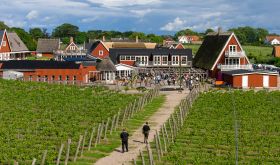
And so it was, Friday night last week, on the eve of the inaugural In Praise of Riesling seminar that these both unfamiliar and welcome feelings were rekindled. The event was organized by the Waipara Winegrowers as a showcase of international Riesling, comparing them with their local offerings. Established primarily for industry and trade people, it may in subsequent years change to incorporate more international guests and a greater proportion of public enthusiasts.
It's great to feel like a kid again. Indeed, the following day at the seminar itself at Pegasus Bay's winery in the Waipara Valley, I was like a kid in a candy store. I was surrounded not only by cult Austrian Riesling from the Wachau, German Scharzhofberger so rare it's almost a myth and Grand Cru reckonings from Alsace, but a bevy of Riesling fanatics that comprehensively covered the who's who of New Zealand vinous royalty. The kingdom of Heaven cometh.
I had always had trouble quelling heart palpitations when reading Jancis, Hugh or Terry (Theise) extol the virtues and affordability of Riesling, but luckily for me and the wider clique of Riesling worshippers, nothing has changed. At least, not yet. Riesling remains the most versatile white wine in the world, the truest conduit for the expression of place and simply an immensely enjoyable wine – that will never change. However, its relatively stagnant price on the world scene continues to amaze me. One assumes it's the same old supply and demand story; maybe we (and Germany) are just getting lucky from a string of good, relatively plentiful vintages, even though demand is creeping up. In any case, I live in the now, and I'm loving the Riesling climate. Long may it continue.
Bob Campbell MW chaired the event, which started with three flights of international Riesling (well, European Riesling really, bar one Australian and one American example). This was an eye-opening exercise. Rarely, in my lifetime, will I be privy to the calibre of wines offered during this segment. Naturally, there were disappointments, polarising wines and conjecture over styles, but the whole experience was made all the richer by the discussion of such wines.
Flight One
Flight one began with a Koehler Ruprecht, Kallstadter Saumagen Rieaslsing Spätlese Trocken 2005 Pfalz. The nose was bizarre; exciting and intriguing as only great Pfalz can be, with aromas of caramel, peach, cherry blossom and oyster shells coiled within a perfumed framework. Racy, crunch acidity governed the palate of citrus and white flowers, finishing dry with a rounded finish. Intellectual – not easy to drink – and certainly a polarising wine.
The Albert Boxler, Riesling Sommerberg JV 2005 Alsace Grand Cru off granite slopes was an excellent wine. Bush honey, smoke, flint, tangelo and crushed rocks beckoned, leading to an unexpectedly delicate body with the barest hint of sweetness. A refined core of fruit sulked in the palate depths, the complementary acid and balance of the wine more apparent than its fruit qualities. It finished fresh and long with citrus flavours.
Another favourite from this flight loomed large – the Josef Leitz, Rüdesheimer Berg Rottland Riesling Alte Reben 2005 Rheingau. And loom it did, the nose immediately expressive and full of peach, dried apricot and autumn leaves. "Assertively gentle", I wrote, no doubt in a temporary fit of vinsanity. I surmised that it must be an off-dry style, though you really have to search for the sweetness. And why would you bother, when you have an enveloping texture with waves of peach and intense orange swimming about and crashing in explosive, dispersing fashion on a cleansing finish.
The FX Pichler Riesling 2006 Wachau (pronounced va-kow) in Austria was, to me, the European Riesling most similar to Waipara Riesling. Lemons, limes, mandarin, crushed rocks and a floral perfume typified the nose, with another generous helping of ripe citrus fruit on the palate. Delicate, framed by a scrupulous acid marriage and kept sprightly by a buoyant texture. The finish of tangy, crushed limes ended an excellent Riesling experience (albeit one slightly simpler than its European brethren).
Next up was a Heymann-Lowenstein, Schieferterrassen Riesling Alte Reben 2006 Mosel, from a ripe vintage. Immediately conspicuous as the darkest wine of the flight, this is due to the winemaker's use of fruit harvested ripe (and late), incorporating oxidative winemaking techniques. The nose is very honeyed, supported by ripe stonefruit and slate nuances. The palate is broad – ample concentration of fruit – but the acid seems a little out of kilter. Sure it's there, in the right amount, but the profile seems to rise and trough in a detracting way. Loads of weight and generosity add more filler to the palate, the finish a little abrupt. Not my style, but enjoyed by many.
Then, as though the Riesling Gods were enjoying a private joke, a Frankland Estate Isolation Ridge 2006 Frankland River from Western Australia emerged as the final wine of the flight. Now, don't get me wrong, I love Aussie Riesling (one need look no further than the examples coming from Grosset, Petaluma and Clonakilla), but this ugly duckling had Buckley's of a swan transformation. I wrote seven words, "Mineral, citrus. Simple. Dry, austere, astringent. No."
Flight Two
The middle stanza of secular Riesling hedonism began with a wine off red, volcanic slate from the steep, precipitous slopes of the Mosel. You would associate volcanoes with heat and heat with spice. Ergo, my flawed reasoning coolly draws the connection of spiciness to the Urziger Wurzgarten (literally translates to spice garden). The nose of this Erni Loosen, Urziger Wurzgarten Riesling Auslese 2006 Mosel was quite reticent with hints of peach, orange blossom and slate. Stonefruits and a shot of mineral line the palate, which is less sweet than expected, especially given the ripeness of the vintage. Whilst the acid is pure and spicy, it's as though the structure (or lack thereof) renders it floppy, with a marked lack of focus or precision. The finish is moderate, as is my impression of the wine. I'd go so far as to say I was disappointed.
Chateau Ste Michelle, Eroica Riesling 2006 Columbia Valley of Washington State was made in collaboration with Loosen. It was good – a wine that would have shone in any other surrounding – but looked a tad pale given the company flanking its sides. Lots of nectarine fruit, lime pulp, white peach and green apple. Crunchy, juicy acid froths across the citric palate, though everything seems just a bit simple and shallow. Hollow was an apt descriptor. Finishes with exuberant citrus, full of freshness and poise.
A very hot site of quartz sand in the Wachau lay claim to the Emmerich Knoll, Schütt Riesling 2006 Wachau. Pineapple, apricot, musk and flint exploded from the glass, with an absolute truckload of concentrated fruit (especially lime) on the palate. Made in a drier style, it's unashamedly ballsy, as though the blender lid has been left off and it's a massive flying fruit free-for-all. Lots of layers, accruing extra texture with every sip. The acid is a little awkward on the finish, but just like moles on models, it's a blemish of character and fortitude. Crazy wine, that found a crazy admirer in me.
The Fritz Haag, Brauneberger Juffer Riesling Spätlese 2006 Mosel was a crowd pleaser. Another reticent nose from a 2006 vintage Mosel, unfolding to express peach, scented bath salts, honey and mineral. There were lots of mead-like textural qualities in the mouth, translating to a honey-flavoured richness that accompanied ripe peach and pineapple fruit on the palate. The finish was gentle, slowly easing back on the throttle to prolong the intensity. If one were picky – and I am not – you could argue that the acid was a little quiet and the palate a bit flabby, but only if you're the sort of pedantic critic who watches movies in slow motion to point out flaws and mistakes. This was a tasty wine. End of discussion.
The single wine of the flight came in the form of an Albert Mann, Riesling Rosenberg 2005 Alsace. These biodynamic vineyards rest atop clay limestone, with indigenous fermentations and no fining – minimalist winemaking that cradles the fruit from grapevine to bottle. And boy, was this wine an expression of site or what! Singular aromas were indiscernible; it was a bouquet that must surely have been equal parts mineral, floral and fruit. The palate was an exercise in flavour delicacy, hinting at every verbose mineral descriptor imaginable, with structure to boot. Seclude yourself in an intimate location, smash a big piece of rock, then lap it up with some serious tongue action and you'll have some idea of the finish that this wine offers. I don't like using the T-word very often, but this wine justifies its use – Terroirists Unite!
Emrich Schönleber, Monzinger Halenberg Riesling Spätlese 2006 Nahe – another product of the 2006 vintage – is typified by stony, slate soils and concentration. At once floral, the aromatics of nettle, jasmine, sea shells and cumquat make for a raised eyebrow and second sniff. Interesting, to say the least. Built upon a solid foundation of sweet and sour structure, the palate is loaded with juicy orange fruit, though the body, texture and finish all seem a bit narcoleptic; one second they're smiling politely, the next they're out cold. It does lack that tension required for top notch Riesling, but an intriguing wine nonetheless.
Flight Three
Okay, strap in. The third flight takes no prisoners. Double-check the seatbelt is buckled because the windows are steaming and the demister is broken.
Enter Egon Müller. Enter Egon Müller, Scharzhofberger Riesling Spätlese 2005 Saar. Enter Elysium.
This wine transcends mortal existence. I wrote notes, but I'm debating whether to even bother transcribing. Do you really need to know what the wine smelt like? Do you need to know what it tasted of? No, I don't think so. Rest assured, this was quintessential Mosel Riesling, of unbelievable balance (tension), concentrated, awake, primed and affectionate. My tongue made love to this wine, while the rest of my mouth sat back and watched the show. Voyeurism never tasted so good.
It was just as well the next wine was so different. A Marc Tempe, Riesling Mambourg 2000 Alsace Grand Cru was poured, making it the oldest Riesling tasted across all flights. A rich, golden colour, the nose was complex and confronting; dripping with honey, full of stonefruit and tropical fruit, ginger spices and nutmeg. Lots of weight and initial richness in the mouth, and just when you're about to comment on the low acidity, it rebounds on the back palate to liven up the finish and keep a degree of harmony. It's a slightly drier style, with a slippery texture, some petrochemical notes on the palate and honey in every nook and cranny. A wine with personality, good in small doses.
Off the grey slate of sheer south-facing slopes, it was a return to the Mosel at the expense of a JJ Prüm, Wehlener Sonnenuhr Riesling Auslese 2006 Mosel (one of my favourite vineyards in the region). Stinky street urchins, wallowing in overflowing sewer drains, welcomed us with outstretched arms as we arrived at sulphide city. Potent, pungent and prickly, though thankfully the severity of this cloud waned with time (and vigorous swirling) to hint at ripe citrus, peach and lovely herbal aromas. Enveloping, with rich sweetness, there is just enough acidity to keep the palate afloat, though myself and others would have liked more. Tropical fruit abounds, with flavours persisting well into the finish, though I felt the lack of acid meant the finish was devoid of any pizzazz. Prum's wines are notorious for their ability to age, but were you not familiar with this producer you may be less inclined to take the gamble.
If Egon Müller successfully claimed the throne for best German example of the day, then the Fallers of Domaine Weinbach would surely have done the same for France. The Domaine Weinbach, Riesling Schlossberg, Cuvee Ste Catherine (L'Inedit) 2006 Alsace Grand Cru is made in an "unedited" style. Very old vines, late pick, natural ferment and cloudy juice – all good things. The nose was absolutely gorgeous. So enticing, delicate and feminine. Led by a floral bouquet, the notes of lemon, mandarin, petrichor and jasmine were all subtle and compartmentalized; distinctive, individual and precise. Sure, there may have been a little VA, but it only added to the wine's charm. Initially delicate in the mouth, the structure was borne of pure, unadulterated acid. Tasty, tactile, amazingly hedonistic acid. The alcohol, sugar and texture were all just traffic, directed expertly by the acid. Citrus – with even more floral elements now – danced on the palate, rising to crescendo levels that back-pedal on a fresh finish with a very long aftertaste. It's hard to evoke exactly what made this wine so special – just take my word for it.
The second Koehler Ruprecht wine of the day was a Koehler Ruprecht, Kallstadter Saumagen Riesling Spätlese 2006 Pfalz and it turned out just as edgy and polarizing as the first. It was a Riesling that I struggled to befriend. Floor polish, EA and VA, struck match and citrus comprised the aromatics, with a whisper of sea-spray. A decent dollop of sweetness creeps over the citrus palate, though the fruit seems to lack sparkle and intensity. The acid appeared a bit disjointed too, as though flimsy. Finishing with some mild astringency, there was daylight between this and the other wines of the flight.
Known for crafting some of the most sought after Rieslings in the world, full of balance and fruit purity, the appropriate finish to three flights of international Riesling came in the form of a Dönnhoff, Oberhäuser Brucke Riesling Spätlese 2003 Nahe. Unlike the hot vintage might suggest, this was a wine of subtleties, refinement and delicateness. The reticent aromatics divulged flowers, white peach, crushed rocks and freshly cut apple, with just a smattering of fusel character. Delicate and elegant, poised on a knife-edge balance of sugar and acid. The alluring flavours of the palate mirror the aromatics, with particularly strong apple notes and lots of citrus, eventually breaking free of the feminine shackles to culminate in a big, boisterous, long finish. A gently penetrating texture reinforced the whole package, delivering the final impression of a first class wine.
The Afternoon
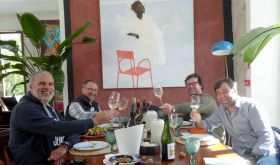
I looked around the room and everyone was smiling. When you're concentrating hard on the actual process of tasting and wine analysis for over four hours, it's easy to forget yourself. Now, with pens down and glasses empty, you're afforded a retrospective reverie. We all sat down to lunch, talked about anything but Riesling, then ventured into the courtyard to taste informally through a host of Rieslings from the different producers of the Waipara Valley. Museum releases, barrel samples and decade verticals – there was something for everyone (I mention the highlights later).
Three workshops were conducted over the course of the afternoon that each focused on viticulture, winemaking and marketing. Of course, each was specific to Riesling. The viticulture workshop saw a forum on the influence of site and hang time turn into a debate over cropping rates, with many winemakers arguing that predetermined cropping levels for Riesling are unnecessary and unhealthy (unlike Pinot Noir, that does benefit from low cropping). When the proponents of this cause included the likes of Blair Walter (Felton Road) and Duncan Forsyth (Mount Edward), the proof was in the pudding.
The winemaking workshop was conducted by good mates Matt Donaldson (Pegasus Bay) and Duncan McTavish (Waipara Springs), who discussed the two different, extreme approaches to making Riesling (with many shades of grey in between). Matt, wearing the white shirt, was the purist advocate, whereas Duncan, donned in a black shirt, was the trend breaker who had 'gone to the dark side' and incorporated many unusual practices (in a classical sense) in his Riesling winemaking. As biodynamic and 'natural' practices continue to evolve, the practice of time on skins, indigenous fermentations and barrel use may not seem that unusual, though in the context of this workshop they made for a valuable juxtaposition.
The marketing workshop was entertaining. It would seem that everyone is jealous of Pinot Gris, or rather, its unprecedented rise of recent times to become the chic white wine and best selling aromatic. Furthermore, everyone (well, those running the workshop, and the lovely marketing people in the room) seemed obsessed with the idea of a classification doctrine; the need to label Riesling dry, off-dry or sweet, or formulate some type of classification that alleviates all the confusion over styles.
The whole idea is fundamentally flawed. The minute you begin classification, imposing limits for residual sugar (or sugar at harvest) to define a style, the wines become less about balance and more about image, or saleability. Ivan Donaldson, the man behind the New Zealand Riesling institution that is Pegasus Bay, stood up and spoke "We have no problems selling our Riesling". All this talk of classification and labelling is by marketers that simply can't do their job! Whether they're lazy or simply inept, build your brand and you will sell your wine!
The workshops ended and everyone basked in the warm afternoon sun, enjoying a cleansing ale or two. A five course dinner followed, crafted by Pegasus Bay's head chef Oliver Jackson (previously of Icebergs in Sydney). The sautéed crab on wet polenta, wild rabbit confit and roast suckling pig all made for some very, very satisfied and grateful guests. Waipara Rieslings were served with every meal, though some of us snuck in a red or two. Highlights of the Waipara Rieslings included Fiddlers Green, Greystone, Pegasus Bay, Waipara Hills and Waipara Springs. Some of the Waipara Rieslings – in fact, those from the whole country – seem to hover in the off-dry territory between 5-15grams of residual sugar. It works for some, but what I'd really like to see is winemakers capitalizing on high natural acidity to craft wines with significantly more residual sugar to create better balance.
All good things must end, but gee, what an eye-opening exercise. I'm somewhat one-eyed toward German Riesling, especially the gear coming out of the Mosel, and to that end not a great deal has changed. But one eye quickly became two as I breathed in the top examples from Alsace that really demand a requisite food match. It was disappointing that we didn't see more from Australia, or perhaps the Finger Lakes or even Canada, but as the format is reworked in future years I can see this becoming a regular highlight in the calendar of every Riesling enthusiast in New Zealand, possibly beyond..
What do you call a group of Riesling lovers? A thrill of Riesling lovers? A suite of Riesling lovers? A residual of Riesling lovers? Whatever we're called, there is little doubt that we'll all be there for the next instalment of In Praise of Riesling.



Guest contributor