Jean-Baptiste Lécaillon is in a most unusual position. He is not only the most respected winemaker working for one of the big champagne houses, but he also oversees a worldwide range of properties owned by his employers, the family company Louis Roederer.
As not just chef de cave but executive vice-president, his empire includes Roederer’s impeccable champagnes, those of Deutz, the much-loved Bordeaux second growth Ch Pichon (Comtesse de) Lalande and Ch de Pez, Delas Rhône wines, Domaines Ott in Provence, the port shipper Ramos Pinto (very important in France) and the well-regarded northern California sparkling-wine producer Roederer Estate, which was recently joined by the uniquely terroir-informed Napa Valley producer Diamond Creek and Merry Edwards, Sonoma Pinot Noir pioneer.
It’s difficult to think of any other wine technician with such a wide purview, but although Lécaillon is a Champagne native, he has always been curious about other wine regions. Almost as soon as he joined Louis Roederer in 1989 he spent a year with Roederer Estate in California’s Anderson Valley, followed by almost three in Tasmania, where Roederer had a significant interest in Heemskerk winery and he had to turn his keen brain, and University of Montpellier wine training, to overcoming the cool, windy climate there.
It was in Tasmania that he become a fan of permaculture, a holistic approach to wine production that includes the increasingly fashionable regenerative viticulture, in which soil health is prioritised. He returned to Reims in 1994 and by 1999 was, at 33, made the youngest chef de cave in Champagne.
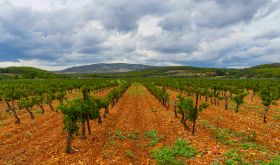
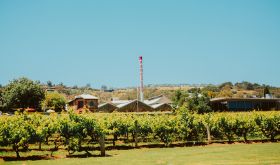
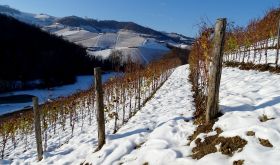
Realising earlier than many winemakers that the secret of wine quality lay in the vineyard not cellar, he insisted on being in charge of vines as well as wines and Roederer’s owners, the Rouzaud family, were wise enough to agree. Since then Lécaillon has worked hard to impose organic and even biodynamic principles on an increasing proportion of Roederer’s 242 ha (598 acres) of prime vineyards that, most unusually for a big house, supply 70% of their needs. Today 120 of them are certified organic and 10 certified biodynamic, with biodynamic composts and preparations applied to all their vineyards.
It’s typical of his scientific, quality-driven approach that they farm two parcels of vines to allow blind comparisons of the produce of organic and biodynamically grown vines. Organic is apparently better in cold years – ‘it brings extra flesh (I don’t know why)’, he said disarmingly at a masterclass in London last November – ‘while biodynamic vines make particularly energetic wine but not extra flesh, so they’re very good for hot years’.
All of this makes him sound just too good to be true and possibly a rather lofty figure but that would be quite wrong. He likes nothing better than sharing his unquenchable enthusiasm for his wines (and is rivalled only by Olivier Krug of Champagne Krug for a specifically champagne-fuelled social-media presence). He may entertain interested parties such as me in the Rouzauds’ grand mansion in Reims, where all is ornate Louis XV curlicues, but that is a sideshow to what’s in the delicate, long-stemmed glasses. (No tall, narrow flutes for Lécaillon.)
Conscious of the warming climate in Champagne, he was one of the first to experiment with making still red wine from the ever-riper Pinot Noir grapes that, pressed so lightly that their juice is hardly pink, are such an important ingredient in champagne. He claims to have a richer collection of Pinot Noir plants than anyone in Champagne – ‘possibly more than anyone in Burgundy’, he added, throwing down the gauntlet.
Under his auspices Louis Roederer is the only champagne house with its own nursery so that instead of planting commercial clones that bring uniformity, they can replicate a selection of their own vines, perpetuating and strengthening the character of their vineyards that Lécaillon tries to express in Roederer champagnes. ‘21st-century winemaking is all about capturing the purity of fruit and place, and bottling that for everyone. You’re not trying to imprint your own ideas on the wine’, he expounded during an online presentation of the latest vintage of his most famous baby, Cristal 2014, which, such is his enthusiasm for both explaining his wines and answering questions about them, threatened to stretch well into the evening.
There always seems to be something new from Roederer, whether it’s the bone-dry Brut Nature produced in conjunction with designer Philippe Starck, or the brand-new replacement for Brut Premier, Louis Roederer’s biggest-selling champagne, their standard non-vintage blend. From last year this has been replaced by a unique blend each year containing a significant proportion of older reserve wines and called Collection. The first general release was Collection 242 to remind us that the youngest vintage in this multi-vintage blend is Louis Roederer’s 242nd harvest. (Collection 241 was made in small quantity and only in magnum.)
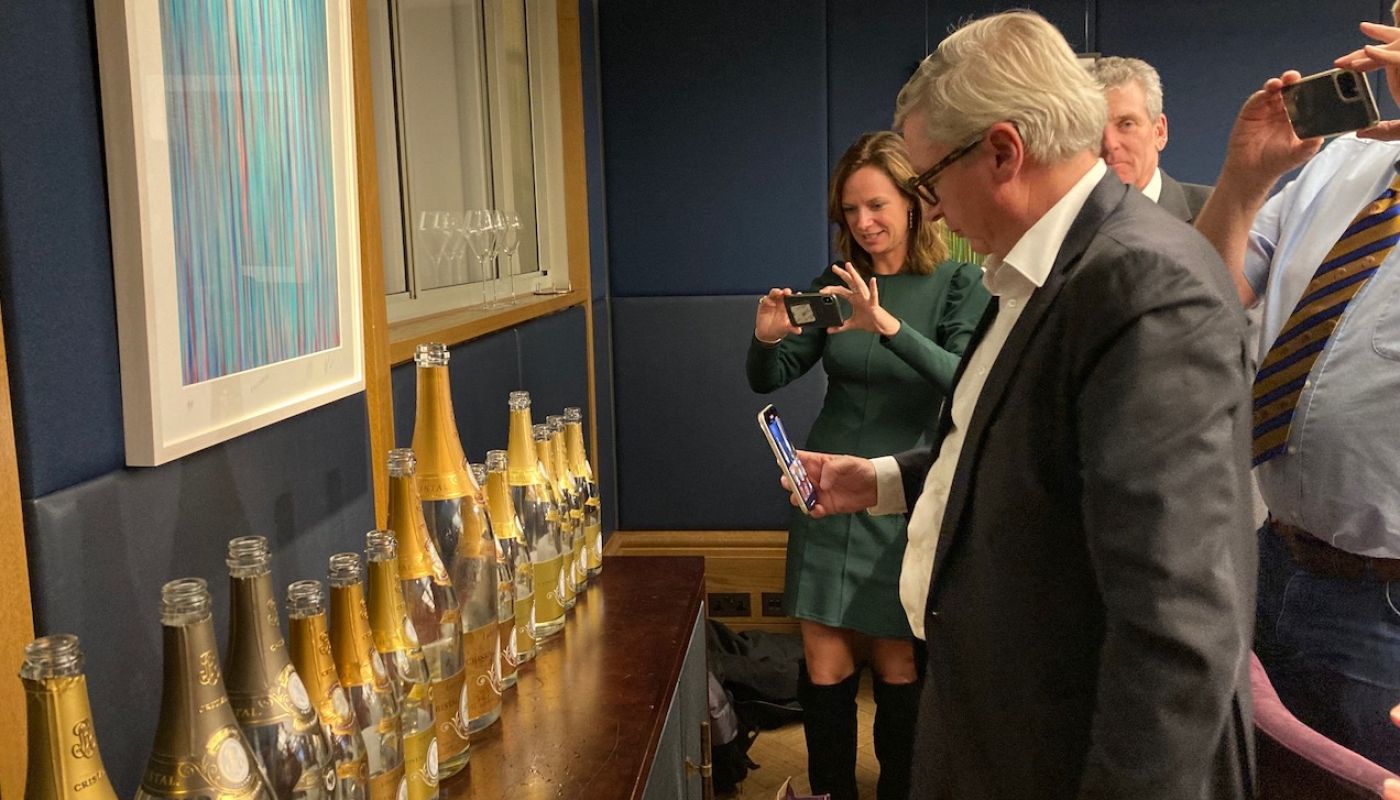
Lécaillon and his boyish enthusiasm for making Cristal better each year seems a world away from the cliché of the nightclub-ish circumstances in which the most famous prestige cuvée is consumed. It comes in a distinctive clear-glass bottle, is labelled in luxurious gold and retails at more than £200 or nearly $300 (all champagne prices have been rising dizzily). It is in fact a wine to appeal to geeks and those who appreciate quality rather than image. At a vertical tasting of Cristal back to a magnum of 1988 from the Rouzaud family cellars, presented by Lécaillon and specialist champagne writer Essi Avellan MW and organised by champagne retail specialist The Finest Bubble at 67 Pall Mall last November, I sat next to a pair of guys who had met at school and decided to blow the money they’d saved for the cancelled Lions tour of South Africa on this tasting.
‘I love this sort of tasting’, said Lécaillon with relish at the beginning, describing the pure, tense, ‘weightless’ Cristal as ‘the Chevalier-Montrachet of Champagne’. He assured us that, because the wine comes from more or less the same 45 plots of mid-slope chalk, all fermented separately, ‘you’ll see that the [vintages] are all very close in style because they are born of the same terroir. We’re trying to capture the energy and freshness of chalk.’ From the 2012 vintage all of the vines for Cristal were farmed biodynamically, and some are now certified as such.
The man in charge of Ch Pichon Lalande is the highly regarded Bordeaux winemaker Nicolas Glumineau. I wondered what it was like having someone as interested in the wines of the world as Lécaillon looking over his shoulder. It seemed to me there was potential for conflict. But Glumineau assured me by email that he was very much allowed to do his own thing and that he and his team simply send their final blends to be ‘validated’ by Lécaillon and Frédéric Rouzaud, adding, ‘it's a very friendly, motivated and passionate collaboration. A true pleasure.’
Favourite Roederer champagnes for current drinking
Note that these prices are low relative to those of some specialist retailers.
Brut Premier NV (any remaining bottles of this superseded wine will have had quite a bit of beneficial time in bottle)
£35.50 The Wine and Glass Company and about £40 from many other retailers
Collection 242 NV
£39.99 Davis Bell & McCraith and about £45 from many other retailers
Brut 2013
£65.99 Bon Coeur Fine Wines, £68 Chester Beer and Wine, £68.99 Cambridge Wine Merchants
Blanc de Blancs 2013
£60 Hatton & Edwards and £64 to £99 from many retailers
Rosé 2013
£57.78 Colombier Vins Fins, £65.99 T Wright Wine
Brut 2008
£72 The Bordeaux Cellar
Brut 2002
£230 The Finest Bubble
Cristal (latest vintage 2014)
It’s somewhat invidious to suggest favourite vintages; there are no disappointing vintages, just disappointing individual bottles occasionally. The tiny quantities made of Vinothèque Cristal, which is aged for many more years on lees before release and can easily cost £800 a bottle.
See nearly 200 tasting notes on Louis Roederer champagnes. International stockists on Wine-Searcher.com.