
Volcanic Wine Awards | The Jancis Robinson Story | 🎁 25% off annual & gift memberships

Kumeu River – an Auckland pearl

Thursday 28 May 2015 • 5 min read
Image

28 May 2015  We are republishing this article from June 2013 as background to today's tasting article detailing a blind comparison of some of Kumeu River's Chardonnays with some top white burgundies. See Kumeu River Chardonnays triumph.

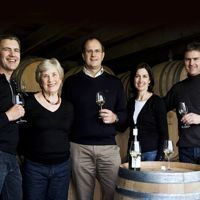
7 June 2013 Winemaker Michael Brajkovich MW (centre) was the chair of the judges in the Air New Zealand Wine Awards 2012, the original impetus for my visit to New Zealand at the end of last year. He whisked me straight off the ferry from Waiheke Island so that he and his brother Paul, marketing director (far right), could accompany me through a vertical tasting of their 2009 and 2010 Chardonnays.

My last visit to this West Auckland enclave of excellence was in 2000 and even then I remember being treated to a fine line-up of top-notch Chardonnays. This intensely family company continues to be under the managing directorship of Melba Brajkovich (second from left), mother of Michael, Paul, Milan (far left) and Marijana (second from right) and widow of Maté, who moved as a child from Croatia to Auckland in 1937 and sadly died in 1992. Milan is the vineyard manager and Marijana the marketing director. All were there for the barbecued-lamb lunch immediately after the tasting. (For more on the history of the family and much more, including a detailed vineyard map, go to the Kumeu River website, a model of clarity and lack of hype.) Michael Brajkovich would also be the first to give credit to their long-standing cellar master Nigel Tibbits, who has been with the company for three decades.

Unless it is to do with Chardonnay's supporting role to Sauvignon Blanc in New Zealand, I cannot fathom why the Kumeu River wines are not more widely recognised. They are highly rated on many markets but I still don't think they get the recognition their quality (and great value) deserves.

Kumeu River wines follow the Burgundy model: village, estate and single-vineyard wines. The estate's soils are generally heavy, deep clay that cracks in summer, with sandstone way down below. They had always vinified the vineyard lots individually but in 1993 they started bottling Maté's vineyard separately, adding Coddington (ripest and richest) and Hunting Hill (more floral) to the line up in 2006 – and there are other candidates for single-vineyard bottlings. They have been fermenting with ambient yeast since 1986, making them an excellent subject for Dr Matt Goddard's research into unique yeast populations (see my notes on Goldie).

Michael Brajkovich, who is both thoughtful and skilful, has a very particular way with yeast lees for his tank-fermented wines that contributes to the fine texture of the Chardonnay and helps him avoid any problems with excessive reduction or oxidation. His reference to this technique during the tasting reminded me of a brilliant explanation he sent several years ago when I asked him for more information:

'Immediately after fermentation the wine is racked, and the yeast lees transferred into another vessel. The lees are then gently circulated with a pump while a small, measured dose of pure bottled oxygen is added using our micro-oxygenation equipment (although the dose is more macro than micro). This continues until no reductive odour remains, which usually takes a matter of a few minutes. Once thus treated, the yeast lees are added back to the bulk of the wine and stirred in. No reduction is evident, and the lees will not produce any further sulphide problems. This allows us to keep the wine on lees for an extended period, which was previously not possible in a stainless-steel tank because of the continuing evolution of sulphidic odours from the yeast lees. We can thus almost emulate the conditions found in a barrel for extended lees ageing, and the benefits are manifold.

'Firstly the lees afford very good protection against oxidation. Secondly, the autolysis of the yeast over time releases the yeast contents into the wine and builds texture and mid-palate weight to the wine, which is not possible if the wine is racked early. This is the real benefit of "lees ageing". Thirdly, if any MLF has occurred in the wine (relevant in Chardonnay and Pinot Gris, but not in Sauvignon Blanc, where we actively discourage it to preserve the zesty acidity) then the diacetyl content is greatly reduced, and the wines are far less buttery as a result. We usually employ two to three months of lees ageing after fermentation to enable the wine to mature gracefully and take on more interesting characters, like the firm "oyster shell" taste this wine has on the finish. This is why we are bottling much later than most, but I think the results are well worth it. I learnt of this technique in 1999 after hearing of the work in Bordeaux done by Lavigne-Cruège et al.'

Kumeu River also produce a village and an estate Pinot Noir, both are good, and good value, but not yet up to the standard of the Chardonnays. I also tasted a sensational Gewurztraminer barrel sample – fragrant, pure and fresh – but they have very little of this.


White
One-third older barrels. Racked off lees, lees oxygenated, then added back for a few months. Defaix in Chablis does the same.
Delicate citrus and stony nose. Unexpected density on the palate and that richness from the lees but with mineral tension on the finish. Something Austrian about it. Or the clay character of Mâcon. Freshness and persistence but restrained in flavour. (JH)
Alcohol: 13%
Drink: 2012 – 2014
White
All barrel fermented, 20% new. More traditional winemaking, ie up to 24 ºC in barrel (20 ºC in tank – yeast much happier). H2S is blown off with the warmer temperature which also gives more varietal flavour. More esters created if the yeasts struggle.
Delicate toasty note. And some spice and orange zest. Tight and long and so fresh. Elegant with some grip that adds length. Have to get tannin right at the juice stage, says winemaker Michael Brajkovich. Gentle toast on the finish. Very long. (JH)
Alcohol: 13%
Drink: 2012 – 2015
White
Vineyard faces north and is sheltered. Both fragrant and smoky. Gentle toast and a mealy note. Delicate stone fruit and citrus and orange flavours hide the power. Copes with higher toast and 25% new oak (Claude Gillet). Rich on the palate. Intense but still fresh and has a certain sweetness on the finish. Touch of botrytis in this vineyard, apparently. (JH)
Alcohol: 13.5%
Drink: 2013 – 2016
White
Exposed to westerly winds and gets sugar ripeness early. Ripe lemon flavours when you taste the fruit in the vineyard. Uses the barrels that are more gentle on the flavour (François Frères).
Opens up more slowly than the Coddington. Much more mineral and stony and austere on the palate. On the nose very mineral (slightly reductive) but there is still a slight floral note that emerges. Delicate, refined, long and great acid length. You almost miss the blossom through the minerality. Apparently the 2006 is looking very good now. (JH)
Alcohol: 13%
Drink: 2013 – 2018
White
Barrels are by Séguin Moreau and Mercurey so quite strong but not as strong as the Gillet. 30% new oak. Older vines and Mendoza clone. Planted 1990. Last vineyard picked each year. Leafroll virus is in Mendoza clone so you get millerandage (some small berries within the bunches) but also harder to ripen.
Green fruit and hay and a touch of caramel sweetness. More spicy too and oak very discreet. Complex and has a definite phenolic grip. Mealy and long and so fresh. Lovely delicate reductive notes and smoky. Very creamy too, especially on the nose. (JH)
Alcohol: 13.5%
Drink: 2013 – 2020
White
Quite smoky and a light toast. Fine citrus and some clementine. Rich and dense and concentrated. Half normal yields. Not fat, because the freshness is there too. Mouthfilling and creamy. Lovely freshness even with all that depth and length. Stunning value. VGV (JH)
Alcohol: 13.5%
Drink: 2012 – 2015
White
Again that peachy note that I found on the 2009 but even more intense. This vintage is much more obviously identifiable as New World Chardonnay. Orange and apricot but not from botrytis. Full of texture and quite a firm grip and spicy finish. Less finesse than in the 2009. (JH)
Alcohol: 13.5%
Drink: 2013 – 2017
White
UCD15 clone here and in Coddington. Iron pan under the vineyard. Like the 2009 but more so – richer and more generous on the nose. Still has a light floral note but a touch spicy too. Intense minerality and real power and persistence. So much more to come. Mouthwatering intensity that gives you almost a savoury finish. (JH)
Alcohol: 13.5%
Drink: 2014 – 2020
White
Some sweet rich, almost honeyed notes (some botrytis), a light toastiness and lots of spice. Reaches so deep across your palate, like being probed, then lingers for ever. Seems to have more mineral character than the 2009. Dense but no fat. (JH)
Alcohol: 13.5%
Drink: 2014 – 2022
Become a member to continue reading
JancisRobinson.com 25th anniversaty logo

Celebrating 25 years of building the world’s most trusted wine community

In honour of our anniversary, enjoy 25% off all annual and gift memberships for a limited time.

Use code HOLIDAY25 to join our community of wine experts and enthusiasts. Valid through 1 January.

会员
$135
/year
每年节省超过15%
适合葡萄酒爱好者
  • 存取 285,970 条葡萄酒点评 & 15,810 篇文章
  • 存取《牛津葡萄酒指南》《世界葡萄酒地图集》
核心会员
$249
/year
 
适合收藏家
  • 存取 285,970 条葡萄酒点评 & 15,810 篇文章
  • 存取《牛津葡萄酒指南》《世界葡萄酒地图集》
  • 提前 48 小时获取最新葡萄酒点评与文章
专业版
$299
/year
供个人葡萄酒专业人士使用
  • 存取 285,970 条葡萄酒点评 & 15,810 篇文章
  • 存取《牛津葡萄酒指南》《世界葡萄酒地图集》
  • 提前 48 小时获取最新葡萄酒点评与文章
  • 可将最多 25 条葡萄酒点评与评分 用于市场宣传(商业用途)
商务版
$399
/year
供葡萄酒行业企业使用
  • 存取 285,970 条葡萄酒点评 & 15,810 篇文章
  • 存取《牛津葡萄酒指南》《世界葡萄酒地图集》
  • 提前 48 小时获取最新葡萄酒点评与文章
  • 可将最多 250 条葡萄酒点评与评分 用于市场宣传(商业用途)
Pay with
Visa logo Mastercard logo American Express logo Logo for more payment options
Join our newsletter

Get the latest from Jancis and her team of leading wine experts.

By subscribing you agree with our Privacy Policy and provide consent to receive updates from our company.

More Tasting articles

Old-vine Clairette at Château de St-Cosme
Tasting articles Gigondas Blanc lives up to its new appellation in 2024. Above, Clairette at Château de St-Cosme, one of the vintage’s...
Hervesters in the vineyard at Domaine Richaud in Cairanne
Tasting articles Cairanne and Rasteau headline the 2024 vintage among the southern crus, but there’s plenty to like in other appellations, too...
Gigondas vineyards from Santa Duc winery
Tasting articles Gigondas has the upper hand in 2024, but both regions offer a lot of drinking pleasure. Above, the Dentelles de...
Clos du Caillou team
Tasting articles Plenty of drinking pleasure on offer in 2024 – and likely without a long wait. The team at Clos du...

More from JancisRobinson.com

The Look of Wine by Florence de La Riviere cover
Book reviews A compelling call to really look at your wine before you drink it, and appreciate the power of colour. The...
Ch de Beaucastel vineyards in winter
Inside information Yields are down but pleasure is up in 2024, with ‘drinkability’ the key word. Above, a wintry view Château de...
Poon's dining room in Somerset House
Nick on restaurants A daughter revives memories of her parents’ much-loved Chinese restaurants. The surname Poon has long associations with the world of...
Front cover of the Radio Times magazine featuring Jancis Robinson
Inside information The fifth of a new seven-part podcast series giving the definitive story of Jancis’s life and career so far. For...
RBJR01_Richard Brendon_Jancis Robinson Collection_glassware with cheese
Free for all What do you get the wine lover who already has everything? Membership of JancisRobinson.com of course! (And especially now, when...
Red wines at The Morris by Cat Fennell
Free for all A wide range of delicious reds for drinking and sharing over the holidays. A very much shorter version of this...
Karl and Alex Fritsch in winery; photo by Julius_Hirtzberger.jpg
Wines of the week A rare Austrian variety revived and worthy of a place at the table. From €13.15, £20.10, $24.19. It was pouring...
Wine Snobbery book cover
Book reviews A scathing take on the wine industry that reminds us to keep asking questions – about wine, and about everything...
Wine inspiration delivered directly to your inbox, weekly
Our weekly newsletter is free for all
By subscribing you're confirming that you agree with our Terms and Conditions.











