Dominique Arangoits, technical director at St-Estèphe second growth Cos d’Estournel, looked rather shell-shocked when showing his particularly fresh 2016s earlier this month. ‘In less than a generation we’ve had to learn a whole new way of growing wine', he said. ‘Now, thanks to climate change, our enemies are completely different.’
They used to go through the vineyard early every summer stripping off leaves to expose the grapes to more of the sunlight responsible for building up fermentable sugars therein. But now the sun can be foe as well as friend, and grapes, especially on the west side of a vine row, may be burnt by particularly fierce afternoon sun. ‘In 2016 the danger was to overreact in June, to deleaf too much. That’s something that’s quite new for us.’
It was only very recently that, unlike now, vine growing in Bordeaux was dedicated to maximising ripeness in grapes. Growers used routinely to thin their crop during the summer so as to reduce yields and make more concentrated, more alcoholic wine. But at Cos, to take one particularly dramatic example, they realised that their massive 2009 had crossed a line. ‘We think the era of wines with 15% alcohol is over', according to Arangoits’ colleague responsible for selling the stuff, Aymeric de Gironde. ‘The consumer is looking for something more refreshing.’
Accordingly at Cos there is now a deliberate move to increase yields so as to delay ripening and achieve balance rather than exaggeration in the vineyard. An average of 45 hl/ha is the stated ideal at Cos. When I was in Bordeaux recently to taste the embryonic 2016s there was none of the talk of yesteryear when producers boasted of how low their yields were. Everyone appeared very happy that 2016 seems in so many cases to have delivered both quality and quantity.
The result is that overall the wines are fresher, lighter and more precise – particularly so at first growths Latour and Mouton (Lafite never really played the density game). But Arangoits and de Gironde admit that all this is new territory. There are certainly examples of Cos, for instance, at even lower alcohol levels than the modest 13.07% of Cos 2016, but they were made with only a fraction of the technical expertise and sophisticated hardware that is now at Bordeaux winemakers’ disposal, so the results were very different. ‘We don’t know how the 2016 will turn out because we’ve never seen this sort of Cos before', admitted Arangoits.
Like the rest of the wine world, Bordeaux is in flux, which makes it an exciting and unpredictable place to taste nowadays. Whoever would have thought that Latour would display finesse? Mouton transparency and verve? That Haut-Brion’s signature red wine might positively prance on the palate?
Who would have thought that properties as traditional as Ch ’12-horse’ Latour would adopt organic viticulture? Ch Palmer, one of Margaux’s most celebrated addresses, even went biodynamic in 2016 – escaping the springtime predations of downy mildew by the skin of director Thomas Duroux’s teeth.
But 2016 is a bit of a miracle vintage from the meteorological point of view. When Arangoits volunteered, ‘at the end of August we were not optimistic', de Gironde added ruefully, ‘That’s an understatement.’ As I explained last week, the growing season virtually ground to a halt thanks to a summer drought that lasted from late June to mid September and it took far longer than usual to get the grapes to decent ripeness.
As Bruno Borie admitted, at Ducru Beaucaillou in St-Julien it took 125 days from flowering to picking, whereas the usual figure is 100. His 2016 seemed oddly sweet, so perhaps he was waiting for more ripeness than was needed.
At Ch Haut-Brion in the Pessac suburb of Bordeaux, they had their longest harvest ever: from 1 September when the first white wine grapes were picked to 14 October for the oldest Cabernets (20 October for their St-Émilion property Ch Quintus). But winemaking director Jean-Philippe Delmas appreciated the cool nights that kept acidities high and alcohols relatively low. He even described the 2016 growing season as reminiscent of Napa Valley, with its very wet winter and very dry summer.
Didier Cuvelier of Léoville Poyferré in St-Julien mentioned another cooling influence, north-west winds so strong that only the brave were tempted into the Atlantic at the Bordeaux wine trade’s summer resort of Arcachon in early August. This helped to keep the grapes free of rot, so that growers were able to hang on until well into October for fully ripe tannins.
Mouton’s winemaker Philippe Dhalluin reported that some of the oldest Cabernet Sauvignon vines of which they are so proud seemed to follow their normal pattern of maturity, completely unfazed by the record summer drought.
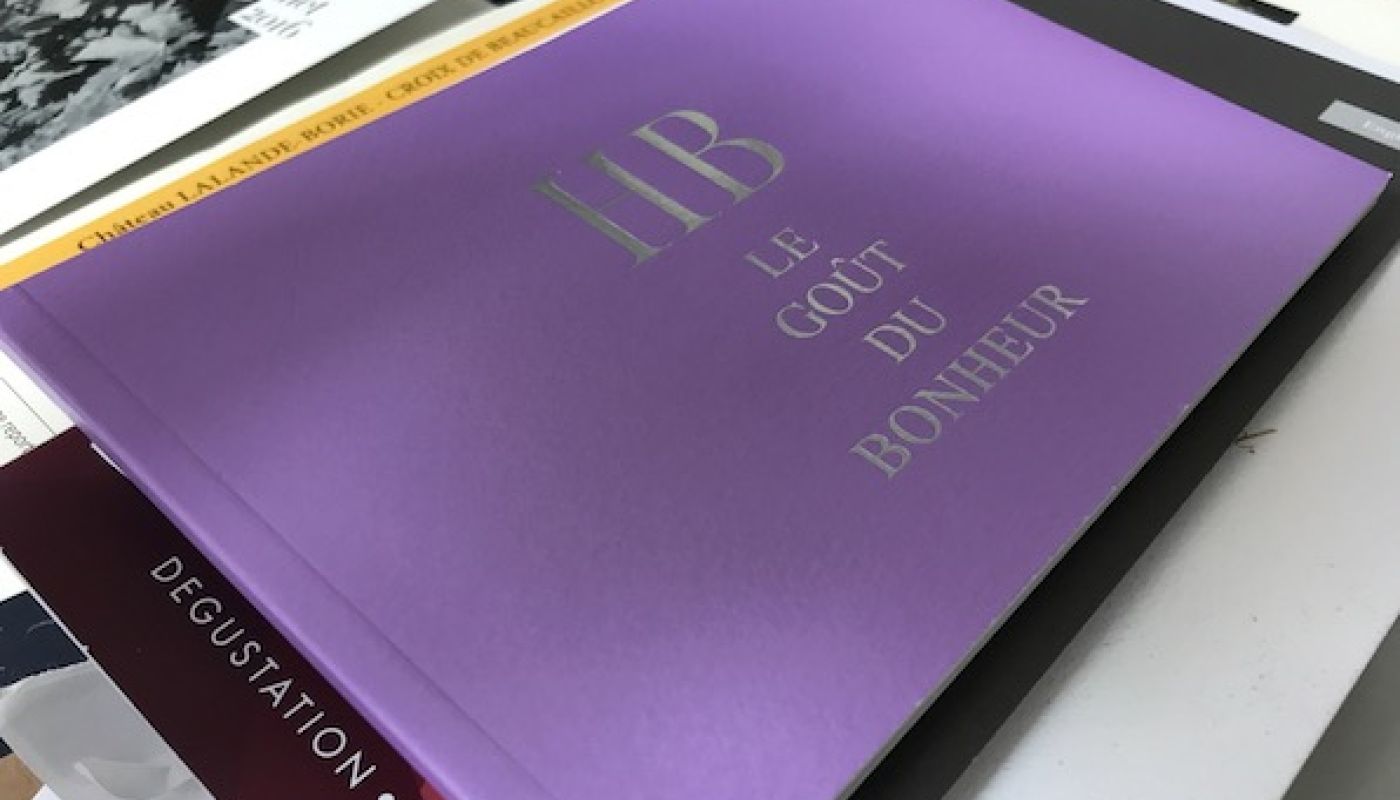
One of the great signatures of the 2016 vintage is how aromatic the musts were when they were fermenting. And indeed tasting more than 500 examples, I was struck by how generally fragrant they were. I often found aromas that reminded me of black pepper, red pimento powder, blackberry compote, and violets. Véronique Sanders, who runs Ch Haut-Bailly in Pessac-Léognan, chooses a different colour each year for the notebook in which she presents her vintage report; it was violet for 2016.
One thing is clear: the best 2016s are very good, more tannic and fresher than the lauded 2015s – but also more variable. Some wines, perhaps picked too early, seem to be marked by underripe phenolics, others by heavy-handed extraction that was unnecessary in this tannic vintage.
The most dramatically youthful wine I tasted in Bordeaux was in Jean-Hubert Delon’s cigar-scented salon in St-Julien. Delon claims he may never live to taste it at its apogee, but he was the only person I encountered who predicted that his wine would definitely close down during its evolution. Léoville Las Cases, and indeed all the wines in that stable, even the second wine of their northern Médoc outpost, Chapelle de Potensac, are vibrant and charming.
This year, there seemed to be even less correlation than usual between quality and likely price, with many an exciting minor wine (and as I write I have not yet finished my tastings of less famous Médocs, the usual bargain hunting ground). Unfortunately, these en primeur tastings take place ridiculously early, a year before most of the wines will even be bottled, let alone be drinkable. Prices for the ones to be sold as futures will presumably seep out over the weeks to come as proprietors play the usual watch-my-neighbour game.
In my list of likely relative bargains below I have assumed that 2016 release prices in euros will be very similar to those of the 2015s, but the Bordelais are notorious for imposing unexpected price increases. Only one thing is clear: the 2016 primeurs campaign will be painful for those of us paying in sterling.
SOME POSSIBLE 2016 LEFT-BANK BARGAINS
These recommendations have very different likely lifespans. Very few of them are likely to last as long as a classed growth, but they should provide delightful medium-term drinking.
Prices in brackets are the average global tax-free prices cited by wine-searcher.com for the 2015, unless stated otherwise. Many, probably most, of these will be released only when ready to ship but I think their quality is such that they deserve credit even at this early stage.
Graves
Roquetaillade Lagrange (£10, 2014), St-Robert, Poncet Deville (£11, 2011)
Haut-Médoc
Arcins (£16), Beaumont (£11), Charmail (£14), Citran (£12), Cissac (£20), Clément-Pichon (£15), Coufran (£12), de Gironville (£9), Lamothe-Bergeron (£12), Lanessan (£13), Larrivaux (£10), Malescasse (£13), Reysson (£16), La Tour Carnet (£23), Verdignan (£19)
Listrac
Liouner (£11, 2012)
Médoc
La Cardonne (£20, 2012), La Chandellière (£7, 2014), Chapelle de Potensac (£24), Fontis (£12 2011), Goulée (£22, 2014), Taffard de Blaignan (£14, 2013), Le Temple (£9, 2014), Vieux Maurac (£6, 2013)
Margaux
Deyrem Valentin (£16)
Moulis
Branas Grand Poujeaux (£21), Dutruch Grand Poujeaux (£13), Mauvesin Barton (£11)
Pauillac
Plantey (£12)
Pessac Léognan
La Garde (£17), Le Pape (£21)
St-Estèphe
Le Boscq (£19), Capbern (£15), Clauzet (£14), Le Crock (£17), Meyney (£23), Ormes de Pez (£22), Pez (£22), Sérilhan (£13), Tour de Pez (£13), Tronquoy Lalande (£19, 2014)
St-Julien
Glana (£17), Lalande Borie (£19), Moulin Riche (£19), Les Ormes