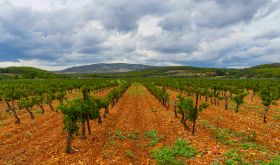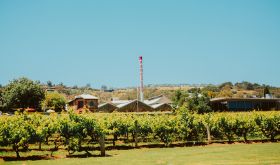
Over two days in March 2020 among my family’s vines in New Zealand, I held my breath. As did most of the country’s wine industry. Not just from fear of a pandemic heading in our direction but because, across the country, we’d had to step away from perfectly ripe fruit on the vine, instructed to move into instant lockdown. By global standards, New Zealand was one of the earliest places to respond so dramatically. Grapes hung in the last of the season’s summer sunshine, waiting to be picked.
Would it all be left for the birds? There was a year’s work out there. There was a sharp anxiety that the NZ wine industry was scuppered. Sparrows waited on power lines. Starlings circled vineyards. The industry’s future was up in the air.
We were eventually given the go-ahead to continue the harvest, privileged to be on the essential services list momentarily. Picking in small teams, our crew worked a distance from each other. I didn’t know it then but it would be the last time I saw those vineyards for three years.
New Zealand’s 2020 vintage had a spectacular run-up. Our climate is generally maritime, but 2020 enjoyed dry, even weather through spring, like something out of an Enid Blyton novel or a WSET textbook. In Hawke’s Bay, on the east coast of the North Island, budbreak and flowering followed the pattern of the past decade of warm, early years and early harvests. We were ahead of most of the country on ripening, almost done, on a weekday in late March with reds going to tank after a day of picking, when emergency alerts started vibrating our phones. A four-level pandemic alert system was announced, and the country was immediately moving to level four. ‘This message is for all of New Zealand’, the text read, with yellow emergency triangle emojis on either side. ‘We are depending on you.’
There was stress and there was fear. We’d seen the quality of fruit coming in, the abundance of small, dark berries that mark out a great year and varietal definition. There were 48 hours of worry for everyone before we were allowed back into the vines.
I helped pick the last of the 2020 Cabernet. It was quiet, precise work with staff, friends and family in tiny teams not allowed to overlap. Even though the whole country’s winegrowers were excited about 2020’s quality, those harvesting were advised to keep quiet about being able to pick. The usual flood of social-media images – grassy NZ hillsides brimming with pickers and sunshine – just didn’t appear. The government’s approach to COVID was elimination, breaking community transmission quickly, isolating families and individuals from their routines. Almost every business closed its doors. Everyone was encouraged to stay apart and stay home.
It was a team approach, appropriate in view of our country’s keenness on team sports. But many New Zealanders were unsure when, or if, they’d be going back to work. The government had moved quickly and dramatically but early information was still scarce and freighted with uncertainty.
I’d planned to see my girlfriend in Amsterdam straight after the 2020 vintage, but the gap between us dragged from days to weeks, then months. Flights and borders closed. The metaphorical drawbridge around my South Pacific homeland was pulled up. Rural Hawke’s Bay streets were empty but houses full. It reminded me of being out at the beach as a kid on Boxing Day. You could walk down the middle of the road without hearing a car. There was that still, ethereal emptiness like something out of a zombie movie or a colder version of Mad Max. A limbo-like apocalyptic state of being, painted in with the long white April mists that reach out from the hills toward the Pacific.
Arriving at city airports for the later season further south, harvest contract workers were unable to work, cut off from inland travel, quarantined en masse and awaiting clearance.
For two days in July a temporary air corridor made international air travel possible through Singapore, so I took a gamble myself and flew. At every airport security-check my boarding pass made that disappointing ‘bu-duh’ sound, as my home tightened its travel policies behind me. It would be three cold European winters before getting back was possible.
Missing vineyards you grew up in is a strange sensation. A bit like missing a garden, or an orchard, but also a fragrance, a topographical version of both home and home cooking. You don’t see the thing you miss, but you do have a sense and shape-memory of it: the smell and feel of vine bark for instance, the distance between each post even, the altitude and aspect each planting. How the frost clumps together the soil in winter, the sweet green smell of pollen at flowering in spring, the quail that rustle up a birdbath in the dusty summer clay.
In Amsterdam I find myself recreating elements of the vineyards in miniature, unintentionally. I go overboard training ivy across the small trellis of our kitchen garden. I cut out tiny windbreaks from plastic food containers to grow berry fruit on a balcony, with covers protecting tender shoots from the cold. I try and recapture the sweep and roll of the hills, too, in words that I notice. It makes them feel present.
The wines I taste lack the fruit and aromatic brightness I’m used to. Though I know I’m biased in an irrational and parochial way, still I keep browsing shelves in wine shops for anything from New Zealand beyond the ubiquitous, bargain-priced Sauvignon Blanc.
There’s a vine nursery in Montpellier that I make, unmake, and remake, plans to visit. I admire the Dutch neighbours’ two-metre wisteria that climbs up their brickwork, and the high, elder roses that espalier up and over front doors in this city that I don’t know.
Between lockdowns I visit a vineyard in Italy a writer once compared to home. It’s in Bolgheri where I get up early and cycle through dusty roads to see them pick Merlot. I ride over dried-out marshland, along a beach, through an old pine-forest reserve, and up the rise towards highline vineyards between cypress trees. I know that scent combo – old pine needles drying in sea air and dusty gravel roads. It’s also in Healdsburg and the Médoc, a recognisable thing. Home, the smell of it, or something parallel to it. At the roadside fruit stall I run out of euros trying to buy too much. They give me two peaches for free and something about this pangs my heart.
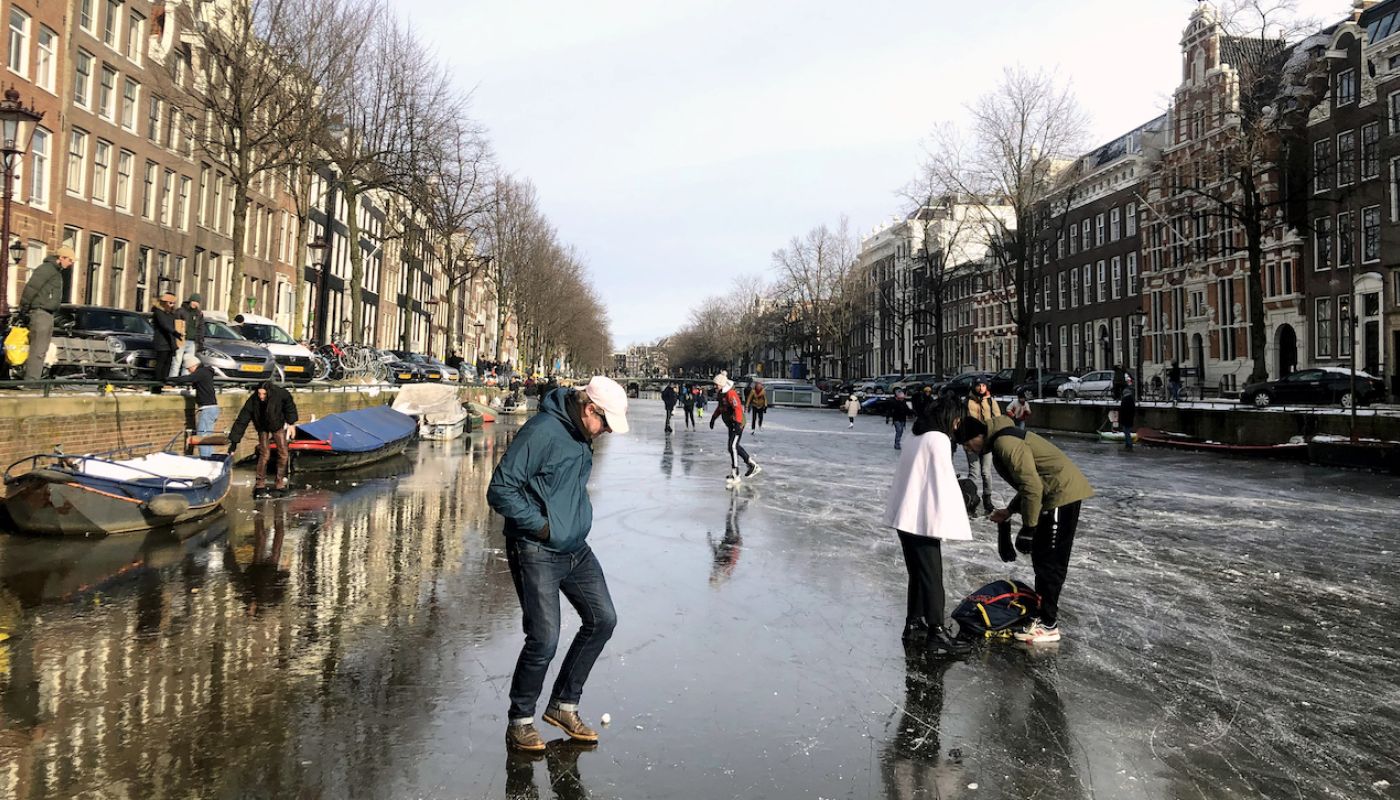
Over video calls home there are radiant blue skies while in Amsterdam the canals are icing over and snowfalls are heavy. The initially more laissez-faire approach to COVID in Europe is confusing. Protests against the winter curfews are met with police water cannon in Central Square.
Back home, even though it’s summer, people are still hunkered down, hoping to survive. The many winding roads across the North and South Islands remain quiet.
Some Kiwis who found themselves overseas during lockdowns have made it back home through the complex re-entry system, waiting online with great patience to secure the few spots on flights, and fewer spots on arrival schemes in managed isolation. Getting in was an expensive lottery, and many vineyards remained closed-off, along with their cellar doors.
Whether I wanted the lesson or not, being in Europe has reminded me of the alchemical properties of vineyards, that they are sites of both activity and abstraction. Spaces like that have a universal totemic charge that dispels distance. Time away has allowed me to go beyond nostalgia, and to gain a more tempered relationship with where I’m from.
Occasionally I encounter bottles from vines I know. At one tasting, where aged New Zealand wines are being shown, I find myself nosing a glass of Syrah from Bridge Pa, and revelling in it. It’s like opening a childhood room decked out in Christmas red fruit and spice. I spy a decade-old barrel-fermented Sauvignon Blanc and Sémillon blend from Hawke’s Bay that I keep going back to. I know that vineyard and that warm year. I’m cherishing it in a way that must look odd.
Summer has arrived in New Zealand; the place is open again for business. I’m due back in February when flights are something I can afford, and in time for the next vintage. Even though I might recall them like the skin on the back of my hand, or the holiday sun on my nose as a child, I expect the vines will just be vines. Imperturbable. And very much as they were. It would be delusional to think otherwise. The 2023 harvest is now just around the corner and there will be more red fruit to come. Rubies, again suspended in their dark green canopy. Small, many and sun-warmed. Fingers crossed, at least. Seasons turn regardless. Even if sometimes we feel the world stands still.