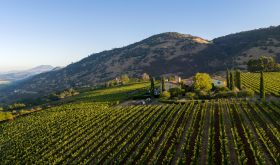
Michael Havens of Havens winery in the Napa Valley is a no-nonsense thinker and doer rather than a follower and I for one heartily approve. A couple of hours spent at his winery off Hoffman Lane just south of Yountville on my last trip to California yielded more quotable quotes than the entire previous week in Bordeaux had done.
Try this one: "We're that close [holding two fingers less than an inch apart] to doing without oak altogether". This was in response to my questions about his extensive use of micro-oxygenation. In 1996 he was one of the first Californians to try this technique of bubbling tiny amounts of oxygen through wine to master its texture and ageing potential.
Or his comment as a Syrah producer on the effects of the Australian wine invasion of the US: "It's a lot harder to sell American Syrah now and consumers are getting more and more confused."
Or re-interpreting the Anything But Chardonnay movement: "You know what ABC stands for? Anything But Crap."
But my favourite was when he arrived at the winery somewhat breathlessly after a call to his cellphone: "I'm really sorry but I thought you were coming next Sunday. I was just about to serve a croque madame and Huet Vouvray to my wife and mother-in-law." Croque madame with Huet, and in the middle of the Napa Valley! Now there's someone with a gastronomic imagination. I felt a heel to be disturbing a brunch that sounded so delicious.
But the most significant thing he said was something echoed, albeit less succinctly, by virtually every winemaker I saw: "California's big challenge today is getting phenolics ripe before the grapes are ready to pick".
And this increasing problem in the world of wine is far from being exclusive to California. Even the French got a taste of it in the exceptionally hot 2003 vintage and, with global warming, are likely to do so again. The problem with modern vineyards in a hot summer is that sugars build up in the grapes much more rapidly than the phenolics, the complicated compounds responsible for tannins, colour and, most importantly, flavour. So growers find themselves with sky-high sugar readings, dangerously low acid levels but a distinct shortage of potential character and mid-palate in the wines.
Many Bordeaux 2003s showed this in the en primeur tastings last April – particularly those (often Pomerols) heavily dependent on young Merlot vines grown on light, free-draining soils which just ran out of water and
struggled to complete the full ripening process. Many a right bank wine was saved by a higher-than-usual proportion of the later-developing Cabernet Franc vines which could stay on the vine long enough to benefit from a bit of rain in early September. The Merlots were often just alcoholic and hollow.
In wine regions more used to hot summers, other tactics are used. As I have written before, it is now customary for producers of top quality wine in some very respected parts of California (and Australia) to pick only when the phenolics have fully developed and sugar levels way past the ideal. To turn these less-than-perfect grapes into well-balanced wine they routinely add acidity and water – generally before fermentation by draining off the least concentrated juice and adding back twice as much water. As another equally hands-on Napa Valley vintner George Hendry put it to me with some pride, "it's difficult to build phenolics in hot regions but we can make the alcohol level whatever we want".
But average alcohol levels everywhere have been rising. I remember a time, children, when it was possible to find red bordeaux with just 10.5 per cent on the label. Today many wines from around the globe are well over 14 per cent alcohol. This is partly a natural consequence of the increasing tendency to pick grapes on phenolic, or phsyiological, ripeness rather than sugar ripeness. It is also a natural result of global warming, and of increased use of strategies (for which often read agrochemicals) to combat rots and mildews, once a major factor in picking grapes early in damper areas. But one other reason why wine has been getting stronger is due to man rather than nature.
As more and more wine today is sold on the basis of its performance in large comparative tastings, there is a natural pressure to make wines that will stand out in these rather artificial circumstances. It is just so easy for a taster to
fall for the most concentrated, most powerful wines – especially as these tend to overwhelm any more subtle wine tasted alongside. I strongly believe that this is factor in the increasing alcohol levels of wine around the world.
But many of us have the experience of comparing which wines get highest points in a tasting with the ones that are chosen to drink with a meal afterwards – easy to measure by the speed with which different bottles are emptied. There is frequently a lack of correlation since tasting is such a very different activity from drinking.
Which brings me to my next hobby horse. Am I mistaken or is wine's purpose to be drunk? More and more I find wines are so strong that I can only sip them if I am to avoid a terrible hangover. But what I enjoy about wine is its taste, with food. I want more mouthfuls of the stuff, not fewer. Stronger wine means less of it – not something that pleases me, anyway.
So what is to be done? Is there any way of slowing grapes' accumulation of sugar in high temperatures to allow physiological ripening more of a chance to be concurrent?
I have never claimed any practical expertise as a vine-grower or winemaker. My role is entirely parasitical. But I am not the only one to wonder whether the fashion for smaller and smaller crop levels is not partly to blame. The fewer grapes a vine is required to ripen, the faster it will ripen them. Perhaps the current vogue for crop-thinning, simply hacking off bunches halfway through the season, may have gone too far?
Winemaker Greg La Follette and, especially, viticulturist Greg Bjornstad, experienced consultants now working together at Tandem Winery in Sonoma, have focussed on this particular problem. They suggest that the key, in warm regions where irrigation is allowed, is to withhold water, and dramatically
reduce fertilisers, in the early part of the growing season. The purpose is to trick the vine into using available carbohydrates not into the easy, default position of growing vegetation but into the more taxing business of building phenolics (which happens in a much narrower, lower temperature range than accumulating sugar) as early as possible. They also argue that this mild water deficit early on encourages fewer and smaller berries per cluster, which has been shown to result in better quality wine.
There is clearly a need for yet more work on this, and I suspect the need will become more pressing as we experience more and more exceptionally hot summers.
Try this one: "We're that close [holding two fingers less than an inch apart] to doing without oak altogether". This was in response to my questions about his extensive use of micro-oxygenation. In 1996 he was one of the first Californians to try this technique of bubbling tiny amounts of oxygen through wine to master its texture and ageing potential.
Or his comment as a Syrah producer on the effects of the Australian wine invasion of the US: "It's a lot harder to sell American Syrah now and consumers are getting more and more confused."
Or re-interpreting the Anything But Chardonnay movement: "You know what ABC stands for? Anything But Crap."
But my favourite was when he arrived at the winery somewhat breathlessly after a call to his cellphone: "I'm really sorry but I thought you were coming next Sunday. I was just about to serve a croque madame and Huet Vouvray to my wife and mother-in-law." Croque madame with Huet, and in the middle of the Napa Valley! Now there's someone with a gastronomic imagination. I felt a heel to be disturbing a brunch that sounded so delicious.
But the most significant thing he said was something echoed, albeit less succinctly, by virtually every winemaker I saw: "California's big challenge today is getting phenolics ripe before the grapes are ready to pick".
And this increasing problem in the world of wine is far from being exclusive to California. Even the French got a taste of it in the exceptionally hot 2003 vintage and, with global warming, are likely to do so again. The problem with modern vineyards in a hot summer is that sugars build up in the grapes much more rapidly than the phenolics, the complicated compounds responsible for tannins, colour and, most importantly, flavour. So growers find themselves with sky-high sugar readings, dangerously low acid levels but a distinct shortage of potential character and mid-palate in the wines.
Many Bordeaux 2003s showed this in the en primeur tastings last April – particularly those (often Pomerols) heavily dependent on young Merlot vines grown on light, free-draining soils which just ran out of water and
struggled to complete the full ripening process. Many a right bank wine was saved by a higher-than-usual proportion of the later-developing Cabernet Franc vines which could stay on the vine long enough to benefit from a bit of rain in early September. The Merlots were often just alcoholic and hollow.
In wine regions more used to hot summers, other tactics are used. As I have written before, it is now customary for producers of top quality wine in some very respected parts of California (and Australia) to pick only when the phenolics have fully developed and sugar levels way past the ideal. To turn these less-than-perfect grapes into well-balanced wine they routinely add acidity and water – generally before fermentation by draining off the least concentrated juice and adding back twice as much water. As another equally hands-on Napa Valley vintner George Hendry put it to me with some pride, "it's difficult to build phenolics in hot regions but we can make the alcohol level whatever we want".
But average alcohol levels everywhere have been rising. I remember a time, children, when it was possible to find red bordeaux with just 10.5 per cent on the label. Today many wines from around the globe are well over 14 per cent alcohol. This is partly a natural consequence of the increasing tendency to pick grapes on phenolic, or phsyiological, ripeness rather than sugar ripeness. It is also a natural result of global warming, and of increased use of strategies (for which often read agrochemicals) to combat rots and mildews, once a major factor in picking grapes early in damper areas. But one other reason why wine has been getting stronger is due to man rather than nature.
As more and more wine today is sold on the basis of its performance in large comparative tastings, there is a natural pressure to make wines that will stand out in these rather artificial circumstances. It is just so easy for a taster to
fall for the most concentrated, most powerful wines – especially as these tend to overwhelm any more subtle wine tasted alongside. I strongly believe that this is factor in the increasing alcohol levels of wine around the world.
But many of us have the experience of comparing which wines get highest points in a tasting with the ones that are chosen to drink with a meal afterwards – easy to measure by the speed with which different bottles are emptied. There is frequently a lack of correlation since tasting is such a very different activity from drinking.
Which brings me to my next hobby horse. Am I mistaken or is wine's purpose to be drunk? More and more I find wines are so strong that I can only sip them if I am to avoid a terrible hangover. But what I enjoy about wine is its taste, with food. I want more mouthfuls of the stuff, not fewer. Stronger wine means less of it – not something that pleases me, anyway.
So what is to be done? Is there any way of slowing grapes' accumulation of sugar in high temperatures to allow physiological ripening more of a chance to be concurrent?
I have never claimed any practical expertise as a vine-grower or winemaker. My role is entirely parasitical. But I am not the only one to wonder whether the fashion for smaller and smaller crop levels is not partly to blame. The fewer grapes a vine is required to ripen, the faster it will ripen them. Perhaps the current vogue for crop-thinning, simply hacking off bunches halfway through the season, may have gone too far?
Winemaker Greg La Follette and, especially, viticulturist Greg Bjornstad, experienced consultants now working together at Tandem Winery in Sonoma, have focussed on this particular problem. They suggest that the key, in warm regions where irrigation is allowed, is to withhold water, and dramatically
reduce fertilisers, in the early part of the growing season. The purpose is to trick the vine into using available carbohydrates not into the easy, default position of growing vegetation but into the more taxing business of building phenolics (which happens in a much narrower, lower temperature range than accumulating sugar) as early as possible. They also argue that this mild water deficit early on encourages fewer and smaller berries per cluster, which has been shown to result in better quality wine.
There is clearly a need for yet more work on this, and I suspect the need will become more pressing as we experience more and more exceptionally hot summers.