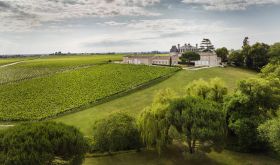
There was a time when wine drinkers affected to be a fan of either one style or the other. The stately restraint of wines from Europe’s classic wine regions contrasted strongly with the brasher but much more accessible charms of those from places such as California and the southern hemisphere and each camp had its own followers. I don’t think the market is by any means as polarised now.
And nor any longer is it easy to paint the world of wine in the broad brushstrokes of commercial success for the New World and doldrums for the Old. France has most conspicuously been losing market share in its all-important export markets and has had to find ways of disposing of surplus stocks, but California and, especially, Australia are suffering the effects of an embarrassing grape glut and shrivelling corporate profits. The international wine market is fatally over-supplied with both raw materials and individual producers – and the wine consumer has never had it so good. The multiple retailers have been driving prices down with their discounts and BOGOFs [buy one get one free] but new, small retailers with more interesting selections are mushrooming – in Europe anyway.
We can choose from wines made better than they ever have been and there is every sign that the range of grapes and styles available is at last widening with every vintage, as growers increasingly treasure indigenous so-called ‘heritage grapes’ and there now seems to be a palpable backlash against what once looked like a worldwide move towards making increasingly concentrated, alcoholic wines.
But is it still the case that there is a difference between the style of New World wines on the one hand and Old World wines on the other? It is certainly true that different parts of the world imprint their own character on the wines made there. Most California wines are just so chock full of sunshine that they almost taste sweet, for example, and many Australian reds have a telltale hint of eucalyptus or menthol in their perfume. But it is not true any longer that all New World wines are made in full-throttle style and all Old World wines are reserved and need bottle age.
The first release of one of Australia’s most admired winemakers, for example, S C Pannell Shiraz 2004 McLaren Vale (£26 Noel Young Wines of Trumpington) may be made from 90 year-old vines carefully selected by Steve Pannell on the basis of his years as head red winemaker at Hardys but the result at the moment tastes almost more like a young red bordeaux than a big, full-blown Aussie Shiraz, so classically has he styled this wine for the long term. (He has worked extensively in France and Italy.)
And Australia is now awash with other Shirazes made in the image not of dark purple essences of Barossa Valley dry-grown fruit but of the more haunting, paler charms of a Côte-Rôtie from France’s Rhône Valley. Clonakilla of Canberra was perhaps the prototype but there are scores of them now. Boston Bay Shiraz 2001 Port Lincoln (£17 Boutique Wine Company of Northampton) is one of the more successful I have tried recently while Yering Frog Shiraz Viognier 2005 Yarra Valley (£6.99 Majestic) is a bargain knock-off of the style – although it should be drunk immediately.
In South Africa, Boekenhoutskloof has been making deliciously ‘French’ Syrah for years – even calling it Syrah rather than by its increasingly popular Australian name Shiraz.
Chile is producing an increasing array of wines from this red Rhône grape, more often than not calling and styling them Syrah, but the most recent surprise is the emergence of some Sancerre-like Sauvignon Blanc and some extremely Alsace-like Gewurztraminer from a country that only a moment ago seemed to be producing nothing but Cabernet and Merlot. Fine examples of each of these respective styles are Montes Sauvignon Blanc 2005 Leyda and Cono Sur Visión, El Marco Vineyard Gewurztraminer 2005 Casablanca Valley (both £7.99 Majestic).
But the traffic is by no means all one-way. Just as Old World wine styles, techniques, trends and vine cuttings are having very obvious effects throughout the New World, the reverse is also the case. This is easily seen even somewhere as traditional as Bordeaux, where visitors to the region are suddenly being told proudly that wines such as the classed growth Pauillac Ch Clerc Milon and the well-made new St-Emilion Domaine de la Part des Anges, Clos des Rêves 2005 contain a proportion of Carmenère, an ancient Bordeaux grape variety for which Chile is now most famous. Similarly Bernard Magrez’s sales team has clearly been told to emphasize the old-vine Malbec content in his rather delicious new red bordeaux Ch Guerry 2005 Côtes de Bourg (available en primeur from Bibendum Wine) because Argentina has made Malbec a famous grape.
Bordeaux is also now making a host of wines heavily influenced by the helpfully labelled, fruit-forward styles that put New World wines on the map. Merchants Bay 2004 Merlot/Cabernet Sauvignon (£4.99 Waitrose) was the prototype way of selling red bordeaux as a New World wine but now we have Malesan 2004 Bordeaux (£5.49 Oddbins). This well-known branded claret now belongs to the same owners as this British chain of quirky wine stores. I could hardly believe my eyes and nose when tasting it recently. The wine is carefully labelled with the names of the Merlot and Cabernet Sauvignon grapes that go into it, and we are also told on the back label that the wine is ‘delicatement boisé’. Delicately oaked? I think not. The wine tastes as though it has been home to a truckful of oak chips.
But overall New World influences in Europe’s vineyards and cellars are far more benign. Australian-trained winemakers have done much to raise standards in co-operative wineries all over France, Spain and Italy. Higher up the scale virtually all European wine producers under 50 have personal experience of working in at least one and often several wine regions outside Europe and have forged firm relationships with their New World counterparts. There is now such a thorough blending of ideas and techniques that it is no wonder that New and Old World stereotypes are on the wane. And while many a French wine producer has invested in the New World, European wine regions are being invaded by non-Europeans too. The Mondavis and Gallos of this world made well-publicised forays into Europe. Jess Jackson of Kendall Jackson fame has his properties in St-Emilion and Tuscany. On a much more modest scale, Matassa (£22.50 Adnams of Southwold) in the fashionable Agly Valley in Roussillon is owned by New Zealander Sam Harrop and South African Tom Lubbe.
And anyway, Tom Lubbe’s homeland was making wine as long ago as 1652. Hardly a New producer surely.