
I never cease to be amazed by the extent to which wine prices are out of sync with quality. This is true of many arenas of course, but it may be exacerbated by the fact that with wine, few consumers feel completely confident of their preferences and buying choices.
In my recent Christmas selections, why on earth are the carefully crafted, delicious red and white Portuguese blends I highlighted less than £10 a bottle? Why are southern Rhône reds with many years of future development ahead of them easy to find under £15? And why is sherry still given away?
Wine lists are full of apparent pricing anomalies, especially those that specialise in famous names.
I’ve long maintained that there is no direct relationship between price and quality in wine but the point was forcefully made to me at two recent Italian tastings. The first, organised by UK importers Berkmann Wine Cellars, was a comparative tasting of three Cabernet blends: the Tuscan prototype Sassicaia; Antinori’s Guado al Tasso, made nearby; and San Leonardo, a wine inspired by Sassicaia but grown in Trentino on the way to the Dolomites in the north.
We tasted all three wines in vintages 2016, 2013, 2011, 2010 and 2007 – so a good, representative spread of vintages, wide enough to iron out seasonal quirks.
I hate to reduce wine to numbers but, for the purposes of comparison, I see that I awarded these totals out of 100 to the three wines: Sassicaia 88.5, San Leonardo 88 and Guado al Tasso 84.5. Yet the prices per bottle estimated by Berkmann were Sassicaia £275 to £325, San Leonardo £50 to £65 and Guado al Tasso £75 to £98.
It’s true that Sassicaia’s first commercial vintage was way back in Italian wine history in 1968, and the 1985 long ago justifiably achieved iconic status in the fine-wine world. (I have been lucky enough to taste it five times this century but one of my lifelong regrets is that I decided some time in the early 1990s that, at £30 a bottle on the list at Leith’s restaurant, it was too expensive to order.) Being first in the field, and succeeding, has made Sassicaia a trophy wine, with a concomitant effect on the price.
But the Guerrieri Gonzaga father and son have been making their refined bordeaux blend San Leonardo since the 1982 vintage, guided closely by Marchese Mario Incisa della Rocchetta, the man who developed Sassicaia on his San Guido estate in Bolgheri, whom they describe as their ‘oenological godfather’. So why is San Leonardo so much cheaper? It certainly shows how ineffectual my many articles over the last 10 years in praise of San Leonardo have been.
As for Guado al Tasso, it came on the scene only in the 1990s, once the Antinori had converted their Bolgheri estate, for long a source of inexpensive rosé, to Cabernet production. Yet perhaps the name and sales machine of the Antinori have helped to elevate its price above that of San Leonardo. I have just reread an article I wrote about Guado al Tasso’s winemaker Renzo Cotarella presenting several vintages of the wine in 2015. He confessed that the early vintages were too big and beefy and described as his goal exactly the sort of subtlety that San Leonardo has in spades.
The second Italian tasting that highlighted starkly how overpriced some wines are was a vertical of the white wine produced on the Ornellaia estate, also in Bolgheri as it happens. Ornellaia’s reds – also Cabernet blends, dating from the mid 1980s – are extremely impressive, last for decades and sell for three-figure sums per bottle. But the Ornellaia team decided to come to London to show off every vintage from the 2013 start of the white, made mainly from Sauvignon Blanc in tiny quantity. I’d never tasted it before and have to say that I was decidedly underwhelmed, feeling that most vintages would not last more than about five years. So I was amazed to learn that it is put on the market at the same price as the red, and then rapidly overtakes it. This is presumably the rarity effect, the same factor that inflates the price of Bordeaux’s most famous, most expensive, tiny-production wines Petrus and Le Pin.
The very small quantities made have also long been the justification for the price of grand cru burgundy, but nowadays there is the additional inflationary factor of fashion that has sent the price of all burgundy, not just the top slice, through the roof. In fact ask any wine merchant to name the most overpriced wines and they are likely to cite second- or third-tier burgundy, burgundy made by a lesser-performing producer. Even village wines, below premiers crus and grands crus in rank and potential, can cost a fortune now that the spotlight of fashion is shining so brightly on Burgundy’s Côte d’Or. And white burgundy prices are particularly crazy because recent production volumes have been so small.
My bugbear with burgundy stems from before the recent price rises. Why are Côte de Nuits reds routinely more expensive than their counterparts from the Côte de Beaune? Is it a hangover from the time when wines were admired for their concentration? There are so many beauties from the southern half of the Côte d’Or nowadays that are arguably a purer expression of Burgundy, especially in warmer vintages. (See also A journey through Beaune.)
Burgundy can provide obvious examples of the recent phenomenon of cultism in wine: individual producers who are suddenly so modish that the prices of their wines become almost unbelievable. In 2013 I was assured by a Paris-based wine lover that I absolutely had to taste the wines of Jean-Yves Bizot in Vosne-Romanée. Ever-obedient and curious, I managed to get an appointment in November 2014 to taste his 2013s, which I found highly variable even if his best wines were admittedly very good. But I didn’t find the wines so outstanding that I went back there year after year.
So I’m honestly staggered to see that his 2019 village Vosne-Romanée, not a premier or grand cru, is currently selling for £4,000 a bottle when most comparable wines are well under £100 a bottle (and used to be much cheaper before Burgundy became the wine world’s darling). And his Grand Cru Échezeaux 2019 is twice that. Other Burgundian recent superstars include Les Horées, Lamy-Caillat and Charles Lachaux of Arnoux-Lachaux.
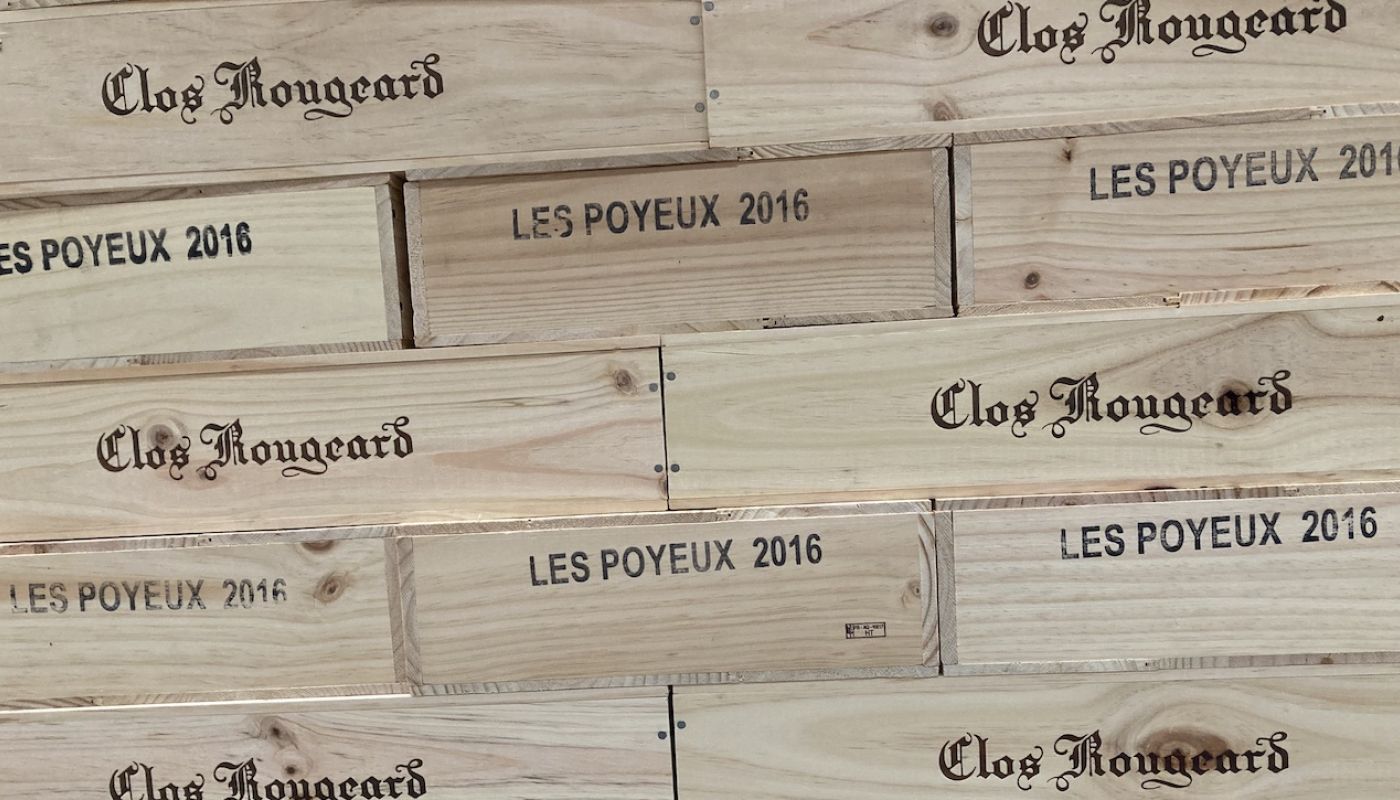
An early example of the phenomenon whereby a producer seemed to blow out of nowhere to stratospherical prices – far higher than its neighbours – is Clos Rougeard in Saumur-Champigny in the Loire. The estate became so desirable that it was acquired from the original family by the Bouygues family of French telecoms and construction fame five years ago.
Others that seem to have achieved overnight fame and prices to match include Domaine des Miroirs in the Jura, Edmond Vatan in Sancerre, Ulysse Collin in Champagne and L’Anglore in, of all places, Tavel in the southern Rhône.
Social media is of course the accelerator of the speed of the ascent of these prices, as well as the dramatically increased number of people worldwide prepared to spend serious money on wine. Perhaps we more ordinary wine lovers should take comfort in the fact that they are encouraged to channel their fortunes into relatively few directions.
Some underpriced categories of wine
In roughly ascending order of body or alcohol. Although there are always overpriced exceptions.
White
Muscadet
German Riesling below Grosses Gewächs level
South African wines
Cretan whites
Sherry
Red
Cru beaujolais (Chiroubles, St-Amour, Fleurie, Régnié, Brouilly, Côte de Brouilly, Juliénas, Chénas, Morgon and Moulin-à-Vent in roughly ascending order of body and ageability)
Chilean Pinot Noir
German Spätburgunder below Grosses Gewächs level
Bordeaux petits châteaux
Chianti Classico
Many central and southern Italian reds
Spanish old-vine Garnacha
Côtes du Rhône
Zinfandel
LBV port













