Giles Burke-Gaffney is buying director of fine-wine merchant Justerini and Brooks but he is finding it hard to source white burgundy, even from his customers’ reserves. ‘Everyone is drinking it so much earlier than they used to that it’s very difficult to find. Our customers still want to drink white burgundy but they don’t hold it nearly as long as they once did.’
The impetus to pull corks on a wine style traditionally designed for ageing has been the dreaded premox, or premature oxidation, the tendency of white burgundy in particular to turn brown and lose its fruit and appeal in a few years rather than a few decades. This phenomenon seemed to be at its worst from the mid 1990s to the mid 2000s, but it is still with us, to judge from a recent tasting of 29 white burgundies from the 2009 vintage. One wine, a Boyer-Martinot Meursault Charmes, was as dead as a dodo, and I found another four, possibly five, wines not as fresh as the rest.
This is a pretty shocking failure rate, and is confirmed by the results of the annual tasting in southern California organised and chronicled by wine collector Don Cornwell. His assessment of last year’s two-night orgy comparing 62 top 2009 white burgundies showed that nearly 13% were either oxidised or prematurely aged. I can quite understand those who want to minimise the risk of tired bottles by drinking them relatively early.
On the other hand, to really get the most from a bottle of serious white burgundy, typically costing £30 to hundreds of pounds a bottle, it makes sense to drink it with some bottle age because such wines can be pretty uncommunicative in youth. What you’re paying for is white burgundy’s ability to become more interesting with time.
It is because a network of growers in Burgundy actively want their wines to be enjoyed at full maturity that they co-operate with my fellow Master of Wine Sarah Marsh of The Burgundy Briefing to supply bottles for regular tastings of mature or maturing vintages for professional burgundy enthusiasts in London. This month it was the turn of 2009 whites, tasted in Justerini’s cellars.
This was a famously warm, copious vintage shaped by a hot August in which the acidity, generally thought necessary for long-lived white wines, was relatively low. Thanks to a dry summer, the grapes were unusually healthy (no need for sorting tables when the grapes arrived at the cellar) but they had pretty thick skins, from which the flavour is derived. This meant that in youth the wines tasted soft and concentrated – not necessarily great candidates for ageing. Certainly 2009 has not proved a great vintage for Burgundy’s northern outpost Chablis that depends on searing acidity in youth (while 2008 and especially 2010 are extremely successful in Chablis).
The recent tasting showed that now that warm summers are becoming increasingly common, we need to reboot our perceptions of Burgundian geography. (This may be true in many other wine regions too.) In the old days we thought of Meursault, Chassagne-Montrachet and Puligny-Montrachet, plus Corton-Charlemagne, as the source of all the finest white burgundy because it was in the best sites of these three villages of the Côte de Beaune that Chardonnay grapes most easily ripened. But climate change means that ripeness is no longer rare – indeed grapes may ripen too fast in very favoured spots and acid levels may fall to dangerously low levels. Fastidious vine-by-vine management in the vineyard may be needed.
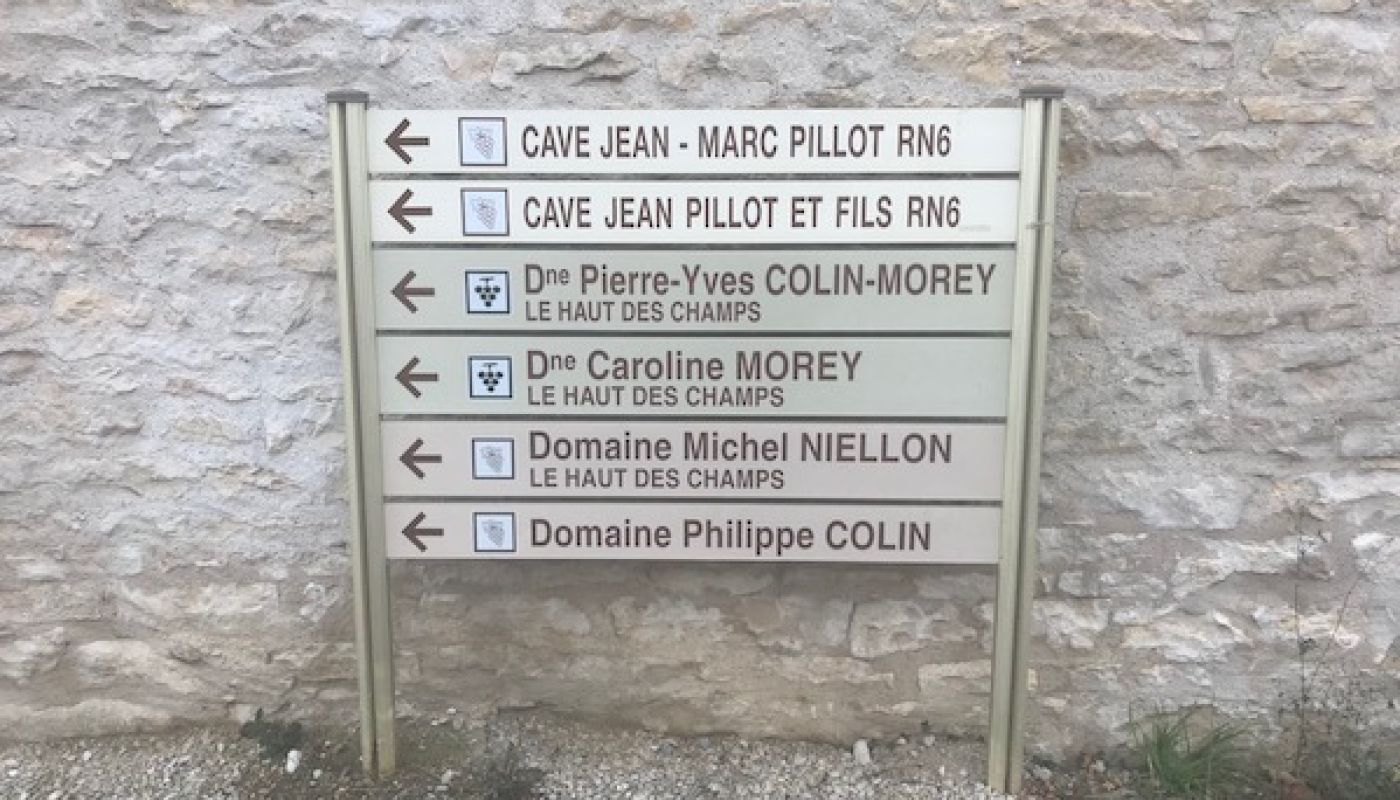
Higher villages of the Côte d’Or such as St-Aubin and Auxey-Duresses where vines used to struggle to ripen are now coming into their own, producing whites with enough ripeness but also refreshing natural acidity. St-Aubin’s star has been in the ascendant for some time – not least because of the exceptional examples made by Pierre-Yves Colin-Morey and Olivier Lamy of Domaine Hubert Lamy.
Our London tasting included wines from both these appellations that showed well, but it also included a fine example from the relatively new appellation even further up the ‘golden slope’ at its southern end, Maranges. In fact Sarah Marsh was surprised to find that the very creditable 2009 submitted by Domaine Chevrot for the tasting was not from the Premier Cru site La Fussière as expected, but was a straight Maranges Blanc. But it was from a superior plot of vines, admittedly, bought in 1988, according to Jasper Morris’s excellent Inside Burgundy, from Burgundy’s famously respected cartographer Sylvain Pitiot.
The very first wine in the tasting, which also showed well, was not even grown on the Côte d’Or but came from the so-called Hautes-Côtes, the cool, hilly hinterland of the most famous strip of vineyards. Bravo Caroline Lestimé of Domaine Jean-Noël Gagnard of Chassagne-Montrachet, who planted vines in an isolated, abandoned plot, Sous Éguisons, back in 2001. (She has another plot, Clos Bortier, planted in 2015 and coming on stream.) It is certainly a sign of the warmer and warmer times that the Hautes-Côtes, where land costs are a fraction of those on the Côte d’Or, is producing such good wine nowadays.
In general these 2009 white burgundies were much fresher than anticipated, causing at least one taster to wonder whether they had been acidified: had had acid added to them to make them taste crisper – a common practice in countries where temperatures have traditionally been much higher than in France. Acidification was long regarded by the French authorities as a lamentable New World phenomenon, but it has been allowed for some time and indeed some oenologists encouraged it in Burgundy in the 1990s. But those who took advantage of this in the first heatwave vintage, 2003, were generally disappointed by the results, whereas those who did not add acid found that the wines found a natural balance eventually anyway. Today, in the prevailing spirit of trying to make wines with as few additions as possible, acidification is relatively rare among the sort of individual domaines responsible for the 2009s we tasted. The freshness evident on the palate of most of the best of these wines was probably the result of clever choice of harvest date: picking when the grapes still had enough natural acidity, generally from around 5 September.
They may not have been the most complex white burgundies ever made, but many of these 2009s tasted as though they still had a way to go. In fact my suggested drinking window for my favourite, Domaine Bernard Moreau’s Chassagne Maltroie, was 2017 to 2030. Two of the three Chassagne Morgeots showed very well too, with suggested drinking windows to 2028 so that, on the basis of this tasting, Chassagne seemed the most favoured of the three classic white burgundy villages in 2009. But, as always with Burgundy, generalisations are dangerous.
WHITE BURGUNDY OUTLIERS
Some top performers outside Meursault, Chassagne-Montrachet and Puligny-Montrachet.
AUXEY-DURESSES
Dom Bernard Buisson-Vadot
Dom Guy Roulot
Benjamin Leroux
MARANGES
Dom Bachelet-Monnot
Dom Chevrot
ST-AUBIN
Pierre-Yves Colin-Morey
Dom Hubert Lamy
Dom Gérard Thomas
ST-ROMAIN
Chanterêves
SANTENAY
Dom de Bellene
Dom Françoise et Denis Clair
Le Grappin
Dom Jean-Marc Vincent
Tasting notes on Purple Pages of JancisRobinson.com. Stockists from Wine-searcher.com.