California is home to many highly successful winemakers and viticulturists, producing wines of great acclaim. That’s not a claim to make lightly, but few other wine regions encompass such diversity and attain such levels of quality, from vineyard to bottle, as California.
My own belief is that California’s success is built on the bedrock of the Central Valley. From the viticultural and oenological research and education at UC Davis and Fresno State, to the massive Central Valley wineries, this is the engine that secures California’s place in the global wine industry. Just as an NFL football team depends on the linemen to allow the quarterback to shine brightly, the Central Valley provides the majority of the approachable, easy-going style of California wine that allows Napa Valley and other coastal wine regions to capture attention and high prices for their wines.
It may be at the northern end of the San Joaquin Valley but the Lodi AVA can be regarded as the valley’s viticultural epicentre with its 110,000 acres (44,500 ha) of vineyards, 45% more than its closest California rival, Sonoma County, and almost 10 times the total area of the Côte d’Or’s vineyards. The swathe of vineyards surrounding the small city of Lodi provides 18% of all California grapes and 40% of all California Zinfandel. Lodi is largely responsible for the familiar soft, immediate style of California red wine.
When the pioneering Robert Mondavi, best known for his innovation in Napa Valley, was looking for a source of fruit that over-delivered in terms of quality for lower-priced wines in this style, the obvious choice was his childhood home of Lodi. Mondavi’s Woodbridge label – still the third-largest US wine brand – and Woodbridge winery were founded in 1979 in the Lodi suburb of Acampo.
Say what you will about this style, you can’t argue with its success in the US, the world’s biggest wine market, nor outside the US either. And it is no longer valid to dismiss Lodi as merely a source of high- volume, low-quality wines when such respected American wine writers as your own Elaine Chukan Brown and Alder Yarrow as well as San Francisco Chronicle wine writer Esther Mobley are noting the winemakers who have harnessed Lodi’s flavourful, balanced, old-vine fruit to make wines combining deftness of touch with sense of place.
But with Lodi’s status in California’s wine industry undergoing a deserved resurgence, it’s a matter of genuine concern that the acres of old vineyards found in Lodi are under threat of removal.

It’s common to consider vine age as part of the magic that separates great wine from the humdrum. There’s certainly a change to vines as they get older: more carbohydrate storage capacity through well-developed root systems and vine trunks leads to greater consistency of shoot growth and flowering, translating to consistency of berry and bunch size and composition of acids, sugars and other components too. Old vines can grow better grapes more often than not, and better fruit leads to better wine.
Quite apart from the wine quality aspect, old-vine cuttings also provide a basis for viticultural research and propagating new clonal material for future plantings. By extension, regions with significant populations of old vines are extremely valuable – and nowhere in California has the same breadth of old-vine vineyards as Lodi, particularly in its central sub-region of Mokelumne River AVA. It’s these vineyards that are now being pulled up, for lack of labour to maintain them or, more correctly, lack of profitable return when the cost and scarcity of hand-maintenance and hand-harvesting has to be paid for by the income raised through the vineyard’s yield.
Old-vine fruit from head-trained Lodi vineyards is shockingly underpriced in relation to the work needed to eke out a crop from an old vineyard. The lack of profitable margin for many grape growers results in drastic changes – old head-trained vines are pulled out, to be replaced by new vines on modern trellising systems that can be pruned, trimmed, netted and harvested by machine. While all of that is understandable in an age where profit drives daily life, what’s unforgivable is that by removing old vines, the industry is removing the current basis of good-quality fruit, the future of clonal material, the resources needed for effective viticultural study, and, quite simply, the soul of a vineyard region too.

The soul of a vineyard region sounds like a fanciful notion of course. But like many products, wine has an emotional quality. We drink wine because of what it says – either about us, or where it comes from – or what it is. We market wine using those ideas too, with evocative images of old vines standing gnarled and immortal under a sunset, be that in Bordeaux, Barossa Valley or Bierzo. And yet as an industry, we seem hell-bent on ripping out the old vineyards that we value the most, and very few wine regions in the world, let alone in California, have as many old-vine plantations as Lodi.
Wine regions are, more often than not, easy on the eye. Stellenbosch, Central Otago, Sonoma County, the Mosel, the Douro, Provence, Tuscany: the list of beautiful places where vines are grown is long and distinguished. To a wine lover used to the beauty of these areas, Lodi may not immediately register. It’s mostly flat and dusty, with the warmth of an endless California summer and a horizon that seems to stretch away under a massive sky. When I first went to Lodi, it reminded me of southern Africa, like Botswana or the north-eastern parts of Namibia – the same horizons, skies, heat, dust and unforgettable succession of blazing sunrises and sunsets.
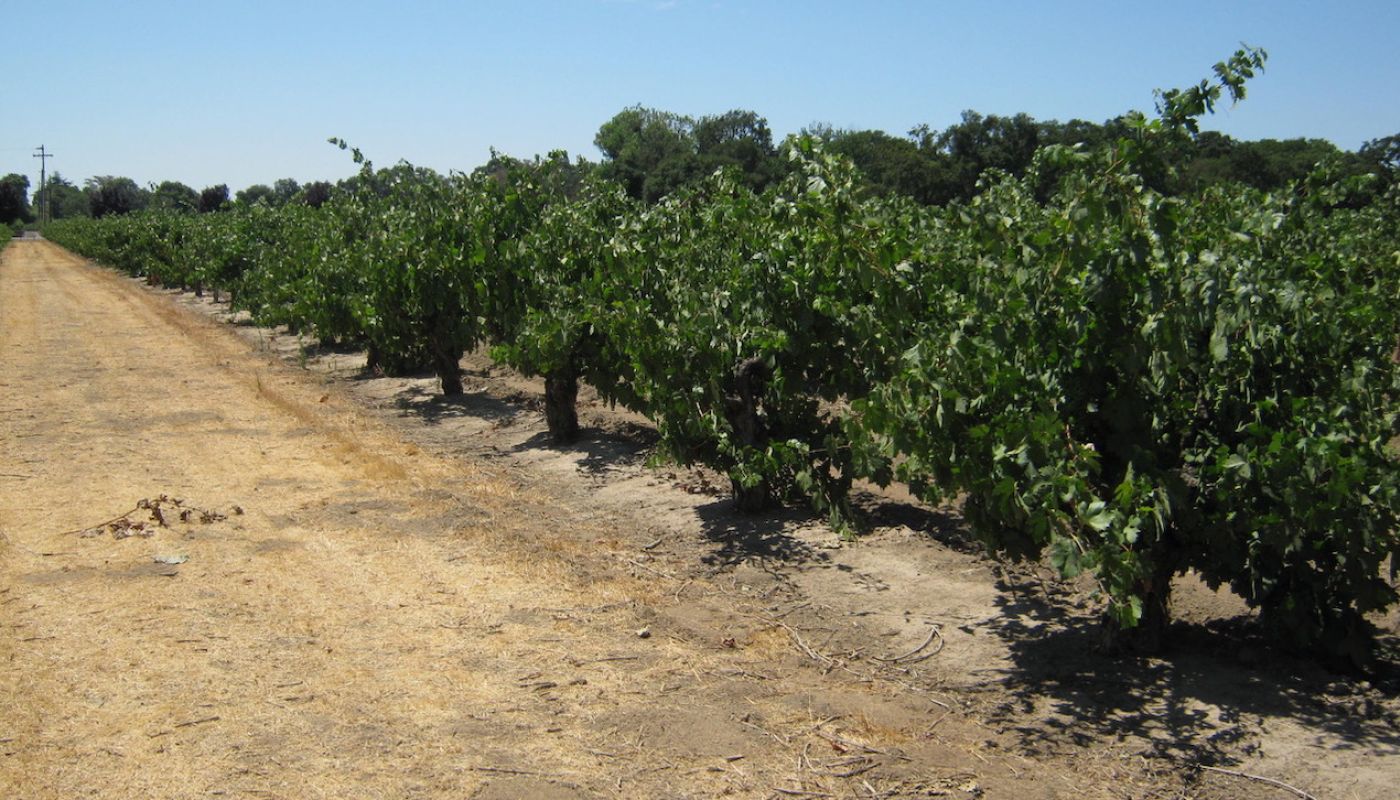
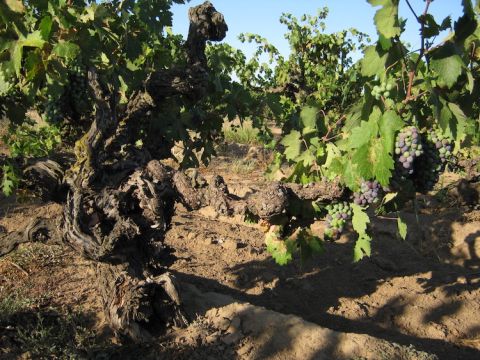
Like Africa, Lodi can get under your skin. After I spent three successive summers there, it certainly got under mine. What Lodi has that belies its immediate appearance, however, is water flowing down from the Sierra Nevada mountains, a cooling breeze flowing in from the Pacific coast through the San Joaquin Delta, and California’s innovative population, leading to a massive wine industry surrounding Lodi. No wonder that driving around Lodi means driving past vineyard after vineyard, dotted with wineries. Slowing down a car just for a moment reveals how many of these vineyards are ancient, revealing their age through the size of their trunks, their wide vine-spacing and the unfettered, random appearance that only head-trained bush vines have.
If you’re used to the parade-ground precision of Bordeaux, Burgundy or Champagne vineyards, Lodi looks gloriously unreconstructed. This is where Lodi’s viticultural soul lies, and California’s too – the ancient Zinfandel, Alicante Bouschet, Carignane, Charbono, Cinsault and Flame Tokay vines provided a solid base for the California wine industry. This is a historic wine region, with what may be the greatest extent of truly old vines that exist anywhere.
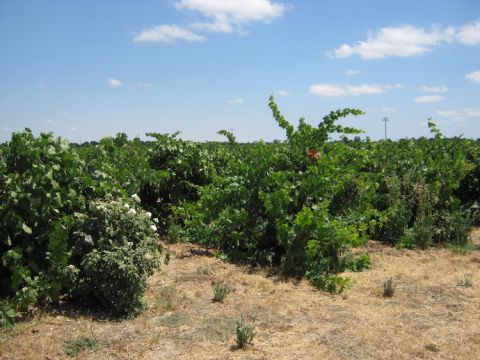
The extent of old vines in Lodi is barely known. It’s estimated that over 2,000 acres (810 ha) are pre-Prohibition-era Zinfandel vines planted on their own roots. There are many more acres of old vines planted before 1970, both grafted and ungrafted, including what’s thought to be the oldest Cinsault vineyard in the world, with 25 acres (10 ha) of vines planted in 1886. Reference is made to some of Lodi’s more famous vineyards in both the Old Vine Register and the Historic Vineyard Society listing, but these only scratch the surface. So many old vineyards in Lodi have their fruit subsumed into larger-volume blends and go unrecognised. Changes in ownership, ambiguous vineyard history, and the hard graft of making a living by selling fruit grown on old vines means that vineyard owners are often unaware of old vineyard register programmes and don’t necessarily have time to subscribe to them. But that doesn’t mean that these vineyards or their owners aren’t vital parts of the wine-industry food chain.
For my sins (actually, my wine epiphany) I did my Master of Wine dissertation in Lodi, starting out by surveying fruit from 42 different vineyards, all 50 years or older. Very few of these vineyards were named on wine labels or shared any glory. One Zinfandel vineyard, at 105 years young, was providing fruit for simple Zinfandel rosé; another, planted in 1947, provides fruit for one of the large brands making a good-value red Zinfandel found almost everywhere (I can find that wine here in Hawke’s Bay, New Zealand – about as far away from Lodi as possible). In so much of Europe, old vineyards are celebrated or specifically named (Vieilles Vignes etc), but it’s time to recognise and value the contribution of old vineyards in all wine regions, not just the classic ones, by recognising those areas such as Lodi that have contributed the most from fruit grown on old vines.
At last, there is now a campaign to save Lodi’s old-vine vineyards – Save The Old. Instigated by the estimable, knowledgeable and highly active Lodi Winegrape Commission, this campaign is dedicated to saving all of Lodi's old vineyards and re-evaluating the cost of farming these patches of land that produce an unforgiving, fickle crop.
As wine drinkers, at the very least, we should take note and support this campaign. This isn’t just a register of old vineyards; it’s a campaign that’s drawing attention to the very real risk to a particularly important, historic wine region that threatens – quite literally – to rip the guts of its production out of the ground. Losing old vines in Lodi would be to lose a vital part of California wine production forever. Where old vineyards have been lost in other wine regions, their loss is felt deeply in the years after, a prime example being South Australia’s government-funded vine-pull scheme in the 1980s. Local estimates in Lodi believe that 10% of old vineyards are being pulled out each year. We shouldn’t let this destruction happen in a wine region as important as California.
There are two very simple solutions to prevent this loss. One is to buy wines being produced in Lodi by people who love and farm the old vineyards. Within Lodi itself, wines from St Amant, The Lucas Winery, Acquiesce, Fields Family Wines, Markus Wine Co, M2 Wines, McCay Cellars, Bokisch Vineyards, Harney Lane and many others make more nuanced and balanced wines than have been associated with Lodi in the past. Look also at the wines being made from Lodi-grown fruit by a new generation of winemakers based outside Lodi. Alquimista Cellars, Turley, Bedrock Wine Co, Carlisle, Precedent, Arnot-Roberts, Sandlands, Birichino and others source fruit from specific Lodi old vineyards because where else can they find fruit that combines the magic that old vines provide at prices that remain far too modest? Certainly not from Napa Valley.
A second solution is to register with the Save The Old campaign. By registering for a campaign that’s little-known outside California, you will help create a groundswell of support from wine consumers and wine lovers that can help the Lodi Winegrape Commission persuade Lodi growers and wineries to continue to farm and register their old vineyards.
So, support Lodi’s old vineyards and support Save The Old. Support all old vineyards, for that matter. Their importance goes beyond pretty marketing pictures. Old vineyards and wines made using old-vine fruit represent the continuing, evolving heritage of the wine industry, something all wine drinkers want, which all of us appreciate every time we open a bottle.
Every major wine region has a vinous marvel that forms the basis of how we think about them – the gravel in the Médoc, the limestone in Burgundy, the qvevri in Georgia – and the old vineyards in California. Lodi is the epicentre of California old vineyards. To help save these vines, drink wine made from Lodi old-vine fruit, pay fair and reasonable prices for it, support Save The Old by registering, and don’t let this underrated, overlooked, evocative, complex and historic region go unloved.
















