
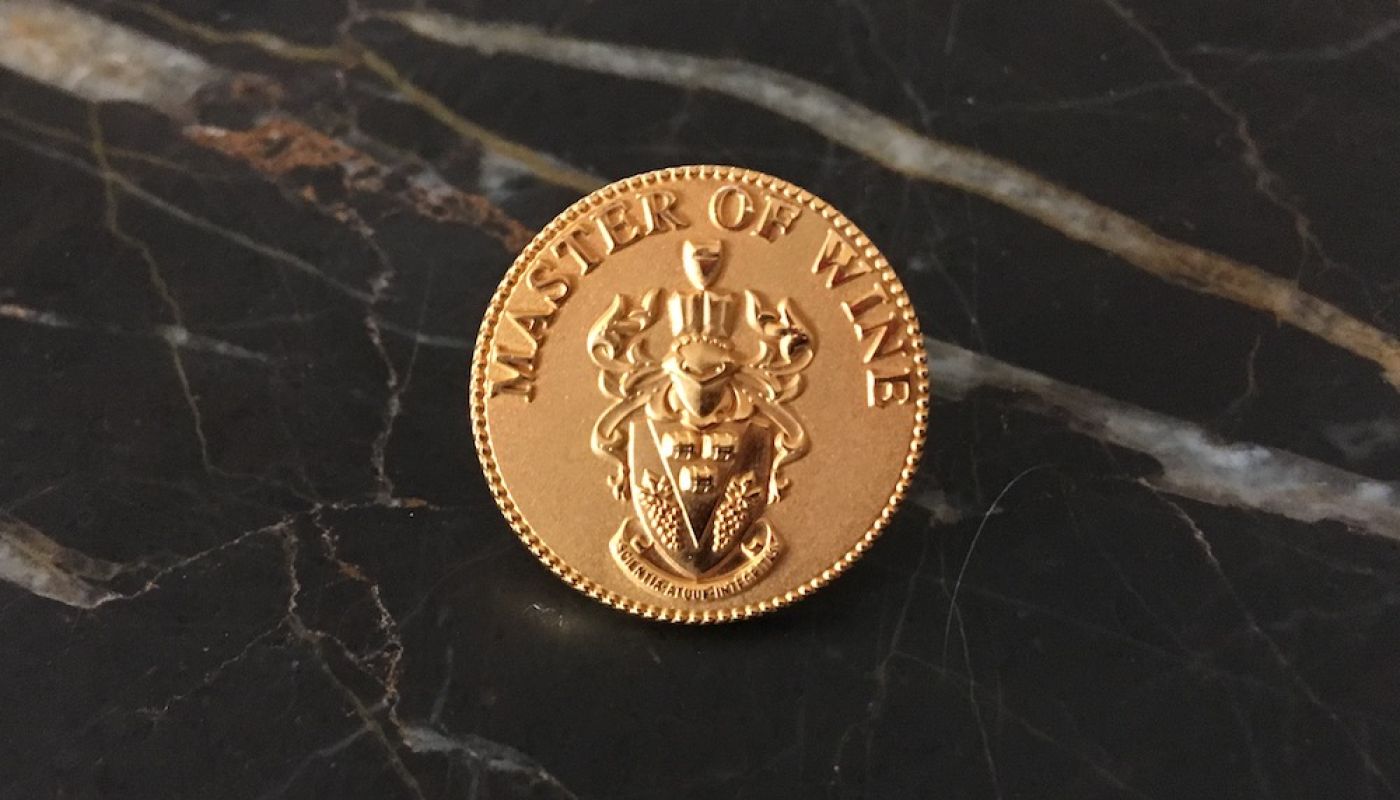
Last week, several hundred people demonstrated their extraordinary devotion to the study of wine by sitting the Master of Wine exams. Around 100 of them were taking the First Year Assessment, the first official hurdle on the journey to gaining the coveted MW pin, pictured. Over 160 candidates were taking the full exams – in London, San Francisco or Sydney – with the hope that the immense amount of work necessary to pass these notoriously challenging exams would pay off.
From Tuesday to Friday, the students sat three practical (ie tasting) papers and five theory papers – more than 20 hours of intense, sustained concentration that tests not just the knowledge of each candidate but their nerve, endurance, eloquence and wit.
The questions were released yesterday and are reproduced below, along with the list of wines. For anyone connected to the MW programme, these questions represent the pinnacle of global wine knowledge and are therefore scrutinised with equal parts academic exactitude and ghoulish Schadenfreude.
In brief, my reaction to the papers is as follows – written with the massive proviso that it's very easy to assess exams when you can see the wines! Even so, the tasting papers are not unkind. Four Chardonnays and two Rieslings should have made paper one relatively reassuring. The six single varieties are not necessarily obvious, but some should have been less esoteric than others. Paper two has several reds that look like bankers, and the triplet of Pinot Noirs should have been unmistakable for variety, if not exact origin. The first three pairs of paper three (two vintages each of Dom Pérignon, Ch Coutet and Taylor's vintage port) might even be described as fun, in relative terms, although the last three Rhône-related varieties are much tougher.
As for the theory papers, the questions conform to expectations: clearly and simply worded, yet requiring devilish depth of knowledge to answer effectively.
Is everyone ready? Then you may turn over your papers and begin. Good luck.
MASTER OF WINE EXAMINATION 2018
Practical papers
Practical Paper 1
Question 1
Wines 1–4 are all made from the same single grape variety.
With reference to all four wines:
a) Identify the grape variety. (20 marks)
For each wine:
b) Identify the origin as closely as possible. (4 x 10 marks)
c) Discuss quality with reference to winemaking techniques used. (4 x 10 marks)
Question 2
Wines 5–10 are all made from different single varieties and are from different countries.
For each wine:
a) Identify the grape variety. (6 x 7 marks)
b) Identify the origin as closely as possible. (6 x 8 marks)
c) Discuss quality with reference to winemaking techniques used. (6 x 10 marks)
Question 3
Wines 11–12 are made from the same single grape variety. With reference to both wines:
a) Identify the grape variety. (10 marks)
For each wine:
b) Identify the origin as closely as possible. (2 x 8 marks)
c) Comment on winemaking, quality and state of maturity. (2 x 12 marks)
Wines
1. Chardonnay, Yellowtail 2017 South East Australia 13%
2. Chablis, Grand Cru Les Preuses, Domaine William Fèvre 2012 Burgundy, France 12.5%
3. Red Shoulder Ranch Chardonnay, Shafer Vineyards 2015 Napa Valley, California, USA 14.9%
4. Hunting Hill Chardonnay, Kumeu River 2015 Auckland, New Zealand 14%
5. Semillon, Lovedale, Mount Pleasant 2011 Hunter Valley, Australia 10%
6. Viña Gravonia, Lopez de Heredia Viña Tondonia 2007 Rioja, Spain 12.5%
7. Ried Lamm, 1ÖTW, Gruner Veltliner, Schloss Gobelsburg 2016 Kamptal, Austria 13.5%
8. La Rocca, Soave Classico, Pieropan 2015 Veneto, Italy 13%
9. Old Vine Chenin Blanc, Raats 2017 Stellenbosch, South Africa 13.5%
10. Torrontés, Susanna Balbo 2016 Valle de Uco, Mendoza, Argentina 13%
11. Kiedrich Gräfenberg, Riesling Trocken GG, Robert Weil 2016 Rheingau, Germany 13%
12. Eitelsbacher Karthäuserhof Riesling Auslese, Karthäuserhofberg 2007 Mosel, Germany 9%
Practical Paper 2
Question 1
Wines 1–5 all come from classic Western European origins.
For each wine:
a) Identify the origin as closely as possible making reference to the grape variety(ies) used. (5 x 10 marks)
b) Discuss quality within the context of the region of origin. (5 x 8 marks)
c) What has the winemaker done to maximise quality and regional typicity during the winemaking process? (5 x 7 marks)
Question 2
Wines 6–8 are made from the same single grape variety.
With reference to all three wines:
a) Identify the grape variety. (15 marks).
For each wine:
b) Identify the origin as closely as possible. (3 x 10 marks)
c) Discuss quality with reference to winemaking techniques used. (3 x 10 marks)
Question 3
Wines 9 and 10 are made from the same single grape variety and come from the same region.
With reference to both wines:
a) Identify the grape variety and origin, as closely as possible. (20 marks).
For each wine:
b) Discuss the wine’s quality within the context of the region of origin. (2 x 8 marks)
c) Comment on the winemaking techniques used. (2 x 7 marks)
Question 4
Wines 11 and 12 come from the Americas.
For each wine:
a) Identify the grape variety(ies) used. (2 x 5 marks)
b) Identify the origin as closely as possible. (2 x 10 marks)
c) Discuss quality in relation to the region of origin. (2 x 10 marks)
Wines
1. Brunello di Montalcino Riserva, Lupi di Serene, Podere Le Ripi 2011 Tuscany, Italy 14.5%
2. Chambolle Musigny, Domaine Roumier 2014 Burgundy, France 13%
3. Côte Rôtie, La Landonne, Delas Frères 2012 N Rhône, France 13.5%
4. Château Clos de Sarpe 2000 St-Émilion, Bordeaux, France 13.5%
5. Baron de Ley, Gran Reserva 2011 Rioja, Spain 14%
6. Pinot Noir, Du MOL, 2015 Russian River Valley, California USA 14.1%
7. Pinot Noir, Felton Road 2016 Bannockburn, Central Otago, New Zealand 13.5%
8. Pinot Noir Reserve, Argyle 2015 Willamette Valley, Oregon, USA 14.1%
9. Syrah, Te Mata Estate 2016 Hawke’s Bay, New Zealand 12.5%
10. Syrah, Homage, Trinity Hill 2014 Hawke’s Bay, New Zealand 13.5%
11. Zinfandel, Old Vines, Ravenswood 2014 Lodi, California 14.5%
12. Cabernet Sauvignon, Viñedo Chadwick 2014 Puente Alto, Maipo, Chile 13.5%
Practical Paper 3
Question 1
Wines 1–6 are presented as pairs, 1 and 2, 3 and 4, and 5 and 6. Each pair is made by a different single producer.
For each pair:
a) Identify the origin, as closely as possible. (3 x 10 marks)
b) Comment on the key winemaking techniques used. (3 x 12 marks)
c) Identify the vintage(s) and consider its/their key characteristics. (3 x 10 marks)
d) Discuss the quality and maturity of the wines. (3 x 18 marks)
Question 2
Wines 7–9 all come from the same country.
For each wine:
a) Identify the origin as closely as possible making reference to the grape variety(ies) used. (3 x 10 marks)
b) Discuss the quality in the context of the region of origin. (3 x 10 marks)
c) Comment on maturity. (3 x 5 marks)
Question 3
Wine 10–12 come from different countries and different single grape varieties (minimum 90%) that are associated with the Rhône Valley.
For each wine:
a) Identify the predominant grape variety used. (3 x 5 marks)
b) Identify the origin as closely as possible. (3 x 8 marks)
c) Comment on the style, quality and commercial potential. (3 x 12)
Wines
1. Dom Pérignon, Moët & Chandon 1999 Champagne, France 12.5%
2. Dom Pérignon, Moët & Chandon 2009 Champagne, France 12.5%
3. Château Coutet 2002 Sauternes-Barsac, Bordeaux, France 14%
4. Château Coutet 2013 Sauternes-Barsac, Bordeaux, France 13.5%
5. Taylor’s Vintage 1985 Douro, Portugal 20.5%
6. Taylor’s Vintage 2009 Douro, Portugal 20.5%
7. Domaine de Chevalier Blanc 2010 Pessac-Léognan, Bordeaux, France 14%
8. Châteauneuf du Pape Blanc, Domaine Bousquet des Papes 2014 Rhône, France 13.5%
9. Saint-Romain, Sous le Château, Olivier Leflaive 2015 Burgundy, France 13%
10. Cinsault, Bechthold Vineyard, Birichino 2016 Lodi, California, USA 12.5%
11. La Garnacha de Mustiguillo, Toni Sarrión 2015 El Terrerazo, La Mancha, Spain 14%
12. Bandol, Château de Pibarnon 2013 Provence, France 14%
Theory papers
Theory Paper one – Viticulture
THREE questions to be answered, ONE from Section A and TWO from Section B.
Section A
1. Many wine regions can produce wines at a wide range of price points. Referencing at least two of such regions, compare and contrast methods of managing vineyards for high priced wines and low priced wines.
2. Referencing at least three wine regions, discuss how climate change is influencing grape growers’ viticultural practices.
Section B
3. Identify the most important trunk diseases in vineyards around the world. How can they be best controlled and managed?
4. Is the use of cover crops worthwhile in viticulture?
5. What is the role of pruning when managing an established vineyard?
6. Old vines have a mystique to them. What are the practical challenges and solutions to maintaining vineyards of old vines?
Theory Paper two – Vinification and Pre-bottling Procedures
THREE questions to be answered, ONE from Section A and TWO from Section B.
Section A
1. Examine the advantages and disadvantages of deliberate stem inclusion, or additions, during the winemaking process.
2. Compare and contrast winemaking techniques for 'high end' and 'entry level' Chardonnay in at least two regions.
Section B
3. Write concise notes on four of the following
- Lysozyme
- Mannoprotein
- CMC – Carboxymethyl cellulose
- Copper sulphate
- Ascorbic acid
- YAN – Yeast-assimilable nitrogen
4. What are the critical winemaking considerations for a producer of inexpensive off-dry still white wines?
5. Which winemaking decisions affect the ageing potential of a finished wine?
6. How and to what extent can a winemaker influence the textural profile of a wine?
Theory paper three – Handling of Wines
Answer TWO questions from the FOUR listed below
1. How does a laboratory analysis of a wine help the quality control manager make decisions at bottling?
2. Describe the options available for bulk transport of wine. What are the risks and benefits for each option?
3. What technical factors influence the choice of a closure for wine bottles?
4. Detail the advantages and disadvantages of the following methods of clarifying a wine:
a. Earth filtration
b. Pad filtration
c. Membrane filtration
d. Crossflow filtration
Theory paper four – The Business of Wine
THREE questions to be answered, ONE from Section A and TWO from Section B.
Section A
1. What have been the most important changes in global wine supply and demand in the past three years and what are their implications?
2. What are the advantages and disadvantages of private-label wines for wineries, distributors and retailers?
Section B
3. How important are environmental credentials in marketing wine?
4. Where are direct-to-consumer wine sales increasing and why?
5. There has been a great deal of innovation in packaging design and formats in other alcoholic beverage categories. Why has the wine industry been slow to follow suit? Should it follow?
6. Evaluate the extent to which scarcity/rarity is a positive attribute in wine marketing.
Theory paper five – Contemporary Issues
TWO questions to be answered, ONE from Section A and ONE from Section B.
Section A
1. Can wine be considered a social good?
2. How can the wine industry attract new consumers?
Section B
3. If a global disease were destroying all known grape varieties and you had the chance to preserve only two varieties – one white and one black – for humanity, which would you choose to save, and why?
4. Is elitism an inherent problem in the world of wine?
5. Do wine consumers need wine experts?













