12 April 2018 In recognition of the fact that this is the official Bordeaux primeurs week, during which Julia is working hard on your behalf in order to publish her hundreds of tasting notes the week after next, we're republishing this old, very old, article describing the logistics of this annual event in Bordeaux. This year apparently, Chinese participants are more numerous than British ones. This would have been unthinkable back in 2005 when this article was originally written.
15 July 2005 How long, I wonder, can Bordeaux go on attracting wine merchants and commentators from around the globe to taste phials of ink every April that they will actually take seriously? Particularly since so many producers in the rest of the world are now making great wines for which they do not expect to be paid until the wines are in bottle or, in some cases, ready to drink.
Last April the primeur (cask) samples of Bordeaux’s 2004s were even hazier approximations to what the finished wines are likely to taste like than usual, and that’s saying something. The harvest had been one of the latest in memory. The wines were stuffed with tannins. The winter and spring had been cold, so cold that some malolactic fermentations were still uncompleted and the wines in cask had evolved at a snail’s pace. And yet more than 4,000 otherwise sane people flocked to this busy city in south west France to see whether these wines were worth buying as futures a good two years before they are likely to be delivered.
Bordeaux is a beautiful city with handsome 19th-century balconied houses lining cobbled quaysides which once rung with the rumble of wine casks being rolled on to ships bound for northern Europe and beyond. But today the centre, the suburbs and the ring road are so choked by traffic that it can be extremely difficult to make any progress at all – let alone the hurtling between appointments required by those who descend for the primeurs season in early April every year.
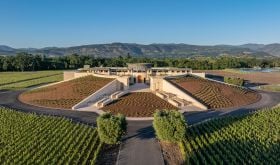
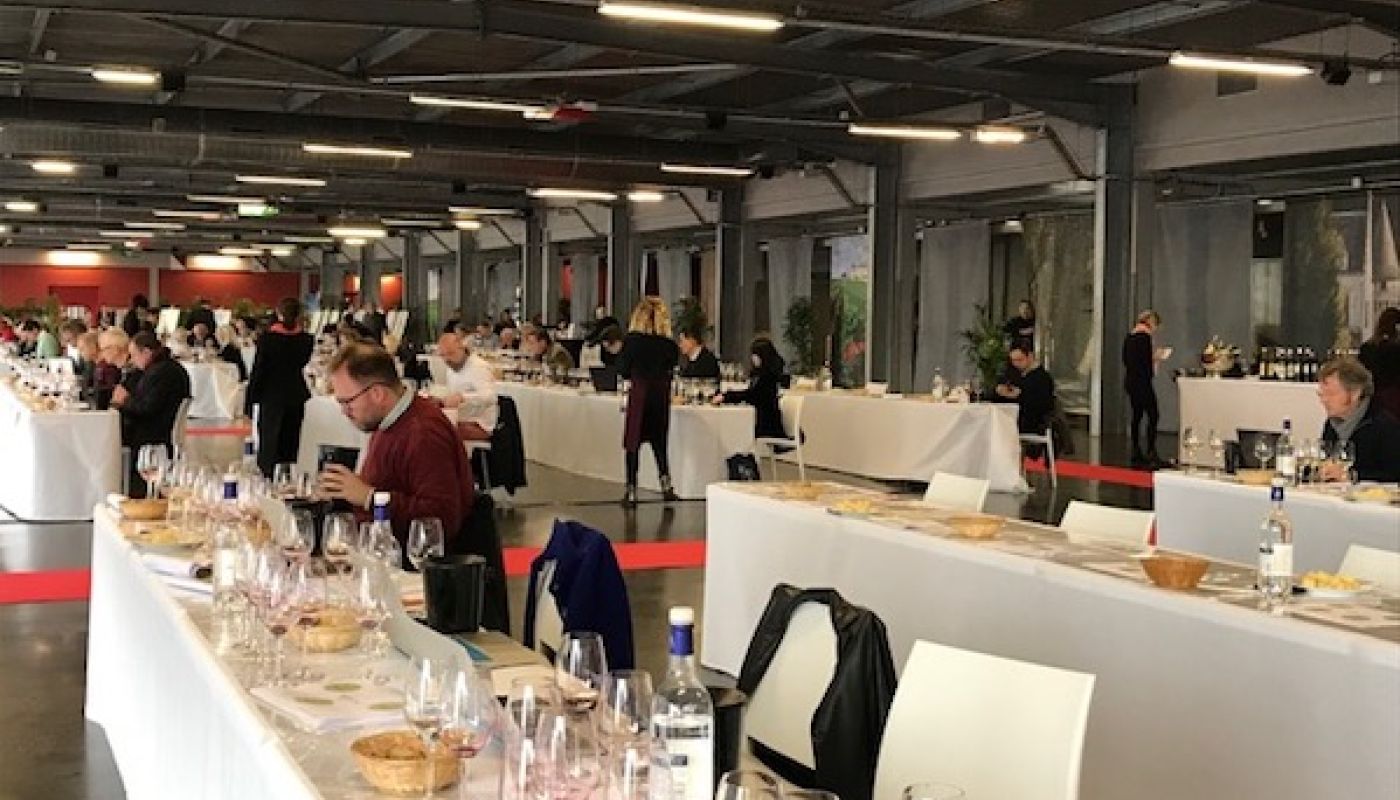
Despite the well-publicised problems associated with la crise viticole (the wine crisis) in France in general and in Bordeaux in particular, there are still thousands of wine producers trying to live off the monoculture that surrounds the city, and hundreds of them clamour for attention from all those buyers and press interested in the primeur campaign. There’s a core of really significant châteaux showing their wares, the majority of them shown at the large official tastings organised by the Union des Grands Crus de Bordeaux. These take place at different châteaux each year. It is not known whether hosting one of these scrums is considered an honour or a chore, but organising which one every visitor is expected to attend must without doubt be a nightmare. (See Bordeaux primeurs tastings shrunk for a 2016 update on this. UGC tastings for the press are no longer hosted by individual châteaux but now take place in Hangar 14, an old warehouse overlooking the Gironde, pictured above.)
Two very different circuits are arranged, one for hacks such as myself, divided into various presumed non-warring subgroups, and another for the trade – perish the thought that these two factions might meet. Accordingly the UGC sends us each an itinerary, telling us which château will be hosting the various themed tastings: Graves, southern Médoc, northern Médoc, right bank (St Emilion and Pomerol), and Sauternes (which far too many participants omit, wrongly believing that only red bordeaux is worthy of their attention).
The trade tastings tend to be very crowded – except at lunchtime of course – and noisy, with all those merchants swapping gossip and boasts. There is usually a shortage of spittoons and many participants give the impression of being more interested in the chat than the wines – some of them hardly making a note.
The media tastings are quite different. Because our living depends on words not deeds, we have to get those words down on paper or, increasingly, keyboard as diligently as we can. Indeed virtually the only sound to be heard at the press tastings I attended this year was the click of a dozen laptops being given a hard time. The key to being a top tasting host for the journalists is having a good supply of extension cables and adaptor boards; the 19th-century salons where most of these tastings take place tend to have a shortage of electric sockets, and heavy cables can look really strange when curled on a Louis XV escritoire. (The American commentators, by the way, tend to eschew these communal events, preferring to hole up in some hotel or merchant’s office and have the samples brought to them.)
Then there is the question of where to stay. The UGC offers journalists the possibility of staying with château owners, but states sternly that 'accepting accommodation implies sharing dinner with your host'. This can either be a distinctly uncomfortable and compromising social event or, as in the case of some of Britain’s most famous wine writers as they recounted the evening to me, being left to fend for themselves with a plate of cheese and one bottle of a particularly mediocre vintage between six of them. I prefer the geographical discomfort of staying in an anodyne hotel just outside Bordeaux. The drives are longer so the mornings start earlier. The room service is adequate rather than convivial. But at least there is no question of obligation, and absolutely no temptation to indulge in a dangerously late night. I can’t tell you how important it is to feel fresh in the morning when your first tasting is at 8am.
A few years ago the French wine writer Michel Bettane campaigned to introduce the possibility for journalists of tasting all these new wines blind, bless him, and what a pleasure that is. About 40 per cent of us tackle each group of wines without having a clue which particular wine we are tasting. I have discovered many a surprise, whether bargain or overhyped pretender, thanks to this system which presents the bottles swathed either in silver foil or cute, knitted sock-like things – maroon for reds and green for whites at my tasting of Graves at Ch Olivier this year. The other essential, apart from water, good quality glasses and a spittoon for each seated taster, is bread. Not just because wine, especially embryonic Cabernet Sauvignon, makes you appallingly hungry, but to wipe the disgusting evidence off the teeth.
We all know it is bad for our gnashers to brush these purple stains off immediately after tasting when the enamel is at its most fragile, but I am told it is ok to wipe, so wipe I do, even though my tongue tends to remain blackened. (Nick bought me a tongue scraper last Christmas; I’m sure some health hazard is implicated in this instrument.)
Speaking of health hazards, there is the small matter of taking to the wheel after these tastings. Their saving grace is that the wines are far too young for us to be tempted to drink them, but even if one is stone cold sober, it can be quite a challenge to fit in all the necessary appointments after the main tastings. The sad truth is that the first growths and far too many other château owners think they are too grand to participate in the official UGC tastings, so we all have to set up additional appointments at the likes of Chx Lafite, Latour, Mouton, Margaux, Haut Brion, Pichon Lalande, Léoville Las Cases, Cos d’Estournel, Montrose, Ausone etc etc to fill in the gaps. (2018 addition: the number of properties that have to be visited is increasing every year.) This means that in the course of a week, we are constantly crossing the same people in the waiting room or tasting room, and cursing them if they take too long because we are already late for the next appointment.
It is on this hectic afternoon circuit that journalists occasionally meet merchants. I think we all wonder why we do it. And on my plane back from Bordeaux to London this year, when at least half the passengers were wine professionals, we wonder whether what we are doing is really sensible and safe. I can only conclude that everyone must go to Bordeaux each spring because they enjoy it – but I suspect that an increasing proportion of participants are there for the socialising rather than for the wines themselves, as the sluggishness of the 2004 bordeaux campaign suggests.
Read more, including tasting notes on hundreds of 2004 bordeaux, on Purple Pages.