
See our Languedoc tasting notes
Wine pricing is all over the place, and has never been a sure guide to quality. But this is particularly true about French wine. Certain regions – notably Bordeaux, Burgundy and Champagne – manage to command the attention and sky-high prices of oligarchs and well-heeled investors, whereas others – Muscadet and Beaujolais spring to mind – are chronically underpriced.
But no-one could accuse the wines of Muscadet and Beaujolais of being wildly varied. These are one-grape regions with a certain similarity of terrain. The variation available is qualitative rather than stylistic. There is one French wine region, however, whose wines are dramatically underpriced, and which produces a vast array of different wine styles.
The Languedoc makes red wines that can vary from relatively delicate Pinot Noir grown on high ground; lively light and fruity reds based on Cinsault; racy answers to red Bordeaux from Cabardès; and all manner of dense, terroir-driven expressions of the local geography from various combinations of Syrah, Grenache, Mourvèdre, Carignan and other local grapes. In the far east of the Languedoc, wines can be remarkably like Châteauneuf-du-Pape but at much lower prices. Rosés vary from what are essentially pale reds through to the most delicate vins gris.
Until relatively recently Languedoc whites were distinctly less exciting. They used to be either extremely tart and neutral or a bit too heavy and oaky, but now the region produces a wide range of thoroughly respectable and satisfying dry whites. Today these are not just the varietal bottlings that used to characterise the wines most exported from the Languedoc – Chardonnays and Viogniers in particular – but all sorts of interesting blends of such southern white wine grapes as Grenache Blanc, Marsanne, Roussanne, Bourboulenc, Clairette, Maccabeo, Terret and Rolle/Vermentino, each with their own very distinct personality but, blended together in various combinations, they can be satisfyingly complementary ingredients.
The region also has its own great-value traditional method fizz, both Blanquette de Limoux and the more champagne-like Crémant de Limoux made in the foothills of the Pyrenees. It also produces various worthwhile sweet wines, not least from the small-berried Muscat grapes that are grown all over the Languedoc (and Roussillon to the south is one of France’s prime sources of good-value sweet wine).
The prospect of such a wide array of wine styles was, I must confess, one of the things that attracted me to the region when we decided to buy a house there back in 1989. I had initially fallen in love with the French countryside in a small village in Burgundy but, however much I love burgundy, I suspected I would find a unvaried diet of expressions of Chardonnay and Pinot Noir, however fine, a little restrictive (and expensive).
In 1989 Languedoc wine could not have been accused of being expensive, nor fine. The majority of production was pretty mediocre stuff from the plains with just a few bright lights shining in the hills.
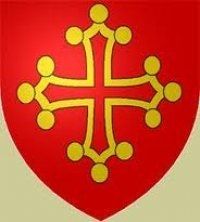
Today the situation is reversed. Over our two-plus decades in the land of the Cathars (the cross of this rugged sect above left) there we have watched the landscape be transformed before our eyes. Every summer we arrive to find cereals, olives, sunflowers or melons growing where once there was an uninterrupted vinescape. The European Union’s efforts to decimate what had become a embarrassing surplus of poor-quality wine really do seem to have been effective. The number of vignerons in the Languedoc-Roussillon plummeted from 43,000 in 2000 to 25,800 in 2010, with most of those driven or bribed off the land, or at least out of viticulture, being those who had been growing high-yielding vines on the plains and taking their less-than-inspiring produce to the local co-op. The last decade has seen a shrivelling of the number of wine co-ops with many closing and/or amalgamating with neighbouring operations.
But at the other end of the quality scale, the picture is much rosier. As throughout the world of wine, quantity has been swapped for quality and there seem to be more and more ambitious, well-trained smallholders in the higher, better vineyards of the Languedoc determined to make characterful wine. Many of them have been attracted by the relatively low land prices there – certainly much lower than in wine regions with a reputation, particularly Burgundy and Champagne. (There are still outlying parts of Bordeaux where land is relatively cheap – but then so are the resulting wines.)
There is also the fact that the climate in this southern swathe of France is attractively Mediterranean and fairly dependable. I cannot remember any disastrous summer in our 24 years there, even if there is considerable variation between vintage years.
But the sad fact is that there are just so many small producers in the Languedoc, it can be very difficult for any of them to make much of an impact on export markets, or even the domestic market. Most importers of any size tend to prefer to deal with the handful of big négociants who specialise in the Languedoc such as Les Grands Chais de France, UCCOAR/Val d’Orbieu, Jeanjean, Foncalieu, LGI, Skalli and Gérard Bertrand (whose quality is generally very sound) rather than go to the bother of sourcing small quantities of wine at the end of an unpaved road, however exciting the wine.
Fortunately, there is a handful of importers specialising in the Languedoc but, I would argue, there should be far more, for there are pearls there to be harvested – and at great prices. These are the sorts of wines that France does best: hand-made, dry-grown wines shaped by the particularity of the terrain in which they are grown, often from mature, low-yielding vines.
Admittedly Languedoc geography is far from a piece of cake. In the west there are the old appellations Fitou, Corbières, Minervois, St-Chinian and Faugères but those names themselves are not enough to guide you straight to fine wine. There are cheap, uninspiring versions of, particularly, Corbières and Minervois from the big bottlers. Best to head for what looks like a small, individual domaine.
The eastern Languedoc is arguably even more difficult to navigate. Interesting-looking producers using the appellation Languedoc with such suffices as Terrasses du Larzac (especially), Pic St-Loup and Montpeyroux are usually worth a punt. But now there is the pan-Languedoc-Roussillon IGP (Indication Géographique Protegee, protected geographical entity) Pays d’Oc, a bit like the old Vin de Pays d’Oc, which a number of even quite ambitious producers seem to be using, even though its regulations are less strict than those of the traditional appellations.
The expression Sud de France is often found on relevant bottles but I find myself frustrated by how difficult it is to provide a shortcut between you the wine lover and all these great producers. Imagine how they must feel.
Tasting notes on Purple Pages of JancisRobinson.com may help.
UK merchants with a worthwhile selection of Languedoc wines
Aldeby Wine
Aubert & Mascoli
Cambridge Wine Merchants
Les Caves de Pyrène
H2Vin
HG Wines
Hourlier Wine
Jeroboams
Roberson
The Sampler
Sanglier Wines
Leon Stolarski
Stone Vine & Sun
Terroir Languedoc
Vine Trail
The Wine Society
The lovely Languedoc
• 5 min read
This is a longer version of an article also published in the Financial Times.


选择方案
会员
$135
/year
适合葡萄酒爱好者
- 存取 296,465 条葡萄酒点评 & 16,124 篇文章
- 存取《牛津葡萄酒指南》及《世界葡萄酒地图集》
- Access askJancis, our AI wine assistant


核心会员
$249
/year
适合收藏家
Everything in “Member”, plus:
- Early access to the latest wine reviews, 48 hours in advance
- Early access to the latest articles, 48 hours in advance
专业版
$299
/year
供个人葡萄酒专业人士使用
- 存取 296,465 条葡萄酒点评 & 16,124 篇文章
- 存取《牛津葡萄酒指南》及《世界葡萄酒地图集》
- Access askJancis, our AI wine assistant
- 提前 48 小时获取最新葡萄酒点评与文章
- 可将最多 25 条葡萄酒点评与评分 用于市场宣传(商业用途)
商务版
$399
/year
供葡萄酒行业企业使用
Everything in “Professional”, plus:
- 可将最多 250 条葡萄酒点评与评分 用于市场宣传(商业用途)
- Access to submit wines for review
- Offer memberships to your employees and manage them from a single place
- API access available for an additional fee
More Free for all
Free for all
路边餐馆的乐趣,作者:查理·吉奥根 (Charlie Geoghegan)。照片由杰森·洛 (Jason Lowe) 拍摄。...
Free for all
首个跨大西洋合资企业作品一号 (Opus One) 涉及20世纪葡萄酒界的标志性人物。本文的一个版本发表于《金融时报》(Financial...
Free for all
突发新闻!老藤登记处 (The Old Vine Registry) 正在打破记录、突破障碍并开辟新天地。现在,老藤登记处标识正式推出。...

Free for all
从世界各地挑选 27 款霞多丽 (Chardonnay) "标志性"酒款,呈献给 18 位认证品鉴师……本文的一个版本发表于金融时报 。另见...
More from JancisRobinson.com
Tasting articles
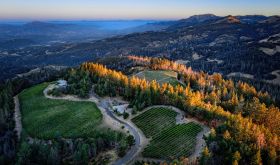
历史悠久的葡萄园、高海拔、火山土壤和有机种植的结合使这个鲜为人知的 AVA 脱颖而出。上图为 拉塞特酒庄 (Lasseter Winery)...
Tasting articles
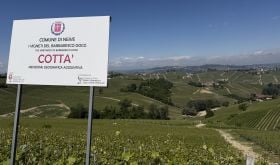
来自热浪年份的诱人清新且易饮的葡萄酒。索蒂马诺 (Sottimano) 从科塔 (Cottà) 特级园(如上图所示...
Tasting articles
来自 2022 年份及更早年份的葡萄酒证明了巴巴莱斯科的陈年潜力。 巴巴莱斯科 2022 年份的晚期发布打破了两个误解—...
Wines of the week
一款由前化学家以精确态度和葡萄藤语者灵魂酿造的绿酒 (Vinho Verde) 白葡萄酒。售价 23 美元起,22 英镑起。上图为拉莫斯...
Tasting articles
25种在炎热中保持清爽的方式。 上周欧洲经历了有记录以来最严重的6月热浪;本周,美国东海岸各城市将打破高温记录。在这种炎热中喝什么?水...
Tasting articles
一场垂直品鉴将詹西斯 (Jancis) 带回这款标志性加州红葡萄酒开创性的起点。在伦敦帕尔摩尔街 67 号 (67 Pall Mall...

Don't quote me
遮蔽葡萄藤并提供酒桶的森林风土与葡萄园及其葡萄酒相互关联。上图为托尼·比什 (Tony Bish) 在 法国中部的特龙赛 (Tronçais...
Don't quote me
这个月逐渐演变成一个充满取消和药物治疗的月份。 一些年长的读者可能还记得已故的罗宾·克尼克 (Robin Kernick),他是科尼与巴罗...