
On Thursday 1 December at the headquarters of the Wine & Spirit Education Trust in London SE1 Monty Waldin and Dr Richard Smart will debate the motion 'The UK wine trade should promote organic and biodynamic wines'.
Monty will be well known to Purple pagers. He has practised, consulted on and written several books about biodynamics and is a frequent contributor to our Members' forum as well as writing a recent series of profiles on New Zealand wine producers. His bio and views on this topic appear below.
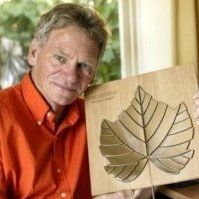
Richard Smart (pictured) is one of the world's best-known viticultural consultants and was viticultural editor of the first edition of The Oxford Companion to Wine. His bio and main views also appear below.
The debate is open to anyone who buys a ticket in advance, and we are told that 'audience involvement is guaranteed'. The debate will be chaired by Antony Moss MW, WSET's Director of Research and Development who won the overall trophy for this year's most outstanding new Master of Wine (won by our very own Julia Harding in 2004) at last week's award ceremony.
WHAT The Great Grape Debate
WHEN 7-9 pm Thursday 1 December
WHERE Wine & Spirit Education Trust, 39-45 Bermondsey Street, London SE1 3XF
HOW MUCH £35 per person
HOW Book here
THE PROTAGONISTS
Monty's bio
Monty Waldin sensed when working as a teenager at a conventionally run Bordeaux château that the more industrial sprays were applied to the grapes, the more additives and other corrective treatments were needed subsequently in the winery. When Monty began wine writing in the mid 1990s he became the first wine writer to specialise in green issues. Monty's first book, The Organic Wine Guide (Thorsons, 1999), published while Monty worked on a biodynamic vineyard in California, became Britain's Wine Guide of the Year. This was followed by the multi-award-winning Biodynamic Wines (Mitchell Beazley, 2004). Monty drew on his winemaking experiences in Chile for Wines of South America (Mitchell Beazley, 2003), winner of America's prestigious James Beard Book Award.
In 2007 while living in France's Roussillon, Monty was the subject of Channel 4's Château Monty, the first ever TV documentary filming biodynamic winemaking from pruning to bottling (broadcast 2008). His other books include Discovering Wine Country: Bordeaux and Discovering Wine Country: Tuscany (both Mitchell Beazley) and Château Monty (Portico, 2008). Monty has contributed to Hugh Johnson's Pocket Wine Guide and Tom Stevenson's Wine Report and wrote the entries on organics and biodynamics for The Oxford Companion to Wine (ed Jancis Robinson MW, 2006). He also contributed to BBC radio and television;⁞ and to wine, travel and environmental newspapers and magazines in several countries including Decanter, Star & Furrow, Biodynamics (USA), and London's Evening Standard.
Monty's view
We all seem to agree that wine should be judged on what it tastes like first and foremost. I believe and always have done that to get the tastiest, healthiest grapes, vineyards should practise what some refer to as 'garden quality farming'. In short, wines which taste as wholesome and refreshing as if you grew them in your own back garden with minimal intervention. Nature seems to give her best when stewarded not enslaved. I think organic and in particular biodynamic farming has this ideal of minimal intervention which is now being achieved by a small minority.
The fact is that biodynamic vineyards not only aim to take less out of the land but they are trying to put back more than they plunder, by making each vineyard a self-sustaining living organism on which the farm gate should stay shut. This means relying on one's own livestock for compostable manure, weed control and even traction for spraying; and utilising local medicinal plants and minerals as ways of stimulating the vine's own immune system without leaving costly and damaging residues in the soil for future generations to clean up. Minimising off-farm inputs makes sense for the vines, and for consumers wishing to drink wines expressive of their site (terroir) and for the wider environment. And although biodynamics seems arriviste, it was the first 'green' farming movement. Perhaps the fact that we are now so conscious of how finite some of the resources humans in general and winegrowers in particular rely on has contributed to its recent notoriety or popularity, depending on one's view.
Richard's bio
Richard Smart claims he is not as old as he looks, but he has trodden in many of the worlds' vineyards in over 30 countries. Currently he is living at Newlyn in Cornwall, but continuing to travel as a vineyard consultant.
Born in Windsor near Sydney, Richard's initial degree was in Agricultural Science at Sydney University. His viticulture career began with research at Griffith, New South Wales, and he was one of the first scientists in the world to study the newly developed drip irrigation. There he developed an interest in sunshine, grapes and wine, which is still his principal area of expertise.
In the 1970s he had the opportunity to do PhD studies with Dr Nelson Shaulis at Cornell University, considered by many as the father of the then new technique of 'canopy management'. This has been a constant theme of Richard's research and writings over the years, and has led to significant gains in wine quality in many vineyards of the world. He has taught at Roseworthy College in Australia, and was Government Viticultural Scientist in New Zealand in the 1980s. More recently he has been an international viticulture consultant based in Tasmania, Australia, where he has also researched Pinot Noir quality.
Richard has written much about viticulture, over 350 articles and papers, and he has been Viticulture Editor for the Oxford Companion to Wine. He has won several academic and sector awards, including Decanter magazine's '50 Most Powerful Names in Wine' in 2005 and being inducted into the New Zealand Wine Hall of Fame in 2006.
Richard's view
As might be expected from someone with four degrees in science, my approach to viticulture is essentially based on conventional science, and not emotional 'black magic', which I consider is a weapon used in the organic/biodynamic debate. My current concern is that the wine press in particular is giving too much attention, and hence credibility, to the organic/biodynamic movement, and thus many conventional producers feel obliged to convert for marketing reasons.
I also claim environmental qualifications. I am the only person I know who has been sacked for taking an environmental stance, and my canopy management research has helped create canopy microclimates which help resist fungal diseases and so reduce reliance on chemicals.
I believe that organic/biodynamic producers considerably overstate the benefits of their approach to wine quality, consumers' health and the environment. I believe that consumers, producers and the environment are protected from malpractice by strict laws and testing using international protocols which are science-based. Things have changed a lot since Rachel Carson's book The Silent Spring, which alerted the world to the environmental problems of indiscriminate use of agricultural chemicals.
I will challenge audience perceptions about environmental degradation in vineyards, and argue for more rational approaches and judgements. I will strongly argue against any wine trade support for organic and biodynamic wines; in my opinion they are no more deserving than are wine producers with first children who are left-handed.













