
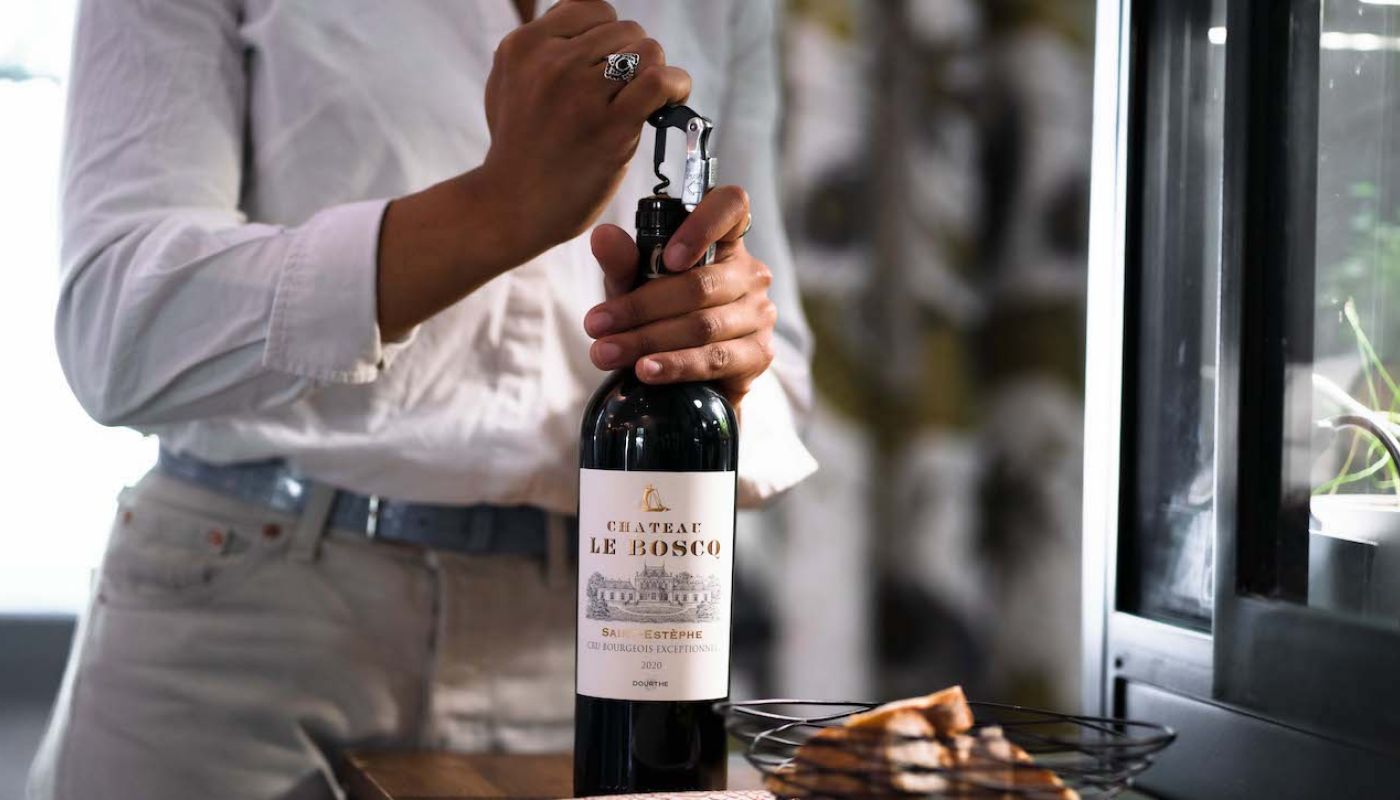
I wonder how many bottles of red bordeaux will grace Christmas dinner tables this weekend? I generally recommend a softer style of wine – one based on Pinot Noir perhaps – to go with turkey and its generally sweetish accompaniments – although the chewier, drier style of red bordeaux can go well with something more savoury such as roast beef, or even roast goose.
But what is happening to red bordeaux?
It is generally agreed that its quality has never been better. At the top end of Bordeaux’s carefully carved hierarchy, the so-called classed growths, château owners have made so much money that they can afford to invest in every last little fine-tuning operation, whether it be an optical sorter that rejects grapes with the slightest imperfection or simply choosing to blend only the very best vats into the main wine, known as the grand vin, each year. At the bottom end, the warming climate means that even if the property is located in one of Bordeaux’s less propitious areas, the grapes nowadays ripen fully, so lean, mean wines are a thing of the past.
But, just as in so many societies today, the gap between top and bottom has been widening – and so disastrously for those producing wine at the bottom end that they are calling on the French government to pay them to uproot up to 15,000 ha (37,000 acres) of the least profitable of Bordeaux’s 110,000 ha (272,000 acres) of vines.
It’s not just that the price of Bordeaux’s most basic wine has been falling (one grower is suing two negociants for buying his wine at 'predatory prices'), so have land prices. While a hectare of vineyard with a famous name such as Pauillac attached has shot up to €2.8 million according to the (generally conservative) estimates by the official French agricultural land agent SAFER in a comparison of 2020 with 1991 prices, the price of a hectare of vineyard only a few kilometres away in the much less glamorous appellation Médoc has actually fallen over that period, to just €40,000.
In a feisty article in the trade publication Meininger’s Wine Business International, British wine-trade commentator Robert Joseph argues that the blame for this lies with the producers at the bottom end who have failed to build brands, unlike their counterparts making wines with names as famous as Lafite, Mouton, Lynch-Bages and Montrose. He writes about the malcontents at the bottom of the ladder, ‘the people they should be angry with are themselves and the négociants [merchants], for failing to show the skill their Champagne counterparts have in creating the brand value their wines deserve. If Bordeaux had a few big brands doing the job Moët & Chandon and Veuve Clicquot et al have done for their region, Bordeaux as a whole would be in a far better state financially than it is today.’
But I’d argue that there are warning signs that even the most famous producers should be heeding. Fine-wine marketplace Liv-ex, with the trade publication Drinks Business, compiles an annual list of the most powerful brands in fine wine. This year, for the first time ever, there are no wines from Bordeaux in the Liv-ex top 10, and the number in the top 100 has fallen from 53 in 2017 to 25 in 2022. (Burgundy has been the big beneficiary, climbing from 24 to 39 over the same period.)
Bud Cuchet co-founded the London fine-wine traders Fine + Rare. He couldn’t help noticing the falling interest his customers had in Bordeaux and the contrast between producers in, say, California, where direct relationships with consumers are so important. Bordeaux producers meanwhile have basically only one customer, the Bordeaux Place, a tight-knit network of wholesale merchants who do all the selling for them. So after he left Fine + Rare in 2017, he set up a company designed to create personal links between Bordeaux château owners on the one hand and influencers, consumers and restaurant wine buyers on the other. He went to Bordeaux to present the results of his initial research, which showed how poorly Bordeaux is represented on important British restaurant wine lists, but such was the indifference of the Bordelais that he gave up.
The Bordeaux classed growths came to London en masse in November to present their 2020s now that they have been bottled (see our recent articles on the whites and right-bank reds and the left-bank reds), and very well made most of them are too, even if they carry much higher price tags than the bargain 2019 vintage offered en primeur during lockdown. Earlier this month in London I bumped into Olivier Bernard of Domaine de Chevalier, one of the stars of this 2020 tasting. ‘It’s vital that you write about the 2020s now that they are ready to deliver’, he urged me, eyes blazing.
I must say my inbox has never before been so overwhelmed by Bordeaux producers anxious to have me taste their 2020s. I may well be wrong, and am bound to be accused of ‘Bordeaux bashing’, but I get the sense that the 2020 vintage, the most recent to go into bottle as opposed to being offered en primeur before that stage, is proving more difficult than usual to sell.
Twice recently in London I’ve had the welcome chance to compare top red bordeaux blind with its counterparts – Cabernets, often blended with other Bordeaux grapes – from elsewhere and it has been instructive. The first comparative tasting was organised by the Napa Valley Vintners (see the second half of Monte Bello v Napa). It comprised 17 wines, mainly mature Napa Cabs from vintages 2005 to 2010, but the organisers threw in three lauded red bordeaux – Chx Calon Ségur 2006, Léoville Barton 2008 and Pichon Lalande 2010 – as well as top wines from Tuscany and Chile. I enjoyed the Bordeaux trio but my favourite wines were Long Meadow Ranch 2009 from Napa and Ornellaia 2006 from Bolgheri. Perhaps more importantly, the red bordeaux did not stand out as being so different from the other wines.
The second comparative tasting was an abbreviated London version of a big annual Cabernet blind tasting held at the Margaret River winery Cape Mentelle. This year it was the turn of the 2017 vintage to be featured and we blind-tasted just 10 of the 20 involved in the Western Australian version, which had included quite a number of Cabernets from Cape Mentelle’s neighbours. Cape Mentelle was the lone Margaret River wine in the London line-up, which included Mount Mary from Victoria’s Yarra Valley, the same three Bordeaux châteaux as featured in the Napa Valley Vintners’ blind tasting in London coincidentally, Ornellaia again, two Napa Cabs, Boekenhoutskloof from South Africa and Santa Rita’s Casa Real from Chile.
The wines were of a consistently high standard and this time my favourite wines were the two Napa wines – Spottswoode 2017 and Chateau Montelena, The Montelena 2017 – together with Ch Pichon Lalande 2017. Our hosts asked us not to try to identify the wines – ‘just enjoy them in this celebration of Cabernet’ – but of course it was difficult to resist the urge. (And, whereas the Napa blind tasting took place in the early evening and I had already participated in two big tastings that day, the Cape Mentelle event was first thing in the morning when our senses are meant to be at their keenest.)
I was pretty accurate in my guesses but took the gorgeous Spottswoode from California, renowned for its subtlety, for ‘a glamorous bordeaux?’ and thought the Pichon Lalande could have been the Léoville Barton. But an examination of retail prices of all these wines makes Bordeaux classed growths look quite good value relative to their most successful challengers.
A fourth tasting highlighted the 2020 crus bourgeois, a category of reds from Médoc châteaux that are distinctly superior to their immediate neighbours but are much, much less expensive than the classed growths. In this warm year some of them lacked a bit of freshness but one or two can offer real value, even if they are less long-lived, concentrated and nuanced than more famous names.
Bordeaux may not be fashionable but it should be of serious interest to bargain hunters.
Strong recommendations
From the four tastings mentioned above.
2020 Bordeaux classed growths
These are widely available but generally not by the bottle and only in bond. They are not yet ready to drink but these showed exceptionally well:
Domaine de Chevalier 2020 Pessac-Léognan
From about £270 per case of 6 in bond
Ch Troplong Mondot 2020 St-Émilion
From £432 per case of 6 in bond
Wines you don’t have to wait as long for
Ch Noaillac 2020 Médoc
£13.99 Cambridge Wine Merchants
Ch Le Boscq 2020 St-Estèphe
£21.88 Lay & Wheeler
Ch Léoville Barton 2017 St-Julien
£65 The Bordeaux Cellar and many other independents
Ch Pichon Lalande 2017 Pauillac
£150 Waitrose Cellar, £151 Waud Wines, £155 The Champagne Company, £159 Mumbles Fine Wines, £163.75 Haynes Hanson & Clark
Chateau Montelena, The Montelena Cabernet Sauvignon 2017 Calistoga, Napa Valley
£155 VINVM, £195 Wine Direct
Ornellaia 2017 Bolgheri Superiore
£192.40 Amathus Drinks, £195 Quaff, £199.99 The Surrey Wine Cellar
Spottswoode Cabernet Sauvignon 2017 St Helena, Napa Valley
£222 Four Walls Wine Company
Ornellaia 2006 Bolgheri Superiore
£399 Hedonism
Tasting notes and scores in our database. Some international stockists on Wine-Searcher.com.













