Red Bordeaux doesn’t have to be famous to be worth buying. Rather the reverse in fact. If – and this may be a big if for some wine collectors – you plan to drink it rather than sell it.
One of my favourite illustrations in the World Atlas of Wine (eighth edition being printed as I write) is a table showing production costs for a bottle of red wine grown and made in the Médoc, Bordeaux’s most famous subregion. They seem remarkably low, say about €16 ($18/£14) a bottle for a really famous classed growth (cru classé) that may well be offered at more than £1,000 (€1,120/$1,250) a dozen long before it’s bottled.
Production costs for any ambitious Médoc cru are fairly similar, whether classé or not. The grand châteaux may be able to afford more brand new oak barrels, more vineyard workers and a stricter selection for their principal wine, but all producers follow more or less the same procedures. And, to judge from the performance of the likes of Ch Meyney in St-Estèphe in our annual blind tastings of about 250 bordeaux from a single four-year-old vintage (see Southwold 2014s - left bank reds, for example), the best-run non-classed growths can easily hold their own with the crus classés.
So, given there are about 600 wine estates in the Médoc, producing about 1,000 different wines, how do you identify the ones worth buying? It is worth finding out because many of them, even good ones, can be found for well under £20 a bottle even for a fully mature vintage.
The other night at dinner I slipped a Ch Belle-Vue 2009 into a line-up of classed growths, including a first growth Ch Latour 2003 (thanks to the generosity of my co-author Hugh Johnson, who was at the table) and two vintages of Ch Lynch-Bages, 1995 and the stunning 1986. The humble Belle-Vue 2009 is currently selling around the world for an average of £33 a bottle nowadays, while the Lynch-Bages 1995, the cheapest of the three classed growths, would set you back more than £150. The 2009 far from disgraced itself and was even more delicious and nuanced the next day (as is so often the case with red bordeaux).
One pretty reliable short cut to value in the Médoc is to head for a bottle carrying the cru bourgeois seal on the neck. Nowadays this incorporates a QR code that can reveal the full background for each wine – far more information than is available for most crus classés.
Crus bourgeois is the category down from classed growths, whose five divisions have been virtually set in stone since Bordeaux merchants so ranked what they considered the top 60-odd châteaux back in 1855. By contrast, the crus bourgeois have been anointed on a much more topical basis.
In recent years this was done every single vintage on the basis of tastings. But the guardians of the category have come up with a slightly more durable classification. They are currently busy overseeing tastings by an independent panel of a range of vintages for each producer – five from 2008 to 2016, chosen and submitted by the producers – in order to decide which estates may call themselves crus bourgeois for five years from the announcement of the new classification next February. The exercise will then be undertaken again in 2024 for another, more recent set of five vintages.
The Bordelais love pulling rank. (One second growth owner told me once that, despite being a neighbour for many decades, he had never been invited to a particular first growth.) The new cru bourgeois classification is to have two super-ranks: cru bourgeois supérieur for superior estates and cru bourgeois exceptionnel for – well, you can probably guess. Producers who have applied to join these two elevated ranks are currently being visited, inspected and assessed. Taken into account is not just the quality of the wine but the way the estate is run, with sustainability a laudably important component, along with – more innovatively for conservative Bordeaux – facilities for tourism.
For years the Bordeaux châteaux rather prided themselves on their closed doors, but this has been changing dramatically recently, even at classed growth level. And of course these crus bourgeois can hardly afford to be haughty, their wines being so much less sought after.
One dampening effect on prices of crus bourgeois compared to crus classés is that there is no secondary market for them. The classed growths are meat and drink to salerooms and fine-wine traders. Not because they are rare. They are very much not. But they do have a track record of glamour and longevity. From the best vintages they have a lifespan of many decades, whereas even from the best vintages, crus bourgeois tend to be at their best at roughly 10 years old.
The advantage of this is that crus bourgeois do not require many a long year of storage charges, and it is much easier to buy mature vintages of them by the single bottle – unlike crus classés that are generally available only by the case and principally long before they are ready to drink. But the disadvantage of crus bourgeois is that they don’t appreciably gain in value. They are – amazingly – wines to drink!
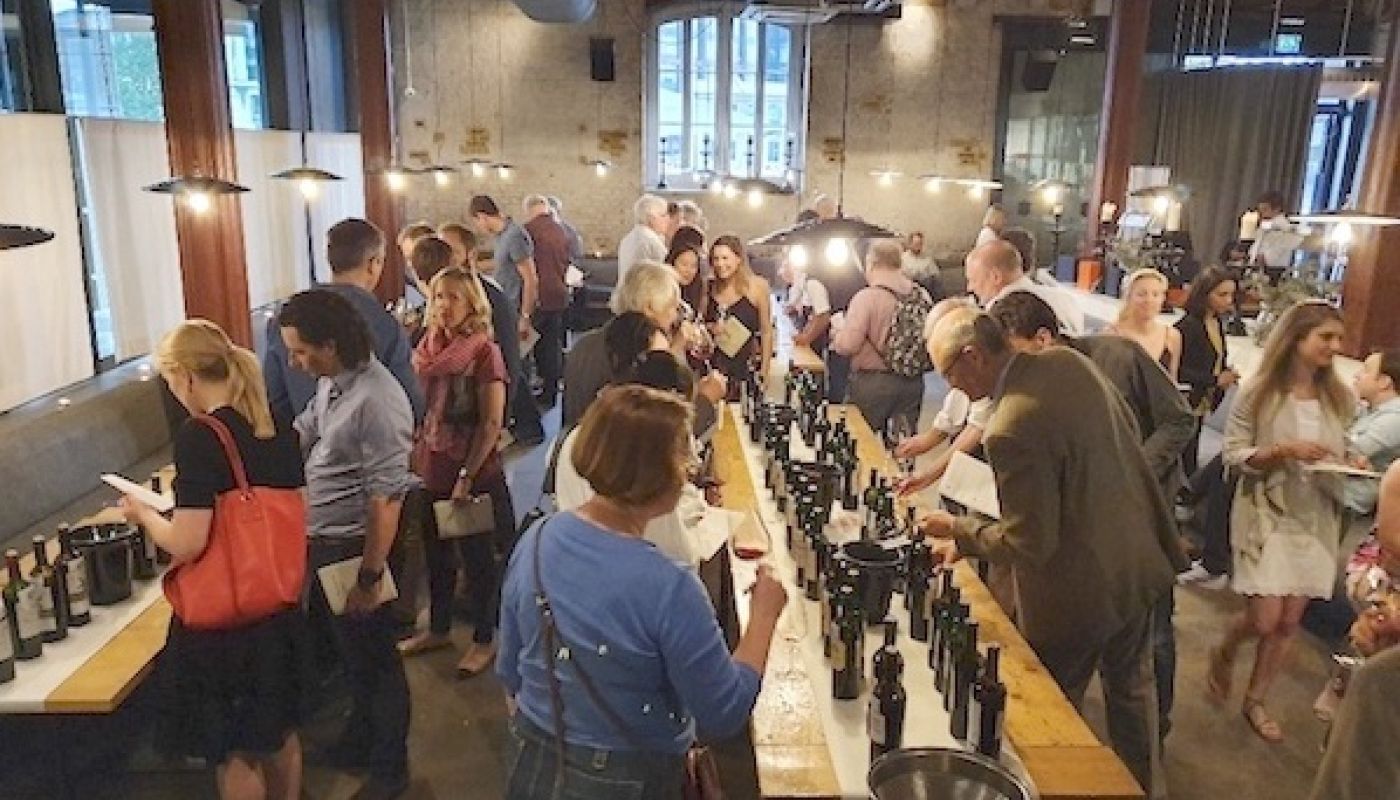
We recently set out to test the value and durability of crus bourgeois by organising the tasting event shown top right (see our Cru Bourgeois Night tasting notes) of pairs of vintages from 23 of my favourite examples: one current young vintage and one more mature one. Younger vintages of Ch Belle-Vue, for example, are available for about £11 a bottle, and at the time of our tasting The Wine Society was selling Ch Beaumont 2009 for just £15 a bottle. (They are currently offering magnums of 2010, a much longer-lasting vintage, for just £30.)
Because of the need to retain considerable stocks of older vintages to qualify for the new crus bourgeois classification, some producers were not able to provide samples from fully mature vintages, but there were enough examples from the twin superstar vintages 2009 and 2010 to prove the point that these wines really do represent the bargains of Bordeaux.
As if to underline the gap between these classical blends of Cabernet with Merlot and the wines that qualify only for the general Bordeaux appellation (mainly in the Entre-Deux-Mers subregion well inland of the Médoc), the producers of the latter recently voted to be allowed limited plantings of seven vine varieties completely foreign to Bordeaux – Arinarnoa, Castets, Marselan, Touriga Nacional, and three whites, Alvarinho, Liliorila and Petit Manseng – mainly new crossings plus two from Portugal. All this in response to climate change. See this thread on our Members’ forum for a discussion of this unexpected turn of events.
Exceptional crus bourgeois
These are not the cheapest but the most outstanding of many good wines at my most recent tasting of crus bourgeois. In brackets is the average retail price worldwide according to Wine-Searcher.com, which can supply stockists in many countries.
Ch Le Boscq 2016 St-Estèphe (£25)
£29.95 Handford Wines
Ch Deyrem Valentin 2016 Margaux (£20)
£31.99 Waitrose Cellar
Ch Deyrem Valentin 2012 Margaux (£21)
£24.43 Winedrop.co.uk, £25.07 Bon Coeur Fine Wines
Ch Tour Haut-Caussan 2009 Médoc (£22)
$26.99 The Wine Specialist, Washington DC
Ch La Tour du Haut-Moulin 2011 Haut-Médoc (£10)
$24.99 Sherlock’s Fine Wine & Spirits, Marietta GA
Ch La Tour de Mons 2014 Margaux (£21)
£36 Made in Little France
Tasting notes on hundreds of crus bourgeois can be found via our tasting notes search. See also the crus bourgeois website.