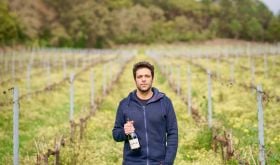
Christian Lowe contributes the next submissions to our wine writing competition. Here’s how he describes himself:
I am a 20-year-old male currently studying for a degree in Wine Production at Plumpton College in West Sussex, with experience in the wine retail industry working for North Coast Wine Co in Cornwall. I am also a novelist currently seeking publication for his first book. For a long time, my ambition has been to marry the two fields of wine and journalism, and writing articles in the style exhibited below, for a young audience of a similar age keen to develop their wine knowledge and experience, is something I am truly passionate about.
The Ministry of Wine
Three years since leaving college, my friends and I have reached the point where we don’t really know what everyone else is doing with their lives, nor do we really care.
So, come party time, vast swathes of obligatory minutes are spent telling one another exactly what it is we are now ‘doing'. Soon, it is my turn. ‘Winemaking', I say, and somehow, without fail, this word is a trigger for a bafflingly unavoidable episode of déjà vu.
At first, there is surprise. Perhaps a ‘cool’, or an ‘of course you are’, or a ‘ha!’. But then comes the challenge: ‘go on then, what am I drinking?’, and into my face is thrust a glass of something that by the unassailable laws of the sub-21 wine-drinking party-goer is always, always, an Aussie Cabernet-Shiraz blend.
I go through the theatre, because my ego enjoys it. A swirl, a sniff, all the while feeling faintly and thrillingly ridiculous. There is a sense of savage glee to my imminent con. My friend will think I am a genius, that I have the nasal skills and palate of an epicure, when in fact my deduction is based purely on the ABV:price ratio of Tesco’s bottom shelf. I pronounce my conclusion to the challenger’s smug face and wait patiently while they go and check the bottle. Correct. I am now an authority, a big cheese. Thwarted, the challenger attempts to supplicate me with an olive branch of feigned interest and, my enthusiasm and vanity successfully tickled, I accept. Their education begins. But maybe I’m too pompous or weirdly fervent, or perhaps they just want to be left alone to get smashed? Maybe I am a genuine bore. Either way, one minute in, the interest slides from their face and they are lost to me for now. Why?
The answer, of course, is that it’s a miserable cocktail of all of the above, and as I stand there as dispenser of this apparently snobby, hubristic, unrelatable bollocks, I sympathise with the universal plight of the teacher: information imbalance. How can you convince someone just how great the thing you’re trying to show them is? I seem so tedious, I know, but I want to help, truly. And helping is hard. In the wine world, there’s a fine line to be walked between the pitfalls of condescension and haughtiness. You’ve got to make the knowledge seem attainable. There is nothing worse than the all-too prevalent gung-ho, RP, overly blasé male who wears his opinion and its evidence as though it were an immense gift of natural, cognitive destiny.
But where to start? We need a platform. Some common ground where we can emerge from our trenches, shake hands and pull a cork. And sometimes it seems like this common ground doesn’t exist – a no-man’s-land purely because there’s no land to have men on. Sometimes I feel like a bibulous missionary, rocking up in sunny climes with a bible and incorrect footwear, spouting righteous nonsense to bemused, perfectly happy people. But they’re not happy, or at least, not as happy as they could be. But encouraging someone to realise this is both a touch Nietzschean and anathema to the principles of common sense. As with all new things, enjoying wine takes practice. Unlike lots of other things, practising enjoying wine also takes financial bravery. Maybe one time you bought that £10 special bottle of something-Classico and you thought it was pretty good, but you weren’t sure just how pretty good it was because you didn’t have a comparison that was similarly pretty good or pretty much awful? Doesn’t it taste fruity? Doesn’t all wine taste fruity? Can you taste that well-integrated oak? What, a tree? No. Did Adam think Eve was beautiful?
The point is, you need more than one bottle, you need two or three, and then preferably two or three more the next day. Comparison is the king. But this sort of palate exposure costs money and guts and a pioneering willingness for self-sensory improvement in a field that can leave you feeling as dwarfed and ineffectual as massaging Donald Trump’s ego with a cotton bud.
I wouldn’t have bothered. I began to ‘enjoy’ a glass of Côtes du Rhône with my parents on a Sunday night that I now realise genuinely tasted like Fisherman’s Friends and Vimto. And it would have continued in this vein, my drinking life an incremental crawl from okay bottle to okay bottle, punctuated here and there with an awkward Pape at Christmas and a bottle of Camel Valley, because it’s Cornish wine and how cute is that? No, my vinous revelation arrived in a veritable bottle barrage. My friend and I were dossing about in Napier in New Zealand, on one of those obligatory post-school trips, when a whimsical twist of chaos drove us and our van into the car park of Ash Ridge tasting room.
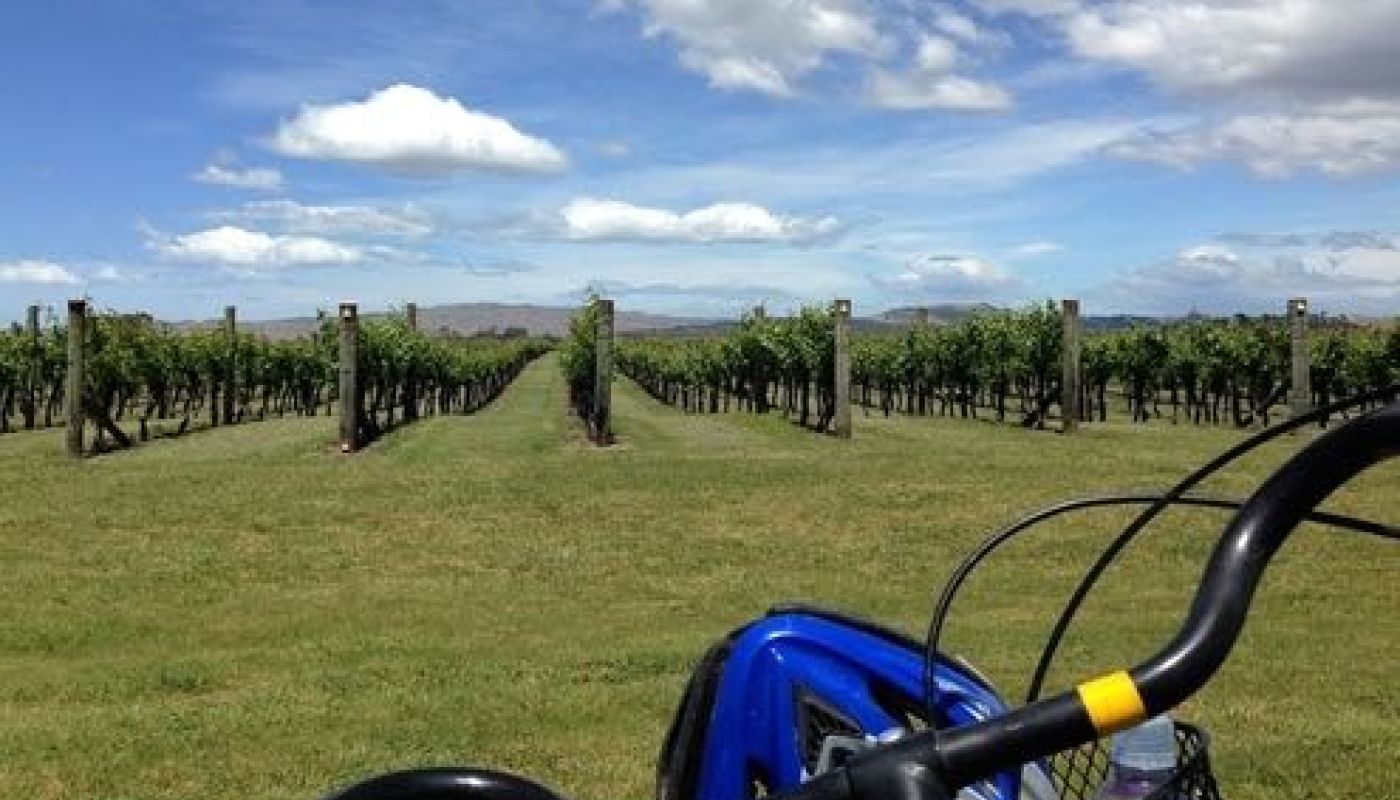
And so it began. An explosion of flavour that had seemed so incomprehensible from the far away shelves of the Great British supermarket. I got it. Resoundingly. The first kick of a ball that is still rolling to this day. We hired some bikes (see picture) and cast off greedily, tongues aloft, noses quivering. Four wines became eight wines, then 12, then 16, and we began to understand. A gooseberry here, a passionfruit there. Lean and peppery, mean and fruity. Words appeared: Gimblett Gravels, MLF, botrytis, French oak. Tactical spit by heuristic swallow we discovered what we liked and why we liked them, and liked them more because of it. We discovered that place has a taste. Will I ever forget the spicy joy of that Salvare Syrah, or the bloke in a beater in Nelson who plied us with grappa and sold us an unlabelled 15% Chardonnay, or the bottle of Ngatawara Noble Harvest Riesling we drank in a midge-invested swamp somewhere on South Island on Christmas Day?
It may not even be hyperbole to say that the me of today was forged somewhere out there, gently pissed and sweating happily astride a badly geared bike on a dusty New Zealand road, my head in the grip of a thousand tannins and reeling with a sense of dazzling excitement. It was the excitement of the new, of desires demystified, akin to that of cabin boy Nick Young, high in the crow’s nest of Cook’s Endeavour, when he first spotted the island I now cycled so shakily upon: the future landmass of my life, already tasting a whole lot better.
I was lucky, I know, to taste these great wines in ranks with their peers, on the very ground from which their fruit was coaxed from the earth. If my friends could have done what I’d done, I’m sure they’d think differently. I’m sure they’d just know. Wine doesn’t have to taste of just wine. No student should have to be the disciple of the supermarket. And thus, my manifesto: The Ministry of Wine.
Think about it. State-sponsored wine tours for everyone. It’ll be Great British National Service, a rite of passage for all 18-year-olds. It’ll be the time of your life and a classroom, all in one. No more will we have to train our taste, one £10 bottle at a time. This, young adults, the Ministry will proclaim, is the route to future happiness, and we’ll load them up on purple buses and take them to the grapes. We’ve got enough in southern England now; it doesn’t have to be expensive. I’m sure I could pluck some economics from somewhere about championing consumption of domestic produce. I’m sure I could find some correlation between drinking wine and national contentment. I’m sure I could root out something about social cohesion amongst all that old Latin, somewhere between drinking wine and making merry and finding truth in its depths. But the real truth is that wine is an expression of culture, of craftsmanship and of flavour. It elevates your evening, your spirits and your food, and one day I hope to share with my friends the profound joy of last night’s cold Domino’s pizza and a two-day old Barolo. This isn’t condescension, it’s a noble obligation.
Château Rubicon
Tasting to the point of no return.
On Wednesday 30 November 2016, I tried my very first finer wine.
No, it’s not a typo. The semantic context: Fine; adj. exquisite, superb, tip-top, pukka (in descending order), ‘an example of exceptional quality’. But in vinous terms? 90+ Parker points? A bottle worthy of its own shelf at Majestic? The definition is elusive. A newly domiciled friend of mine is hosting a fine-wine housewarming party. ‘But what is a fine wine?’ I ask. He grimaces, emitting a throaty, uncertain sound – ‘anything over twenty quid?’ Hmm.
The thing is, I’ve drunk many of these bottles (many = less than lots) and one thing I’ve noticed is that there is a polarising diversity in levels of fineness. Despite the £20 entrance fee, there’s no communal membership lounge. The Ornellaias of this world do not mix with the Chocolate Blocks. They sit in the Old Boy’s room, feet-up and tuxedoed, Havana in hand, working on some serious ‘cigar box’ notes and the difficult task of growing old. For these wines, it seems we need some new terminology. But what’s better than fine? Finest, most probably – although the superlative in the room now threatens to draw us into dangerous philosophical territory regarding the unattainability of perfection. No, it seems I must settle for finer, and the finer rocks upon which I dashed my grand vin virginity were mined, dear reader, from the golden-brown glory of a 2010 Château d’Yquem.
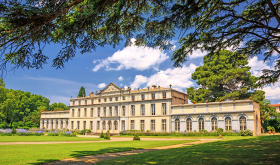
Let me set the scene. It was the big ticket of the Plumpton College Wine Department wine-tasting tour. We rolled up to the château, palates well-oiled by a warm-up at La Tour Blanche. I wasn’t sure what I expected, but quite possibly more bling. Maybe a fountain, or lashings of marble interspersed by pedantic topiary, or a panoramic glass restaurant with ranks of Riedel and plates of dogmatic foie gras (as far as one can expect such a thing). Instead, there was stone; lots of stone and lots of silence – the manicured dignity of a place that’s been coveted from the day it was built. A Frenchman trundled by on his tractor and paid us no heed. It was a little oasis, engulfed by its vines, as far as the eye could see. But it felt right, it felt like terroir – like it had been pulled from the earth, men installed, and given one instruction: ‘here, winemaker, thou shalt make the best Sauternes.’ Elegance and John Deere, in perfect tandem.
Inside, touché. It was of the same restrained grandeur, of confident history, of corners where spiders wouldn’t dare to spin. We descended to the barrel room down a spiral staircase crafted in carpentry of a kind that would make a Norwegian weep, through medieval doors salvaged from Middle Earth. The barrels themselves – one hundred sleeping beauties, cradling in their amniotic darkness a golden tongue-tease that by this point, I really, really, wanted to try.
I was getting a bit giddy. I was aware of knowledge being imparted – natural ferment, new oak barrels, someone Sauvage – but I found myself enjoying an internal rendition of ‘My Sweet Lord’ (I really wanna drink you), and could barely suppress a smile at my own dizzy wit. It was in something of a daze that we entered the tasting room. The sun was low in the sky, throwing blades of evening light through the far window that twinkled on the shoulders of 30 crystal glasses. There was a hush. It was Arthurian, sanctimonious, voyeuristic. And then, from a hidden door, our guide emerged with the elixir itself – the greatest sweet wine in the world: Château d’Yquem.
It was hard not to be palate-awed. I felt weirdly submissive. I tried to remind myself that the Christian Lowe of normality would consider the flashy, golden, tasting-room screen rather obnoxious and grizzly, and that LVMH was the company that made those handbags he didn’t like. They were oppressors. Perpetuators of global inequality, degrading us with subliminal and superficial aspiration, etc, etc – but it was no use. The moment I wrapped my lecherous fingers around that stem and drew it to my nose, I just knew that my lips were on the brink of something truly special.
Some people say that one shouldn’t even look at an Yquem before its fiftieth birthday, but they must be wrong, or be thinking in dog years. It was like a Manuka honey blues harmonica was skipping right across my taste buds, accompanied by the pithy notes of an apricot horn section and an orange peel slide guitar. But it was only as I stepped back and contemplated the most expensive thing that I had ever put in my mouth, that the crux of its majesty became truly apparent; the acidity. It was refined precision, a chamois cloth to the tongue, drawing all sorts of flavours and textures and lashing them up the inside of my cheeks. I think I said something weird and clumsy like, ‘this is stonking’, before I finished the glass, and a curtain was drawn on the fine wines of my previous life.
There’s not much more to say after that. Many selfies were taken, cork-larceny considered. I got an odious little thrill from being the first Vivino user to have sampled the 2010 au château. But soon it was over, and we stumbled back to the bus, glazed wrecks of appreciation, aware that we had tasted the fruits of lives unlike our own and knowing, deep down, that we’d probably never see the likes of it again.
But I would, I decided, as darkness descended over Sauternes. I had crossed the Rubicon. For better or for worse, there was only onwards. As Graves and Pessac slipped away into the night, a whisper of Yquem still a kiss on my tongue, I made a vow – that one day I would meet her again, on a field of my own choosing, and we would come as equals.
Until then, Yquem.