We continue the series of articles submitted for our wine writing competition with two pieces written by an English winemaker now far from home who describes himself thus:
My name is Tom Munro and I am a 39-year-old, self-employed winemaker and wine importer, male, based in Sydney, Australia.
Bordeaux safari: the search for Bordeaux’s artisan heart
Bordeaux wine brokers are reputed to ride in chauffeur-driven Audis so I didn’t recognise Thomas as a négociant when he hopped off his Vespa right in front of me.
Thomas Allewaert is the founder of Redsap, Bordeaux’s leading organic wine brokerage, and he develops markets for the new generation of Bordeaux winemakers who are bringing back innovation to this conservative region.
We weave through Bordeaux’s rush-hour traffic on the Vespa before switching to his cubist-looking Citroën and heading down a wormhole into the parallel universe of Bordeaux wine’s avant garde.
First stop is the lesser-known western district of Margaux to visit Clos du Jaugueyron (CDJ for short). We plunge into the dark and dappled light of the wooded village of Arsac and pull in at what looks like a country barn or grange. No château and no vines are visible and it’s rare to be met by vignerons in Bordeaux who actually look like working people and not like ladies or gents dressed for lunch at their club but Michel and Stéphanie Théron (below), the young owners of CDJ, appear as they are in jeans and t-shirts, taking a break from the dirty work of vine-growing to show us round. No snobbery: it’s just like being welcomed into their home, nothing more, nothing less.
All four of us squeeze back into the Citroën and drive a short distance before turning off the bitumen and into grass as high as the car itself. It feels like we’re on safari and I half expect to see buffalo. The Citroën is low to the ground and as we lurch through potholes I brace for the sound of the exhaust being ripped off but suddenly we get up onto some higher ground where the grass is shorter and I can see we are on a broad hillock in a forest clearing. There are several hectares of exuberantly happy-looking vines here with strips of unkempt grass and colourful wild flowers between the vine rows. It’s almost hard to believe this riotous-looking vine garden really is in Margaux but if you want to re-energise iconic terroir then you have to get away from industrial agricultural techniques and the manicured, combed vineyard model.

Michel and Stéphanie’s 'safari viticulture' results in vibrant wines of individuality and after an extraordinary tasting we are sad to leave but have to if we are to make our next appointment. 'It’s now time to visit a real UFO', Thomas says, beaming with excitement. 'It’s called BAMA'.
BAMA is short for Château Bel Air-Marquis d’Aligre and is run by Pierre Boyer, who is now (in October 2016) completing his 68th vintage on these 13 hectares (32 acres) of Margaux grand cru just north of CDJ. Monsieur Boyer is proud to make wine in the same way his dad taught him to. Uniquely for modern Bordeaux, all the different red varieties are randomly growing together in the BAMA vineyard – Cabernets Sauvignon and Franc, Merlot, Carmenère and Petit Verdot. As a result, at BAMA all the varieties are harvested together and thrown into spontaneous fermentation in vat before being pressed off and aged in concrete tanks for many years to make ultra-light, perfumed and medium-bodied wines of charm and drinkability designed to reveal themselves after ten or 15 years in bottle. BAMA is 'claret' for purists and not just a reminder of how Bordeaux used to taste but the embodiment also of what Bordeaux’s young winemakers are trying to reconnect with: the authentic, unadorned wines of fruit purity and terroir that were made before the fashion in the 1990s swung towards overripe and oaky fruit bombs to tempt foreign buyers.
The final visit of the day is to Maison Blanche, owned by Nicolas Despagne, a vigneron whose idealism and determination to innovate got him ejected from the winemakers’ union of Montagne-St-Émilion. And if Monsieur Boyer at BAMA prided himself on continuing the tradition of his father, Nicolas prides himself on having completely broken with it. He is at the extreme edge of organic viticulture, his flashing eyes and long hair flying around as he gesticulates excitedly about the fruit trees he’s inter-planting among the vines to break up the monoculture and encourage a diverse ecosystem, a star-shaped pendant bouncing round his neck and effusive, kind, welcoming warmth radiating in every direction. Nicolas leads us down into the barrel hall but it’s the enormous terracotta wine urns that dominate this vast underground space, with strange alchemical-looking, wine-filled, glass air traps coming out of their tops. Nicolas ages in these urns a preservative-free wine he calls Vinum Simplex and the MMXII version (the vintage is always in Roman numerals for this wine) was a blaze of genius, a giddy potpourri of perfume counterbalanced by a palate of strict tannin structure.
There’s a lot of slap-dash wine coming out from young winemakers around the world right now but these Romantic wines from Bordeaux are different because they are still works of serious craftsmanship and not just fermented grape juice made to be slurped in the blur of a late-night session at a natural wine bar. Yes, they are still radical wines that sing from the heart, challenge orthodoxy and oxygenate the stagnant pool of tradition but their makers have maintained the Bordeaux tradition to do things properly and provide a reliable product for market. They might not be wearing tweed jackets or driving Audis but the new generation in Bordeaux are just as much open in their minds as they are open for business.
From Burnham Norton to the New Bordeaux
Sometimes I’m jealous of people who are born into winemaking families, with vineyards, history and châteaux as their inheritance, but if I had been born to a vineyard I would never have discovered the terroir of Burnham Norton.
There’s a slim chance you might know that Burnham Norton is a hamlet on the north coast of Norfolk, and if you do then you would probably agree that its wine-growing potential makes the rain-flayed slopes of Rumpole’s 'Château Fleet Street' look like Vosne-Romanée in comparison. The terroir of Burnham Norton is typified by short summers, horizontal rain, and soils so rich in clay that, when waterlogged (which is the norm), they will seize and swallow the wellies of small children and, when baked dry by the sun (which is rare), they are impenetrable to pneumatic drills.
My family used to holiday in Burnham Norton and when I was 13 years old I begged from the owners of the village’s 'big house' their neglected crop of Black Hamburg grapes, which was growing on a tentacular old vine in their draughty glasshouse, in order to make a batch of sparkling wine. The frothing and flavoursome brew that resulted was a breakthrough for my school’s black market, where I sold it to boys much older than myself. Black Hamburg is also known as Trollinger, the name it goes by in its native Alto Adige in northern Italy, and so 'Tom’s Troll', as my fizz was referred to, enjoyed a brief spell of celebrity at various parent-free gatherings and people talked in whispers of the Troll’s rapacious acidity and lurid purple foam.
I finished my education and dabbled in journalism but the distant halloo of the bacchanalian tribe was never far away and when I discovered that my parents knew someone who had family on a vineyard in Bordeaux I rang them up out of the blue to apply for an unpaid winemaking apprenticeship for vintage 1998. Given that they had never sought any unpaid labour, they could hardly believe their luck and, when they approved my application, I could hardly believe mine. The opportunity beckoned to learn about wine in a real winery in Bordeaux and I couldn’t have been more excited.
Having made wine in the frigid heart of Appellation Burnham Norton Contrôlée I felt a kind of numbing ecstasy when I saw for the first time Bordeaux’s endless combed vineyards as my train trundled through the Graves district one July afternoon of that year. The train was nearly empty and stopped at village stations where nobody got on or off, the snoozy sense of rustic desertion drifting from the platform into the carriage before the doors hissed shut and the train jerked onwards. It felt like we were travelling into a world of happy timelessness, a place where everything would stay the same, and nowhere was this more true than in the local wine scene that I discovered on arrival.
In 1998 prices for the grands crus were soaring towards extraordinary new levels, buoyed by the certainty that they were the world’s greatest wines. Their success was based on this argument: Bordeaux had the greatest climate in the world for growing vines, the grands crus owned the best land in Bordeaux and the best land gave the best wine and, thus, how could anyone ever make better or more expensive wine than them? They were a winemaking aristocracy, enshrined in law and blessed by Napoleon III in 1855 with the famous classification.
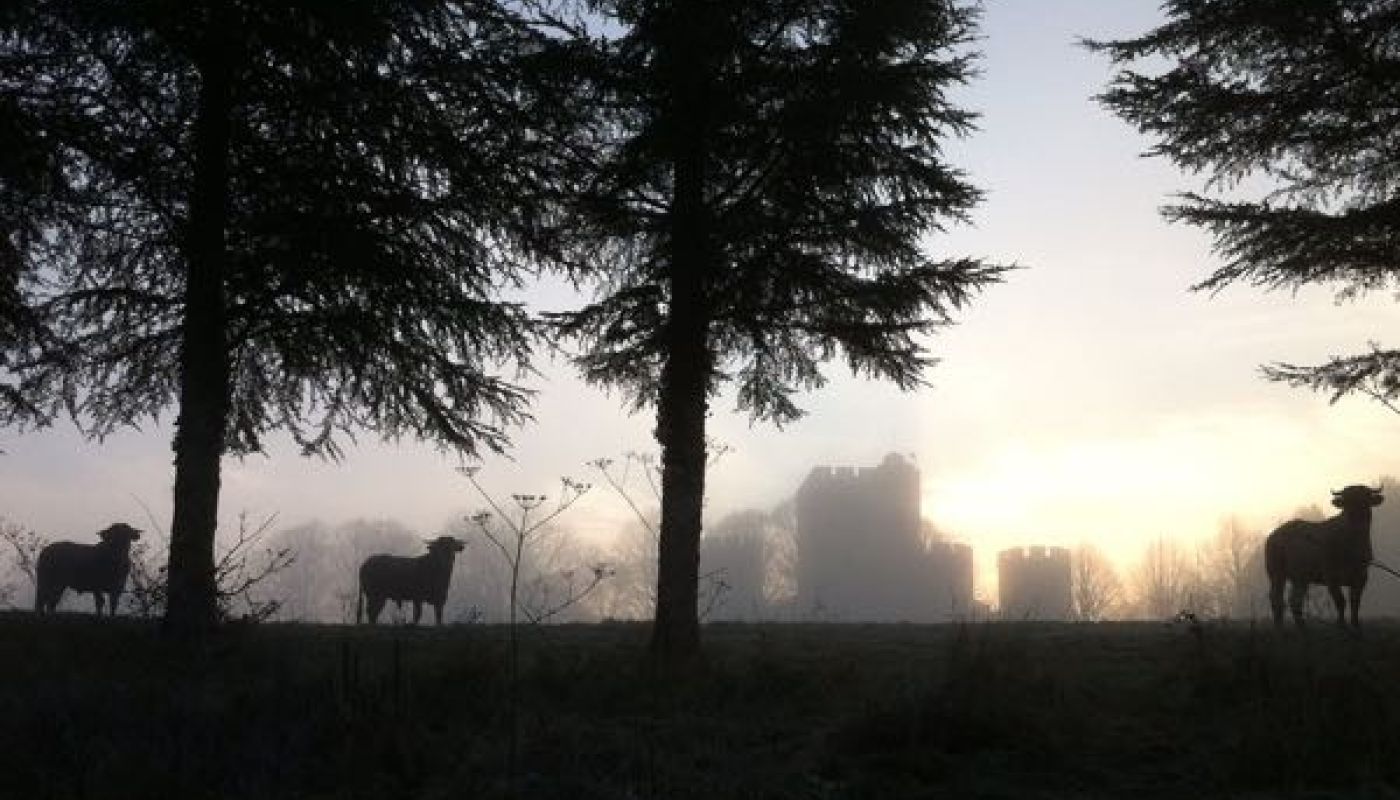
And this was the hierarchic mentality that dominated when I arrived at Châteaufort de Roquetaillade (top right), a medieval château and vineyard in the southern Graves district where I was to begin my winemaking apprenticeship. On my first night there we drank a grand cru and its superior status was explained to me. Sure, it was a great wine but I was young and didn’t see why it couldn’t be bettered. Besides, when you’ve convinced teenagers that 'beer is OK but the sparkling reds of Burnham Norton are really where the party’s at', then you are well disposed NOT to take such an elitist hierarchy as the final word on the subject. So I was determined from the outset to unearth the New Bordeaux that would one day provide an alternative to the ancien régime of grands crus.
There was a long wait in store for me. On the surface, not much changed over the next decade. The grands crus kept putting up their prices and the hysterical hullabaloo over their annual en primeur releases became ever more frenetic. But then I met a vigneron called André Chatenoud in the village of Lussac, over on the other side of the Dordogne, and I realised that the tectonic plates of wine history were in fact shifting under the surface. André’s wine seemed different from anything I had tasted before: more pure, less oaky, more vibrantly fruity, more unaffected, and quite reasonably priced despite the fact he could claim the prestigious Lussac-St-Émilion appellation for his wine so long as he kept up the local tradition of making oak-aged reds from Merlot and Cabernet Franc. But in a bold experiment André decided instead to rip up a large section of his reds and plant the obscure white Sauvignon Gris variety, and the wine that resulted was revolutionary. Here was self-immolating new-wave zeal and to emphasise the audacity of his new wines André also became certified organic and practising biodynamic, something regarded as pure voodoo at the time. André was my first hero of a new generation who had the courage of his convictions to pick up an ideological rock and hurl it at the police of convention. André’s Sauvignon Gris is an epoch-defining wine that marked the start of the artisan wine revolution that will carry Bordeaux into an exciting, open-spirited and innovative future. Welcome to the New Bordeaux.