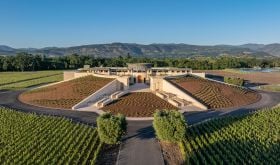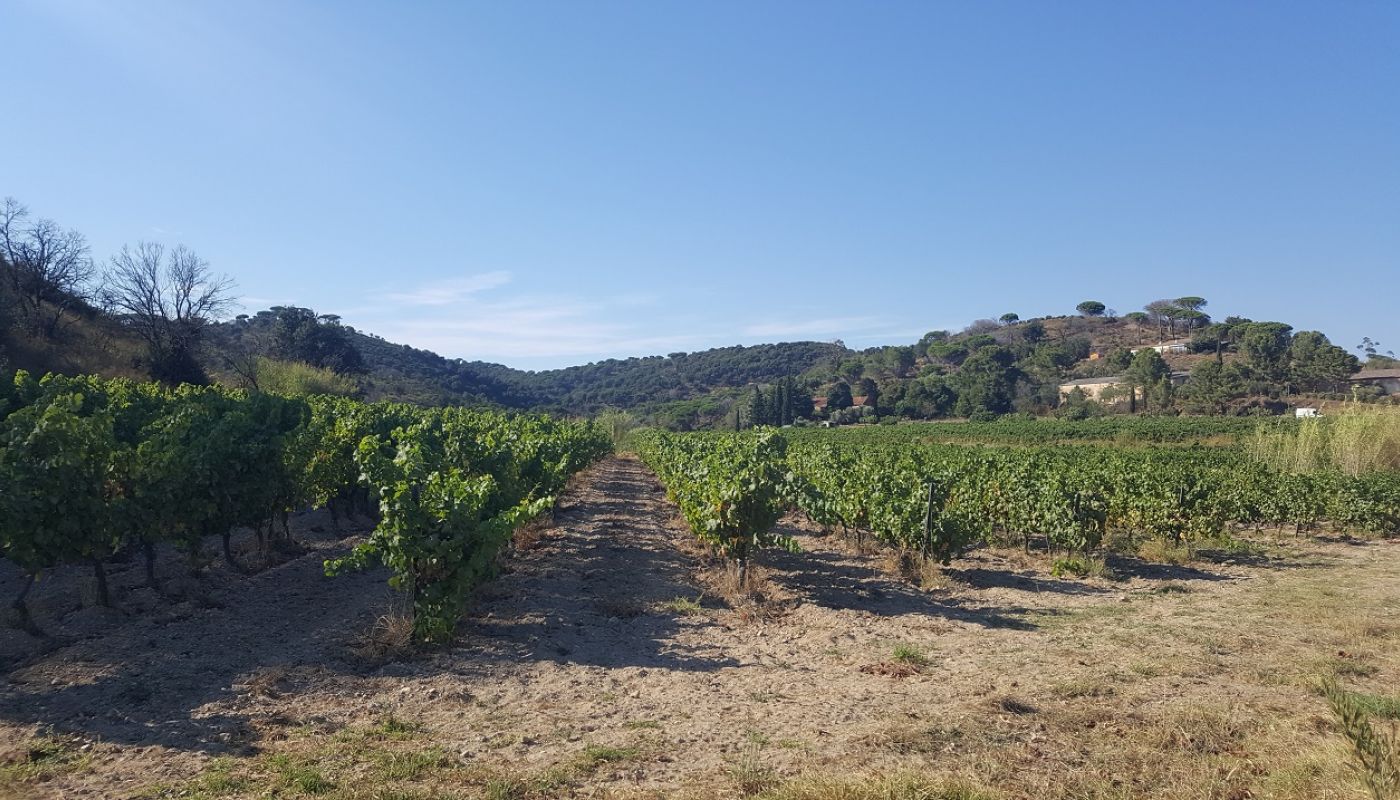
The French Riviera is not known for its hair shirt. Ramatuelle on the Côte d’Azur may be the comparatively discreet elder sister of nearby, glitzy Saint Tropez, but the sound of revving supercars fills the early evening and enormous yachts anchor glaringly offshore. Where tortoises once strolled the peninsula’s pine and vine-covered slopes, a helicopter’s eye view reveals pristine green lawns alongside neat sky-blue rectangles, eroding the space for agricultural production and wildlife alike. Nevertheless, for two hundred years the Brun family has been making wine in a quiet corner of the Saint Tropez peninsula, a corner protected since 1995 where the parasol pines and cork oak forest still flank the neat rows of vines lining the valley floor.
Sébastien Craveris Brun and his brother, Guillaume, have been involved for a decade and are now taking over the reins of managing Domaine La Tourraque, an organic-certified and family-owned vignoble of 30 hectares, from the prior generation. Sébastien is a modest young man, as green-eyed and deep-tanned as a son of the Midi should be, for whom sustainability means passing on a thriving property to the next generation, as the generations have done before him since 1805.
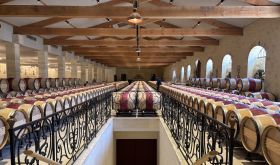
In keeping with the family-run spirit, the brothers are now head winemakers, chief distributors, in charge of marketing and, of course, there to open the tasting room at 10am sharp. Annual production is 100,000 bottles. Amid the daily bustle, the long-term challenges of a changing climate demand a certain degree of reflection. Under the direction of this new generation, with the organic transition behind them (the domaine was fully certified in 2013) and capital investment in a new geothermally temperature-regulated warehouse complete in 2007, they are at the beginning of plotting what the next 40 years of La Tourraque will look like.
All options are on the table, and in fact they can’t be certain that wine will be the dominant product 40 years from now. While the dry and salty air makes for outstanding rot and mildew resistance, easing the transition to organic, hot summers and dry winters are making for greater concentrations of juice and sugar. Two generations prior, 12% alcohol was the mark of a good vintage, now the challenge is to keep wines below 14%. They don’t irrigate here, the oldest vines having 45 years and being profoundly rooted in the granitic soil, but even if they had to there wouldn’t be enough water from the property’s borehole. Instead the domaine is beginning to experiment with more drought and heat-tolerant grape varieties such as Caladoc, a Grenache-Malbec cross, as well as the planting of chick-peas between rows to shade and cool the soil. The former effort is in collaboration with the Le Centre du Rosé, a dedicated research institute based in nearby Vidauban. Olives, it turns out, are even tougher than vines to grow commercially, thanks to the parasitic fly that’s shrunk yields from the domaine’s 400-odd trees by 90%.
The Bastide Blanche, being one of the last refuges on this part of the Cote d’Azur to be spared development, means there are difficulties too operating in (and being the protector of) such an intensively scrutinised and scorchingly beautiful valley. Sébastien would like to install solar PV but he cannot, the site being as protected from the construction of eyesores as it is from the destruction of ecosystems. A wind turbine and a metalled road are equally out of the question, and you traverse a rutted and dusty kilometre in order to visit, something best not attempted in a low-slung sports car.
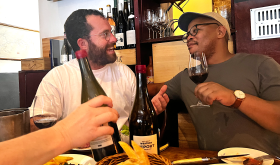
The Bruns’ vision also considers economic sustainability, and illustrates the success (and paradox) of selling wine locally in a hotspot of international tourism. In terms of distribution, La Tourraque sells two thirds of production into the extensive network of local restaurants and shops; relatively little of its wine leaves the region and demand from summer visitors is key. This year has been good, certainly versus much of the global wine industry: within driving distance of much of sun-starved northern Europe, Côte d’Azur beaches are packed this summer, although recent COVID-related restaurant closures reminds one how fragile is the situation. The remaining third of sales are made direct via a scenic tasting room featuring a sea view and exhibits from the Brun family archive, and which is equally as reliant on tourist footfall as are the restaurant sales. As an aside, and illustrating the family’s long history here, the museum features a chunk of the 16th Century elm that shaded Ramatuelle’s village square until it was chopped down in 1943, for which is named the iconic café that persists on the Place to this day.
Meanwhile in terms of colour mix, La Tourraque prefers to keep its options open. The Bruns are reluctant to over-invest in their pink production and see danger assuming rosé will forever be the fashionable summer drink. Marketing spend is minimal versus the perfume ad approach of some peers, nor do they dress their wine in obscure bottle shapes that can earn a place behind trendy Saint Tropez bars. Cash-wise rosé is attractive as there’s no need to sit on inventory for years, unlike in, say, Bordeaux, but the flipside is that you have to sell out the most recent vintage before summer’s end, as demand for old rosé drops precipitously.
Locally distributing, in family ownership and organic, La Tourraque provides a useful model for a sustainable 21st Century winery, and results in delicious and interesting red and white wine indeed, as well as rosé, pleasing to lovers of fruit (via the Classic range, €11.20/bottle) as well as those looking for oak-aged character (cuvée Harmonie, €15). It’s somewhat ironic that such an expression of localism relies on cross-continental tourism, but in this land where wine and civilisation have sprung up together, let’s hope that producers like La Tourraque are able to cope in generations to come with whatever challenges the gods of climate and grape throw upon their land.