I understand that most readers expect to come to this wonderful site and read any and all stories concerning wine. I ought to warn you. This isn't a wine story. This is a love story. And if you bear with us, you may find yourself to agree or disagree, but I don’t think that in any occasion you will find yourself poorer for taking the time to read, and ponder this.
Some of my favourite books are the original Dune series. Most people see them just as sci-fi, but for me, its an example of something we have forgotten in the western world. Sustainability. The wild fremen teach us that economy, ecology and society are intertwined. It is always good to try to be better and do more, its in our nature and a drive that keeps us growing. But not at any cost. The balance we have to strive for is not only with each other, but with our environment. We forgot that at our own peril.
But not everyone. 'Love is higher than opinion. If people love one another the most varied opinions can be reconciled – thus one of the most important tasks for humankind today and in the future is that we should learn to live together and understand one another. If this human fellowship is not achieved, all talk of development is empty.' Words that strike at the heart of this era's woes. Rudolf Steiner was a very inquisitive spirit. An architect, philosopher, he dabbled around in many different sciences, including medicine. But the one most relevant for this discussion is what would later be called biodynamic agriculture. It treats soil fertility, plant growth, and livestock care as ecologically interrelated tasks. Come 2020, it is gaining followers steadily.
When someone does something exceptionally well, we often say he/she has elevated it to an art form. And that is what I taste every time I take a sip of these wines. It is one of those cases that the result is greater than the sum of its parts. I lift a glass, smell hints of green apples and white flesh fruit, fresh almonds and taste that razor sharp acidity, and a lingering aftertaste. I can almost visualize the effort, consideration and care that was put into making this wine. And that is how you get to know someone, without ever having met them, and why I feel this winery belongs in the forefront of a change we need to make happen, sooner, rather than later.
One such producer that shared Steiner's vision of a sustainable and self relying environment is Laurens Hartman, owner and producer of Domaine Karanika. The winery is completely thermo-isolated, uses solar energy for warm water and power, unique architecture (subterranean levels account for 70% of the winery) for cooling and composts grape skins and waste to enrich the soil. All of it was designed to work with what the environment has to offer. And if terroir is often used to describe so much in wine production, starting from phenotype and including practices, in this instance it definitely includes the winery. Not something many wineries can claim. The exclusive design of the building allows the wines to be made without the effects of pumps and filters. On the top floor under the narrow tile roof, the grapes are collected, selected and destemmed. By gravity flow the grapes slide to the middle floor where the red wines are fermented in both oak and stainless steel tanks of 40 hl. At this level the white grapes and the grapes for blanc de noirs are pressed in a traditional basket press. Right underneath this floor are the ageing cellars and the bottling units. The rest of this bottom floor is reserved for the production of rose and white wines as well as sparkling wines.
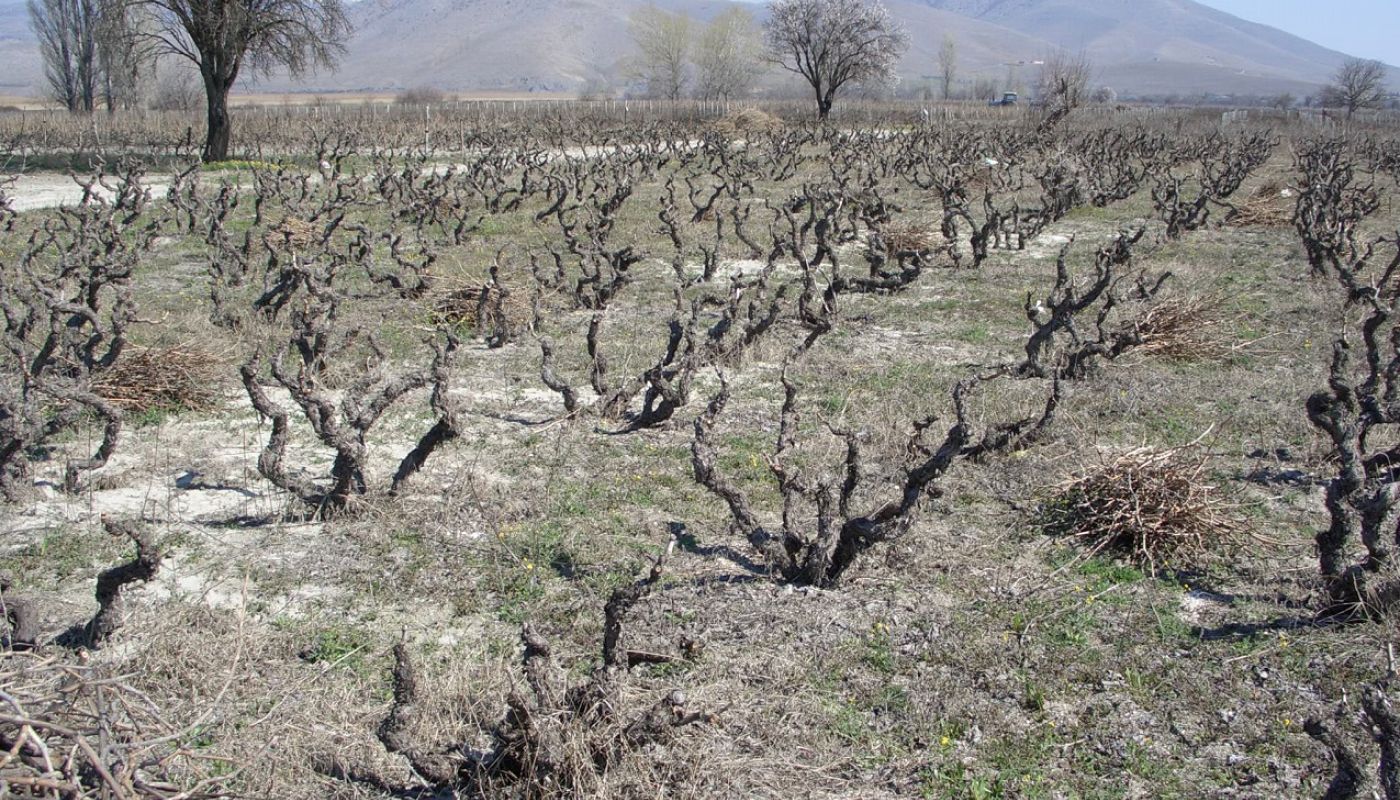
Which brings us to the vineyards. Certified organic since 2009, the soils in themselves vary from alluvial, sandy loam, sandy clay to sandy lime soil rich in calcium with subsoil of marl and limestone. Sotirtsko(1) is a plot of ungrafted vines of Xinomavro with the 0,25 hectare vineyard being at least 110 years old. Next to it you can find a 60 year old 0.25 hectare vineyard of ungrafted Xinomavro. At Rasto(2) there are 6 vineyards, 25 and 40 years old, totalling 1.5 hectares of Xinomavro. Then we have the 0.5 hectare 25 year old Xinomavro vineyard at Dromos Lakkias(3) near Amyndeon village and close to a pine forest. Nivigratsko is a 0.1 hectare old Xinomavro vineyard between Amyndeon and Lake Petres. Surrounding the winery(4) are 3 hectares of vineyards and 2 of fruit trees and vegetable garden. There are also 5 hectares of vineyards planted in 2017, biodynamic since their first day, in Amplelotopi, 1,000 meters from the winery. The vineyards aren’t watered structurally nor are any chemicals used in the vineyard or the winery. Activities are scheduled around Maria Thuns' biodynamic calendar. Wines aren’t pumped, instead opting for gravity flow transfers. Harvesting and punching down are done manually and the wine is fermented with naturally occurring native yeast. Riddling is done by hand between 90–120 times per bottle over the course of a month. Disgorgement is then done in relation to the moon phase. This is performed 6 times per year.
All organic waste from the vineyards and the produce is made into compost and returned to the soil. The compost in turn increases microbial life and aids harmonisation of plant growth, leading to healthier, more robust grapes. All of the practices amount to the only additive being a small dose of sulfites and montmorillonite clay. Glass, carton and plastic are separated and turned over to the municipality's recycling program.
The water used in the winery to clean tanks and equipment is recycled, then biologically cleaned in a self designed system of septic tanks and used to irrigate some vineyards in rare times of heat stress. This is only possible because no chemical cleaning agents are used. Only soda, citric acid and warm water. All are biodegradable.
The carbon footprint of the estate is low, considering the energy consumption is very efficient, its harvesting is by hand and the 2 small tractors are used only to spray biodynamic preparations. Transportation of the grapes for the short distances between the plots and the winery are done mainly by vehicle, but still retains the footprint very much lower than the conventional means of produce and the regular chain of production.
In general Domaine Karanika was able to dramatically reduce the use of power, just by being more conscious, and smarter. For example cold stabilisation is only done outside when the winter temperatures reach minus degrees Celsius. 2014 saw 150 kW used per hl produced wine. In 2019/20 that was reduced to 40 kW per hl produced wine. An astonishing accomplishment as the percentage of produced sparkling wines have increased to 90% of total production. Sparkling wines need more cooling than red wines and still wines in general. The total energy consumption for 600 hl and the family home was 22,000 kW over the period of November 2018 – October 2019.
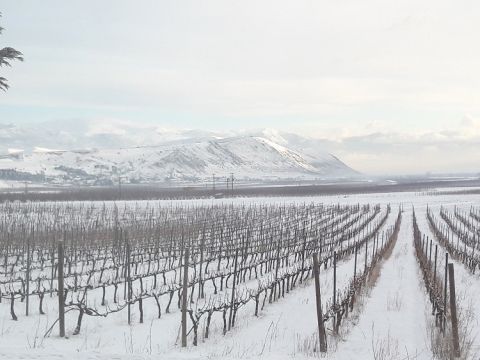
Seeded cover crops and flowers are planted to encourage biodiversity and promote a self sustained mini eco system. Wildlife is unharmed and taken into account as an environmental factor (sparrows have repeatedly feasted on many a promising vines like the 2009 and 2010 Sotirtsko produce) and members of mans' best friend have made their homes in the estate.
As a producer in Amyndeo he supports the community by offering his wines in events like the promotion of tradition and local produce in the square of Amyndeon, or by providing labour in the months of the harvest for the local populace, above all understanding and promoting the ideas of cooperation for prosperity. The estate foregoes marketing (does not participate in wine fairs all over the world, does not advertise) in order to offer the consumer with a better price.
At the beginning, we mentioned how this was a love story. Above all, what reading the works of Rudolph Steiner leaves us with? Respect and love. For one's community, nature and fellow man. And more so seeing it implemented. And we could all take a page from this book, to understand that to initiate change, we must effect change ourselves. How we do anything is how we do everything. From the very beginning, we should think how our actions impact the whole.
















