For believers in nominative determinism, it will be no surprise that David and Lynne Levin are winemakers. Levin Wines has had a deep commitment to sustainable wine production since they started in 1985; but the expression of that approach has evolved over time.
At the start, David’s aim was to produce a high-quality wine for his London hotel [The Capital] and various other outlets (including London’s Royal Festival Hall). He wanted to know how the grapes had been grown, how the wine had been produced and transported. It was a ‘grape to glass’, sustainable approach well before its time.
As an early investor in Petaluma Wines in the Adelaide Hills, he was impressed by their approach: carefully matching the grape variety to the best site, minimal mechanical and chemical intervention and restrained production levels. In many respects, that was the polar opposite of the approach being used by conventional Australian producers. Yet, their results were revolutionising the UK market. David himself bought ‘hundreds of cases a year’ of Evans Family Chardonnay and was impressed by the new techniques being used – especially stainless steel fermentation tanks and screw top bottles.
David wanted a very hands-on approach to winemaking, but from his London base that meant something closer to home. Burgundy or Bordeaux would have been terrific, of course, but vineyard prices were too high; the Loire Valley was cheaper. There was a reason: land was often of ‘poor’ quality. In the 1980s, careful assessment of the soil and terroir was in its infancy but, taking advice from Bordeaux soil expert Claude Bourguignon, David was convinced the area was a ‘sleeping princess’. It could be awoken with careful nurturing. David built up a holding of 19 vineyards totalling 20 hectares across 150 fields in Bourré, Choussy and Oisly.
Emmanuel Bienvenu, a Loire Valley native and an organic enthusiast, became David’s winemaker. He loves nothing more than experimenting with organic and biodynamic techniques (often in his own garden); and in the early days there was much experimentation to be done.
Biodynamic techniques, popular in Bordeaux, are also widely used in the Loire. Some have a touch of Harry Potter about them. Lynne remembers the recipe for one early ‘preparation’: take ‘herbs’ (often a euphemism for weeds) grown in the vineyard, ferment these and then distil the liquid in a copper pot, always stirring anticlockwise. Take the resulting potion and drip it by – never spray it on – the vines when there is an early morning dew. This would, assuredly, inoculate the earth against unwanted pests and weeds, even thistles – the ‘strongest of the weeds’. But thistles shot up fast and grew as high and wide as the vines. That was not a great environment for leaf plucking, pruning and picking. The plan had to be refined.
A four-strip design for the vineyards has been used since the outset: one strip for the vines and the three others used, in rotation, for planting to develop the soil and encourage biodiversity or to be left fallow (the omission of which, in the early years, had led to the thistle problem).
For example, one strip could be sown with plants chosen to increase soil friability: avoine (wild oats), féveroles (fava beans), vesce (vetch) and prêle (horsetail). These break up the soil as they grow and as they are worked back into the soil they deliver natural trace elements. Timing has to be careful: fava beans, for example, need working back in when the beans are just starting to form. Another strip is then used for green manure. Vine health and water retention, particularly important in France where dry farming is used in both conventional and organic viticulture, is improved. The soil has improved steadily over time: it has become more friable; and the grape quality has improved. Thicker skins make for grapes which are more disease resistant and less likely to lose moisture through evaporation.
A thick skin is a benefit in other aspects of Loire viticulture. During the 1980s and 1990s, questions started to be raised about the Levins’ low yields. While conventional vineyard yields were climbing ever higher, from 100 to 120 to even 150 hl/ha (hectolitres of juice per hectare), Levin yields were much lower (around 35–40 hl/ha). The (somewhat obvious!) reason was that there was no attempt to maximise yield: routine thinning of the grapes to reduce stress on the vines; and no use of artificial fertiliser, pesticides or herbicides.
Winegrowers in the region typically sell their produce to a co-operative, where there is little or no price discrimination based on quality. At the start, the Levins were basically price takers. Their work on sustainability wasn’t being rewarded.
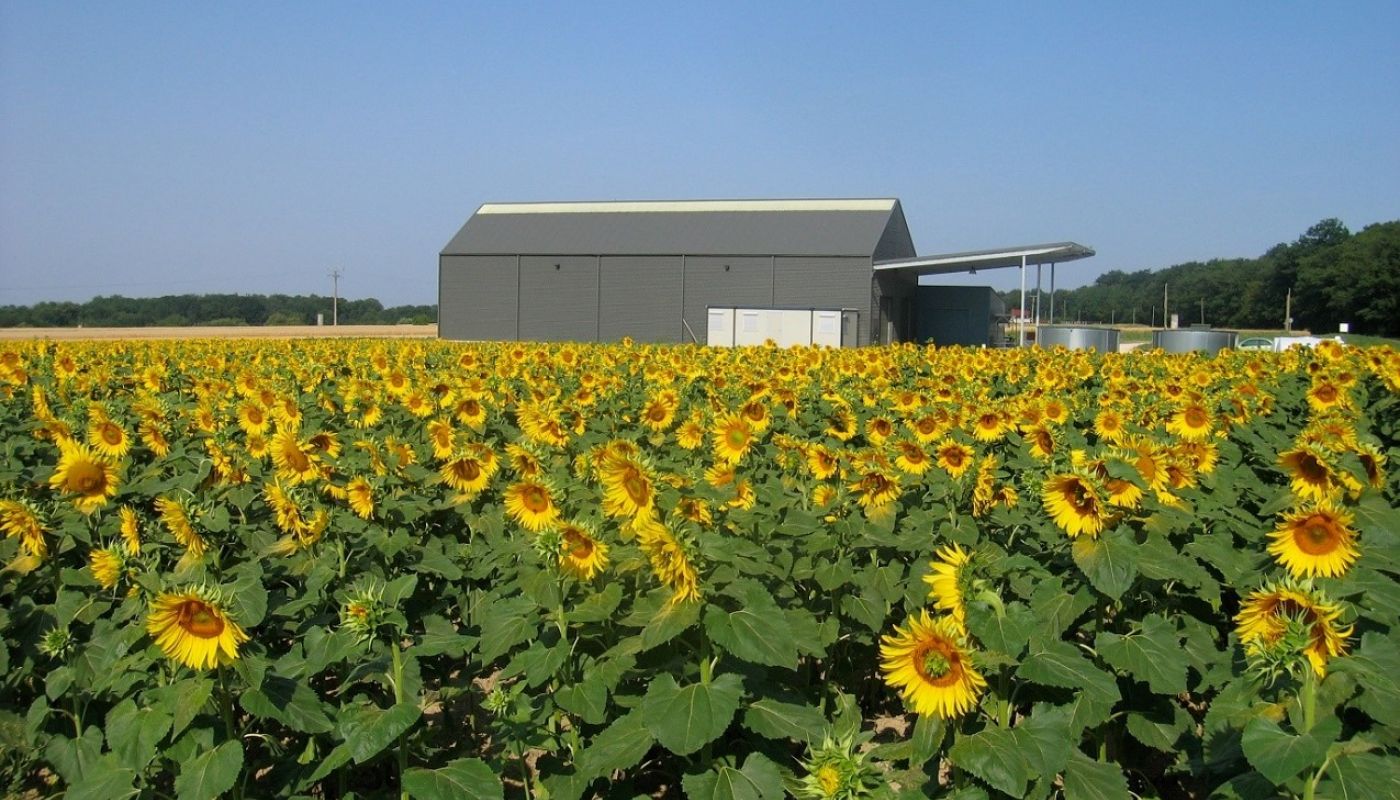
It was time for them to get their own winery. Again, they drew inspiration from Australia, Lynne’s homeland, building a winery similar to that of Shaw+Smith in the Adelaide Hills. The same architect was used and the winery, and all its equipment, was made in Australia and transported to the Loire Valley. The roof is designed to collect rainwater, which is used in the winery (not, please note, the wine itself). The winery is well insulated, designed with a high A roofline to provide good air circulation and clear roof panels to provide natural light.
The Levins wanted to bottle their own wine and for that, they turned to mobile bottling units. Their desire for some small (Royal Festival Hall interlude-sized) screw top bottles was, to say the least, a bit of a problem. Few mobile bottlers were set up to do this; and to secure supplies of small bottles (from a Dutch producer) a large order was required – enough for years of production. The Levins’ small-scale and variable production was a disadvantage.
Having not used herbicides, pesticides and artificial fertilisers from the outset, when organic certification from EcoCert was sought in 2007 the process was relatively straightforward (it took little more than the three-year minimum period). That certification has two strands: of the grapes and the wine production process. It is rigorous and demanding, involving physical examination of the vineyard and winery, forensic examination of the winery’s books to make sure no undesirable products have been purchased and periodic spot checks.
As well as being organic, the Levins have more recently sought to make their wine suitable for vegans. As Lynne points out: ‘if someone orders a vegan meal in a restaurant, it’s only right they should be able to have a vegan wine to go with it’. To achieve that, biodynamic preparations which use animal products – most famously cow horns – are ruled out in the grape growing process. And animal products, from eggs and milk to fish bladders cannot be used in wine fining. So, by omitting biodynamic preparations (although maintaining biodynamic principles of planting, picking and pruning according to the lunar calendar) and using bentonite clay for fining, Levin wines are now recognised as vegan.
The concept of ‘sustainability’ in winemaking continues to evolve. The Paris Climate Accord means the emphasis is now squarely on CO2 emissions across all industries. Assessment of the carbon footprint of wine has already started. Transportation, especially because of the weight of glass bottles (sometimes greater than their contents) and the production of the glass itself are the main contributors, according to one study.[1] Recognising this, Levin wines has made two changes. First, a reduction in bottle weight (from 488 g for the 2012 Sauvignon Blanc to 400 g in 2016, for example). Second, the use of 30 litre fully recyclable key kegs for distribution to bars serving wine on tap.
One potentially beneficial side-effect of COVID-19 is that it has highlighted the importance of fair treatment of workers and good working conditions as a key aspect of sustainability. Levin Wines ranks highly in this respect: they have a dedicated, long-serving workforce which is treated well. Locals are used for hand picking, ‘pulling out’ and lifting wires. Levin Wines has become embedded in the local community. This even extends to planting vegetables and having their own fruit trees, especially to provide harvest lunch for the pickers at each vintage. And there is a Levin forest growing stakes for the vines.
More broadly, sustainability includes good governance (the G in the ESG acronym which has now supplanted sustainability, especially in the world of finance). Holding up the mirror of ‘governance’ to the wine industry recalls some pretty uncomfortable images of the past. One reason is that each stage in the wine process is often separate and opaque, making traceability more difficult and tampering easier. In this respect, the grape to glass, integrated approach of Levin Wines is one of their greatest strengths. The wine’s pretty good too!
[1] Getting it Straight: Exact Carbon Emissions From One Bottle of Wine.
















