The story of wine in South Africa is one that’s quite emblematic of the country as a whole: it’s dizzyingly complex and unique, and there’s a precarious coexistence of past and present woes alongside limitless promise and potential for the future. To borrow from the title of the 2009 Meryl Streep and Alec Baldwin comedy: it’s … complicated.
Add a global pandemic to the mix and, well, the situation gets even hairier. Bans on domestic alcohol sales have been implemented, lifted, and put back in place. Wine exports were initially banned, as well, before the government gave the green light for them to resume. Harvest and cellar work were thrown into question, and the very survival of many wine farms is on the line. And as much as that pains me as a wine consumer and educator, the loss of the product – wine – is decidedly secondary to the loss suffered by all of the individuals who depend on the farms for a living.
For all of the talk about sustainability in wine, all too little attention is paid to the people doing the often-unseen work to make it all happen. We extoll the virtues of the brilliant winemaker, the cunning entrepreneur, and the marketing wizard, but the hands tilling the soil, picking the grapes, and cleaning the cellar are relegated to the margins of the discussion – if they’re even mentioned at all. Further compounding things, these same people are also often confined to the margins of society due to their economic status or by being visible minorities or immigrants. This is not, unfortunately, a uniquely South African phenomenon; you’ll recognize similar dynamics in California, Italy, and beyond.
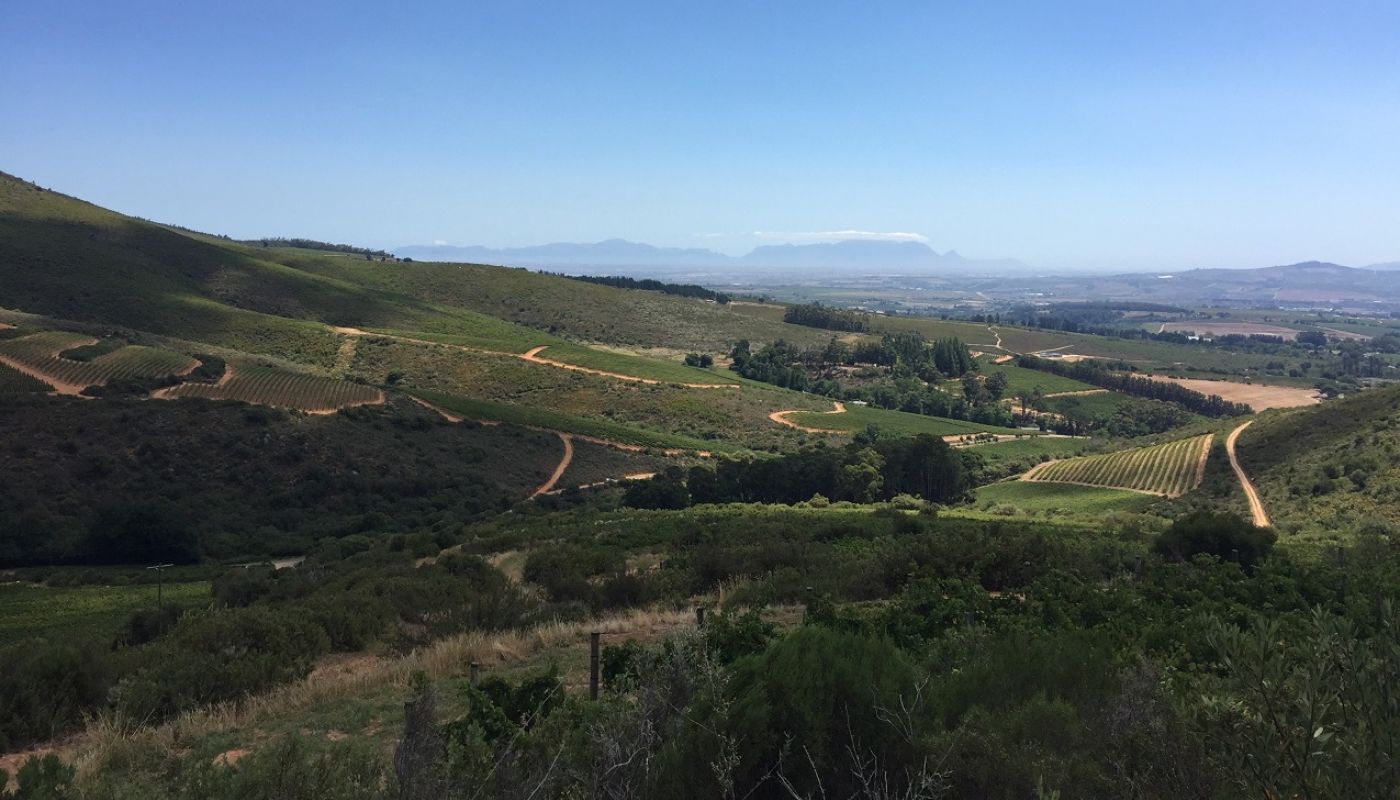
One producer, however, has made people as much of a priority as his product in this sustainability fight: Johan Reyneke of Reyneke Wines. Based on a 90-acre farm in the Polkadraai Hills of the Western Cape’s Stellenbosch district, Johan crafts distinctive and delicious wines that certainly tick the boxes when it comes to the common buzzwords of our era, but it’s his commitment to creating an equitable environment for employees that sets him apart from so many of the others.
But before moving on, let’s go back to the buzzwords for a brief moment. Shortly after taking over the family farm in 1998, Reyneke embarked on the difficult journey of conversion from conventional to organic farming. A daunting task in its own right, the process was further complicated by the lack of government subsidies available to South African farms like his; the risk factor increased exponentially, but it was, for him, the only way forward.
Despite disastrous initial results that saw the return of every possible pest above and in the ground, Reyneke persisted. With the assistance of experts like Jeanne Malherbe, he was encouraged to dig deeper into the philosophies and practices of biodynamic agriculture – particularly after seeing dramatic improvement in his own vineyards once the first preparations were applied. Suddenly, there was a glimmer of light in the darkness; the path forward was becoming clearer.
As made evident by interview transcripts and even the producer’s own website, Reyneke’s approach to farming isn’t so much about innovation as it is a return to so-called ‘ancient wisdom’. When the farm was initially planted in 1863 (then known as Uitzicht, Dutch for view or vista), none of the chemical preparations that would become the norm factored into the picture. Johan and his team have adopted a ‘waste not, want not’ approach that creates an entirely self-sustaining model of viticulture. They have eschewed monoculture in an effort to create a farm that’s entirely self-propelled for the health of the soils, the vines, and, ultimately, the people. From the ducks that eat the snails to the dandelions that dot the landscape, everything has a purpose.
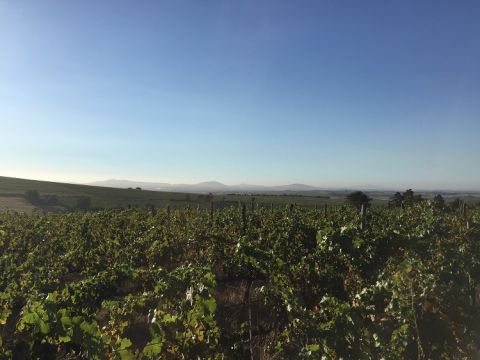
Reyneke was officially certified biodynamic in 2008 (a first in South Africa) by Demeter International, and today they are one of the largest biodynamic operations in the business. In some respects, the farm is a standard-bearer for biodynamic farming in the Cape, and Reyneke is a firm believer in its merits – even if he has admitted in the past that he doesn’t fully understand why it all works. But the proof, as they say, is in the pudding, whether you’re enjoying the structure and violet perfume of his Syrah, the mesmerizing complexity of his fleshy, barrel-fermented Reserve White from Sauvignon Blanc, or the delightful drinkability of his entry-level Vinehugger wines.
If there’s one concept in biodynamic viticulture that has seemingly resonated with Reyneke, it would be that of balance. Since moving from conventional to biodynamic farming, he has become keenly aware of the interplay between all aspects of the farm – including, as I’ve said, the people on it. And it was his experiences working on the farm as a laborer that paved the way for the decisions he would make once he took the reins.
In his early 20s, Reyneke, with his 1990s surfer uniform of bleached dreadlocks, cut his teeth working in the fields to pay his way as a philosophy student. He was, of course, something of an oddity as the only white laborer in a role that had been relegated to communities of color in the wake of Apartheid. He has told the story of a wet, cold day in the vineyards that further magnified his immense privilege as he watched his colleagues stuff bits of used newspaper and other materials into their gloves and shoes in an effort to keep warm. The dichotomy of studying philosophy that resonated with him while working in decidedly contradictory conditions simply became too much. He knew that in order to affect change, he couldn’t do for himself; the change had to lift everyone else up along with him.
Inspired by the work of philosopher Amartya Sen, Reyneke understood that when individuals have the right to choose for themselves, only then are they truly empowered. The Cornerstone Project was born out of this idea in an effort to provide the education and home ownership opportunities desired by his staff. Farm workers and their families have historically faced extreme hurdles to home ownership due to the institutional racism of Apartheid, and their lack of ability to acquire such assets has thwarted economic mobility for a significant portion of the winelands’ laborers. Although Apartheid has officially ended, so many of the structures that propped it up remain firmly entrenched, and the pace of meaningful reform has been woefully and unacceptably slow.
A Bordeaux-style blend anchored by one of the two Cabernets (depending on the vintage) and rounded out by Merlot, the Cornerstone wine’s profits go directly to projects benefiting farm workers. Several workers have been able to purchase homes for themselves and their families, and the proceeds are also going toward tertiary education for workers’ children. More recently, the project has incorporated dimensions related to eventual farm business ownership. Although this is, admittedly, a drop in a very large bucket, it demonstrates what’s possible when efforts are made to ensure a greater degree of equitability – balance, really – on the farm.
This is an especially turbulent time in South Africa’s winelands, and uncertainly looms large. Wine farms are looking to international markets to help save the industry and all of the people whose livelihoods depend on it. Johan Reyneke’s approach is one that should rightfully be emulated as the Cape chips away at the structural chains that have crippled and crushed so many souls along the way. Because the South African wine industry, despite its many dents and scuffs, shines with the same potential that Johan himself saw in his vineyards just a few short decades ago.
















