
Sokol Blosser Winery – A winery gone to the birds (in the best way!)
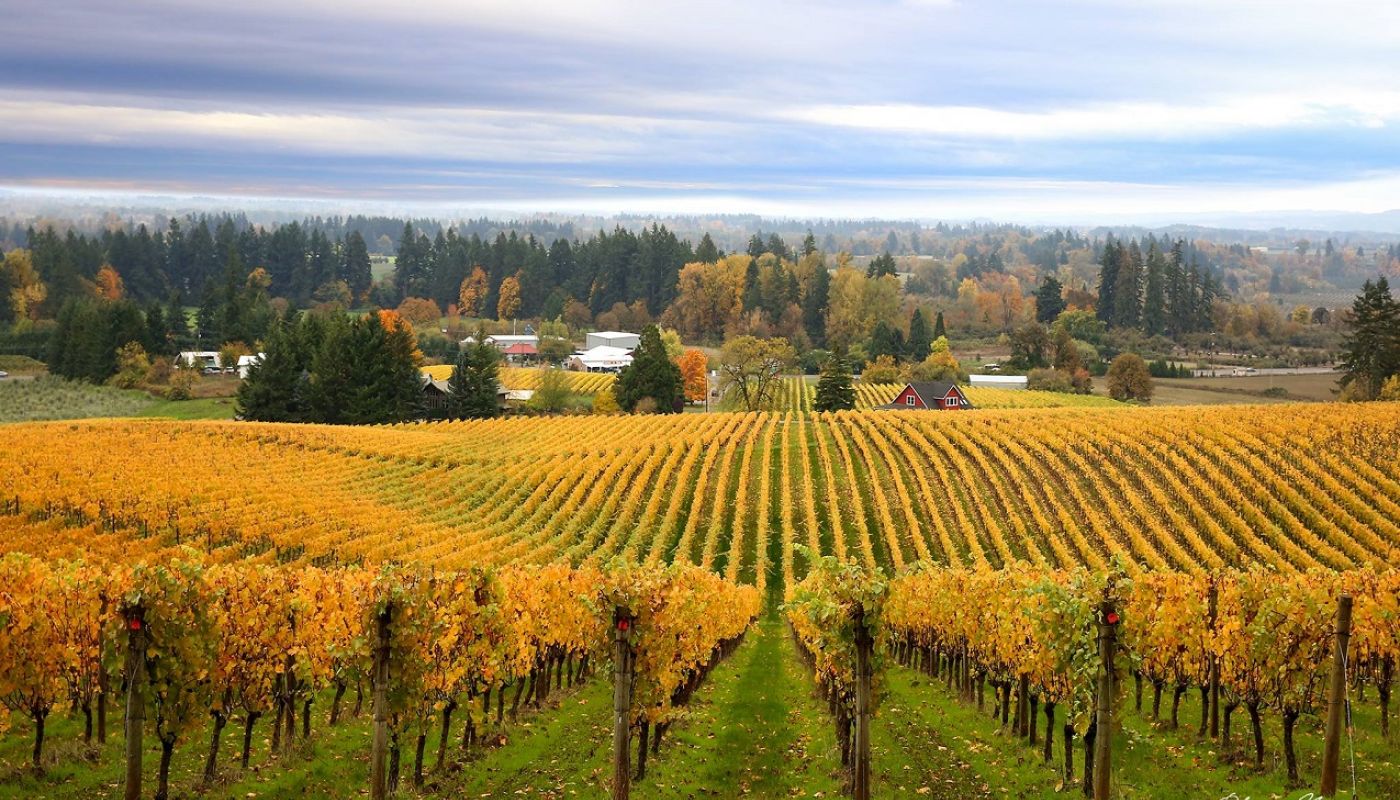
While you might think birds would be unwelcome at a winery, a very lucky group of Western Bluebirds gets to make its home in nesting boxes among the rolling vineyards of Dundee Hills, Oregon. Situated 30 miles south of Portland, these 88 acres under vine belong to Sokol Blosser, a wine estate that has modeled sustainability from its humble beginnings nearly a half century ago to its iconic status today.
It’s an unusual arrangement, but Sokol Blosser’s history has been marked by a series of firsts. In 1971, Susan Sokol Blosser and Bill Blosser headed to Oregon in a Volkswagen camper with a dream to start a vineyard. Possessing two Stanford University degrees yet no education in viticulture, they planted vines in an abandoned prune orchard in what is now the Dundee Hills AVA. They – along with the Coury, Lett, Ponzi, Erath, Campbell, Adelsheim, and Peterson-Nedry families – founded Oregon’s modern wine industry.
Today, Sokol Blosser remains family-owned and run, with the reins having passed to daughter Alison and son Alex, who serve as co-presidents. Alison is also the CEO, while Alex is the head winemaker, and oldest son Nik serves on the board. The company produces 90,000 cases of wine yearly, sold globally under the Sokol Blosser and Evolution brands, which include not only Chardonnay and Pinot Noir—well known for suiting Oregon’s Burgundian latitude – but also Pinot Gris, Riesling, and Müller-Thurgau.
Sokol Blosser has been at the forefront of the sustainability movement for most of its existence. Early on, the family espoused a ‘good to the earth’ motto. This has evolved into its current business model in which every decision is weighed against its impact on the three Ps: planet, people, and profit.
Planet
Early Achievements
Long before climate change became a prominent issue, Sokol Blosser was undertaking progressive vineyard management. In 1983, when most women in wine did marketing rather than farming, Susan supervised a cover crop project to curb hillside erosion, winning her an award from the U.S. Soil and Water Conservation District – although her husband received all the praise at the ceremony.

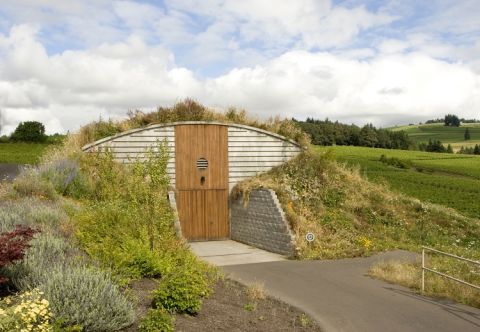
The following decade, Sokol Blosser joined Oregon State University’s LIVE or Low Input Viticulture and Enology movement. Its winery, constructed in 1977, which added Oregon’s first purpose-built tasting room in 1978, was the first U.S. winery to earn salmon-safe certification in 1996.

For Susan, these efforts fell short. After attending a sustainability workshop in 1999, she came away determined to be more progressive. Sokol Blosser achieved three huge feats in the 2000s. First, in 2002, it became the first winery in the world to have a LEED-certified facility – ‘a big experiment,’ Susan says now. Second, in 2005, Sokol Blosser received full USDA organic certification of its vineyards by foregoing the use of synthetic chemicals and fertilizers. Third, in 2007, Sokol Blosser accepted the governor’s carbon neutrality challenge – one of the first wineries to do so. The winery installed a 25kW solar panel system, set aside native plant riparian zones among the vines, offset 22 carbon metric tons by purchasing clean wind energy, and invested in clean energy elsewhere to achieve zero-carbon shipping. For these efforts, Sokol Blosser garnered Sunset Magazine’s 2007 Green Winery of the Year.
‘I don’t know if we were always first,’ Susan recalled, ‘and certainly others have gone beyond what we have done, but we were embracing sustainability across the organization before it was fashionable. We also trained builders and contractors on what it meant to be sustainable. They thought sustainability solely meant creating something that would last.’
Continued Focus
To hold itself accountable, Sokol Blosser publishes an annual sustainability report, in which it records every kilowatt of electricity used in the tasting room, winery offices, cellar, vineyard, orchard house, and harvest house. In 2019, its onsite electric vehicle charging station displaced 407.61 gallons of fuel and offset 7907.61 lbs of CO2, 45% more than in 2018. All but one forklift is electric, and all tractors and trucks run on 50% biodiesel fuel. The company also tracks its wastewater, a figure of 0.65 gallon per gallon of wine, which it hopes to improve with more efficient tank washing equipment.
Each element of packaging is selected with the Earth in mind. Labels are printed with vegetable-based ink on recycled post-consumer waste. Lighter weight glass bottles are sealed with composite natural corks, shipped in recycled kraft case boxes, sold in reusable bottle bags, and stored in FSC-certified wood boxes – the ‘gold standard’ for wood sourced from environmentally managed forests.
In May 2020, Sokol Blosser responded to COVID-19 by being the first Oregon winery to produce boxed wine for the national market, offering its Evolution brand in a recyclable cardboard box format to appeal to demand for value-priced wine. ‘The pandemic has changed the game in every possible way, and as we brainstormed out-of-the-box ways to adapt, we actually landed inside the box. Producing a boxed wine gives our customers great wine at a really friendly price point and it also fits our core value of sustainability,’ Alison told the press. The box produces two-thirds fewer carbon emissions than its 750-ml glass bottle counterpart.
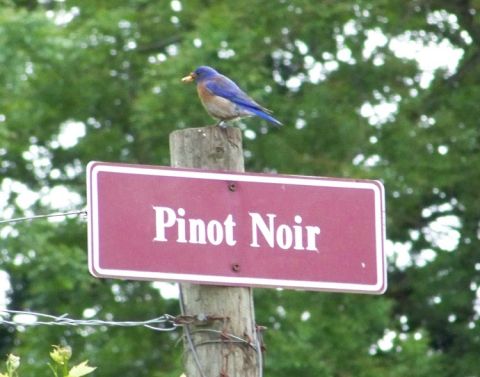
For Sokol Blosser, sustainability is about creating a holistic vineyard ecosystem – which is where the birds come in. For more than 20 years, the vineyard has maintained 15 birdhouses as part of the Prescott Western Bluebird Recovery Project. These bluebirds, in turn, pay their ‘rent’ by eating plant-eating insects. The estate also harbors three bee colonies, chickens, and a fruit and vegetable orchard. Recently, the business donated $1 for every bottle sold of their 2015 Estate Pinot Noir to Save the Bees, a project that introduces honeybees to Western Oregon.

People
Sokol Blosser has repeatedly earned spots on Oregon Business Magazine’s 100 Best Companies to Work For and the 100 Best Green Companies to Work For. Employees receive medical, dental, vision, short-term disability, and life insurance, as well as professional development opportunities and 401K matching. Hourly workers earn 13 days paid time off (PTO) during their first year and up to 28 days each year after six years, while salaried workers enjoy unlimited PTO.
In the area of diversity, Sokol Blosser has the longest way to go, but it has been transparent about this gap. After the tragic death of George Floyd this year, the company announced it was increasing support for social justice organizations to fight systemic racism and was looking into training opportunities for their team, as well as maintaining a platform for employees to share information, reading materials, and donation opportunities.
When it comes to balancing gender, Sokol Blosser has made impressive strides compared to most of corporate America. With a female at the helm for most of its history – starting with Susan in 1991, and then Alison in 2008 – the executive team today is split evenly between females and males. The board is now one-third female, and 61% of employees are female.
Sokol Blosser supports its local communities in a myriad of ways. Employees receive PTO to volunteer 8–20 hours for their favorite charities. In 2019, the company gave more than $76,000 to local charities, including a mobile healthcare clinic that provides free medical screenings for vineyard workers; the Women in Wine: Fermenting Change in Oregon conference; and the Yamhill Community Action Partnership, which supports low-income groups in the county. The company’s leaders as well as its employees serve on boards for local organizations, including the Oregon Winegrower’s Association, Women in Wine, Willamette Pinot Auction, and Yamhill Enrichment Society.
Profit
For Sokol Blosser, profitability forms the third leg of the sustainability trinity. In an interview with Linfield College, Alex chuckled at the reputation that his parents were hippies, noting they were always entrepreneurial first. Alex and Alison have carried on this approach by agreeing that if a more sustainable product or process costs only 5% more, they would buy it or undertake it, but if more than that, they would have to weigh it carefully.
Failure as progress
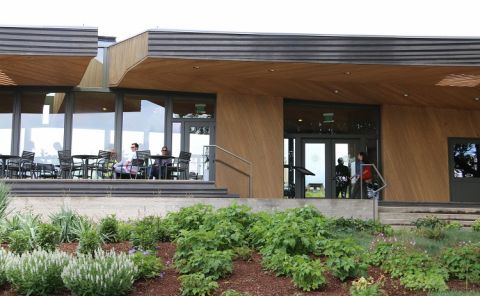
Unfortunately, not every attempt to be sustainable has met those calculations. In 2013, the family built a stunning indoor-outdoor tasting facility and applied for what would have been the first tasting room certified by Living Building Challenge – the architectural standard for regenerative design. The attempt failed at the painful cost of $30,000, raising the larger question of whether certification fees are so high they divert resources from future green investments. ‘We reached high, and we didn’t get it,’ Alison said, ‘We could have gotten LEED-certified with much less effort, but we had already done that.’
Alison and Susan told me about other sustainability flops, including an effort to make eco-conscious labels that fell off the wine bottles when dipped in an ice bucket. Another time, they placed straw bales in between the vines, hoping to retain moisture and keep out bugs but ended up creating the perfect milieu for field mice who girdled the vines. Once, they rented a chipper to recycle ripped-out Chardonnay vines, which proved to take too much time and labor. An attempt to go biodynamic in a designated plot ended up decimating the vines after a mildew attack. ‘There were no easy answers to any of these,’ Susan noted, ‘some things just didn’t work.’
Shunning complacency, in 2015, Sokol Blosser became a Certified B Corp., joining the ranks of Patagonia and some 3,000 environmentally-minded companies. ‘For me,’ Susan said, ‘the key is to be sustainable across all of the winery’s operations. Alison has taken it to a new level with the B-Corp certification.’ Such businesses must meet the highest standards of verified social and environmental performance, public transparency, and legal accountability to balance profit and purpose. In 2017, Sokol Blosser increased their score and earned a spot on the Best for the World: Changemakers list. In 2018 and 2019, they won the Best for the Environment award, given to companies that prioritize the environment in their everyday business practices. ‘Getting B-Corp certified has been a great tool for us. It makes us think through everything we do,’ Alison told me as she held up the thick manual of requirements.
Looking forward and outward
Having achieved carbon reduction in the vineyard and over most of the winemaking process, Sokol Blosser has set its sights on the final steps in getting wine into the customer’s hands. The company is looking at ways to reduce the carbon footprint of its shipments, sales, and marketing efforts.
For Sokol Blosser, achieving sustainability is a never-ending goal. ‘Sustainability is as much about making money, as it about saving the planet, as it is about being good partners with your team and the local community,’ Alex said. ‘I don’t even know how realistic it is to do all three really, really well. A lot of the things that are good for the planet cost us a lot more money … We don’t always do what’s right for the planet, but know that we’re considering it … At the end of the day, that’s what sustainability’s about, you’re having the discussion.’
A sustainability pioneer, Sokol Blosser offers an evolving business model for other wineries to emulate. ‘There are things you can do that will save you money,’ Alison said, ‘such as using LED lightbulbs, recycling, turning down the heat, flipping the lights off, reducing waste, saving water, and then tracking it. Diversifying your workforce and balancing gender doesn’t cost.’ When I asked Susan what advice she would give smaller wineries, she recommended looking at what’s required to become B-Corp certified and then try to meet these standards one step at a time.
‘Sustainability was a concept that was not in our lexicon when we started the winery,’ Susan said, ‘but it has become front and center.’ Indeed, as Sokol Blosser continues to welcome guests to its tasting room, many will wonder why there seem to be so many bluebirds flying around.
(All of the photos are copyright-free from Flickr or were given to me with permission from Sokol Blosser.)
















