Some beings defy Keres, the female daemons of violent or cruel death. They look them in the eye and refuse to succumb to their savage play. They want to live no matter what. I remember a discussion I had with Kostis Dalamaras of the Dalamaras Winery in Naoussa (northern Greece) a few years ago about his old vines. Phenomenal survivors. I was so impressed that I wanted to meet them and see if they could tell me something about their life. I will be relating the story I was told by one of these old goblet xinomavro vines.
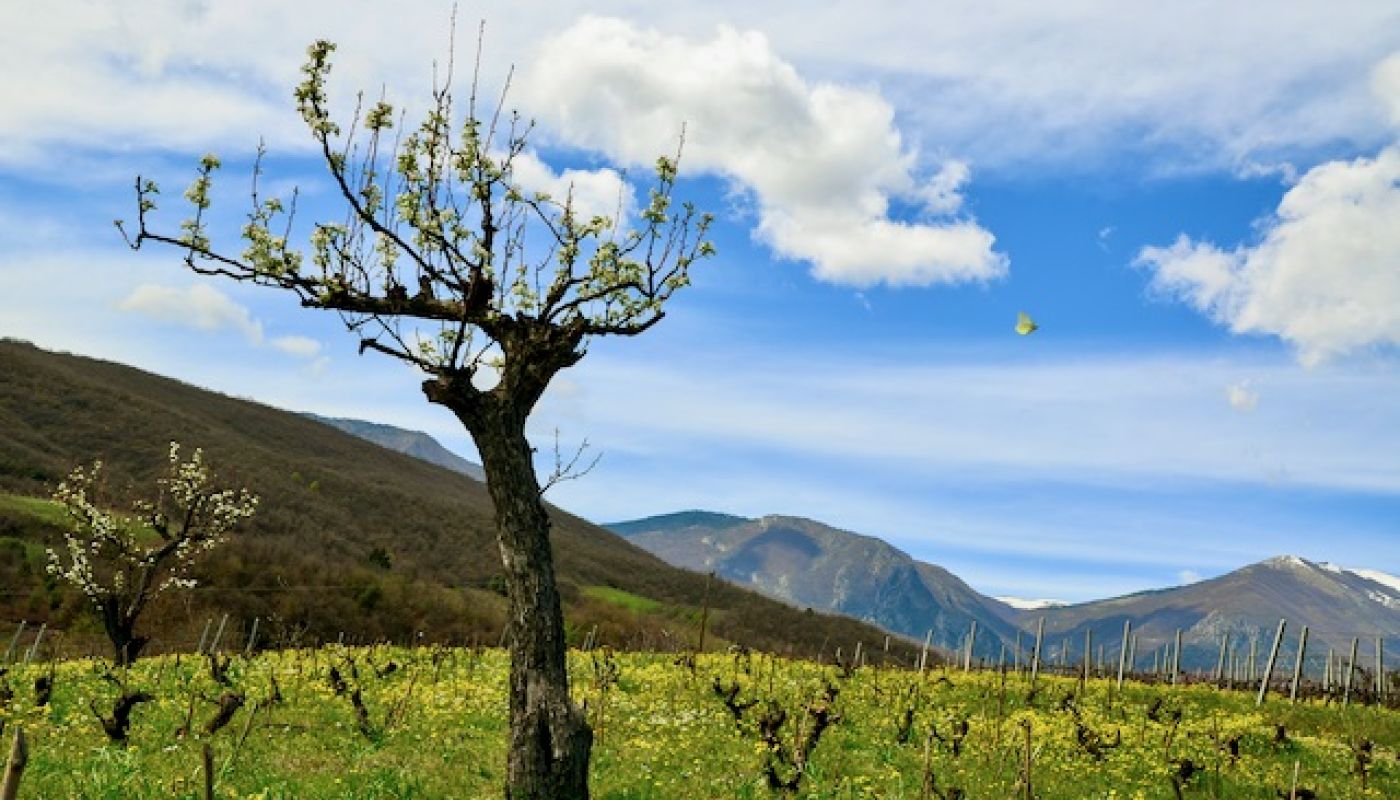
“I have been living on this site, Paliokalias, in Naoussa, for about a century and I am surrounded by my very few friends that survived the horror around us. In the 1920's we watched our neighbours exterminated by a sort of pandemic, named phylloxera, much like what humans are living through nowadays. I remember the panic, the fear, and the despair. At least humans can run away. I could not. I am firmly rooted in my place and had to endure the dread of waiting for the enemy to hit me. I shiver at the memory. Each day our friends sent out signals for help. The vine-growers were aghast. Nobody knew what to do to rid us of the malady. This terrible pest was feasting on our life. Within a few years, by 1928, 95% of our friends died. Lying around us was a vast cemetery of dead trunks and brown leaves, with humans crying at the loss. Why and how we survived is beyond me, but we did. Eight hundred and fifty of us are still standing our ground, on this tiny 0,035ha plot, which is our home. Maybe we got lucky because none of our neighbours were too close to us. I often wonder about why we were spared. Do we have a purpose? Should we prove a point? I cannot say, but I like this idea that we are still alive for a reason. From what I have heard humans say neither our soil, nor our place explains our survival.
During the first years after this death toll, we helped save our variety. Although, many vineyards were abandoned. Our long life has been all but boring. World wars, a guerilla war, a civil war, poverty, emigration and slow revival. But, we managed. We never stopped supporting humans and giving them our fruit, until we got much older and our production declined. People weren't that interested in us any more. They might have thought of pulling us up to replant with young, vigorous, productive xinomavro vines, but as you can see we are growing on very stony soil, which is a mix of sandy clayey loam. It is also very shallow and under that is pure rock. Our roots have managed to pierce this rock. My guess is that young vines would have a very hard time growing here. So, we were allowed to continue our life.
Kostis' father and grandfather knew us since they were children and they had set their hearts and eyes on us. So, in 2003 Kostis' parents made us part of their family. Mind you, they had realised how valuable we are, and how precious the fruit we give is and had been buying our produce since 2000. They always showed us great respect, just as we deserve. They never once thought of replacing us despite the fact that we don't give them much. They care more about who we are and what we represent. We get regal treatment. Maybe more so now that young Kostis has taken over, because he studied in Burgundy and is the first in the family who knows all about vines and winemaking. We try our best to return his care by giving him a bunch, or even two, each. This bunch is really worth his effort. I have heard him say that the xinomavro wine he makes from us, is incomparable. The tannins mature easily, which makes the wine beautiful even in its youth, it is concentrated, complex, soft and easy drinking, with great potential to age. And, it is always of superior quality”. I looked at the vine talking to me and took in its pride, the grandeur of the whorls and gnarls of its trunk, and then I lifted my head and looked around at the other members of the plot. I felt honoured to be here.
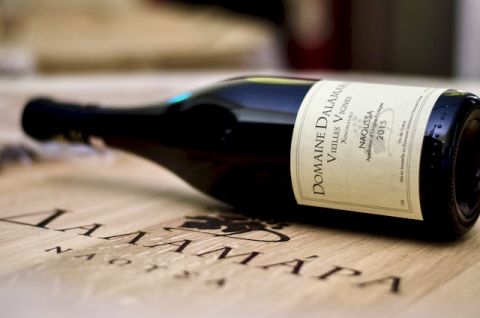
“He calls it some French name, Vieilles Vignes”, the vine continued. “I'm not sure what that means, but I guess it's something to do with how important we are. Because, wines with French names are some of the best in the world. The truth is there are not enough of us to make a full barrel of wine, so he uses some juice from another plot, Vados, that has own rooted xinomavro vines. You see, his grandparents were clever people and they kept cuttings. These vines are in their best prime, in their thirties. Sadly, almost 2/3 of them for the lustre of their youth, and 1/3 of us for the essence. I don't mind blending with these youngsters, I just wish there were more of us.
You've met Kostis. He is a very fine young man, soft-spoken, polite, with the grace of a deer. He even acts like a deer and prefers the peace of our company than the busy, noisy company of humans. He spends much of his time working with the vines and finds refuge up here in Paliokalias, when he needs to think. His lovely mother passed away suddenly in her early fifties, and this left a hole in the hearts of all who knew her. She was a beautiful woman, with finesse and inborn gentility, who loved music, played the guitar and sang beautifully. This is where Kostis would come to grieve. He turned to us for support and we gladly gave him reasons to come here and tend us.
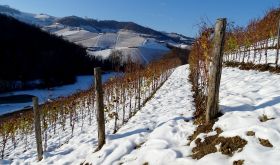
You know, Naoussa is not an easy place to grow in. The winters are bitter with cold and the summers can get really hot. If it weren't for those refreshing cool evenings that invigorate us, the cool breezes from the west, and the nice eastern warm breezes in the early mornings, particularly in the winter, we would often not produce at all. Of course, it isn't just our environment that isn't too hospitable. Apparently, we, xinomavro vines, are difficult to tame, we ripen late and are prone to diseases, mostly powdery mildew. With all this climate change we sometimes get frost at all the wrong times. Being stubby, as we are, helps in such cases. In 2014 we were battered by an amazing hailstorm, and we don't have the stamina any more to endure such hardships. We never managed to achieve our previous state and we now produce even less than we did just a few years ago. I'm sure that if Kostis continues to watch us so methodically, he will come up with a way to restore our strength. But, I shouldn't groan. Age also has its benefits. We never allow Kostis to water us, because our roots are so deep we find the resources we need ourselves. As you can see, we are on a bit of a slope, and that, together with our soil, drains the water away. We can't but go deeper and deeper. We always manage, otherwise we wouldn't still be standing here.
There is so much to remember, I can't fit 100 years into a couple of hours. You must come again. We are all very pleased to know that you will be writing our story. I'm sure there aren't many vines in the world like us. Don't forget to ask Kostis about the wine he makes from us. He will give you the details and I'm sure he will confirm what I told you about it”.
I thanked the vine with all my heart and went my way with a feeling of elation and optimism. I want to be like them when I'm older.
Later on, back at the winery, Kostis provided the information about 'Vieilles Vignes'. He confirms that the bunches from the old vines are not enough to make a full barrel of wine, so he also uses grapes from the 30yr old own rooted xinomavro vines at Vados. The grapes are harvested between the 18-30th September, depending on the vintage, and very careful sorting takes place both in the vineyard and at the winery. I am also told that the workers don’t need clippers to harvest xinomavro bunches, because their stem is really thin and breaks off easily (which can be a problem sometimes, as heavy bunches can be lost before they are harvested). The grapes are destemmed and softly crushed before being transferred to open top temperature controlled stainless steel tanks. Fermentation takes place at 23-26°C, with regular punch downs. Easy in terms of its winemaking, it needs very little, as the juice ferments to dryness with its natural yeasts and will always give great quality wines. The wine is matured in a second and third use 300lt oak barrel for a year and will then spend a minimum of one year in bottle before release. Total SO2 70-80mg/lt. It is bottled unfined and unfiltered. A single barrel is made that amounts to about 340 75cl bottles and 20 magnums. The few precious bottles are sold by list at the winery. Kostis adds that the tannins show great concentration and finesse, and the wine is ready to drink from the very first day (not common for xinomavro wines).
As I was driving back to Athens I contemplated why Kostis likes going to Paliokalias. The serenity, the vines, the mountains, the mystical atmosphere, flood the soul with peace.
Contact Info:
Domaine Dalamara (open to visitors)
G.Kyrtsi 31(1st km Naoussa-R.S.) 59200 Naoussa Greece
Τel: 23320 28321, 23320 26054
Εmail: [email protected]
The photos were provided by the winery to Olga Antoniadou for use with this article.