This spring will see the release of the 2015 Bordeaux vintage. As with most vintages that end with a 5, it looks to be pretty good, even very good. It is yet another opportunity for the Bordelais to re-engage with their consumers, and, after five years of a falling or flat market, those with a commercial interest have their fingers crossed, as do the Bordelais themselves.
Prompted by this article, I started thinking and haven’t really stopped. Neal Martin, Robert Parker’s nominated en primeur taster, thinks that tasting these wines blind is flawed and, initially, I was inclined to agree. Jancis thinks otherwise and, after some reflection, I see her point.
My point, if I have one, is this: you don’t drink wine blind. Knowing what is in your glass or in your mouth is intrinsic to the process. Or is it?
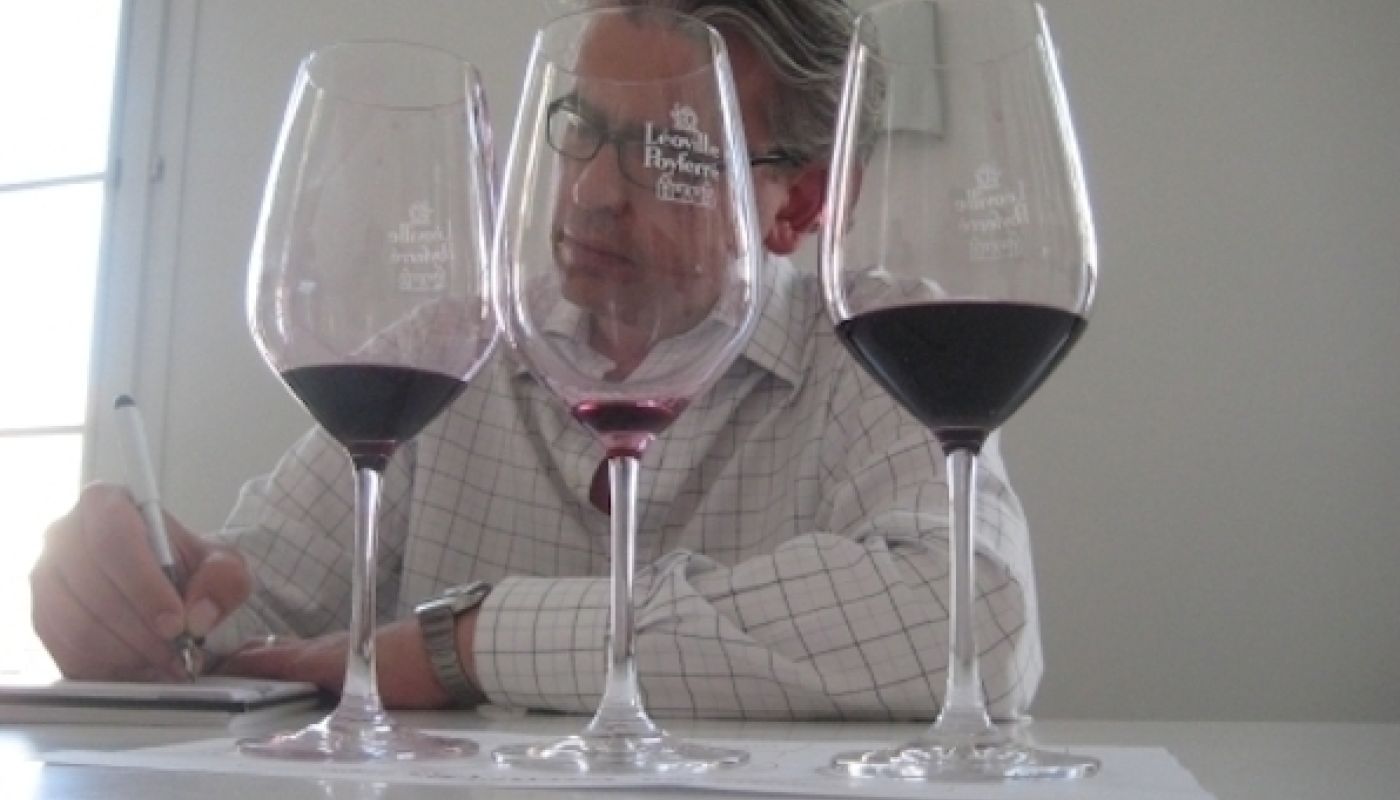
In a circle of like-minded wine lovers, say before lunch or dinner, tasting blind – the simple game of guess the region, vintage, grower, vineyard – can be daunting but, once you’ve done it enough, it’s an opportunity to stretch your mind, test your palate, keep sharp, and to look rather stupid or rather clever or somewhere in between. It’s also an opportunity to really examine what is in your glass, to look at it objectively, and to look further into it than you might do otherwise. It is fun, and it is rewarding.
The initial process can take a while. Most of us can get, or at least come to a conclusion on, grape variety and/or region fairly quickly. Vintage is always tricky though years such as 2009 and 2003 do stand out for most of France though. At the same time, this is where the problem begins. The problem is your brain, and its default setting: to process all the information, not just the information that is in front of you. This is where I always come unstuck. Too many multiple processes going on at the same time. I have one friend, for example, who will always serve wines that he knows I like. So: Roc de Cambes, anything Lafon, etc, etc – and this is always at the back of my mind when I’m making my guess. Your brain, you see, is always trying to make it easier for you. It’s always trying to auto-complete. It’s a bit like predictive text on an iPhone and, like predictive text, it doesn’t always work. This is blind tasting’s flaw, at least it is if you have a mind like mine, one that just won’t shut up.
At more academic tastings, wines are often shown blind. I have tasted the 2011, 2010, 2007 and 2004 Bordeaux vintages from bottle in this fashion, and it is a very effective way of doing things. All merchants or critics or whatever you like to be called have soft spots for various properties; tasting the wines blind simply removes any prejudice. A few wines are easy to spot, but that’s not the point. Indeed, if you spend time, or let your mind wander to trying to spot which wine is which, then judgement of each becomes very tricky: your brain throws in a few more dots to join up, some of which might be the wrong ones. What strikes me most is how the playing field is levelled out a little, and some of the grander wines, wines whose labels would normally command some deference, some respect, can lack the pzazz that they would, or should, normally show. Equally, the dark horses often get their run.
Now this is where, I think, it gets tricky. Where it gets back to context. You don’t drink wine blind. When you open a bottle of something swanky you know what it is, and human nature is such that you will have made certain that your guests know what it is. The ‘reveal’ after a blind tasting is the fun bit, and where you start enjoying the juice instead of examining it. And enjoyment is what it is for, and part of your enjoyment of that wine comes from knowing what it is. It adds to the occasion. And, maybe, knowing what you are drinking enhances your ability to enjoy what you are drinking.
Tasting wines from barrel in the spring following the harvest is, to a degree, folly. Doing it blind is arguably even more so. The wines are unfinished. Samples are variable in terms of freshness, cleanliness and honest preparation. A few are, well, a little cooked up. And then there is the weather. Wines tasted on a clear and sunny day will almost invariably taste better than those tasted on a miserable and overcast one (it’s mostly about atmospheric pressure, I think). And then there is you: the subject. How is your mood? More importantly: how is your nose? And what are your preconceptions? And how much are you listening to those around you? I always make a point of keeping silent when tasting: any hint of approval or derision may influence those around me. Other tasters are not so thoughtful. And, halfway through a week of tasting, there's always a couple of wines that people are talking about at lunch or dinner: ‘Have you tasted Château _____ yet?’ will be heard.
The truth is, in my view, that tasting a vintage en primeur is so, so, so, tricky in the first place, that to do it blind is a little like writing left-handed. It may well focus the mind and bring objectivity to the table, but, equally, it may compromise the end result. And, when there is every chance that the samples that one is tasting have been, if not manipulated then certainly polished, tasters needs all their wit about them.
After the gluttonous party that surrounded the 2009 and 2010 vintages, Bordeaux is in a bit of a pickle. The hangover has more or less cleared, but the party is over, the bar long closed. And one player in particular has left the scene, probably never to return: Robert Parker, the man whose judgement on a wine, a vintage, is or was more important than the sunshine or the soil that made it. En primeur without Robert Parker is like Happy Days without the Fonz, or the Muppet Show without Kermit, and it will never be the same. This may well be a good thing (or maybe not) but it leaves the Bordelais with a problem, and it leaves those who trusted his judgement with a problem too: those who do not have the pleasure of tasting the 2015 Bordeaux vintage before they buy it now have to either (a) pick one of the alternative runners and riders – Jancis, Neal, James, or whoever (the merchants will be quoting whoever throws the biggest scores around) or (b) read through all of their notes and scores and hedge their bets. Or, and this is what I guess the Bordelais must fear, (c) stand fast and not buy at all.
If we choose one runner, which is what I’d do, then I’d like them to be tasting with their eyes wide open, which is what I do. If we choose a panel then one or two of the panel tasting blind may well add something extra to the mix, but I’m not entirely sure what – most tasters will sample 250 to 300 wines in an en primeur week, some will do more. It is not easy to do well, and it’s hard work even for those that don’t. Why make it harder?
It is, of course, a matter of choice and it may well be a matter of skill and experience, but judging wines in a way that is so far removed from the context that those wines will be enjoyed in strikes me as extreme, almost gratuitously so. The aim is what? Objectivity? Objectivity doesn’t exist when it comes to taste – taste is intrinsically subjective. And what is there to be afraid of in seeing a label? That the name of the property will seduce the senses? This is half the point of Bordeaux but I am fairly certain that I can rise above any prejudice here and that other professionals, especially those without a financial interest, can do the same.
All of this was provoked by Jancis’s article. I started off in the other camp, wrote the above, then changed my mind. Then changed it again. And now I’m in two halves: no longer on the fence but, irritatingly, on both sides of it and satisfied with neither. The fact is that I quite fancy doing a vintage blind from barrel. I’d need a fair bit of time, and I’d need convincing that the samples were clean (I’m arrogant enough to reckon that I can spot the manipulation) but, after a fair bit of thought, it might just be the way to do it properly.