I’m ashamed of not having visited any Loire wine region other than Sancerre and Pouilly-sur-Loire for years, despite travelling far and wide in the wine world. Especially since the Loire’s time has come. Its fresh, relatively low-alcohol wines with the emphasis on whites are what many wine drinkers are currently seeking.
Fortunately for me, however, Chris Hardy of Charles Sydney Wines held an illuminating tasting in London recently. Hardy, the Balliol-educated former Majestic wine buyer, took over this leading supplier of Loire wines to the UK in 2016. Of course his wares are just a snapshot of what’s available, but 75 carefully selected producers were represented and nearly 300 wines shown. I decided to concentrate on the dry white still wines, the chief output of Loire vineyards.
The one thing that was very striking was the massive contrast between 2024 and 2025 vintages in the Loire. As in Burgundy, as I reported recently, the 2024 growing season was horribly cool and wet and most 2024s at the tasting really stood out for their unusual lack of ripeness. Whereas the 2025s, from an early, particularly healthy (though not desperately abundant) vintage, were absolutely charming. The wines shown by Charles Sydney Wines were being offered to the trade, so it will take a few months for them to make their way on to shelves and lists, but the 2025s really are worth waiting for.
Setting side 2024, it was quite clear that in general the Loire’s dynamic vine-growers no longer have to struggle to ripen their grapes as they once did, and those good enough to be in the Charles Sydney portfolio seem determined to express their particular terroir in the bottle.
These terroirs vary enormously as one travels upriver, from the relatively flat Muscadet region in the hinterland of Nantes, the Pays Nantais, to the very distinct characters of Anjou, Saumur, Touraine with its bluffs of Vouvray and Montlouis as well as the red-wine country of Chinon and Bourgeuil to the completely different rolling landscape of the Central Loire, home to the popular Sancerre and Pouilly-Fumé appellations plus better-value offshoots. (For an overview of the appellations, see the World Atlas of Wine map of the Loire Valley wine region).
And recently there has been added a whole new Loire region, Volcanic Loire, even further upriver than Central Loire, in the Auvergne and north of St-Étienne. Producers in the resurgent appellations of St-Pourçain, Côtes d’Auvergne, Côte Roannaise and Côtes du Forez have banded together to promote the region’s wines, generally based on volcanic soils and some of it arrestingly dotted with flat-topped or cratered green cones that were once volcanoes, which UNESCO has made a World Heritage Site. The wines (and coal) of the Auvergne were once famously popular in Paris.
No white representative from this exciting ‘new’ region was included in the Charles Sydney tasting but there was no shortage of evidence of the confidence and ambition of vignerons in the Loire, a wine region with an unusually high proportion of organic certification.
Arguably, the Loire wine region that has seen the greatest transformation is Muscadet, the best-value white-wine region in the world, if you know where to look.
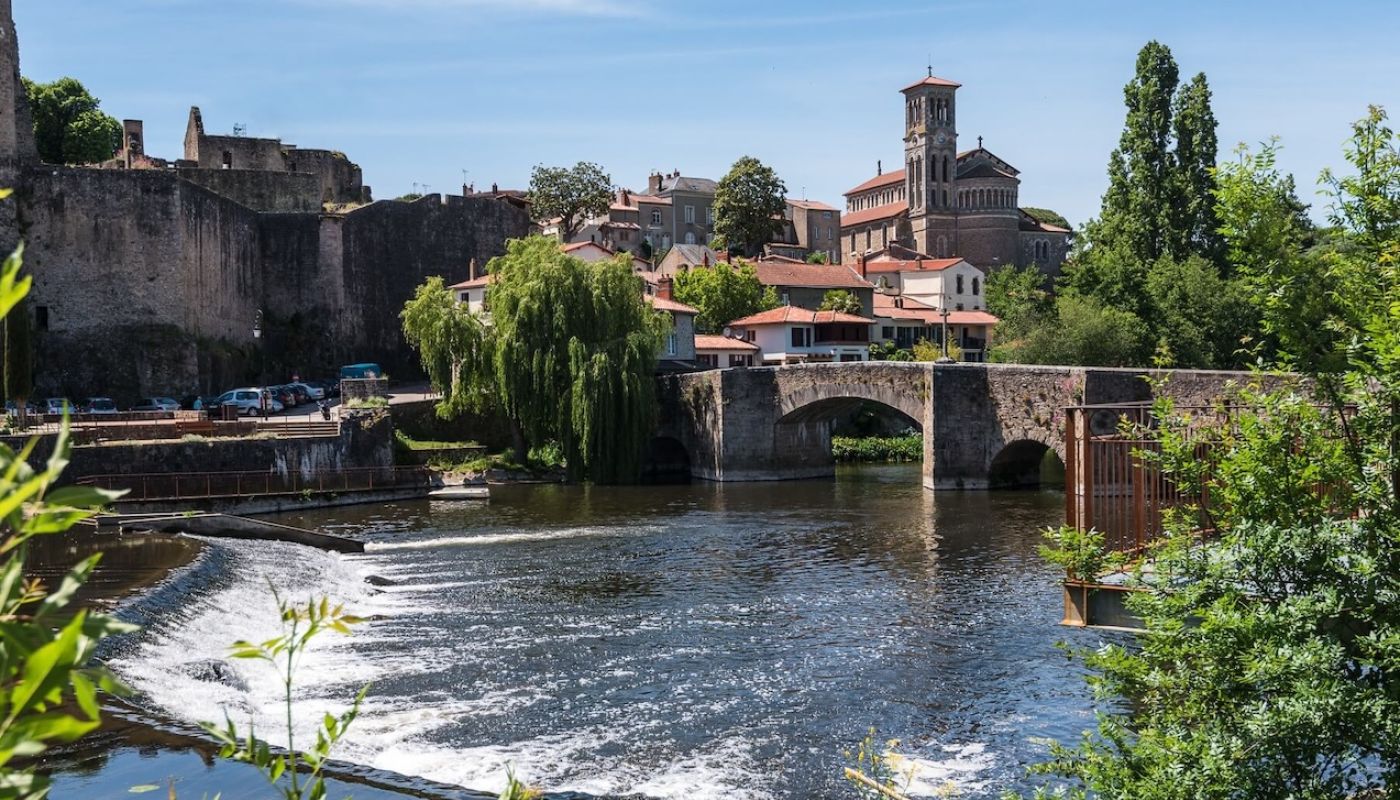
The Melon de Bourgogne grape of Muscadet is a relative of the white burgundy grape Chardonnay and it shows in the best wines of the region. Many of these belong to a new subcategory, Muscadet cru communal, which can have the name of a locally distinctive commune appended to the appellation name, for example Muscadet-Sèvre et Maine Clisson. (The words ‘cru communal’ are not on labels.) At the tasting, François Lieubeau of Famille Lieubeau showed two beautiful 2023s from the communes of Clisson and Goulaine respectively, just 12% and 12.5% alcohol but intense and deep-flavoured with obvious potential for ageing – at less than £20 recommended retail price (RRP).
Understandably more expensive was Lieubeau’s even more concentrated 12% La Minée 2022 from a plot mentioned in the first written document citing Muscadet, in 1616, in the commune of Château-Thébaud.
Quite a bit of Chardonnay itself is now grown in the Muscadet region and I tasted several pretty examples, all sold as IGP Val de Loire and likely to be available in the UK at between £10 and £12. But they were much less serious wines than the best Muscadets.
Wines were grouped by grape variety (blends are uncommon among Loire whites) and I tasted the Sauvignon Blancs before the Chenin Blancs of Anjou-Saumur. The price difference between a Sancerre or Pouilly-Fumé and other Loire Sauvignon Blancs is extremely marked. While one of my favourite Sauvignons, Domaine La Tour Beaumont, Le Fié Gris 2025 Touraine Haut-Poitou (made from a colour mutation of Sauvignon Blanc known as Sauvignon Gris), has a likely UK retail price below £14, the Sancerres and Pouilly-Fumés I tasted would probably vary from £20 to £65. And a lone bottle of the ‘icon wine’ Didier Dagueneau, Silex 2020 on the table – sold not as a Pouilly-Fumé by the late Didier’s son Louis-Benjamin but as a Vin de France – carried the dreaded price tag POA (price on application) in the tasting booklet. (See a price and stockist in my recommendations below.) Reputation is a wonderful thing – and well earned in the case of Dagueneau.
Three standout 2025 Sancerres are listed in my recommendations but older vintages of them are easier to find for the moment. The Domaine du Clos St-Martin is especially rich and concentrated and, while a dramatic drink, may not sync with some wine lovers’ idea of a typical Sancerre. Older vintages of Domaine Alphonse Mellot, La Moussière Sancerre, partially aged in oak, are relatively easy to find, especially in cases of six bottles in bond from £160 and up. The 2025 La Moussière (14.5%) starts off rich and then becomes surprisingly elegant. Nineteenth-generation Mellot’s Génération XIX 2022 Sancerre still positively throbs with life but the price may give you a headache.
Best-value Sauvignon Blancs shown, with a likely RRP well under £15 a bottle, were a brace of wines from Reuilly, a mixed-farming Sancerre satellite: Matthieu et Renaud Mabillot, La Ferté 2025 Reuilly (13.5%) and Domaine de Reuilly – Denis Jamain, Les Coignons 2025 Reuilly (13%). They are much easier to find in France than in the UK, unfortunately.
After the Sauvignon Blancs came the Chenin Blancs of the middle stretch of the Loire Valley between Muscadet and the Central Loire. The first wine I tasted, Domaine des Deux Vallées, Équilibriste 2025 Vin de France, was so good that I immediately concluded that Chenin is vastly superior to Sauvignon, which is a bit unfair. I had previously enjoyed the much less dramatic 2023 vintage of this wine that Waitrose stocked at £8.99 but apparently it never took off. Laithwaites are currently offering the 2024 vintage, which I haven’t tasted, as Equilibrium at £12.99 and are expected to switch to the lovely 2025 in the next month or two.
Honey, apples and straw are all descriptors of Chenin Blanc, which, in the Loire, comes in all sweetness levels as well as being the basis of many a sparkling wine. But with warmer summers, the proportion of dry Chenins has increased enormously, with François Chidaine and the late Jacky Blot of Domaine de la Taille aux Loups in Montlouis showing how it should be done many years ago. Blot’s son Jean-Philippe was at the tasting and is clearly carrying the torch splendidly. The domaine’s Triple Zéro (latest vintage based on 2022) has long been one of France’s finest non-champagne sparkling wines, and even Jean-Philippe’s 2024 dry whites, which was all he had to show since his 2025s won’t be bottled until late spring, showed extremely well. His bottling from Clos de la Bretonnière and the tiny Clos de Venise in Vouvray have to be labelled as Vin de France because they’re not vinified in Vouvray. Millésima UK have an excellent range of wines from this talented producer, and they are not overpriced.
I’m a big fan of Savennières, dry Loire Chenin at its most pungent. Domaine des Deux Vallées 2024 would make a good introduction to the style, although it’s nothing like as smouldering as Château Pierre-Bise’s 2022.
And finally, note Jérôme Choblet’s hard work on the Grolleau grapes he grows at Domaine des Herbauges in the Muscadet region to come up with creditable white, pink and improving red IGP Val de Loire wines that are naturally only 8.5% alcohol. He deserves encouragement.
Recommended Loire dry whites
Note that many of these are older vintages of the 2025s tasted recently, but do look out for the 2025s expected in the next few months.
Pays Nantais
Taste the Difference Mid Strength 2024 IGP Val de Loire 8.5%
£7.75 white and rosé Sainsbury’s (2025 Domaine des Herbauges Grolleaus – red, white and rosé – expected at Waitrose in April)
Jérémie Huchet, Chemin des Prières 2023 Muscadet 12%
£12.50 The Wine Society
Domaine de la Combe, Vendange Nocturne 2025 Muscadet 11.5%
2022 is £12.89 Wildflower Wines, 2019 is £14.89 Tilley’s Wines
Sauvignon Blanc
Domaine Paul Thomas 2025 Sancerre 13%
2022 is £22 Freds Drinks, 2023 is £25.90 Bon Coeur
Domaine du Clos St-Martin 2025 Sancerre 13.5%
2023 is £32 Wine Source
Domaine Jean-Max Roger, Cuvée Genèse 2025 Sancerre 13%
2023 is £35.95 Champagnes and Châteaux
Domaine Alphonse Mellot, Génération XIX 2022 Sancerre 13.5%
£61.71 IDealWine UK
Domaine Didier Dagueneau, Silex 2020 Vin de France 13.5%
£165 Wine Tasting Adventure and others
Chenin Blanc
Domaine des Deux Vallées 2024 Savennières 12.5%
2022 is £16.99 Averys, Sunday Times Wine Club
Domaine de la Taille aux Loups, Triple Zéro Sparkling NV Montlouis-sur-Loire 12.5%
£26.20 Millesima UK, £27.65 Justerinis
Domaine de la Taille aux Loups, Clos Michet 2024 Montlouis-sur-Loire 12%
£31.80 Millesima UK
Domaine de la Taille aux Loups, Clos de la Bretonnière 2024 Vin de France 12%
£36.30 Millesima UK
Château Pierre-Bise 2022 Savennières Roche aux Moines 14.5%
£39.44 Lay & Wheeler
Dom de la Taille aux Loups, Clos de Venise 2024 Vin de France 12%
£41.80 Millesima UK
For tasting notes, scores and suggested drinking dates for the 2025s and some of the other wines, see yesterday’s tasting article and our tasting notes database. For international stockists, see Wine-Searcher.com.
Image at the top of this article © Emeline Boileau courtesy of the Fédération des Vins de Nantes.