‘Nightmare’, ‘misery’, ‘exhausting’, ‘unremittingly grim’, ‘desperate’ with ‘gruesome’ final yields. All comments on the 2024 burgundy growing season that have been made by both observers and participants. ‘Classic’, ‘precise’, ‘elegant’, ‘defined by freshness, clarity and poise’ is how the UK merchants currently trying to sell the resulting wines describe them.
Burgundian vignerons have been worrying about the dangerously drier climate that seems to be heading their way for years but in 2024 they had enough rain for a decade’s worth of growing seasons. During the crucial flowering season in late spring in both frost-hit Chablis and the main Côte d’Or region, the rain was so heavy that it positively pummelled the little vine-flowers that should have developed into grapes, particularly the later-flowering Pinot Noir.
The rain, and unusually low temperatures, continued throughout June and July, encouraging rampant downy mildew that, unusually, had begun as early as the flowering season, so that almost as soon as one spraying was administered, it was washed off the vine and it was time for another. According to Mark Haisma, who professed himself ‘delighted at least that we managed to get to harvest and did actually harvest something’, average rainfall records were smashed only halfway through the year. (His experimental 12.5% organic Shiraz Vin de France was a surprise hit during Burgundy Week for me.)
Vines at the soggy bottom of the Côte d’Or, the golden slope of all of Burgundy’s most famous vineyards, tended to suffer more than those at the top, where some of the rain drained away downhill.
One after another vignerons who had previously committed themselves to organic viticulture decided to abandon that path in favour of more effective systemic sprays simply to save the crop. Thibaud Clerget of Domaine Yvon Clerget told me he managed to stick to his organic principles only by going through the vineyard with permitted treatments 15 times – far more than usual. In his detailed report, our man in Burgundy Matthew Hayes explained that the much-admired Pierre-Yves Colin-Morey of Chassagne-Montrachet in the Côte de Beaune managed ‘respectable’ (but most unusual for 2024) yields of as much as 35 to 40 hl/ha by abandoning his usual organic preparations early on.
Admittedly the Côte de Beaune with its greater reliance on Chardonnay was slightly better off than the Côte de Nuits in the northern half of the Côte d’Or, but there were widespread reports of losses of the potential red-wine crop of up to 80%, with the white-wine crop down 30%.
Late August brought a little respite so that such grapes as had escaped mildew and rot were able to benefit from slightly warmer weather, and sugar levels in the grapes rose. But the alcohol levels in the resulting wines are unusually low, often under 13%. Unusually for this warmer century, many vignerons felt impelled to chaptalise, adding a little sugar before or during fermentation to increase the final alcohol level and/or prolong the fermentation.
Thanks to the cool summer, and the grapes’ struggle to ripen, acid levels in the resulting wines, reds as well as whites, are high. The successful reds could be described as pretty, but never as concentrated, which in some examples seemed to accentuate the acidity and made them taste a bit raw. They are relatively pale with tannins barely perceptible, and some wines already seemed dangerously evolved. A vintage to drink relatively early then – if you can afford to buy it.
If 2024 had been a generous crop, there might have been some hope of a reduction in the sky-high prices of burgundy we have seen in recent years but the fact that 2025 is also a relatively small vintage has kept prices more or less stable.
The paucity of grapes made life difficult in many a cellar. Tanks which are usually full for the fermentation were only half-full or less, increasing the risk of oxidation, microbial infection or, the vigneron’s nightmare, a stuck fermentation. In recent years many producers have been cutting back on the proportion of new oak they use because oaky wines are so unfashionable. And anyway the 2024 fruit was hardly robust enough to handle the impact of new oak. But for wines such as grands crus and some premiers crus, for which a higher-than-average proportion of new oak is customarily employed, there were instances of having to use as much as 50%, simply because there was only enough wine to fill two barrels.
One of the major operations in red winemaking is extraction, persuading dark-skinned grapes to release colour and flavour from the skins (see Back to basics below). Grégory Patriat, Jean-Claude Boisset’s winemaker, who seems to have managed to make a fist of what he called his ‘garage wines’ because quantities were so small, observed that in the cellar the danger with the 2024s was ‘to try to extract what wasn’t there’.
In Burgundy, and with Pinot Noir vinifications in general, there has been a fixation on the proportion of whole bunches, or whole clusters, of grapes that go into the fermentation vat rather than being destemmed. The stems and bunches can usefully aerate the fermenting must and can add freshness to the resulting wine, especially if the stems haven’t lignified (which Patriat, incidentally, claims hardly ever happens in Burgundy).
Because Chardonnay grapes were less affected by 2024’s vicissitudes, white burgundies – ever popular according to UK wine merchants – are more widely available than reds, even if they also tend to taste brisk (sorry, ‘classic’ and ‘precise’) rather than generous.
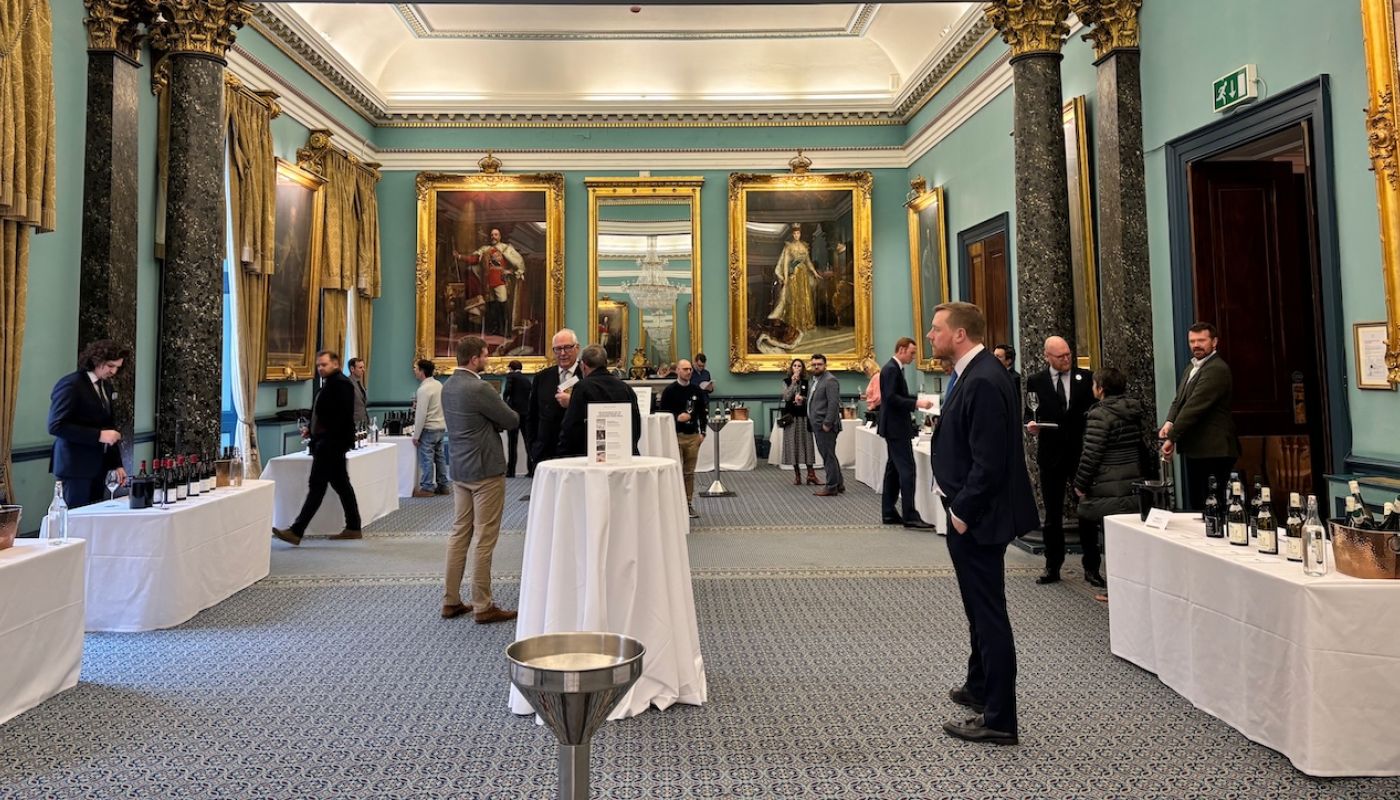
Despite all this doom and gloom about the 2024s, and their paucity, London’s customarily hectic week of burgundy tastings took place as usual this month with what felt like as many different samples as usual – presumably spurred by the UK merchants’ desire for cash – even if the available quantities of each wine were presumably much smaller than usual. Quite a few of the tastings included numerous older vintages as well, indicating a certain resistance to burgundy price levels among the merchants’ customers.
One important thing to note, however, is that the vineyards south of the Côte d’Or in the Côte Chalonnaise, the Mâconnais and Beaujolais suffered very much less in 2024 and quantities produced were much more generous. It’s also true that the wines produced in each of these regions, much less widely shown during Burgundy Week than the Côte d’Or classics, are not just generally much cheaper than those from the Côte d’Or, but have become very much more sophisticated in recent years. Head south for value in 2024.
The most successful producers I encountered in the nine tastings I attended are listed below but my fellow MWs Julia and Andy were able to taste at a total of 10 more. All our tasting notes are already published even if not yet edited and neatened up in articles grouped alphabetically by producer (sur)name.
Producers of successful, relatively well-priced 2024s
From wines tasted chez Flint, Goedhuis Waddeson, Justerini & Brooks, Liberty Wines and Robert Rolls, although I gave only a very meagre handful of scores above 17 out of 20. Producer names, in alphabetical order by surname, are followed by where they are based.
Domaine Bertrand Bachelet, Maranges
Domaine Aline Beauné, Montagny
Domaine Billaud-Simon, Chablis
Domaine Samuel Billaud, Chablis
Jean-Claude Boisset, Nuits-St-Georges
Domaine Jean-Marc Burgaud, Morgon
Domaine des Chézeaux, Gevrey-Chambertin
Domaine Yvon Clerget, Pommard
Domaine du Clos des Rocs, Loché
Domaine Comte Armand (reds), Volnay
Domaine Marc Colin, St-Aubin
Domaine Philippe Colin, Chassagne-Montrachet
Domaine Coquard-Loison-Fleurot, Flagey-Echézeaux
Domaine Jean-Paul Droin, Chablis
Maison Joseph Drouhin, Beaune
Domaine Dubreuil-Fontaine, Pernand-Vergelesses
Domaine Drouhin-Laroze, Gevrey-Chambertin
Domaine Duroché, Gevrey-Chambertin
Jane Eyre, Cissey
Domaine Faiveley, Nuits-St-Georges
Jean-Philippe Fichet, Meursault
Justin Girardin, Santenay
Domaine Henri Gouges, Nuits-St-Georges
Domaine Patrick Javillier, Meursault
Domaine Lafouge, Auxey-Duresses
Domaine Lamy-Pillot, Chassagne-Montrachet
Domaine Laroche, Chablis
Domaine Lejeune, Pommard
Benjamin Leroux, Beaune
Domaine de la Monette, Mercurey
Domaine Alex Moreau, Chassagne-Montrachet
Domaine Thomas Morey, Chassagne-Montrachet
Domaine Michel Niellon, Chassagne-Montrachet
Domaine Philippe Pernot-Bélicard, Puligny-Montrachet
Domaine Elodie Roy, Maranges
Domaine Sérafin, Gevrey-Chambertin
Domaine Jean Tardy, Vosne-Romanée
Domaine Tessier, Meursault
Domaine Tollot-Beaut, Chorey-lès-Beaune
Domaine Tupinier-Bautista, Mercurey
For tasting notes, scores and suggested drinking windows for individual wines follow this link.
Back to basics
How to make wine red |
|
Dark-skinned grapes are essential because all the red colour (and tannins, and much of the flavour) is in the grapes’ skins. Apart from a few unusual red-fleshed grape varieties known as teinturiers, the flesh of all grape varieties, whatever the colour of their skins, is a sort of greyish green.
It is therefore crucial to encourage the skins to release these important ingredients into the must, as the dense, fermenting grape juice is known. Optimising the extraction of just enough colour, tannins and flavour during fermentation is much of what modern red winemaking is all about. In the fermentation vat, the grape skins rise to the top to form a thick ‘cap’ and extraction may be encouraged by pumping the must over the cap, or plunging the cap into the must by various means, either manual or automated.
Once the fermentation is complete and the winemaker decides there has been enough contact between the skins and the must, the young wine is separated from (racked off) the skins. The thick mass of skins remaining in the fermentation vat is then pressed to release particularly tannic, deeply coloured, so-called press wine and the winemaker decides how much of it, if at all, to blend in to the young wine before it is aged in barrels, larger casks, vats or tanks before bottling.
For much more on the full process of making red wine, see the Oxford Companion to Wine entry on red winemaking. |