As you can see [if you are watching the video of this report], a bit of a change of venue today – I am currently in Australia for my Master of Wine seminar. Before I get to global news, I’d like to point out that JancisRobinson.com now has two podcasts – this one, under The Wine News in 5 from JancisRobinson.com, and The JancisRobinson.com Podcast, where Richard Hemming has been publishing the story of Jancis’s life so far. He’s done an incredible job interviewing Jancis, as well as friends and family from different periods of her life, and editing these interviews together in a way that is humorous, engaging and, honestly, pretty restful and relaxing. I highly recommend giving it a listen.
On to the news. Today I’ll discuss recent protests in France as well as government aid for uprooting vineyards; the acquisition of Domaine Sigalas in Greece; Vinarchy considering axing 60 brands; an early ice-wine harvest in Germany; and the oldest vine in the world.
Protests in France and government aid for winegrowers
On 15 November 4,000 demonstrators – largely winegrowers – gathered in the streets of the city of Béziers in the Hérault department of southern France. Romain Angelras, president of the Young Farmers of Gard, Jérôme Despey, president of the Hérault Chamber of Agriculture, and Damien Onorre, president of the Aude Winegrowers’ Union, spoke to growers and passers-by about the difficulties facing the winegrowing community in France and the need for a fair minimum price for wine as well as emergency financial support and funds for uprooting and distillation and for a promotional campaign to increase exports. Despey called for the release of at least €200 million from the European crisis reserve.
Following on the heels of the protest, on 17 November, a Lidl supermarket in Béziers that had been selling bottles of Pay’s d’Oc wine for €1.35 this summer was vandalised. The Divipro bulk-wine broker in neighbouring Nissan-lez-Enserune, which is known to offer systematically low prices to supermarkets such as Lidl and Leclerc, was also vandalised.
With all the unrest it comes as a relief that on 24 November France’s Minister of Agriculture, Annie Genevard, announced a support plan for France’s wine industry. The plan includes €130 million in national funding for uprooting, €5 million to relieve social security contributions – with another €10 million planned for next year – and the extension of structural loans. In addition, Genevard has called on the European Commissioner for Agriculture and Food to mobilise the European crisis reserve to secure funds for distillation.
Acquisition of Domaine Sigalas
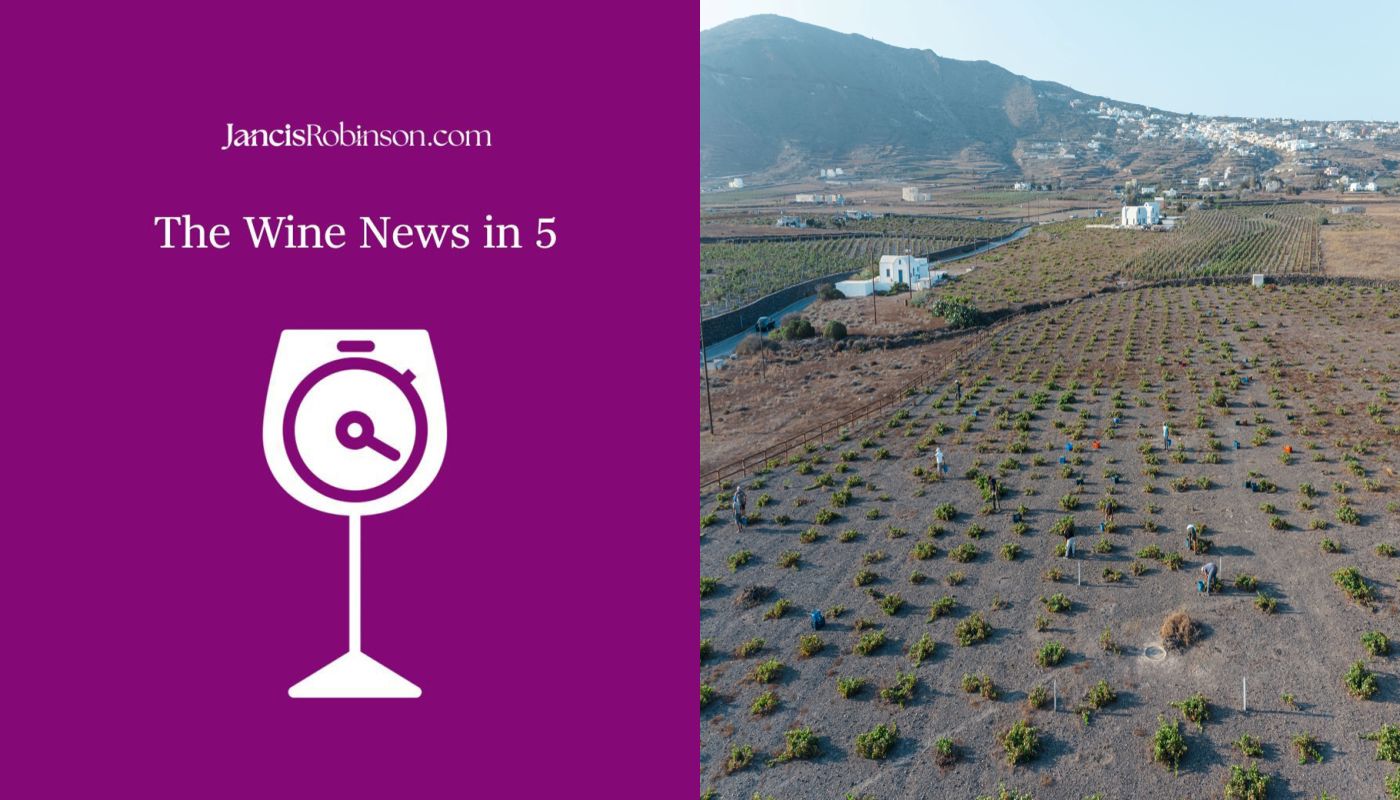
On 11 November, Kir-Yianni – a wine estate with vineyard holdings in Naoussa and Amyndeon – announced their acquisition of Domaine Sigalas on the island of Santorini. Kir-Yianni first invested in Domaine Sigalas in 2009. Since 2020 they have taken over management of the winery and implemented an investment plan. They’ve now acquired the remainder of shares of the company from Greek shipowner Thanassis Martinos. At a time when Santorini’s wine industry is being hit hard by the climate crisis and reduced yields, this acquisition is incredibly promising for the future of Domaine Sigalas.
Vinarchy considers offloading 60 wine brands
If you remember back to May of this year, Australian Wine Holdco, owner of Accolade, bought all of Pernod Ricard’s Australian, New Zealand and Spanish wine interests and bundled them with Accolade to create Vinarchy – Australia’s second-largest wine company. A month after that, they closed cellar doors for Rolf Binder and Banrock Station and consolidated winemaking facilities for other brands.
On 25 November, The Australian Financial Review reported that the business ‘is considering culling about 60 brands’ – or 40% of its portfolio – in the next two years. Chief executive, Danny Celoni, told AFR that the business will be focusing on its top three brands – Hardys, Jacob’s Creek and Campo Viejo – as well as smaller-format bottles.
Early harvest for ice wine in Germany
On 11 November, Wines of Germany announced an early ice-wine harvest. Riesling, Silvaner and Souvignier Gris have been harvested in Rheinhessen, Franken, Sachsen, the Pfalz, Hessische Bergstrasse, Württemberg and the Mosel. Early reports suggest that 2025 will be an outstanding vintage for ice wine as grapes were healthy and high in sugar.
The oldest vine in the world
On 10 November, Guiness World Records reported its recognition of a 416-year-old wild grapevine in Tibet as the oldest living grapevine in the world. This vine replaces ‘The Old Vine’, in Maribor, Slovenia, as the oldest living grapevine.
That’s all for this episode of the wine news. I will be on a plane back to the Oregon this coming Friday, so I won’t see you again until the 12th. If you enjoy this newscast and would like to see it continue, please become a member of JancisRobinson.com. And if you have breaking news in your area, please email [email protected].
This is a transcript of our weekly five-minute news broadcast, which you can watch above. You can also listen to it on The Wine News in 5 Podcast. If you enjoy this content and would like to see more like it, please become a member of our site and subscribe to our weekly newsletter.