
It’s that time of year again. For those of us in the northern hemisphere, the weather is getting warmer, the days are getting longer, everything is beautifully in bloom and people are getting excited about hiking, biking and camping. Meanwhile, I am inside with a stomach full of anxiety and a face full of stress-induced rosacea counting down the 10 remaining days until I sit my MW practical exam. Truth be told, I don’t love wine right now. I don’t even like it. But I can still be impressed by it.
This wine – Quinta do Vesúvio’s 2022 Pombal do Vesúvio – was bought after a particularly rough blind-tasting session in which I called a Ribera del Duero a Douro blend, a Douro blend a Primitivo and a Primitivo a Ribera del Duero. Set on figuring out how to determine which was which, I went and purchased this wine to compare with the other Douro and sort out my markers … only to be utterly flummoxed.
You see, despite ample evidence that the percentage of grape varieties in a blend makes a huge difference, I had decided that dry Douro reds were compact, ripe, richly fruited with a chocolatey oak profile and an elevated level of tannins and acidity – easy to confuse with Ribera del Duero and Primitivo. Which is why, when I stuck my nose into this glass of wine, my first thought was ‘that’s not right’.
This wine is stunningly aromatic – it smells like parched earth, dried lavender, roses, sage and blueberry compote. The tannin level is moderate, and the tannins themselves are gentle and rounded – almost caressing. The 14% alcohol is well-integrated. Mouth-watering acidity carries the lengthy finish. The texture is open weave. It’s ripe but not in a jammy way. It packs in a lot of fruit, but the fruit is light and bright. It has oak notes – but they aren’t all that noticeable. It’s certainly not chocolatey. And it looks nothing like the Douro I confused in my blind flight.
The reason is at least partially in the blend. The Douro that was easily confused with Ribera and Primitivo was 35% Touriga Nacional, 30% Touriga Franca, 15% Tinta Roriz, 5% Sousão, 5% Tinta Barroca and 10% old-vine field blend. But this incredibly aromatic number is 65% Touriga Nacional, 32.5% Touriga Franca and 2.5% Tinta Amarela.
As Wine Grapes tells us, wines from Touriga Nacional are, ‘in some cases distinguished by their fragrance – aromas such as bergamot, rosemary, rock roses or violets. This very intensity can make such wines almost too much on their own and many believe Touriga Nacional is better in a blend.’

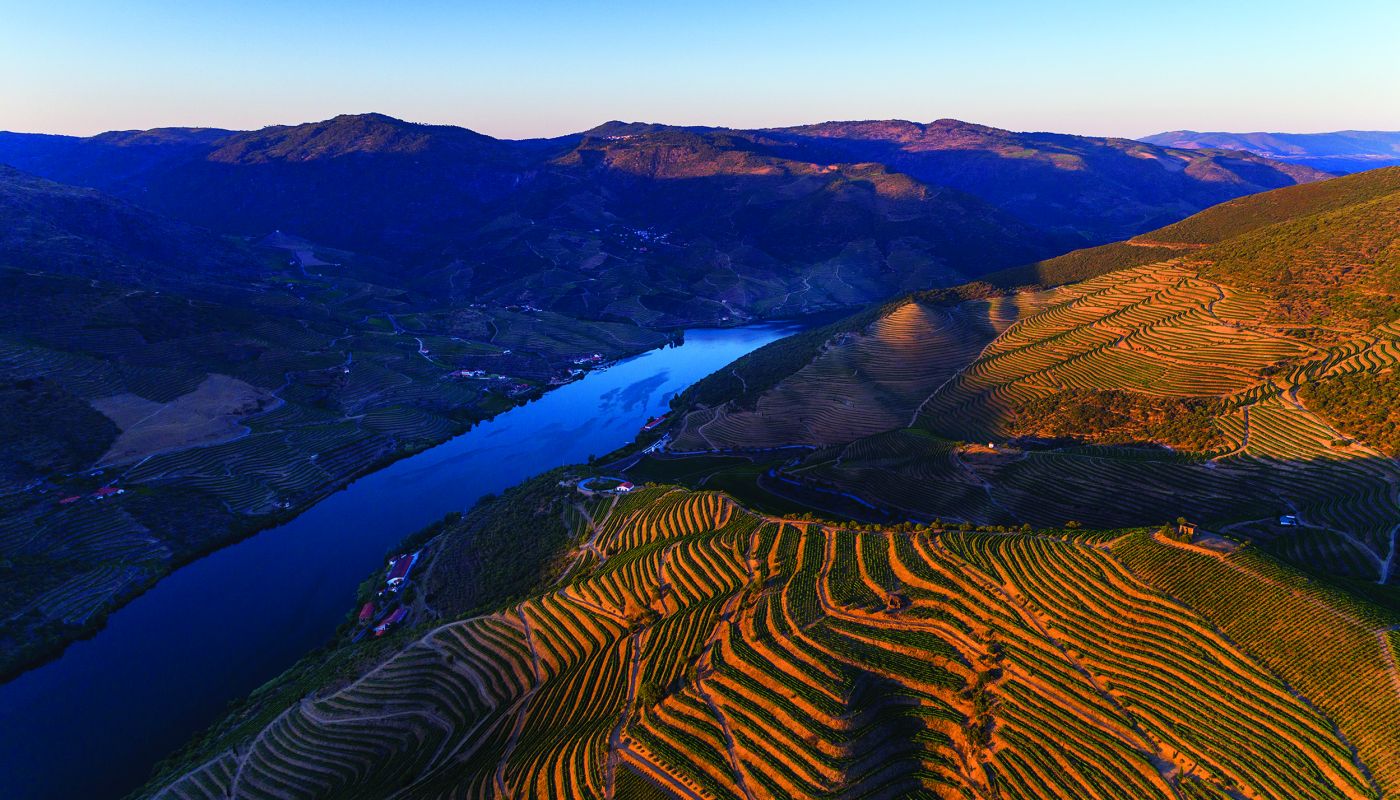
Of course, it doesn’t hurt that the grapes are sourced from one of the most respected estates in the Douro – Quinta do Vesúvio. The 137-hectare (339-acre) north- and west-facing vineyard associated with this property rises from 110 to 450 m (361–1,476 ft) along the Douro River and has been producing wine since 1823. In 2007, Pombal do Vesúvio was one of the first bottlings that the estate made of dry, unfortified Douro red.
The grapes for this wine are hand-picked before being destemmed and gravity-fed into stainless-steel fermentation tanks where they are fermented at 24–27 °C (75–81 °F). After fermentation the wine is matured for 9 months in 400- and 225-litre second- and third-use French oak barrels. This vintage was bottled in April 2023. Despite the hot, dry conditions of the 2022 vintage (70% less rainfall than the 30-year average), the wine has great freshness and vivacity.
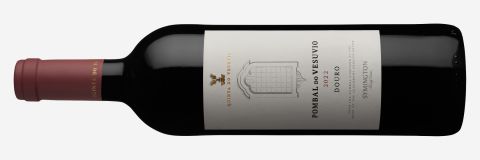
The 2022 vintage of Pombal do Vesúvio is available in the US, the UK, Portugal, Sweden, Germany, New Zealand, Cyprus and the Netherlands. In the US the best price listed on Wine-Searcher is from Saratoga Wine Exchange from $29.24 per bottle. In the UK, it’s available from a range of independent wine merchants with Givino currently offering the best price of £21.57.
Images courtesy of Symington Family Estates.
Portugal is a particularly rich source of great buys, if our past wines of the week are telling. Also scan our extensive tasting notes for more well-priced Douro bottles.