The South African wine industry is at a very strange, possibly critical, point in its evolution.
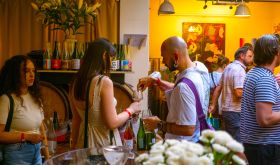
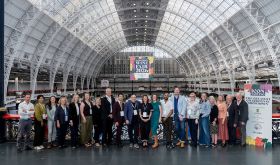
This month’s tasting in London of New Wave South African wines may well have been the most exciting I have ever attended in a capital spoilt for professional wine tastings. There was a rare energy and enthusiasm in the high-ceilinged renovated warehouse – not just because of the carefully chosen playlist (a distinct rarity at wine tastings) and not just because we were in the hipster republic of Shoreditch, but because of the consistent quality and novelty of the wines.

Just five Cabernet Sauvignons were listed among the hundreds of wines in the tasting list, for example. Cinsault, Clairette Blanche, field blends based on Palomino – this was the sort of fare served up to a crowd of more than 400 thoroughly appreciative wine professionals. I heard many an excited comment. And there seemed to be a rare sense of harmony among the South African visitors.
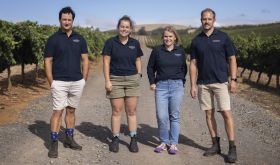
More than any other wine-producing country except perhaps France, South Africa can boast a serious cohort of radical and cohesive young winemakers forging a new wine identity for their country. Of the 55 producers attending, 15 were names I had never heard of – not because they are of no interest but because they are so fledgling.
Yes, among the producers there was a preponderance of facial hair, and the usual shortage of women. But these were accomplished oenologists by any measure, relying largely on grapes bought from long-standing Afrikaans farmers, many of them with mixed farms and living lives far from the exalted world of wine. The supply agreements are largely based on nothing more concrete than a handshake, which worries this hardened city dweller.
And the vines themselves are typically much more senior than the global, and certainly European, average (see South Africa's old-vine marvels). This is another concern since vines are not immortal, and yields shrink as vine trunks expand with age, but it is certainly something of which the South African wine industry can be proud.
Thanks to seed funding from Richemont chairman (and vintner) Johann Rupert, South Africa has its very own Old Vines Project, designed to safeguard vines more than 20 years old, and to celebrate and catalogue those more than 35 years old, of which there are about 2,500 hectares, or more than 6,000 acres, in Cape vineyards. According to André Morgenthal of The Old Vine Project, a total of 38 different vine varieties are involved and about a third of these senior vines are suitable for wine production.
Some of them are just not good enough quality, others are suffering from the leafroll virus that has been endemic in South African vineyards and have to be pulled out.
There are other major problems however, quite apart from the current drought and ongoing political situation. British, German and Dutch wine drinkers in particular have become used to seeing Cape wines on the bottom shelf, and relying on South Africa solely for wine bargains. But wine prices and therefore grape prices have been so low that, according to South Africa’s most prominent wine writer Michael Fridjhon in a much-discussed speech (which you can download here) prior to the important Nederburg Wine Auction this year, more than 60% of Cape wine businesses are either lossmaking or financially marginal.
That there is now a concerted effort to increase wine prices was very evident at the recent New Wave tasting in London. Recommended retail prices quoted went up to almost £100 a bottle (for the brand new Leeu Passant Dry Red 2015, admittedly made by ex-accountant Chris Mullineux), and there were very few single-digit prices.
The aim is to achieve selling prices that will allow grape prices to rise and become sufficiently attractive to farmers that they will not be tempted to pull out the older, less productive vines that may well make some of the finest wine.
One woman has been responsible for nurturing South Africa’s old-vine heritage. Rosa Kruger, a descendant of famous president Paul Kruger, is a viticulturist who has painstakingly catalogued every old vineyard and acted as marriage broker between the old growers and the young winemakers.
Thanks to her and the work of The Old Vine Project, the hope is to see grape prices increase from as little as 2,500 rand (£140, $180) a ton to something closer to 12,000 (£670, $885). The average price for Napa grapes last year, by the way, was officially $7,000 a ton but most observers of the California wine scene agree this is a low estimate.
But Kruger has also taken the initiative in another even more important defining aspect of South African wine. I suspect I am not alone in assuming that one of the reasons for those low prices has been low labour costs. But, as Fridjhon pointed out in his speech, all is far from sweetness and light in Cape vineyards.
Rosa Kruger describes the prevailing attitude among far too many vineyard workers as one of ‘absolute desperation’. There are few alternative careers for ‘the previously disadvantaged’, as politically correct Capespeak has it, in the beautiful but monocultural Cape winelands. Rosa Krug has been spearheading an initiative to seriously educate and train vineyard workers so that, in Fridjhon’s words, the job is transformed ‘from a burden borne with resentment to a career of choice, [which] must come with skills development and the prospect of skilled labour rates and job satisfaction'.
Fridjhon’s sentiments, reinforced recently in an incendiary article SA Wine’s Ongoing Lack of Transformation, have not been universally welcomed by the wine industry. His article was inspired by seeing a preview of a film, The Colour of Wine, about the experiences of the first non-whites to have been admitted on to wine-industry training programmes after the 1994 election. ‘It is not possible to see this film and not feel ashamed', he confessed, calling for less tokenism and more black faces to feature in the industry’s senior technical positions to address a serious and continuing imbalance of power – not to mention waste of talent, as Cape Town’s top sommeliers, all of them black Zimbabweans, have gracefully demonstrated.
From some mainstream wine-industry figures Fridjhon has suffered the slings and arrows of online comment, and perhaps I will too as a result of this article. But, given that the South African wine industry seems to find itself at a crossroads today, this would seem as good a time as any to take the right road.
SOME TIP-TOP SOUTH AFRICAN WINES
Wines I scored at least 17 out of 20 with retail prices recommended at the New Wave tasting (where I was able to taste only a fraction of the wines available). They are supplemented by wines from Handford Wines tasted the next day. See tasting notes on all 190 wines tasted by Julia and me recently.
Alheit, Cartology 2016 Western Cape £34 and Magnetic North Chenin Blanc 2016 Citrusdal Mountain £62.99 Handford
Boekenhoutskloof Semillon 2015 Franschhoek £30
Crystallum, Clay Shales Chardonnay 2016 Hemel-en-Aarde Ridge £32, Mabalel Pinot Noir 2016 Elandskloof £39 and Bona Fide Red 2016 Hemel-en-Aarde Valley £39
David and Nadia, Aristargos 2016 Swartland £21 and Elpidios Syrah 2015 Swartland £23
De Morgenzon, Reserve Chenin Blanc 2016 Stellenbosch £28.99 Handford
Kershaw, Deconstructed Chardonnay 2015 Elgin £222 for three bottles
Leeu Passant Chardonnay 2015 Stellenbosch £65 and Dry Red 2015 Franschhoek £98.50
Lismore Chardonnay 2015 Greyton £23
Momento Chenin Blanc/Verdelho 2016 Western Cape £23
Mullineux Family Wines, Granite Chenin Blanc 2016 Swartland £49.50, Schist (and Granite) Syrah 2015 Swartland £76.75, Straw Wine 2015 Swartland £24.95 per half Handford
Rall, White 2016 Coastal Region £26.50 and Ava Chenin 2016 Swartland [no price given] and Rall Red 2015 Swartland £27.50
Sadie Family, Skurfberg 2016 Olifantsrivier, Voetpad 2016 Swartland, Columella 2015 Swartland, Treinspoor 2015 Swartland £32.99
Savage, White 2016 Western Cape £28
Sons of Sugarland Syrah 2016 Stellenbosch £28.99 Handford
Solms Delta, Amalie 2015 Western Cape 14% £19