My frequent conversations with our restaurateur son invariably reveal to me the enormous changes that have taken place since I was a restaurateur in the 1980s, and the different challenges facing the profession today.
Restaurants are run so much better now. There have been improvements in the menu, the wine list, the produce, the service and restaurants’ overall design. And, perhaps even more importantly, since COVID, restaurateurs have had to work much harder to train and hold on to their staff. But there have been two less obvious changes, one behind the scenes, the other rarely even mentioned.
The first change, and improvement, is how today restaurateurs can keep track of sales, of customer spending and its impact on the profit and loss account for the week. In my day we used to have to wait for the arrival – prompt at 9 am every Tuesday morning – of our Austrian bookkeeper. He would spend six hours gathering invoices and our takings sheets before producing our weekly P&L account at about 4.30 pm. Only then did I know whether all our hard work the previous week had borne fruit. Today, thanks to companies such as Lightspeed, today’s restaurateurs know what the spend is in real time.
The other significant change has been in which day of the week is the busiest. In my day, the week progressed to a crescendo on a Friday and a Saturday. Monday has always been the quietest day of the week, and if occasionally Monday was busy it was invariably followed by a quiet Tuesday. Thursday tended to be busy but it was Friday (POETS Day, as it was referred to, for ‘piss off early tomorrow’s Saturday’) that was the busiest lunchtime and evening. Saturday lunch we were firmly closed at L’Escargot, gearing up from 3.30 on Saturday afternoon for a busy Saturday night that was always a challenge.
Today, by contrast, Saturday lunchtime is the busiest lunch service of the week – in London where I am based at least. This is the result of a much greater interest in going to restaurants than in my day and the enormous growth in tourism to London, a city distinctive in so many ways. And for many, the day for enjoying oneself and one’s friends’ company now seems more likely to be Saturday than Sunday. Perhaps family, exercise and odd jobs take precedence on a Sunday? And then in the UK at least, the staff shortages created by Brexit have resulted in more restaurants being closed on Sundays (and, often, Mondays).
When I asked our restaurateur son Will for a list of which days are his busiest, he replied accordingly:
- Lunch (busiest to quietest): Sat, Tues to Thurs (equal), Fri, Mon
- Dinner (busiest to quietest): Sat, Fri, Tues to Thurs (equal), Mon
What struck me about these lists was that the malign hangover of the COVID epidemic, most notably the three-day working week, is still with us. That Tuesday lunchtime can be the almost as busy as Saturday is because on Mondays many restaurants are closed due to lack of demand because so many people work from home then, so Tuesday is the first day back in the office. But what struck me also was the fall in demand for Friday lunch, today the quietest lunch of the week, when pre-COVID Friday was the busiest and Tuesday lunchtimes could then be quite quiet.
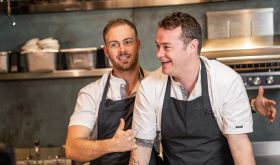
Will Beckett, half of the founding partners of Hawksmoor restaurants, was largely in agreement as to his group’s trading patterns, with two exceptions of interest to wine lovers. He reported, ‘Mondays are unusually busy at Hawksmoor because of our £5 corkage policy on any bottle any customer brings in. And in our branch in Liverpool a great deal depends on when a football match is being played. When Liverpool are at home on a Saturday, then that is the busiest lunch service. When they are not, it is the quietest. And similarly, on a Tuesday or a Wednesday night, if Liverpool are at home then the restaurant is very busy.’
In New York, Cam Avent, vice president of analytics at Union Square Hospitality Group, responded to my queries with the kind of detail that fully justifies his job description.
‘At lunch in 2019, Friday and Saturday were the busiest days and were about 10% busier than the next closest days, Thursday and Sunday. In 2025 the dynamic changed slightly and now Saturday and Sunday were our busiest lunch days, being 14% higher than the next two busiest days, which are Thursday and Friday. Another interesting shift is that Wednesday lunch is at a similar level to Thursday (and Friday), whereas it used to be a bit slower than Thursday and Friday. Another lunch trend we’ve seen is a growth in our 2 pm reservations, which have increased by 16% since 2019.
‘In the evenings, the only real shift we’ve seen in dinner covers is on Saturday nights; whereas Friday nights used to be the peak of the week with Saturday being second in 2019, now Saturday is the busiest night of the week with Friday being second. And that’s not due to Friday declining in covers, it’s because Saturday dinner has grown more than other days. From a time-of-day perspective, we’ve seen the 5-6 pm reservation slot grow by 19% since 2019 and we’ve also seen the 9 pm+ slot declining by 26%, which signals that diners are shifting towards earlier reservations. And we have a lot less late-night walk-ins’.
In Sydney, Australia, the situation is quite similar according to Amanda Yallop, wine director at Fink Group: ‘Mid week lunches are busier since COVID with many people working from home Mondays and Fridays. Today, Wednesday and Thursdays have taken over as the busiest lunches, after Saturdays of course. The busy Friday lunch returned as usual in December but then it fades back to a more moderate pace’.
And then she continued, as though to prove that customers all over the world are susceptible to a good deal: ‘In Bennelong, our restaurant in the Sydney Opera House, we introduced The House Lunch (two courses plus a glass of sparkling wine for AUD$130 per person). ‘On Fridays that was so successful that we added it to our weekend lunch service.’
For my final stop in Paris, I consulted Mark Williamson who for the past 40 years is to be found either behind the bar at Willi’s Wine Bar or on the floor at nearby Maceo in the city’s 1st arrondissement. He quickly agreed that in the City of Light and the capital of the country with the world’s biggest influx of tourists, Saturday lunchtime was the most popular time.
‘Let’s start with Saturday lunch. Willi’s has been busier than usual over the last year at lunch on Saturday. Cool. But since January this has eroded dramatically. Go figure. Monday lunch is, however, predictably solid, in part due to the limited number of alternatives available on a Monday. Evenings and midafternoon are in part enlivened from mid-week onwards with very few reliable indicators as to what to expect next. In general, either Thursday evening, Friday evening or Saturday evening will be manic – or all three! Tuesday and Wednesday are softer – but not always.’
So, it is the case. The profession may not have altered in its fundamentals since the 1980s – to be a successful restaurateur you have to love food, wine and people – but the day of the week when you have to display these qualities to the maximum certainly has. The busiest service of the week around the world is today Saturday lunchtime.
Photo at top courtesy Hawksmoor.
Every Sunday, Nick writes about restaurants. To stay abreast of his reviews, sign up for our weekly newsletter.