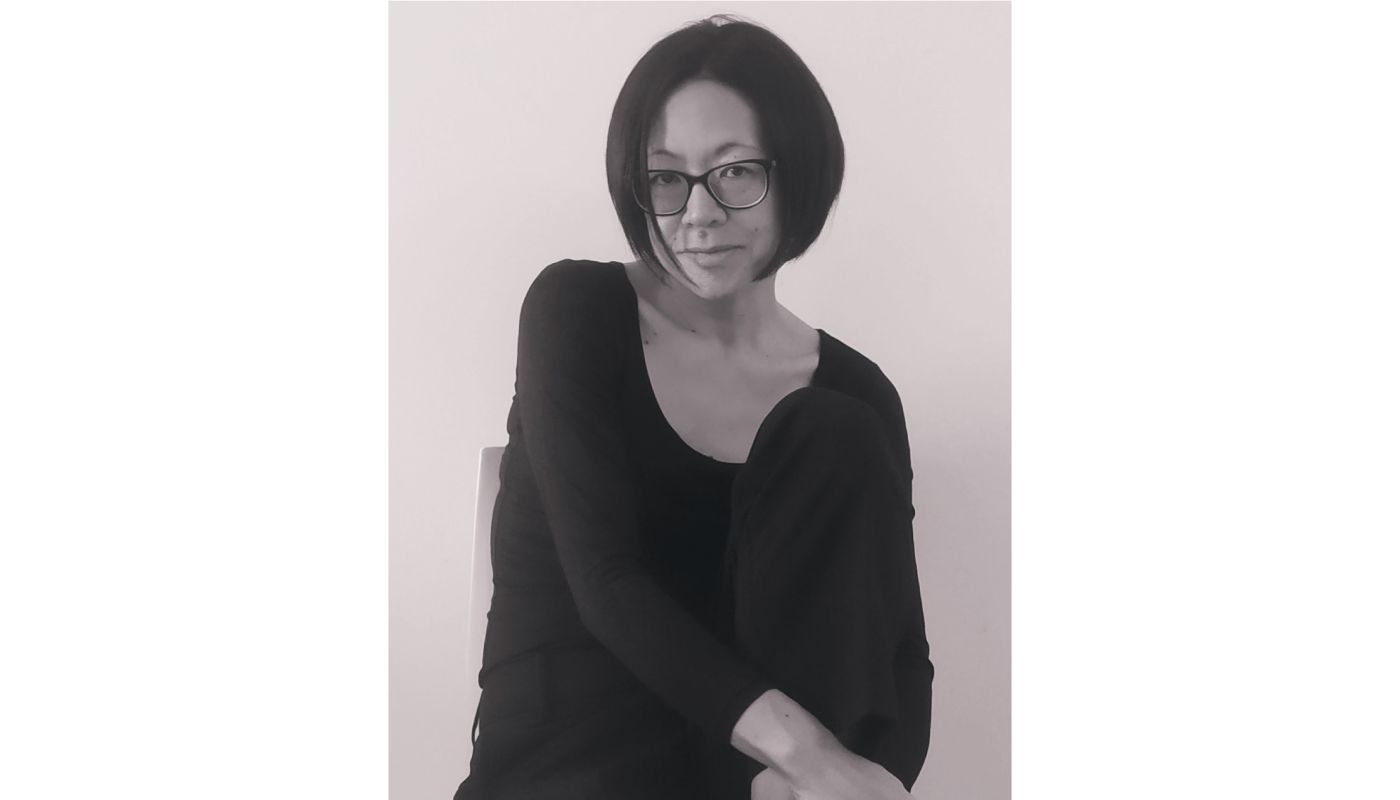
Sera Goto writes I studied at the University of California, Berkeley, before moving into wine production in Napa Valley. I hold three diplomas in wine production and science: The Diplôme National d’Oenologue, the Master of Science in Oenology and Viticulture, and a PhD in Oenologie and Viticulture, all from the ISVV, Université de Bordeaux. I’ve also worked in production in Napa Valley and Bordeaux, as a consultant in Japan, and served as director to a large Tokyo-based commercial wine program. When not working with wine, I enjoy driving my daughter to her swimming lessons and music classes and making fresh pesto together.
An ode to Muscat Bailey A
There were naysayers, there were defeatists. “You can’t change everything in one vintage.” “It has an elegant character, but it needs a good masculine structure to support it.” “Don’t go against expectations. Pushing limits only gets you a reputation as rebellious.”
I could not tell if those words of wisdom referred to me, or to the grape varietal Muscat Bailey A.
Muscat Bailey A is an intrepid labrusca-vinifera hybrid, a cross of Bailey (itself a hybrid) and Muscat of Hamburg. Conceived in the early 20th century by pioneer viticulturist Zenbei Kawakami, this resilient, vigorous vine endures Japan’s subzero winters, while the fruit’s thick, mauve skin defies the oppressive humidity and relentless vine diseases which define the sultry Nippon summer. More importantly, it produces a light, floral juice with a muscat echo that brings to mind fuurin (summer wind chimes) and mizuniwa (water garden.)
Me, I was a foreign-educated Japanese woman entering the wine stage armed with hopeful idealism. While I’d grown up in Tokyo, I finished my bachelor’s at U.C. Berkeley, then worked production in the Napa Valley before heading to France. By the time I obtained an oenologie master’s at the University of Bordeaux Institute of Science of Vine and Wine (ISVV,) I’d added Chateau Margaux, Chateau d’Yquem, and Chateau Lynch Bages to my C.V. I wanted to take on the world.
But when I returned to Japan as a production consultant, I found an industry embedded in a staunch patriarchy that regarded me as an aberration.
“Are you married?” The opening question posed to me upon my arrival at my first contract, a winery tucked away in the ethereal hills surrounding Hiroshima.
“No, I am not married,” I replied pleasantly.
Scandal.
Then, another scandal on the heels of my singlehood.
“Why is this wine so heavy and syrupy?” I asked upon tasting Muscat Bailey A for the first time. The liquid was a deep violet, almost licorice, in the glass. On the mouth, the balance felt off. Acidity on one side, viscosity on the other, dissonant aromas in between. The wine had such a dark, fruity layer I couldn’t tell what – if anything - lay underneath.
The air tightened around my question. The room suddenly felt constricted, muted. I’d blundered out a direct question.
“That’s the style of this wine,” the cellar hand explained defensively. “It’s how we’ve always made it.” A burly young man, tall and beefy, immediately taking up space with his chest and elbows.
I raised my eyebrows. “I’m sorry if I’ve offended you but I think it is rather unfortunate to mask the grape varietal’s unique character with color and flavor additives.”
“How do you know we add color?” he barked, his face reddening. I’d never understood the phrase nostrils flaring until that particular moment.
“Is it obvious?” the second cellar hand asked quietly. She was a shy young woman but her eyes were brightly interested in wine production.
“Maybe only to me,” I shrugged with polite regret.
“You don’t know anything,” the young man sneered.
So I rather blundered through my first day. Confidence? Cracked.
However, the second day, I headed to the winery vineyards. Suddenly, my outlook changed. Petty bullies faded into insignificance. Marriage status was a sideline.
When I tasted the source grape, the Muscat Bailey A, a light, sweet acidity danced across my senses. Aromatic straight off the vine, the juice revealed delightful fruit nuances and playful florals. Even its skin, deep and black violet on the surface, yielded a tantalizingly rose blush when crushed between my fingers. How had this exuberant grape become the clumsy oil slick I’d tasted the day before? It was as mind-boggling as piling on layers of winter furs on a tropical island.
What I learned in following days is that while the Muscat Bailey A had originally been bred for its resistant capacity and pleasant, light body, the internationalization of traditional Bordeaux varietals a few decades prior had spurred many Japanese producers to emulate their full-bodied style. Since Muscat Bailey A did not have the genetic disposition to produce such a rich wine, alternative methods – additives – became the custom, resulting in the darkly viscous quaff I’d tasted.
Announcing I was changing the production of the Muscat Bailey A resulted in another argument with the young man. He threw tradition, singlehood, and femaleness at me. I stood my ground – barely - because I believed the grape had unexplored potential. Finally, to maintain peace on the winery grounds, the production manager asked me to apply my changes to one 50 hectoliter tank as an experiment, while they continued with their traditional method on the rest of the harvest. I agreed; after all, despite my experience on paper my skills were yet unknown.
The other cellar hand and I crafted a Muscat Bailey A wine in that tank that sold out within a few weeks of its release. The wine was lovely, fresh and balanced. Glorious clear garnet color, clean acidity and a bounty of fresh berries and florals. A varietal marker, an exuberant strawberry candy aroma, shone with pride and brilliance. Served slightly chilled, the wine conveyed summer in all its idealized, Japanese nostalgia. The winery was jubilant. In the end, Muscat Bailey A defied tradition to shine with its own personality, a trend that has equally gained momentum with other producers.
As for me, I went on to one of the top wine postings in Tokyo, and eventually back to France to complete a PhD in oenologie. But for all my time in fabled vineyards and celebrated cellars, it was a modest hybrid grape that affirmed my confidence in myself as a wine producer. So, no matter where my path takes me, I will always keep a spot in my cellar for Muscat Bailey A.
The photo is of the author.
















