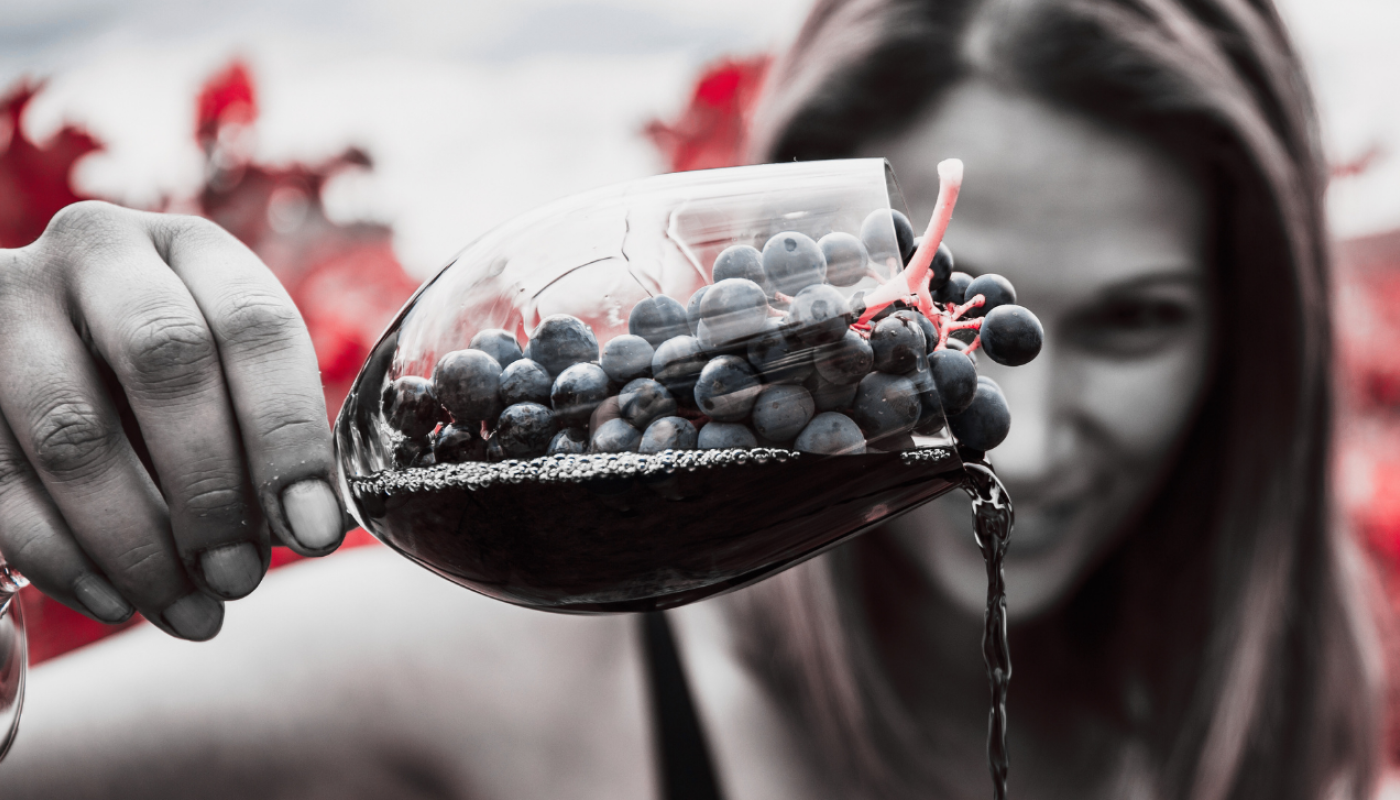
Raquel Jones writes I’m a female winemaker in Beechworth, Victoria, producing wines under my own label, Weathercraft, with all fruit grown, vinified, and bottled on site. My heritage is Spanish—my father born before the Civil War, my mother in its shadow. I’m first-generation Australian, yet I’ve always felt Spain in my blood. Tempranillo carries that inheritance: memory, identity, resilience. While I mainly work with chardonnay, I champion Iberian varieties in Australia, and tempranillo feels like my alter ego—the night to its day. Writing this piece brought a lump to my throat. Its story echoes mine: shaped by history, grounded in survival, quietly enduring.
A vestige to Tempranillo
I. The Root of the Matter
In the beginning,
there was no blood in the vine.
Only sun, and stone, and the hush of first beginnings.
Beneath the limestone,
a root held firm in shallow earth.
Tight as alveoli,
holding breath should tears awaken rot.
A grape with patience. Anchored in a land with none.
In Rioja Alta the monks whispered prayers
into furrows, not cathedrals.
Temprano, they called it—
the early one, the silent one,
first to ripen, last to fade.
“Madura,” whispered los monjes. “Convierte el frío.”
And so it did.
Season aside, it grew absently—
leaning into necessity, mistaken for virtue.
II. War in Wine
What war is this, that tastes of ferrous fruit and scorched hide?
Whose tannins cut with silence, softened in foreign oak?
The Republic cracked at the mortar joints;
Francoists found kindred spirit in garnacha,
while the poets wept into shattered glass.
But it was Tinta del País
in the bota of the fleeing soldier,
and Cencibel in the clay cup of the widow—
not raised in toast, but in remembrance.
Not the vitis of empire,
the centurion’s whip,
but the vine that bled without command,
its silence more enduring than banners.
In the Sierra de Guadarrama,
rebels drank quietly,
dreaming of vineyards, not victory.
In Gernika, the vines endured—
to carry the souls of those who did not.
Blood once again mixed with must,
and in the glass, a flicker of tobacco leaf—
the taste of ash that lingers still.
This grape does not forget,
even when men do.
III. The Silence that Echoed
After Franco.
After the books burned,
and the harvests ended.
After the winemakers went mute,
and the barrels echoed with emptiness.
It was not anthem or crown
that returned solace to Spain—
but vineyard.
Broken stakes. Blistered hands.
Women bending to prune old vines
hidden by their fathers among olive groves.
Hands cupped in prayer, en vaso—
perennial headstones,
honouring the nameless.
A slow, yet assured return.
In Ribera. In La Mancha.
In lips stained violet by joy, not hunger.
A grape of the people, not the palace.
For shepherds and scholars alike.
For weddings. And wakes.
A grape that assured Spain:
"You are enough."
IV. Memory in the Glass
We drink it now
without ritual,
without gesture.
Only the silence it answers.
Tempranillo—
Tinto Fino, Ull de Llebre, Tinta Roriz—
Sanguine as symbol,
not worn but grown.
It ripens in Rioja.
Persists in La Mancha.
Waits in Catalunya.
Listens in Euskadi.
No crown.
Only calloused hands.
Wine is not place.
It is what place remembers.
The earth does not forget—
it holds grief, and fire,
and exhales it,
vintage by vintage.
Not only weather.
Not only soil.
But blood,
and prayer,
and the possibility of return.
Tempranillo is not a grape.
It is what was buried,
and what remains.
An echo.
The image is of the author in a vineyard; it is owned by the author's winery: Weathercraft.
















