24 August 2017 We're republishing this article from 2009, in our Throwback Thursday series, as a tribute to the hugely talented Haridimos Hatzidakis who so tragically took his own life recently. He had been troubled for some time, and leaves a massive void in the fortunes of Greek wine (which, coincidentally, has long been championed by the subject of my article on Tuesday, Steve Daniel). Non-members please note that in our more recent tasting articles, our tasting notes are presented in a much more sophisticated format.
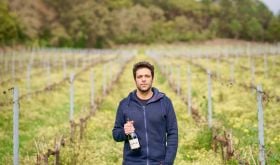
31 March 2009 Haridimos Hatzidakis started his own winery in 1996, having trained in Athens and worked as Boutari’s chief winemaker at their wineries on Crete and Santorini in the early 1990s.
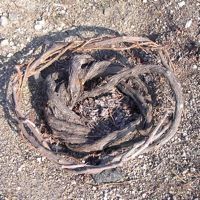
He is currently the only winemaker living full time on Santorini, working the vineyards and making the wines and he is one of the few young men on the island who knows how to prune the vines into the typical Santorni kouloura (baskets that protect the vines from the winds). In less windy areas, the vines are trained as gobelet or bush vines but these too have to be very close to the ground.
Hatzidakis owns just one hectare of vines and has 8 ha on long-term lease, including 3 ha that he took on three years ago from a local monastery and has reterraced and replanted with Assyrtiko, Aidani and the rare red grape Mavrotragano, organically farmed. He also has long-term contracts to buy grapes from certain local growers.

Hatzidakis' ‘basic’ Santorini –90% Assyrtiko, 5% Aidani and 5% Athiri (interplanted with the Assyrtiko) – is an excellent introduction to the precise, mineral-rich qualities of Assyrtiko planted on these volcanic soils but his passion for the island’s varieties also makes him an enthusiastic experimenter, going to the edge with highly distinctive styles and daring winemaking such as the two-year fermentation for the Pyrgos and the sweet dried grape wines (drying process pictured here).
Some of these wines are available in the UK from the Caves de Pyrène.
Hatzidakis Aidani 2008 Aegean Islands 16.5 Drink 2009-11
Organic viticulture. 95% Aidani, 5% Assyrtiko, old vines, ungrafted, planted at 50-300 metres on sandy and volcanic soils without irrigation. Just bottled. Aidani tends to have lower acidity levels than Assyritiko, hence the inclusion of 5% of the latter and, in youth at least, is more floral. Fermented with ambient yeasts in stainless steel at 18 °C and 4 months on lees.
Very pale gold with a pinkish tinge. A little floral, mildly herbal. Perfumed but not overly floral. A little bit grapey. Relatively soft on the palate, at least compared with Assyrtiko, and powerful and a mineral undertow. Dry, rich and mouthfilling. A hint of perfumed spice on the finish. 12.5% (JH)
Hatzidakis Aidani 2007 Aegean Islands 16 Drink 2008-10
Viticulture and winemaking as for the 2008. Quite different on the nose. Much more smoky and mineral. Slightly savoury honey note on the palate. 10% Assyrtiko starts to assert itself and most of the floral/apricot flavours have disappeared. pH 3.4, 12.5% (JH)
Hatzidakis 2008 Santorini 17 Drink 2010-14
Tank sample. 90% Assyrtiko, 5% Aidani, 5% Athiri. The Assyrtiko is picked from the end of the first week of August and the wine is fermented in stainless steel tanks for about 6 months. Total production. 60,000 bottles. The acidity is a little higher than in the 2007 due to stress on the vines from the drying north winds.
Youthful pear-drop fermentation aromas. Intense, fine, dry mineral citrus. Very concentrated. Very crisp. Nice grainy finish. Really moreish. (JH)
Hatzidakis 2007 Santorini 17 Drink 2009-12
1st bottle slightly corked.
2nd bottle: a little softer than the 2008. Quite aromatic and citrussy at first then very dry, mineral and long. 13.5% (JH)
Hatzidakis, Cuvée 17 2007 Santorini 17.5 Drink 2009-13
90% Assyrtiko, 5% Aidani, 5% Athiri. This is a one off. Hatzidakis had one tank from a single vineyard on volcanic soil at 250 metres in the south of the island which he felt had a unique character, so he bottled and labelled it separately. No oak influence. Skin maceration for 6 hours, fermentation over 40 days.
Smells more creamy than the straight Santorini. Matured on lees. Still has a delicious mineral, citrus freshness, and a slight touch of orange, but it also has more power and depth and weight and a richer mouthfeel. pH 3.2, 14.3% (JH)
Hatzidakis, Organic Assyrtiko Cuvée 15 2007 Santorini 17.5 Drink 2009-13
100% Assyrtiko, part old vines, ungrafted, at 100-150 metres on sandy and volcanic ash soils where the grapes ripen relatively early. Another experiment – Hatzidakis was encouraged to make and bottle this separately by his French importer. Fermented over 60 days with ambient yeasts. Matured for 4 months ins stainless steel tanks .
Wonderfully aromatic, a touch of ginger, grapefruit. Lovely concentration even without intense fruit flavours. Gently sour lemon freshness with a strong line of minerality. Very very long. pH 3.1, 2.5 g/l residual sugar. 14% (JH)
Hatzidakis, Nykteri 2007 Santorini 16.5 Drink 2009-13
100% Assyrtiko, picked late for extra ripeness and fermented in old French oak barrels (300-500 litre). Nikteri means night work, from the days when they used to crush the grapes at night.
This is his most popular wine on the domestic market but I think it was my least favourite. Rich and honeyed on the nose. Then full and broad and honeyed but just balanced by the freshness of the variety. Lacks the linear persistence of the straight Santorini and the special cuvées. Quite a savoury/sour finish with a gently oaky note. More mature dried fruit flavours – dried apricot. Dried pear. 15% (JH)
Hatzidakis, Nykteri 2006 Santorini 16.5 Drink 2008-12
Woody nose. Very traditional and very popular in Greece. Spicy and golden tasting. Pure fresh citrus acidity through the middle of this gently oxidative style. Complex, concentrated and persistent but lacks finesse. 3.8 g/l residual sugar. 14.9% (JH)
Hatzidakis, Mylos 2007 Santorini 17 Drink 2010-13
Made from late harvest Assyrtiko from a single vineyard, in stainless steel tanks. Named after the vineyard. 12 months in tank and no filtration.
Slightly deeper gold than the Nykteri. Still has very strong pear and quince aromas as if it were just out of tank though it has had a year in bottle. Firm grainy pear flavour. Very fresh, dry and taut. Racy and less polished than some but full of character. 15% (JH)
Hatzidakis, Pyrgos 2004 Santorini 17.5 Drink 2009-15
Late harvest Assyrtiko, 12 hours on the skins, then fermented very slowly over a period of 2 years in stainless steel, then one more year in tank before 1 year in big old oak.
Medium gold. Smoky, mineral and highly reductive from the slow ferment. I loved this powerful, dense, dry and compact wine but some might be put off because it is so reductive. Even after it had been open a week, that character was barely diminished. Yet has Assyrtiko freshness and length and mineral structure. There's 6.3 g/l residual sugar but I couldn't taste any sweetness at all. pH 3.24, 14.7% (JH)
Hatzidakis Mavrotragano 2006 Santorini 15.5 Drink 2010
Very rare variety, only 2% of the island’s production, interplanted with the white vines, so you have to go round and hunt it out at harvest time. Mavrotragano means crispy black.
Smells almost overripe, like bitter liqueur cherries. Very dry and grainy on the finish. Quite aggressive tannins. Bags of character. Pretty rustic. Needs food – and went very well with smoked duck salad. 13.9% (JH)
Hatzidakis Vinsanto 2000 Santorini 18 Drink 2009-20
Made from late-harvested sundried grapes – 80% Assyrtiko and 20% Aidani from 100-year-old vines. The grapes spent about a week in the sun (usually two weeks but it was so hot ...) and the wine about 6 years in used 300 and 500 litre barrels. Fermented in oak too.
Nut brown caramel colour. A little volatile but in an attractive way wholly appropriate to the wine. Dried apricots and quince but also a hint of maraschino cherry and caramelised oranges. Rich and sweet but with that wonderful grip of the grainy Assyrtiko character. Great acidity leaves the mouth fresh. Very youthful. Hints of dark toffee as it opens up in the glass and a streak of orange through the middle. Stunning. 240 g/l. 7.8 g/l total acidity. 12.7% (JH)
Hatzidakis Voudomato 2002 Greece 17.5 Drink 2008-18
Very old ungrafted vines (suggested age 500 years because they have been propagated using the layering method) from this virtually extinct variety whose name means ‘bulls eye’. Grapes sun dried for 15 days, fermented in stainless steel and then aged 5 years on old oak. Tiny production of 400 bottles, all taken by Les Caves de Pyrène. Has to be sold as a table wine.
Another successful experiment! A sweet red from a forgotten variety with amazingly fresh acidity (total acidity 10.3 g/l, pH 3.25) considering that these big grapes are not particularly high in acidity. Smells like lovely rich homemade black cherry jam, with figs and raisins, but tastes and finishes so fresh. Firm grippy tannins. Would go beautifully with strong cheese. A massive 280 g/l residual sugar and 11% alcohol. (JH)