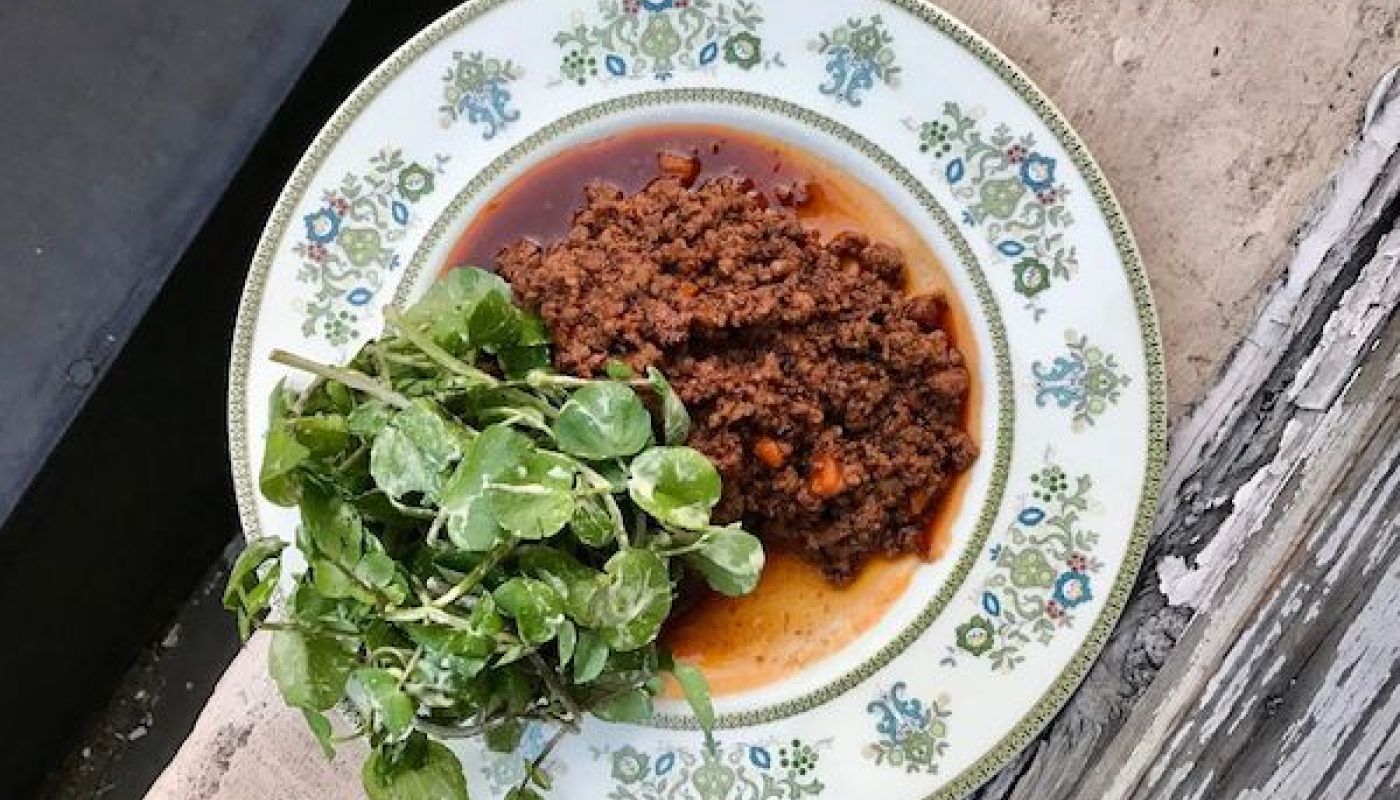
The media furore caused a couple of weeks ago by what has come to be called #Mincegate, the much-discussed review of one particularly fine dish of minced Hereford beef on dripping toast that has been on the menu at The Quality Chop House in Farringdon Road, London EC1, since it was re-opened by our son, inter alia, almost five years ago, provided a vital blast of oxygen for all of those concerned.
It obviously got www.eater.com/london, the new London version of the New York-based internet food newsletter, off to a flying start. It exposed Shaun Searley, the Chop House’s excellent chef who created this equally excellent dish, to welcome and deserved recognition. (He was even interviewed by the BBC about this seminal dish.) And it devolved 15 seconds of fame on to the hundreds of eaters and tweeters who took to Twitter to tell the world what they thought of mince on toast and its place in British culture. So, in effect, there were no losers.
Well, perhaps there were two, firstly concerning the media’s view of restaurants in general and, secondly, why we use them. My immediate reaction to this ‘storm in a bowl’ (the bowl in question and in this much-published photograph is part of a set of crockery that belonged to my late mother) was one of family pride, obviously. But also one of indifference, as in so many cases of the media’s continuing obsession with food and restaurants. But above all one of exasperation. Why, in an industry that is so seemingly simple, do the media continue to add levels of controversy?
Let’s start with the simplicity of the restaurant business. Now there are so many reasons for walking into any restaurant, wherever that may be, but two are fundamental: the customer is hungry and/or thirsty and the restaurateur is there to satisfy both needs. That is the heart of the business.
Levels of controversy begin with the presence of anyone not fulfilling either of those roles, whether it is the restaurant critic, out to find fault with the food and the service; the consumer champion, out to find something wrong with the restaurateur’s pricing; or the assumption by many that the way service is charged in their own particular country will continue to apply in whichever country they choose to eat in (see this recent thread in our members’ Travel forum, at this time of year more active than usual).
(And here, my disappointment at my fellow eaters’ lack of curiosity is only less than that which I feel for those restaurateurs who stand to benefit so much from international tourism and yet seem to have failed to establish a table of service charges that apply around the world. How hard, and yet how beneficial, would that be for someone at www.eater.com, a valuable task that could be fulfilled in an afternoon?)
The most obvious example of how the simple approach to opening a restaurant used to show itself was when a couple decided that his/her skills at cooking at a dinner party combined with her/his wit and clearing-up ability manifested itself in what was invariably a short-lived restaurant venture. Fortunately, these examples of amateur start-ups are increasingly rare today.
Then there was the social status of the restaurateur, of being known as a chef (with, probably, a propensity for drink) and in fact for having anything to do with this world. How back in 1980 my parents accepted my decision to use my Cambridge and business school education to become a restaurateur is something I will now never know, but I do wish I had asked this particular question. Perhaps a more telling reaction to the status of the restaurant business then was that of the former editor of the Financial Times, who, on being introduced to me as the paper’s new restaurant writer at the annual FT Christmas party in 1990, looked down his nose and snorted, ‘Has the paper come to this?’ before turning and walking away.
He would have appeared foolish had he made that comment today. Not only does the FT have two restaurant correspondents (I alternate with Tim Hayward) but every serious journalist who ends up writing the highly popular Lunch with the FT page (which originated from my original Lunch for A Fiver campaign which did so much to lift readers’ spirits back in the economic gloom of January 1993) feels obliged to try their hand at restaurant criticism. The London Evening Standard has just completed its month-long London Restaurant Festival spearheaded by Grace Dent and Fay Maschler. Over in New York, Pete Wells, the New York Times restaurant correspondent remains so important that he goes to great lengths to maintain his cover.
But while newspapers desperately chase chefs and the restaurateurs, I wonder how much longer this will last. While both sides appreciate the publicity the other can supply, there surely has to come a time when restaurateurs can rely on their own customers to provide this coverage.
Here I am referring to a recent experiment conducted by Dirty Bones, an American restaurant and cocktail bar whose branch in London’s Soho has had its menu and interior design deliberately showcased (an expression I detest) to be Instagrammable. And, just in case you are as antediluvian as me, the restaurant also provides a free Instagram kit to allow you to take better pictures. (This includes a ‘a portable LED camera light, a multi-device charger, a clip-on wide-angle camera lens as well as a tripod selfie stick for overhead table shots’!)
This craziness is a response to the fact that the hashtag foodporn was used nearly 10 million times between November 2014 and April 2015 and that 42% of these posts included geolocation information that can direct a customer directly to a business. This could be a very smart move on the part of these restaurateurs.
And if it proves popular with guests and the media, the move will presumably be copied by other restaurateurs, leading to an extension of the expression that the Canadian professor of media Marshall McLuhan first coined when he wrote that ‘the medium is the message’ (and not massage, as it was initially described on its jacket cover). Restaurants could emerge, one day, as the place not just to eat and drink, not just to be seen in, but also as purveyors of the medium as well as the message. Who would object? Perhaps only the media?