ヴォルカニック・ワイン・アワード | The Jancis Robinson Story (ポッドキャスト) | 🎁 年間メンバーシップとギフトプランが25%OFF

North Canterbury – limestone lovers

Wednesday 19 June 2013 • 7 分で読めます
Image

See also my introduction to Waipara and North Canterbury and notes from the regional tasting.

Below are my notes on the two producers that are in North Canterbury, outside the Waipara Valley wine region. Both are on Waikari soils: hard limestone, marls and clays on moderately steep slopes and escarpments.

BELL HILL

As you drive over the Weka Pass, named after a flightless bird endemic to New Zealand, you enter limestone territory, which is what drew Marcel Giesen (one of three German brothers who own and run Giesen in Marlborough) and his partner Sherwyn Veldhuizen to Waikari, further north and inland from the Waipara Valley. A few years later, limestone was a major factor in the magnetic pull of this area to Mike and Claudia Weersing of Pyramid Valley (see below).

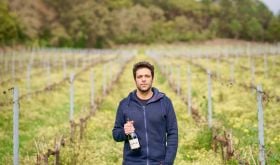
Sherwyn_and_Marcel

Sherwyn was a student at Lincoln University and then at Giesen but when her relationship with Marcel became more than a working one, and they married, the family rule established by Marcel's father (no spouse shall work in the business) determined that they would have to set up a separate operation if they wanted to work together. This is what they have done, though Marcel is still pretty busy with his day job at Giesen, leaving Bell Hill largely to Sherwyn's tender-loving care.

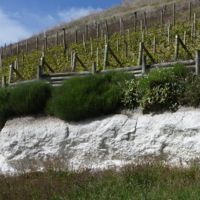
As you can read on the Bell Hill website, their land was first surveyed in 1871 for a lime quarry, a business that continued until the late 1930s, and the current Waikari Limeworks is nearby. Planting of the vineyard with Pinot Noir and Chardonnay, a bijou total of 2.5 ha on north-facing slopes, has taken 12 years since they started in 1997, progressing very cautiously to make sure they get it right and having to wait for the right rootstocks to be imported. What is most striking about the vineyards, apart from the dazzling white of the limestone backdrop, is the high planting density, modeled on Burgundy, intended 'to reduce yield per vine and encourage deep and rapid root penetration to make the most of the site's unique terroir'. If you want the complete description of clones and planting densities of all seven vineyard blocks, it is painstakingly recorded here. The soil types are also explained in minute detail, revealing this couple's obsessive quest to understand and make the most of their vineyard.

Bill Hill's vines are at 260–290 m above sea level and at risk from frost, so they use sprinklers as their main defence mechanism, though this method does bring with it the problem of too much water in the vineyard and compaction of the soil. (After much bureaucratic wrangling, they were allowed to build a reservoir to obtain irrigation water.) Yields are tiny, partly due to the planting density but also because of deliberate thinning, generally to one bunch per shoot. The average yield per vine is just 500–700 g. The vineyards are worked organically, and much of the weeding done manually with a hoe. The heads of the vines are kept low to the ground in order to benefit from the reflected heat of the soil.

Winemaking is careful but uncomplicated: hand sorting, some whole bunch for the Pinot, depending on the vintage, no inoculated yeasts, barrel fermentation for the Chardonnay, all parcels vinified separately, quite a lot of new oak, particularly for the Pinot (they are the NZ agents for tonnellerie Mercurey, which presumably helps to reduce barrel bills), cold pre-ferment and warm post-ferment maceration for the Pinot. Most of the wines spend about a year in barrel.

The Bell Hill barrel cellar consists of a 40-foot high cube shipping container, buried underground. They did try to dig out a cellar but encountered too many difficulties in the construction.

I was particularly impressed by the purity and finesse of the Bell Hill wines. It's a shame that they make such small volumes but perhaps that is what allows them to be quite so pernickety.

Bell Hill wines are imported into the UK by John Armit. See here for distribution around the world.

White
Shelf and Limeworks blocks. Crushed (for more lees) and basket pressed.
Delicate but fine aroma of ripe citrus and some oak toastiness and a touch of smokiness but also linden blossom and a note of linseed. Really tight and crisp and fine high acid even with 100% malo. Subtle and incredibly long. Still so young. A little more austere than the 2009. Very refined. (JH)
Alcohol: 13%
Drink: 2012 – 2018
White
Shelf and Limeworks blocks. 12 months in barrel and then 12 months in bottle before release. A bit more new wood (one barrel out of four). Whole cluster and tank pressed because retains more acidity. 100% malo. pH 3.38, TA 5.7 g/l.
Slightly riper citrus and almost floral. Slightly more grip and more savoury on the palate than the 2008. Long and very mineral tight finish. (JH)
Alcohol: 13.5%
Drink: 2012 – 2019
White
Shelf and Limeworks blocks. Very low-yielding vintage. Cool season, especially in the spring. Only two and a half barrels made so no new oak. Bottled in 2012 but not released until 2013.
Creamy and mineral aroma. Dense, slight chew, fine acidity and salty finish. Mouthwatering finish. Restrained and tightly wound. Excellent. (JH)
Drink: 2014 – 2020
Red
5% stems. A three-barrel selection from the upper and lower part of the Quarry block. 22-28 days on skins, including a cold pre-ferment maceration. 100% new oak for 13 months, then the whole-bunch and crushed portions were blended. Further 10 months in tank before bottling. pH 3.55, TA 6 g/l. Total production 924 bottles!
Mid ruby. Red but not especially sweet fruit on the nose. Possibly a hint of leather. Deep fruited on the mid palate but savoury too. Little bit of pepper and hint of stems. Juicy acidity and rounded finish and the fruit comes back at the end. Opens up to a gentle gentle wine but with very good length. (JH)
Drink: 2012 – 2016
Red
An eight-barrel selection from three blocks: Shelf, Limeworks, Quarry, each fermented and aged separately. 10-15% stems. 100% new oak for 13 months, then the whole-bunch and crushed portions were blended. Further 10 months in tank before bottling. pH 3.66, TA 5.4 g/l.
Fragrant red fruit. Lightly floral note more than stemmy. Dry finesse in the tannins tightly wound around the dense and spicy dark fruit. Much more density than the Old Weka Pass Road 2009 and a more mineral, fine-boned length with the power in a refined mode. (JH)
Drink: 2013 – 2020
Red
100% new oak. No stems. Darker fruited than the 2009 but so perfumed too, delicately floral but still quite contained. Really firm and dry in texture, attractively so. Fluid through the middle. So fresh but subdued and tightly bound. Complete in itself. (JH)
Drink: 2014 – 2024
Red
No stems. 100% new oak. Touch of smoky toasty oak but so well absorbed. Intense dark and savoury, small-berried fruit. Again those lovely dry fine tannins. Grainy and long and mineral on the finish, with that saline note coming through. Mouthwatering even though it still has a certain austerity of youth. (JH)
Drink: 2015 – 2025


PYRAMID VALLEY

My second visit beyond the Weka Pass into North Canterbury revealed the most beautiful sweeping vineyards minutely overseen by German-born but US-raised Claudia Weersing (pictured), who guided me through her beloved Pyramid Valley vines and then showed me a selection of the wines. Although there are only four from the home vineyard, two Pinot Noirs and two Chardonnays, the Growers' Collection includes many more small, single-vineyard bottlings from other regions.
Claudia_Weersing

Husband and winemaker Mike Weersing, US-born and raised, but trained in Beaune and Dijon and in the vineyards and wineries of Europe, notably Burgundy, Alsace and Germany (see their website for the full background), before he worked as winemaker at Neudorf in Nelson from 1996 to 2000, was away in Marlborough, where much of the fruit for their Growers' Collection is sourced. (See my tasting notes below for more precise details.) After a long search, they bought the Pyramid Valley farm in 2000.

The Pinot Noir and Chardonnay vineyards, densely planted, ungrafted, on clay-limestone slopes, have been farmed biodynamically from the outset. Yields are extremely low – kept down to 6-8 bunches, or 350–500 g, per vine and all weeding is done by hand. The blocks were planted by soil type, giving a patchwork impression across the slopes, and each block is vinified separately. They have about eight different Pinot Noir clones and two for Chardonnay but each block is a mix of those clones. The vineyards are named after the dominant wild plant that grows there, eg Angel Flower and Earth Smoke, and the only thing imported from outside the farm for use in the vineyard is the seaweed used to spray the vines. The photo below, taken in the tasting room, shows the lengths the Weersings go to to explain each wine's stony origin.

Pyramid_Valley

They describe their winemaking as 'natural' and frequently refer to 'the spirit of place', their job being to coax a wine from its 'rock bottle'. Every vintage they create a starter yeast culture for each wine from the yeast present in the source vineyard. DNA tests have revealed that these yeasts change from year to year. Grapes are destemmed by hand and basket bressed. Ferments, in big/old oak or clay amphorae, are very long (some whites take up to a year) and are allowed to stop naturally, whether the wine is dry or not. Malo may or may not take place. Wines are bottled unfiltered with little or no sulphur.

Although I did not meet Mike Weersing on this visit, I did subsequently hear him speak at the Real Wine Fair in London in March this year on the subject of skin contact and 'orange wines', of which he is an enthusiastic proponent and master craftsman. In that seminar he suggested that 95% of a grape's goodness and the expression of its terroir, including colourants, aromatic precursors and polyphenols, is in the skins, making it preposterous that in the vinification of almost all white wines, the juice/pulp and skins are divorced so abruptly and prematurely, leaving mostly sugar, acid and water.

His overriding question as to when and why we started discarding so much from the vineyard was a striking one. While I have tasted and loved many white wines that have had long skin contact and are generally more powerful, tannic and more deeply coloured than the average white wine today, though perhaps less varietally distinct, I am not convinced that the global adoption of such practices would be desirable, depriving us of so much of the incredible diversity that makes wine the most pleasurable and fascinating agricultural product on the planet. I have also tasted whites made with long skin maceration that are tough as old boots and show no signs of fruit. But he certainly made me think and reminded me to appreciate his – and others' – convinced but not unpleasantly proselytising commitment to this approach.

Total production is around 3,200 cases (that includes the wines from their home vineyard as well as the even smaller volumes of the Growers' Collection) for 27 markets, so don't expect to find the wines easily. In the UK they are available from the Caves de Pyrène and Swig.

White
Cropped at 4.1 tonnes/acre (about 80 hl/ha). Whole-bunch pressed, no settling, no fining agents. Indigenous fermentation of 15 months in 500-litre puncheons, 5% new. Bottled on the spring equinox, September 2011. No added SO2. pH 3.52, TA 4.3 g/l, RS 25 g/l. Production 410 cases.
Rich and ripe and intensely honeyed on the palate, and peachy. Sweet and concentrated and perfumed but mostly concentrated. Spicy too and so long. Richissimo. Great with crayfish, I found out later. (JH)
Alcohol: 14%
Drink: 2012 – 2014
Price: NZ$29
White
Hand-picked in four tries due to uneven ripening, whole-bunch pressed, no settling, indigenous yeast fermentation of 13 months, in French oak, primarily 500-litre puncheons (50% new). Full, natural, spring malolactic. Bottled May 2008 after 15 months on original lees. A blend of 95% Semillon, 5% Sauvignon Blanc. pH 3.19, RS 2.4 g/l. Production: 450 cases. 'Our oyster wine', says Claudia Weersing, owner and vineyard manager.
Mid gold. Intense rocket, peapod and nettle nose and then the most interesting palate that is hard to describe. Nutty and then there's great acidity. Wet stones and toasty. Complex. (JH)
Alcohol: 13.5%
Drink: 2012 – 2018
Price: NZ$30
White
40% Sauvignon Blanc. Pale gold from long, slow ferment. Slow press cycle – 8-10 press cycles.
Warmer year and more honeyed on the nose. Meady. Then tart grapefruit and capsicum on the palate. Tight and mineral and some tannin. Not as good as the 2007, which had less Sauvignon. (JH)
Drink: 2013 – 2017
White
This wine was known as Lebecca in 2005-2007 but as the vineyard was converted to biodynamics, the wine got drier so they changed the name. 30 hl/ha, 30-year-old vines. 11 months' ferment in tank, whole bunch, TA 7.5 g/l, RS 6.5 g/l. 400 cases – 'that's a lot for us'.
Pale gold. Intense and complex nose is utterly inviting – smoky (reductive), spicy honey and grapefruit. Tight and stony and has intense stony citrus and quince flavours. Long dry mineral finish. Mouthwatering. (JH)
Alcohol: 13.6%
Drink: 2012 – 2019
White
66% Pinot Blanc. 20-year-old vines. 2.2 tonnes/acre (about 37 hl/ha) from this cool, strong soiled site on Fareham Lane in the Waihopai Valley. Selectively picked for perfect fruit, knowing this wine would spend time on skins. Sorted again at the winery, then destemmed, and transferred to tank. Vineyard yeast fermentation, natural malolactic, and 10 months on skins before being lightly pressed in our tiny basket press. Settled for another three months, before bottling on the Summer Equinox; neither fined nor filtered. Nothing ever added, including sulphur. TA 4.4 g/l, RS <1 g/l. Production 60 cases.
Deep copper. Goes brown in two days once open. Savoury mushroomy nose, very tannic and grippy on the palate. Dry and grainy. Love the texture but find the taste on the bitter side. And needs more fruit to balance. Some Gewürz in next vintage. (JH)
Alcohol: 14.2%
Drink: 2012 – 2013
Price: NZ$32
White
15 months 450-500 litre oak, spring malo, 11 months on lees then nine months in tank. No new oak. 70 cases.
Rich, a touch buttery on the nose but somehow has an austerity and minerality too. Mealy and something like barley sugar on the finish though it is beautifully crisp and dry. Although it has all those apricot/orange flavours it is dry and very finely textured. (JH)
Alcohol: 14.5%
Drink: 2013 – 2016
White
Picked on the same day as the Field of Fire Chardonnay (all biodynamic timing) and same winemaking too. Warmer site. Smaller berries from glauconitic green sand/clay. 100 cases.
Slightly deeper gold. Much more mealy and savoury. Richer and tastes as if there is more toasty oak. Lemon on toast. So crisp and clean on the finish. Some tannin working nicely to frame the fruit with the acidity. Firm structure for a full-flavoured, full-bodied wine. Acidity seems crisper as a contrast to the richness. (JH)
Alcohol: 14.5%
Drink: 2012 – 2018
Red
18 hl/ha! Hand destemmed, 25% foot crushed, 27 days' cuvaison, malo in spring, 10 months on lees, 15% new French oak. Unfined and unfiltered. 180 cases.
Very savoury and earthy and fine and gentle on the palate. Warm spicy earthy red fruit. Too cool to use stems here. Firm and earthy and savoury beetroot but so fine and refined. Lovely gentle freshness and very burgundian. Overall an earthy softness that is different from the Earth Smoke. Very long finish. Power all hidden underneath. (JH)
Alcohol: 13.7%
Drink: 2013 – 2020
Price: NZ$105
Red
More floral on the nose than the Angel Flower. More aromatic and brighter. Has dense firm fine grain but is also somehow more fluid and juicy and there's spice on the finish. Tighter, more excitable, fine scented length. Less obvious power and density. More 'feminine'. (JH)
Drink: 2012 – 2018
Price: NZ$105
この記事は有料会員限定です。登録すると続きをお読みいただけます。
JancisRobinson.com 25th anniversaty logo

JancisRobinson.com 25周年記念!特別キャンペーン

日頃の感謝を込めて、期間限定で年間会員・ギフト会員が 25%オフ

コード HOLIDAY25 を使って、ワインの専門家や愛好家のコミュニティに参加しましょう。 有効期限:1月1日まで

スタンダード会員
$135
/year
年間購読
ワイン愛好家向け
  • 286,112件のワインレビュー および 15,815本の記事 読み放題
  • The Oxford Companion to Wine および 世界のワイン図鑑 (The World Atlas of Wine)
プレミアム会員
$249
/year
 
本格的な愛好家向け
  • 286,112件のワインレビュー および 15,815本の記事 読み放題
  • The Oxford Companion to Wine および 世界のワイン図鑑 (The World Atlas of Wine)
  • 最新のワイン・レビュー と記事に先行アクセス(一般公開の48時間前より)
プロフェッショナル
$299
/year
ワイン業界関係者(個人)向け 
  • 286,112件のワインレビュー および 15,815本の記事 読み放題
  • The Oxford Companion to Wine および 世界のワイン図鑑 (The World Atlas of Wine)
  • 最新のワイン・レビュー と記事に先行アクセス(一般公開の48時間前より)
  • 最大25件のワインレビューおよびスコアを商業利用可能(マーケティング用)
ビジネスプラン
$399
/year
法人購読
  • 286,112件のワインレビュー および 15,815本の記事 読み放題
  • The Oxford Companion to Wine および 世界のワイン図鑑 (The World Atlas of Wine)
  • 最新のワイン・レビュー と記事に先行アクセス(一般公開の48時間前より)
  • 最大250件のワインレビューおよびスコアを商業利用可能(マーケティング用)
Visa logo Mastercard logo American Express logo Logo for more payment options
で購入
ニュースレター登録

編集部から、最新のワインニュースやトレンドを毎週メールでお届けします。

プライバシーポリシーおよび利用規約が適用されます。

More Tasting articles

Fortified tasting chez JR
テイスティング記事 Sherry, port and Madeira in profusion. This is surely the time of year when you can allow yourself to take...
Old-vine Clairette at Château de St-Cosme
テイスティング記事 ジゴンダス・ブランは2024年に新アペラシオンの名に恥じない出来栄えを見せている。写真上は、この年のヴィンテージの傑出した生産者の一つ...
Hervesters in the vineyard at Domaine Richaud in Cairanne
テイスティング記事 南部のクリュの中で2024ヴィンテージの注目株はケランヌとラストーだが、他のアペラシオンにも気に入るワインが数多くある。写真上は...
Gigondas vineyards from Santa Duc winery
テイスティング記事 2024年はジゴンダスが優位に立っているが、どちらの産地も多くの飲み応えを提供している。写真上は、サンタ・デュック(Santa Duc...

More from JancisRobinson.com

My glasses of Yquem being filled at The Morris
無料で読める記事 Go on, spoil yourself! A version of this article is published by the Financial Times . Above, my glasses being...
Brokenwood Stuart Hordern and Kate Sturgess
今週のワイン A brilliantly buzzy white wine with the power to transform deliciously over many years. And prices start at just €19.90...
Saldanha exterior
現地詳報 南アフリカの人里離れた西海岸で、思いがけない酒精強化ワインの復活が起こっている。マル・ランバート (Malu Lambert)...
Still-life photograph of bottles of wine and various herbs and spices
現地詳報 リチャードの著書から抜粋した、アジアの風味とワインをペアリングする方法に関する全8回シリーズの第3回目...
The Look of Wine by Florence de La Riviere cover
書籍レビュー A compelling call to really look at your wine before you drink it, and appreciate the power of colour. The...
Ch de Beaucastel vineyards in winter
現地詳報 Yields are down but pleasure is up in 2024, with ‘drinkability’ the key word. Above, a wintry view Château de...
Poon's dining room in Somerset House
ニックのレストラン巡り A daughter revives memories of her parents’ much-loved Chinese restaurants. The surname Poon has long associations with the world of...
Front cover of the Radio Times magazine featuring Jancis Robinson
現地詳報 The fifth of a new seven-part podcast series giving the definitive story of Jancis’s life and career so far. For...
JancisRobinson.comニュースレター
最新のワインニュースやトレンドを毎週メールでお届けします。
JancisRobinson.comでは、ニュースレターを無料配信しています。ワインに関する最新情報をいち早くお届けします。
なお、ご登録いただいた個人情報は、ニュースレターの配信以外の目的で利用したり、第三者に提供したりすることはありません。プライバシーポリシーおよび利用規約が適用されます.