The 2017 en primeur campaign is nearing its end. It would be an understatement to say it has not gone as well as it could have done. When I asked Paulo Pong, managing director of Altaya Wines, how the campaign was going in Hong Kong, his immediate response was ‘what campaign?’.
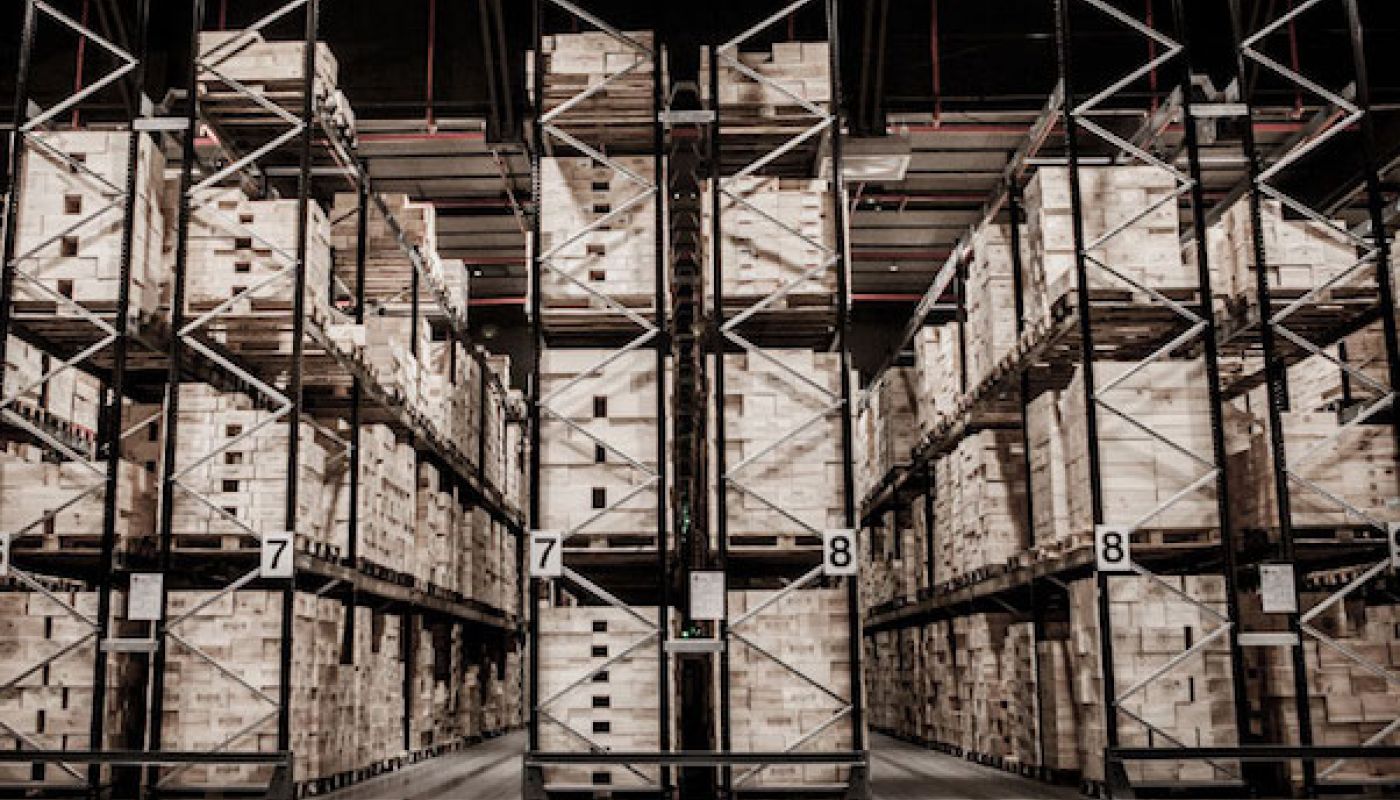
Seasoned négociants (Bordeaux merchants) had feared a challenging en primeur season. When I spoke to CVBG’s managing director Mathieu Chadronnier in early April (the telling image on the right is from CVBG's home page), he correctly predicted that the company’s revenues for the campaign would be down around 50% on last year. This puts CVBG’s 2017 campaign on a par with 2011. Other négociants report similar haircuts. Pong called it ‘one of the most difficult campaigns we’ve seen in recent years'. Meanwhile the majority of merchants are reporting revenues down approximately two-thirds on 2016 – the story is remarkably similar for importers across the UK, the US and Asia.
It did not have to be this way. There was hope in the air during April’s en primeur tastings, with the 2017 vintage winning fans among trade and press alike. The average Wine Lister Quality score for the vintage is 838 (for a basket of 75 top Bordeaux wines), just 9% lower than for 2016. 2017 is not a great vintage like 2015 and 2016, but it is far better than a middling vintage like 2011 (whose average Quality score is 749). The 2017 is a tricky, in-between vintage, where perception is everything.
Unfortunately, the perspective of the vast majority of producers diverged from customers’ expectations. In general, châteaux priced the vintage much closer to 2015 than to 2014. As shown in the chart below, the average 2017 release price was just 6% below the current market price for 2015, but 20% above 2014. Meanwhile the trade (and their clients) wanted to see release prices below market value of similar, physically available vintages (as outlined in Wine Lister’s recent blog on en primeur pricing).

Why so high?
As en primeur becomes more and more of a positioning exercise, two distinct strategies are becoming increasingly apparent. The most common, and often less effective, is where the property decides – independently of market factors – that its price should be higher, and in one fell swoop fixes a release price above what the market is willing to pay for existing vintages. This imposed repositioning can work in exceptional cases where there is an explicable justification that the trade (and their clients) can endorse, whether or not it is valid per se. Think Figeac in 2016, or even Haut-Batailley 2017.
However, more often than not, the imposed price is not embraced, and leaves a bitter taste in the mouth of négociants and stock in their warehouses, whose price will stagnate or even decrease. This is, unsurprisingly, damaging for the brand in question, and for earning goodwill. One négociant told me off the record that he and his Bordeaux peers are ‘sickened’ by the 2017 en primeur campaign, which has ended in ‘sorrow’. ‘The producers should be ashamed', he lamented.
Why do so many châteaux do it? Because they can. Bordeaux’s allocation system puts the properties in a position of immense (if somewhat synthetic and certainly counterproductive) power. It means that positions built up by the négociants over generations need protecting at almost any cost. This means that many are prepared to buy stock at the wrong price, and either hold it for years, or sell it off straightaway with no profit margin, or even occasionally at a loss. The biggest and most highly reputed négociants are immensely capitalised, and are holding more stock than ever before in the race to consolidate their position on the Bordeaux Place.
Constructive repositioning
But back to the producers’ positioning: the second, long-termist strategy is practised by only a handful of properties. It involves enlisting the goodwill of the trade and consumers to boost a brand more organically. By releasing at a price attractive enough to warrant buying the wine as futures, the wine immediately gains in desirability. More often than not, this leads to a significant subsequent price increase in the secondary market, including for back vintages of that wine. A virtuous circle, this approach to repositioning allows the whole chain to make money. It means that the market will readily, and naturally, absorb higher prices for future vintages.
Fewer than 10 châteaux wholeheartedly adopted this second constructive repositioning strategy during the 2017 en primeur campaign, with the textbook example being Calon-Ségur (no coincidence, perhaps, that it is run by a former négociant). It requires patience and also humility, from owners willing to play the long game. It of course involves relinquishing potentially greater profit in the short term, and passing this on to the rest of the food chain.
Constructive repositioning is the lifeblood of the en primeur system. Designed as a mechanism to build interest in the newest Bordeaux vintage, en primeur at its best is a masterful marketing tool and remarkable revenue driver. En primeur should be a mutually beneficial collaboration between producer and trade, to best serve the consumer thereby best serving themselves.
It is difficult to see a return to this ideal when the producers hold so much power thanks to the allocation system. Bordeaux négociants are shackled to the châteaux almost regardless of the price, so crucial to their very existence are their allocations. Two different négociants told me they had reduced some of their allocations this year. ‘It is a last resort', explained one, again off the record, ‘when the price really is too high'.
The Place de Bordeaux is painfully aware of the sword of Damocles hovering above the en primeur system.
Getting physical
It is different for the trade outside Bordeaux, who have anyway steadily reduced their reliance on Bordeaux in general and en primeur in particular. Max Lalondrelle, Bordeaux buyer at Berry Bros & Rudd, was very unhappy about giving up ‘a lot of allocation which I built over 10 years', but says, ‘at these prices it didn’t make any commercial sense to keep them'.
Meanwhile Altaya Wines’ strategy now is ‘to pay much more attention to livrable', says Pong, referring to physically available, deliverable stock. Maybe this is what consumers should be doing too. Time and time again, as we reported on 2017 releases here at Wine Lister, we noted how good-value the 2014 vintage looked by comparison (confirmed by its high average quality and low average price on the chart above).
Chadronnier agrees that, ‘technically, the great buy of the moment is 2014'. However, as they near their physical delivery, Chadronnier believes 2015 and 2016 also look ‘extraordinary value, if you look beyond the top 25 or so brands’. He believes that, ‘2014 will be replaced by another vintage but 2015 and 2016 won’t – they’re becoming brands in their own right.'