It’s now an established fact that making and transporting glass bottles are the biggest components in wine’s carbon footprint. An international group of retailers have been researching how to reduce this most effectively and are making real progress.
Of course the ideal situation would be that all glass bottles were either reused or recycled because, unlike some other materials, glass can be recycled virtually infinitely. But that doesn’t happen even in countries with admirable recycling schemes and clear guidelines for consumers. In the UK recycling is administered by local authorities and councils, of which there are 333 in England alone. They all recycle differently – quite efficiently in Wales but not often elsewhere. The Scots have proposed a complicated returnable bottle scheme, all part of establishing their independence from Westminster.
As a consumer who wants to do the right thing, I would love more interference from Westminster in this respect. I’d welcome standardised, clear guidance on what to do with bottles and anything else that should be recycled. As it is, like many Brits I suspect, I’m confused, and am far from totally convinced that what I so carefully put in the recycling bin is actually recycled rather than going to landfill or being shipped off to Indonesia or somewhere.
Attempts to standardise UK recycling schemes are apparently thwarted by the fact that many of these local authorities are hamstrung by very long-term contracts with waste-management companies such as Biffa.
In the UK we seem to be so much worse at recycling than, say, Germany, Switzerland, Scandinavia and France. According to The Wine Society’s director of sustainability Dominic De Ville, ‘we’re considered the dirty man of Europe’. Not good, and a bit worrying considering in Britain we’re considerably better at recycling than the world’s biggest wine market, the United States.
The best current option for reducing wine bottles’ carbon footprint seems to be to campaign for lighter bottles. Under the auspices of Sustainable Wine Roundtable, an independent coalition of producers, distributors, retailers and transporters of wine, a group of concerned retailers – Waitrose, The Wine Society, Whole Foods, Dutch retailer Ahold Delhaize and the alcohol monopolies in Sweden and Finland – have been funding researcher Peter Stanbury to look into all aspects of this.
Since last September he has been interviewing interested parties and reviewing the literature with a view to coming up with a proposal that would see producers gradually using lighter and lighter bottles at the request of those they sell to. The SAQ, the alcohol monopoly in Quebec, has introduced such a scheme, though of course it’s easier to impose if, as in Quebec, there is a single retailer who can refuse to buy wine in bottles above a certain weight.
SAQ has chosen 420 g (15 oz) as the target weight for an empty wine bottle. (Stanbury told me that the heaviest empty bottle he has encountered was 2,850 g (6.25 lbs). (He thinks it was for an Amarone.) The trade organisation British Glass say that its members have already successfully produced 250 million wine bottles that weigh less than 350 g and they have proved quite resilient enough.
I’ve been campaigning for lighter bottles since 2006, for the sake of those who have to lift cases of them as well as for the good of the planet, and for the last two years have been including bottle weights in my reviews of wines tasted at home. An increasing number of producers seem to me to be using lighter bottles and I have also noticed that, despite my obsession with bottle weight, I am getting worse and worse at predicting from sight and feel alone which are the lighter bottles. Perhaps bottle designers are becoming more skilful at disguising a bottle that weighs less than 500 g, which many of them do now.
According to Stanbury, there are no massive practical problems associated with reducing bottle weights. The bottle moulds may need to be slightly adjusted so as to strengthen the points at which bottles are most fragile. And very high-speed bottling lines may have to be tinkered with. But he has concluded that a bottle weighing 420 g or even lighter would be perfectly sturdy enough to be transported long distances. I know from delighted practical experience that there is now a wide range of recyclable cardboard options for packing bottles with zero risk of breakage.

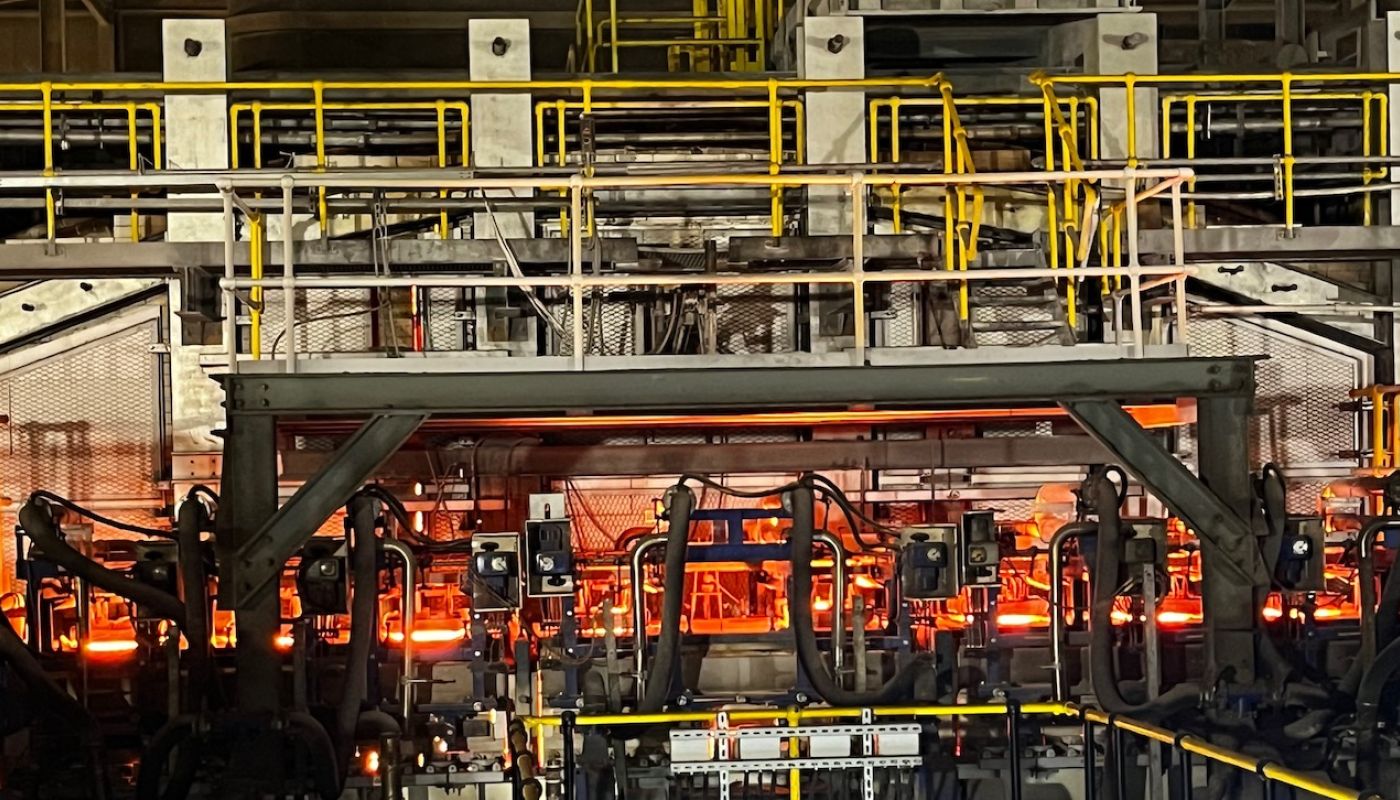
There are of course cost implications to using heavy glass. Stanbury, De Ville and I spent a day recently with Encirc, one of the UK’s most ambitious bottle producers, seeing just how simple bottle manufacture is if you can afford the energy to maintain a furnace at a constant temperature, 365 days a year, of 1,500 °C. The raw materials are just silica sand, soda ash and limestone. (The aim is to use an increasing proportion of recycled glass as well. That proportion is currently 52% in Europe, higher for green bottles and lower for clear ones.) But as energy costs have been escalating, so have bottle prices.
Although most US wine producers ship in bottles from China, California vigneron Raj Parr is determined to buy (light) US-made bottles for his Phelan Farm wines. Last year they cost 38 cents each. This year he’s paying $1.10.
Philip Cox of Cramele Recaş, the biggest exporter of wine from Romania and a wine producer who is particularly concerned about carbon footprints, wrote to me recently, ‘frankly glass has now become too expensive for entry-level wines. Anything less than £6 a bottle is heavily impacted by bottle costs which have increased by over 20 cents per bottle in Europe in the last year (which translates to minimum 50p a bottle shelf-price increase after all the margins and VAT). Not only has it gotten very expensive, there is very limited availability which is even worse. We can’t get enough bottles and it’s worse in Spain, France and Italy.’
According to Stanbury, the bottle manufacturers he has spoken to would be quite happy to sell lighter bottles. They’d be cheaper to make and production volumes could be increased.
The big retailers could start to impose maximum bottle weights on their suppliers quite easily – and might welcome the extra shelf space and savings in transport costs that would result.
The only stumbling block seems to be not necessarily consumer perceptions, but brand owners’ perceptions of their customers’ perceptions. Too many producers seem convinced that consumers still associate heavy bottles with wine quality (even though the Bordeaux first growths for instance, wines that have represented the cream of the crop for nearly two centuries, don’t use especially heavy bottles).
There are admittedly some appellations such as Châteauneuf-du-Pape that insist on a particularly heavy special bottle. These wine producers may need to be convinced to change, or incur a hefty surcharge.
I would argue however that younger consumers are increasingly concerned with all aspects of sustainability (financial and social as well as environmental) as are wine drinkers in general. When substantial UK retailer Laithwaites introduced, with much fanfare, a wine sold in a 100% recycled glass bottle a year ago, it apparently sold out within 72 hours.
According to Stanbury’s research, it is mainly new wine drinkers who are reassured by heavy bottles, not experienced ones, and this could be changed with education. His review of the literature concerning what makes people choose one wine over another suggests that bottle weight is much less important to consumers than factors such as price, label design and where the wine comes from. And anyway, so much more wine is now bought online, or in bars or restaurants, where we can’t handle bottles in advance of choosing them.
Stanbury aims to complete his researches and make recommendations to the retailers in the next two months. If your bottle of wine starts to weigh less, please don’t complain.
Delicious wines in very light bottles
White
Verum, Las Tinadas Airén 2020 Vino de la Tierra Castilla, Spain 12.5%
£26.96 Great Wines Direct
Reds
Ch Pesquié, Edition 1912m 2020 Ventoux, Rhône 14.5%
£12.99 Majestic (£10.99 Mix Six price)
VidAs, Vive La Vida 2019 Cangas, Asturias 13.5%
£18.80 Savage Selection
Marion, Borgo 2020 Valpolicella 12.5%
£19.95 Wine & Greene
Subscribers can access tasting notes and scores on our Purple Pages. Some international stockists on Wine-Searcher.com.