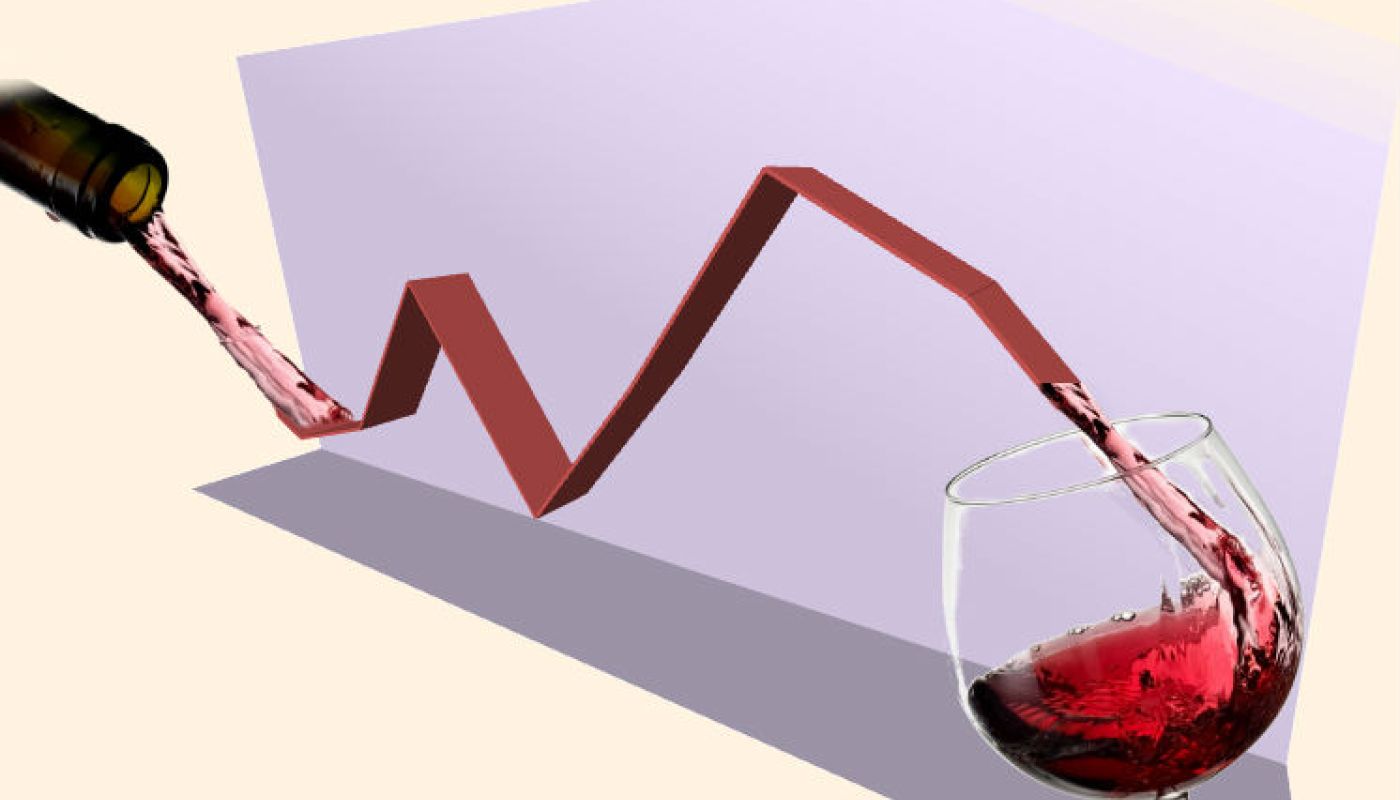
Over the last decade, it has become increasingly fashionable to invest out of the box. Within the vast universe of exotic investments, fine wine has attracted special popularity. This is not only due to its supposedly attractive return and low risk, but also to its ability to convey values associated with lifestyle and social status. Two general approaches can be pursued in participating in this market: purchasing a wine estate or buying bottles of fine wine.
The first approach suffers from several practical issues (limited number of investment opportunities, large amount of money involved, inherent complexity, managerial implications, etc), which explains why the second approach is favoured. Several studies have demonstrated that the performance of such a strategy is attractive in terms of returns and diversification. The nature of fine wine and the peculiarities of the market on which it trades, however, make it difficult for those who are not wine experts to profit. Finance professionals have subsequently started to cater to this new demand by marketing, among others, wine investment funds. However, investors should be aware of the specificities of the wine market which involve both opportunities and risks for these wine funds and may affect their performance.
The wine market and its characteristics
Wine displays characteristics that distinguish it from other investments. Foremost, it does not deliver any kind of cash-flow. This implies that the value of a bottle of wine, as opposed to stocks or bonds, cannot be determined by a traditional financial approach. It is, therefore, the confrontation between supply and demand in its purest sense which explains the evolution of prices. A further important feature is the lack of a centralised marketplace; a bottle can be processed through a multitude of channels (auction houses, merchants, private contacts, etc.) all over the globe. This segmentation reinforces the difficulty of establishing a fair value since a bottle may sell for different prices in different places. This, coupled with the limited number of market participants, makes the timely sale or purchase of wine difficult. In financial terms we would say that the wine market is inefficient and illiquid.
The very nature of the product also has implications for potential investors. A bottle may break, the wine can deteriorate if poorly stored, or may be an outright fake. Moreover, the various costs associated with an investment in wine can be considerable. Transaction costs depend on the channel in which the wine is traded but are generally high. Auction houses on average charge a sales commission of up to 5% and a purchase premium of 15 to 25%. Other costs also have to be added: insurance premiums, transportation and storage costs. These can hardly be eliminated.
Wine funds: a special investment
The success or failure of wine funds is based on the specificities of the wine market and depends on the capacity of the fund manager not just to get an exposure to the market but also to exploit the opportunities it offers.
The inefficiency of the market constitutes a problem for most investors but can turn into an advantage for those with a better understanding of it and who have privileged access to information. A fund manager knowing the wine market inside out can make use of this information asymmetry leading to increased ease in detecting trends or finding appropriate distribution channels. This constitutes a non-negligible advantage as it allows fund managers to have access to rare wines, negotiate better sale or purchase prices and to guarantee a minimal traceability of the provenance.
Investors should nevertheless be aware of some potential issues that may affect wine funds and their performance. First of all, the lack of a centralised market, coupled with the fact that most wines are traded infrequently, makes it difficult to estimate wine prices precisely. Subsequently an accurate calculation of the value of a portfolio of wines held by a fund becomes complicated. Most funds rely on the services of Liv-ex, while a few others use their own estimates. Unfortunately, we still lack an internationally accepted standard. This has led some funds, such as Luxembourg-based Nobles Crus, to come under increased scrutiny because of their approach to valuation. This problem is associated with a more general lack of regulation of companies or funds investing in wine. In the United Kingdom, for example, the FSA has started regulating these kind of funds only recently. It is not helpful that many wine funds are located in low-taxation and little-regulated jurisdictions such as the Cayman Islands, Delaware (USA), or St Kitts and Nevis.
A second issue is related to the limited depth of the wine market, which impedes the ability of wine funds to trade important quantities of specific wines. This problem may become particularly severe if a fund needs to sell substantial positions rapidly, especially in a downward market. Some funds have indeed recently faced redemption calls from investors but have not been able to sell off their positions in a timely fashion. To reduce the effect of this issue, funds can take different measures. The investment of a specific investor should not be allowed to represent more than 5% of the total money invested in the fund. Moreover, redemption periods should remain sufficiently large such that fund managers have enough time to sell positions without flooding the entire market and consequently putting a heavy downward pressure on it.
A third issue is related to the strategy of wine funds. Most of them invest predominantly in the best wines from Bordeaux. Some, however, also have a non-negligible percentage of wines from Burgundy, Rhône and Italy within their portfolio. In general, funds also tend to focus on the best vintages and to overweight recent vintages. The fact that most of these funds invest in a small universe of wines raises two concerns. An investment in wine through funds eliminates the costs and complications related to storage and transport for the investor. Transaction costs may also be reduced but not eliminated as funds may charge a yearly management fee of 1.5% to 2.5% and a performance fee of up to 20%. Based on these facts, what is the added value provided by some fund managers who demand high fees and ultimately appear to buy readily available wines on the market? Second, what is the market-wide impact of having a relatively significant fraction of the last great Bordeaux vintages owned by a small number of market participants? This situation constitutes a potential source of risk as it may lead to the creation of bubbles or to market crashes in case of fire sales of specific wines. On the other hand, wine funds through their trading contribute to the increase in liquidity on the market. This is beneficial for all market participants as it facilitates exchanges and increases information flow.
The performance of wine funds
In a recent article*, we analysed the performance of the six largest wine funds. Our results suggest that wine funds have indeed benefited from the positive evolution of the wine market of the last years. Consequently, they have been able to display a decent return for their investors. An investment in wine funds has also been favourable from a risk perspective. Through their weak relation to stocks and bonds, wine funds have provided diversification benefits that have reduced the overall risk of an investor’s portfolio. Wine funds therefore appear to be interesting vehicles from an investment perspective and compared with classic financial markets. However, the picture is less bright when funds and their relation to the general wine market are analysed in more detail.
We have also examined whether fund managers are proficient in identifying the best investment opportunities on the wine market. Considering their expertise, they should be capable of outperforming the overall wine market benchmarked by the Liv-ex Investables [sic; I’m sure Julia would prefer Investibles – JR] Fine Wine Index. However, we found that only one fund, Nobles Crus, was able to do so (this result should, however, be viewed with extreme caution because of doubts described above over their valuation policy). Two other funds, the Vintage Wine Fund and the Fine Wine Fund, were in the opposite situation, having underperformed the general wine market. The remaining three funds (the Wine Investment Fund, the Fine Wine Investment Fund and the Australian Wine Fund) delivered a performance close to the Liv-ex Fine Wine Investables Index. This performance is disappointing, especially if one considers the substantial fees charged by wine funds.
Finally, we studied whether fund managers are able to anticipate the evolution of the wine market. Due to their superior information and knowledge, they should be better able to profit from market inefficiencies by predicting market-wide movements or trends. We found that only the manager of the Wine Investment Fund on average entered and exited the market when it was the most opportune. This discouraging result is probably due to the lack of liquidity of the wine market and not to poor fund management. It is complicated to enter or exit the market rapidly and to use the informational advantage fully.
Overall, wine funds appear to offer a decent alternative to classic financial investments. This positive outcome is, however, mitigated for two distinct reasons. First, management and performance fees associated with investment in wine funds may somewhat reduce the attractiveness and performance of such funds however attractive they may be in terms of diversification and risk. Second, compared with the underlying wine market, results are less rosy. This appears surprising given the segmentation of the wine market and the differences in information and expertise market participants display. This environment should be ideal for specialists enjoying privileged access to information and should, one would think, enable the establishment of profitable investment strategies. But this does not seem to be the case. The lack of market liquidity and constraints relating to the allocation of wines into the various funds may partly explain this disappointing result.
*The complete study can be found here (though only the abstract if freely accessible).
















