
When I started out writing about wine in the 1970s I was told firmly that the Asians would never become wine drinkers. There was commonly supposed to be something about the Asian palate and physiology that had them forever cast as either teetotallers or beer or spirits drinkers. Some of them might occasionally sip a rice-based ferment, but grapes were definitely out. When, for example, the Liu brothers from Hong Kong starred in the Oxbridge wine tasting teams in the late 1970s, they were considered the exceptions who proved the rule.
How very wrong we all were. It is no exaggeration to say that Asia has become the focus of the world's fine-wine trade. And it has happened in a remarkably short time – principally since February 2008 when the Hong Kong government very deliberately slashed wine duty to zero in an effort to make the southern Chinese enclave a fine-wine hub. Today more fine wine is auctioned on Hong Kong island than anywhere else in the world and virtually all of the fine-wine traders who clustered around London and its salerooms and fine-wine storage now have a Hong Kong outpost that is an oriental tail very firmly wagging the occidental dog. On Monday last week, for example, a bank (and office) holiday throughout the UK, it was a normal working day for the likes of Farr Vintners, so few of their customers nowadays are based in the UK, and so many are hard-working Asians.
A significant proportion of the wine bought in Hong Kong finds its way to other parts of Asia, mainland China in particular but also to Indonesia, Taiwan, Singapore, South Korea and of course Macau. Many of these countries have extremely high duties on wine, typically ad valorem taxes that are particularly punitive for fine wines, so some entrepreneurs have developed businesses specifically designed to minimise the duty collectors pay when importing wine into their own country from Hong Kong. Because Chinese regulations permit duty-free hand carrying of bottles into China, some businessmen run teams of wine mules over the border, the human equivalent of the white vans that used to be so prevalent importing supposedly 'personal allowances' of duty-free drink and cigarettes from mainland Europe into the UK.
Hundreds of fine-wine traders, French merchants and Bordeaux châteaux owners have China's new millionaires firmly in their sights, and will be hoping to carve a direct route to them the week after next when Vinexpo, the Bordeaux-based company that operates a biennial wine fair in Bordeaux, holds a counterpart in Hong Kong. Indeed the very existence of this opportunity for meeting and greeting the supposed top bidders is given as an excuse for postponing the release of keenly anticipated prices of the 2009 bordeaux primeurs.
When I was in China in March I asked leading figures in the wine trade there how many individuals they thought were willing, able and keen to buy first-growth bordeaux 2009 (which some are predicting will cost more thousands of pounds per dozen than ever before). Answers varied between 5,000 and 10,000 – certainly far more than there are in the cash-strapped traditional markets. Certainly Chinese magazines, even general-interest magazines, are now peppered with ads for wine, apparently a symbol of sophistication, along with luxury fashion labels. The next generation of major players in the Bordeaux wine scene are now very much more likely to be sent on apprenticeships in Shanghai or Hong Kong than in New York or London.
But the Asian wine scene is very much more than Hong Kong and China. Japan and Singapore have long histories of connoisseurship. Japan, the first Asian market to show real interest in importing top-quality European wine, is still very much a player, despite recent economic vicissitudes. The Singapore wine market is much livelier than it has ever been, and is very much more dependent on local entrepreneurship than on any foreign influence. Importers, often allied with the restaurant business, sell direct to the public, and tend to do so in a much more creative, user-friendly way than most British wine buyers are used to. A major new development in the Singapore wine market has been the opening, against some muted opposition, of two large casinos. Their buyers, on behalf of their high rollers, can absorb all the grand cru burgundies and first growths that their suppliers can source for them. In fact one notable development in Singapore is that more and more wine lovers are realising that tough, tannic red bordeaux may not be the ideal wine for their sultry climate. Red burgundies, and Pinot Noir in general, is increasingly appreciated there, along with the equally chillable Riesling and Sauvignon Blanc.
The Asian country with perhaps the greatest current growth in demand for fine wine is another with a Singaporean climate, Indonesia. Duties on wine in Indonesia are as high as both temperatures and humidity, however, which is presenting challenges for even the most creative wine importers and exporters. Despite its latitude, Indonesia is home to no fewer than three wineries, all on Bali, and at least one dependent on grape juice imported from Australia.
The French tried to introduce viticulture to Vietnam in the 19th century but today wine produced by wineries there is based, as in most Asian countries, on a mixture of home-grown grapes and bulk imports. Great efforts have been made to develop local vineyards and winemaking expertise in Thailand, however, and heavy local import taxes give them a huge price advantage over even cheaper imports from Chile and the like. As in China, there are far more deliberate attempts to develop wine tourism than there are in most of Europe.
India has its own wine industry, its own punitive wine duties, and its own very distinctive drinking habits. Even the most determined French wine exporter has found it hard to break the Indian social tradition of drinking long and hard – whether wine, spirits or beer, or all three – before rather than with food. Indeed parties tend to be measured a success by how late the food is served, a long way from the stately progress of a traditional French dinner with wine.
What India does share with most of Asia, however, and particularly with China, Hong Kong and Singapore, is the extent to which wine is associated with status. Recipients of hospitality will routinely check the scores and price of the wines they have just been served – unless of course their host was brazen enough to assure them at the time of serving that they were 'hundred-point wines'.
Asia undoubtedly presents glorious opportunities for the world's wine producers – even if for us wine consumers it is having a distastefully inflationary effect on prices at the very top end. But because wine and face are so intimately intermingled, it is also paradise for unscrupulous traders passing off fake wine, everything from the most obvious 'Château Lofite' to much more cunning, and ambitiously priced, counterfeits. Those tracking down fine-wine fraud are finding it even more difficult to persuade collectors in Asia than those in the US or Europe that some of their bottles may not be genuine.
See our continuing pictorial series on China – the genuine and the ingenious.
Asia – the last continent
• 5 min read
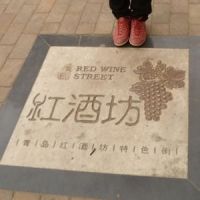
This is a longer version of an article also published in the Financial Times.


选择方案
会员
$135
/year
适合葡萄酒爱好者
- 存取 296,561 条葡萄酒点评 & 16,125 篇文章
- 存取《牛津葡萄酒指南》及《世界葡萄酒地图集》
- Access askJancis, our AI wine assistant


核心会员
$249
/year
适合收藏家
Everything in “Member”, plus:
- Early access to the latest wine reviews, 48 hours in advance
- Early access to the latest articles, 48 hours in advance
专业版
$299
/year
供个人葡萄酒专业人士使用
- 存取 296,561 条葡萄酒点评 & 16,125 篇文章
- 存取《牛津葡萄酒指南》及《世界葡萄酒地图集》
- Access askJancis, our AI wine assistant
- 提前 48 小时获取最新葡萄酒点评与文章
- 可将最多 25 条葡萄酒点评与评分 用于市场宣传(商业用途)
商务版
$399
/year
供葡萄酒行业企业使用
Everything in “Professional”, plus:
- 可将最多 250 条葡萄酒点评与评分 用于市场宣传(商业用途)
- Access to submit wines for review
- Offer memberships to your employees and manage them from a single place
- API access available for an additional fee
More Free for all

Free for all
路边餐馆的乐趣,作者:查理·吉奥根 (Charlie Geoghegan)。照片由杰森·洛 (Jason Lowe) 拍摄。...

Free for all
首个跨大西洋合资企业作品一号 (Opus One) 涉及20世纪葡萄酒界的标志性人物。本文的一个版本发表于《金融时报》(Financial...

Free for all
突发新闻!老藤登记处 (The Old Vine Registry) 正在打破记录、突破障碍并开辟新天地。现在,老藤登记处标识正式推出。...

Free for all
从世界各地挑选 27 款霞多丽 (Chardonnay) "标志性"酒款,呈献给 18 位认证品鉴师……本文的一个版本发表于金融时报 。另见...
More from JancisRobinson.com
Tasting articles
证明南非仍然是最值得探索的葡萄酒国家之一。上图为天气报告 (Weather Report) 的克里斯·基特 (Chris Keets)(左...

Tasting articles
历史悠久的葡萄园、高海拔、火山土壤和有机种植的结合使这个鲜为人知的 AVA 脱颖而出。上图为 拉塞特酒庄 (Lasseter Winery)...

Tasting articles
来自热浪年份的诱人清新且易饮的葡萄酒。索蒂马诺 (Sottimano) 从科塔 (Cottà) 特级园(如上图所示...

Tasting articles
来自 2022 年份及更早年份的葡萄酒证明了巴巴莱斯科的陈年潜力。 巴巴莱斯科 2022 年份的晚期发布打破了两个误解—...

Tasting articles
25种在炎热中保持清爽的方式。 上周欧洲经历了有记录以来最严重的6月热浪;本周,美国东海岸各城市将打破高温记录。在这种炎热中喝什么?水...

Wines of the week
一款由前化学家以精确态度和葡萄藤语者灵魂酿造的绿酒 (Vinho Verde) 白葡萄酒。售价 23 美元起,22 英镑起。上图为拉莫斯...

Tasting articles
一场垂直品鉴将詹西斯 (Jancis) 带回这款标志性加州红葡萄酒开创性的起点。在伦敦帕尔摩尔街 67 号 (67 Pall Mall...

Don't quote me
遮蔽葡萄藤并提供酒桶的森林风土与葡萄园及其葡萄酒相互关联。上图为托尼·比什 (Tony Bish) 在 法国中部的特龙赛 (Tronçais...