25th anniversary events | The Jancis Robinson Story | 🎁 25% off gift memberships

Blind tasting, part 2 – gathering visual clues

Thursday 19 February 2026 • 1 min read
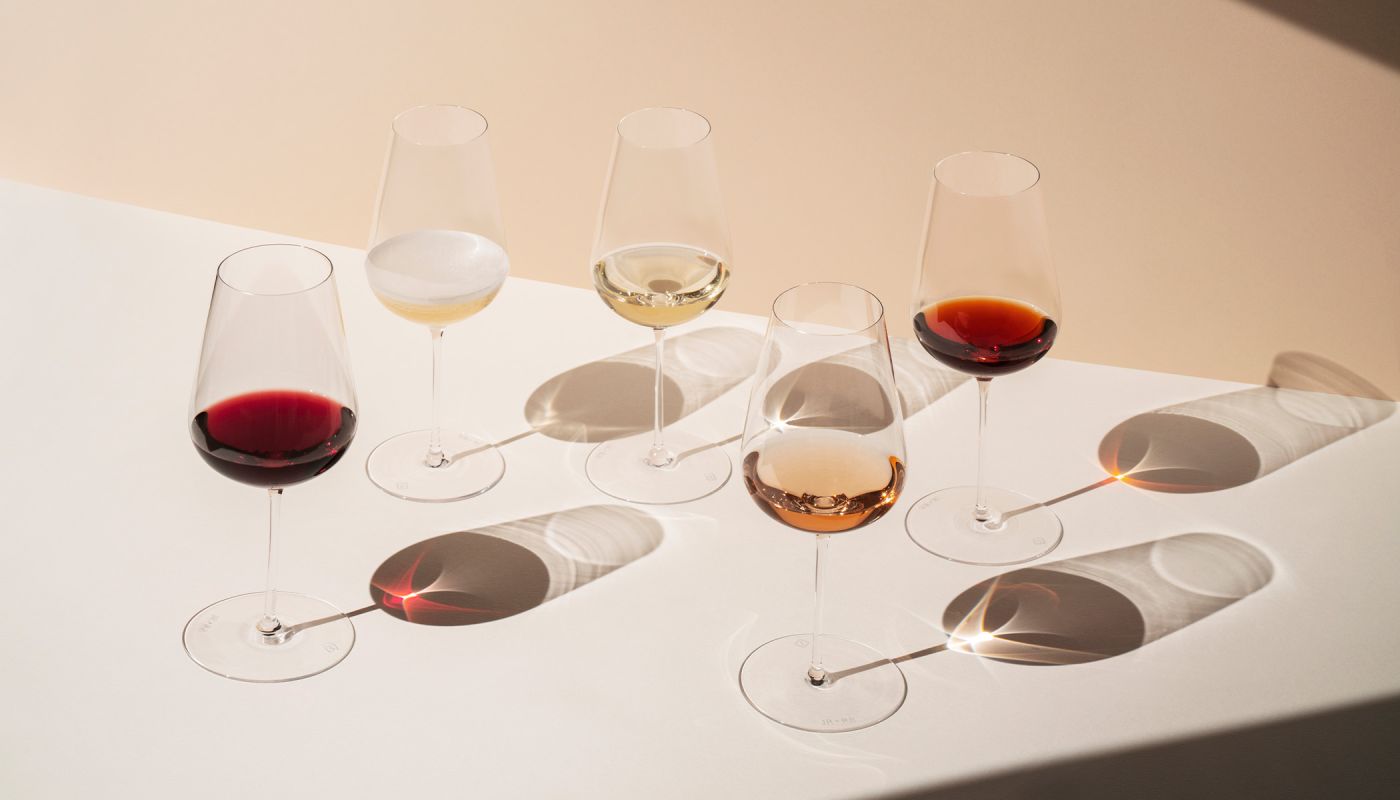
Richard Brendon_JR Collection glasses with differen-coloured wines in each glassAll Wine

Just looking closely can help you figure out what wine is in your glass.

Welcome back to Mission Blind Tasting! Now that we’ve covered the varied approaches to blind tasting, and all the things you need for blind tasting (see essential tools), it’s time to actually start evaluating. If you’ve taken my wine suggestions from part 1, go ahead and pour your young Vinho Verde, old Sauternes, cool-climate Pinot Noir and warm-climate Cabernet Sauvignon or Shiraz into four glasses. Otherwise, grab any wine you have on hand and follow along.

Evaluation starts with sight

Before you smell or taste a wine, look at the liquid in your glass over a white background (a piece of paper, a tablecloth) and note its clarity (or lack of clarity), colour and any appearance of bubbles. These details can give you hints as to what’s in the glass. We’ll break down each part.

Clarity v haziness

Most wines are clear – and if you’re presented with a glass of clear wine, you can move right on down to Intensity.

If a wine is hazy – take note.

Haziness is rarely a flaw these days – as long as the wine smells good. If the wine smells unpleasant, the haze might be caused by bacterial spoilage – in which case you should find a different wine to evaluate.

If the wine smells fine, the lack of clarity is most likely a protein haze. Grape proteins will coagulate if the temperature of a wine fluctuates too much during maturation or after bottling, causing cloudiness.

This is more common in young white wines than in young red wines because red wines tend to have more tannins, which stabilise proteins. (The exception is older red wines, which may develop a haze as their tannins begin to denature, aggregate and precipitate out.)

In young wine, a haze usually indicates that a wine wasn’t stabilised through fining or filtration. Forgoing stabilisation is rare in all but a handful of styles, so, if your white wine smells fresh and youthful but looks hazy, it might be from a region, or made in a style, where haze is commonplace.

Commonly hazy styles

  • Sparkling wine made by either the traditional method or the méthode ancestrale in which the yeasts are not disgorged before bottling. Méthode ancestrale examples include most ‘pet-nats’ (pétillant naturel) and some Lambruscos. Traditional-method examples include Col Fondo Prosecco and, again, some Lambruscos.
  • Wines from producers who are part of the natural-wine movement. Natural winemakers eschew stabilisation – which means hazy wines are more accepted.

Intensity

Intensity refers to how dark or light a wine is. The WSET (Wine & Spirit Education Trust) allows students just three descriptors: pale, medium and deep. The IMW (Institute of Masters of Wine) encourages you to get creative and use descriptors such as limpid, translucent, mid depth, opaque and pretty much anything else that would accurately describe depth of colour. For the sake of simplicity, I’m generally going to use WSET terms.

How pale is pale?

Pale: if you hold a red wine at a 45-degree angle over a book and can easily read through it, it’s pale. For white wines, if the wine has a broad, watery (nearly colourless) rim, it’s pale.

Deep: if you can’t see a hint of lettering through a red wine, it’s deep. In white wines, if the colour stretches to the rim, it’s deep. Because it’s more difficult to determine the intensity of white wines, I find it helpful to keep in mind that gold- and lemon-coloured wines are more likely to be deep than lemon-green wines or wines with a silvery hue (we’ll get to colour in a moment).

Medium: here’s where things get challenging. The WSET insists on one descriptor. But the IMW doesn’t mind if you split the difference. So I’m going to take the liberty of using ‘pale verging on medium’ and ‘medium verging on deep’ when it’s appropriate.

Why intensity matters

Intensity matters because the factors that might influence that depth of colour can help you narrow down the age of the wine, grape variety used and/or winemaking techniques.

Factors that can lead to a deeper colour in white wines:

  • grape variety – a more reddish or bronze-hued variety which is higher in anthocyanins than lighter-skinned white grapes (eg Pinot Gris or Gewürztraminer)
  • botrytis – when botrytis (noble rot) is allowed to infect fruit it produces an enzyme called laccase which oxidises phenolic compounds, causing browning and deepening colour
  • winemaking:
    • oxidative winemaking – any decision that exposes grapes, must, or wine to oxygen; this ranges from choosing not to add sulphites to maturing a wine in a porous container such as oak or unlined clay before it’s bottled
    • skin contact – the more time the juice spends mingled with the skins, the more anthocyanins and phenolic compounds are extracted
  • ageing – all closures allow small amounts of oxygen to enter a wine bottle, slowly oxidising the wine and causing the colour to deepen.

Factors that can lead to a deeper colour in red wines:

  • grape variety – grape varieties with relatively high levels of extractable anthocyanins (eg Malbec, Cabernet Sauvignon and Syrah) or with relatively thick skins in proportion to the size of their berries (eg Petit Verdot and Petit Sirah) tend to produce wines with a greater depth of colour
  • climate and weather – anthocyanin levels in grapes are positively correlated with exposure to sunlight and negatively correlated with access to water; heatwaves (temperatures over 35 °C/95 °F) result in anthocyanin degradation; thus, the highest levels of anthocyanins are often generated by vines planted in sunny, dry places with moderate temperatures
  • winemaking:
    • destemming – stems absorb and bind significant amounts of pigment, removing it from the wine, so if you discard the stems before winemaking, more pigment remains
    • a shallow fermentation vessel – this allows for more contact between skin and juice and therefore more extraction
    • cold soak – anthocyanins are water-soluble and can be extracted at low temperatures; extracting colour prior to fermentation results in deeper colour than if a winemaker were to extend maceration post fermentation when pigments are likely to bind with tannins and precipitate out (ultimately this colour would be more stable but not as deep)
    • moderate fermentation temperature – peak temperatures of 25–27 °C (77–81 °F) allow for extraction without degrading anthocyanins
    • more-vigorous cap management early in fermentation (when alcohol is lower).

Colour

Youthful white wines can range from lemon-green to gold and youthful reds from purple to ruby. But no matter the initial colour, oxygen causes all wines to brown with age.

Why colour matters

Considering the factors that influence colour can help you narrow down the age of the wine, grape variety used and/or climate. Keep in mind that ageing and winemaking trump variety in the game of colour.

Factors that affect white wine colour:

  • grape variety – a more reddish or bronze-hued variety will affect colour as well as intensity – making it more likely a wine will be gold (or lemon with a bronze-hue – like many young Pinot Grigios) rather than green
  • ripeness – riper grapes are likely to yield lemon to gold-coloured wines while less-ripe grapes may have a greenish tint
  • age – pale-lemon wines will progress to gold, then amber with age; wines that start lemon-green might well retain their greenness throughout the progression to amber (ie Sercial Madeira often goes fully brown while retaining a subtle green hue).

Factors that affect red wine colour:

  • grape variety – grape varieties vary in the types and concentrations of anthocyanins they contain (ie Malbec is known for being vibrantly purple in youth while young Nebbiolo and Sangiovese are almost always ruby)
  • pH – low pH (high acid) wines will generally be redder in colour while those that are higher pH (lower acid) will be more purple in colour
  • ripeness – because ripeness is directly correlated with pH, riper wines tend to be higher pH and therefor more purple in colour
  • age – purple wines will progress to ruby, then garnet, then tawny.

Sediment

Crystals at the bottom of your glass of white wine or sludgy/gritty black stuff at the bottom of your red wine shouldn’t be a cause for concern. In white wines, the crystals are almost entirely composed of tartrates. In reds, the sediment is made up of tartrates, tannins and pigments.

Sediment suggests:

  • an unstabilised wine – if a wine is young and has sediment, it is likely that the producer chose not to fine, filter or cold-stabilise the wine
  • an older red wine – when red wines age, tannins and pigments that were previously in solution fall out of solution.

Spritz/bubbles

Bubbles in your glass are dissolved carbon dioxide. If you are looking at a fully sparkling wine, note as much and we will evaluate the mousse when we get to the palate. If a wine is not fully sparkling but has a few bubbles coating the glass, this light spritz might indicate a couple of things.

  • Youth – fermenting wine produces heaps of CO2 and if a wine is treated anaerobically in the winery (protected from oxygen and fermented in a non-porous material like stainless steel) and is bottled young, it will retain dissolved CO2 for a short period of time. Examples of wines sold young that might have a bit of bubble include Vinho Verde, Txakoli and super-fresh German Rieslings.
  • Screwcap – while a young wine under cork might be bottled with residual CO2, the porosity of the closure means that the CO2 will dissipate quickly as the wine develops. But screwcaps are less porous, so if a wine shows signs of development and still has dissolved CO2, there’s a fair chance it’s been bottled under screwcap. While every country bottles wines under screwcap, New Zealand, Australia, South Africa, Austria and Germany have more of a proclivity for the closure than most.

You might notice that the clues derived from the appearance of a wine have at least as much to do with winemaking and age as they do variety and origin. These aspects are incredibly important in determining what a wine is. Indeed, most classic wine regions have adopted regional winemaking practices and some even have mandatory ageing requirements (we will discuss this later in this series). But no matter how many clues you pick up in a wine’s appearance, you should never try to guess a wine by sight alone. You will need clues from both the aromas – which we will evaluate next week – and palate structure to draw conclusions and reach your final answer.

Photo, of the Jancis Robinson x Richard Brendon wine glasses, courtesy of Richard Brendon.

Next week: what scent can tell you. Questions, comments about this series? Drop them in our forum!

选择方案
JancisRobinson.com 25th anniversaty logo

This February, share what you love.

February is the month of love and wine. From Valentine’s Day (14th) to Global Drink Wine Day (21st), it’s the perfect time to gift wine knowledge to the people who matter most.

Gift an annual membership and save 25%. Offer ends 21 February.

会员
$135
/year
每年节省超过15%
适合葡萄酒爱好者
  • 存取 289,622 条葡萄酒点评 & 15,915 篇文章
  • 存取《牛津葡萄酒指南》《世界葡萄酒地图集》
核心会员
$249
/year
 
适合收藏家
  • 存取 289,622 条葡萄酒点评 & 15,915 篇文章
  • 存取《牛津葡萄酒指南》《世界葡萄酒地图集》
  • 提前 48 小时获取最新葡萄酒点评与文章
专业版
$299
/year
供个人葡萄酒专业人士使用
  • 存取 289,622 条葡萄酒点评 & 15,915 篇文章
  • 存取《牛津葡萄酒指南》《世界葡萄酒地图集》
  • 提前 48 小时获取最新葡萄酒点评与文章
  • 可将最多 25 条葡萄酒点评与评分 用于市场宣传(商业用途)
商务版
$399
/year
供葡萄酒行业企业使用
  • 存取 289,622 条葡萄酒点评 & 15,915 篇文章
  • 存取《牛津葡萄酒指南》《世界葡萄酒地图集》
  • 提前 48 小时获取最新葡萄酒点评与文章
  • 可将最多 250 条葡萄酒点评与评分 用于市场宣传(商业用途)
Pay with
Visa logo Mastercard logo American Express logo Logo for more payment options
Join our newsletter

Get the latest from Jancis and her team of leading wine experts.

By subscribing you agree with our Privacy Policy and provide consent to receive updates from our company.

More Mission Blind Tasting

essential tools for blind tasting
Mission Blind Tasting 成功盲品所需的物品,以及如何设置。背景信息请参见 如何以及为什么要盲品。 盲品真正需要的物品只有一个杯子...
Sam Cole-Johnson blind tasting at her table
Mission Blind Tasting 无论您是在为葡萄酒考试学习,还是只想学习如何从您的酒杯中获得更多,萨姆 (Sam) 将在新系列《盲品任务...

More from JancisRobinson.com

Institute of Masters of Wine logo
Free for all Congratulations to the latest crop of MWs, announced today by the Institute of Masters of Wine. The Institute of Masters...
Erbamat grapes
Inside information 一个古老的品种,高酸度、低酒精度,可能有助于弗朗齐亚柯塔 (Franciacorta) 应对气候变化的影响。 去年九月,我受到贝卢奇...
De Villaine, Fenal and Brett-Smith
Tasting articles 一个极端年份,因令人瞠目结舌的筛选而变得稀有。上图为联合总监贝特朗·德·维兰 (Betrand de Villaine) 和佩琳·费纳尔...
Joseph Berkmann
Free for all 2026年2月17日 年长的读者对约瑟夫·伯克曼 (Joseph Berkmann) 这个名字会很熟悉。正如下面重新发布的简介所述...
line-up of Chinese wines in London
Tasting articles 中国葡萄酒迎接新年——或者说任何时候,现在这个产品组合在英国已经可以买到了。 好客、爱酒的唐代诗人李白 (Li Bai)...
al Kostat interior in Barcelona
Nick on restaurants 我们的西班牙专家费兰·森特列斯 (Ferran Centelles) 在巴塞罗那葡萄酒贸易展期间为詹西斯 (Jancis) 和尼克...
Ch Brane-Cantenac in Margaux
Free for all 这是对今年在泰晤士河畔索斯沃尔德 (Southwold-on-Thames) 品鉴约200款来自异常炎热干燥的2022年份葡萄酒的最终报告...
WNi5 logo and Andrew Jefford recieving IMW Lifetime Achievement award with Kylie Minogue.jpg
Wine news in 5 此外,中国和南非的贸易协议,法国葡萄酒和烈酒出口下降,澳大利亚的法律案件,以及祝贺安德鲁·杰弗德 (Andrew Jefford)...
Wine inspiration delivered directly to your inbox, weekly
Our weekly newsletter is free for all
By subscribing you're confirming that you agree with our Terms and Conditions.