14 April 2007 This is a longer version of an article also published in the Financial Times.
So, should you start budgeting for the 2006 bordeaux, the vintage just shown in embryonic state in Bordeaux’s cellars, salons and offices to the wine trade and media?
I would say that, with a handful of exceptions, this is a vintage to be bought by wine lovers only if they have an empty cellar that they are dying to fill.
Judging from some of the more visible contingents that were château-hopping last week, the Bordeaux trade seem to be hoping that this applies to many an Asian customer. They may well use a supposed demand from the east to bolster the 2006 prices they announce over the next few weeks. These are realistically expected to be somewhere between 2004 and 2003 release price levels – and well below the sky-high prices for the annus mirabilis 2005.
Most years there is a common theme to the primeurs sales pitch. This year it has been that many vintages have in the past been erroneously overshadowed by the one that preceded it: 2004 by 2003, 1996 by 1995, 1990 by 1989, 1986 by 1985, for example. We are meant to believe that by association 2006 is in danger of being overlooked because we are dazzled by the greatness of 2005. Do not fall for this.
This time last year I came back from tasting the 2005s on a high, almost unable to pick out the weak spots. This year it was a question of adjusting to 2006’s default settings – notable acidity, lightweight fruit and rasping tannins – and picking out the exceptions, of which there are certainly some, particularly in Pomerol. And some producers have made better 2006s than 2005s.
But in general, while the growing conditions and resulting wines of 2005 could hardly have been better, the 2006 season was plagued by problems. The vines had still not recovered from the drought cycle that produced 2005 although fortunately winter 2005/6 was rather wetter, as well as colder, than usual even if the water table throughout Bordeaux vineyards is still much lower than it used to be.
Budburst was a bit later than usual and there was some frost damage in April, although not serious enough to allow the Bordelais to complain about a dramatically reduced crop. (Any low production levels are more likely to be the result of fastidious selection.) From April to July rainfall was much lower than average and, from early May, the weather got hotter and hotter until July when mean temperatures were more than four degrees C above the long-term average. A serious heatwave in July lasted longer than its fatal counterpart in August 2003 which had such a exceptional impact on the 2003 vintage, raisining rather than ripening so many grapes on the vine. It looked as though Bordeaux was set for another exceptionally hot, dry summer that could produce similarly exceptional wines.
July was so hot and dry that the vines began to shut down. Vegetative growth stopped, the ripening process stalled and the vines adopted emergency heatwave measures, concentrating all their efforts on staying alive with the meagre available water in the soil. The earliest-ripening Merlot grapes started to change colour, the so-called véraison process, towards the end of July, earlier than usual.
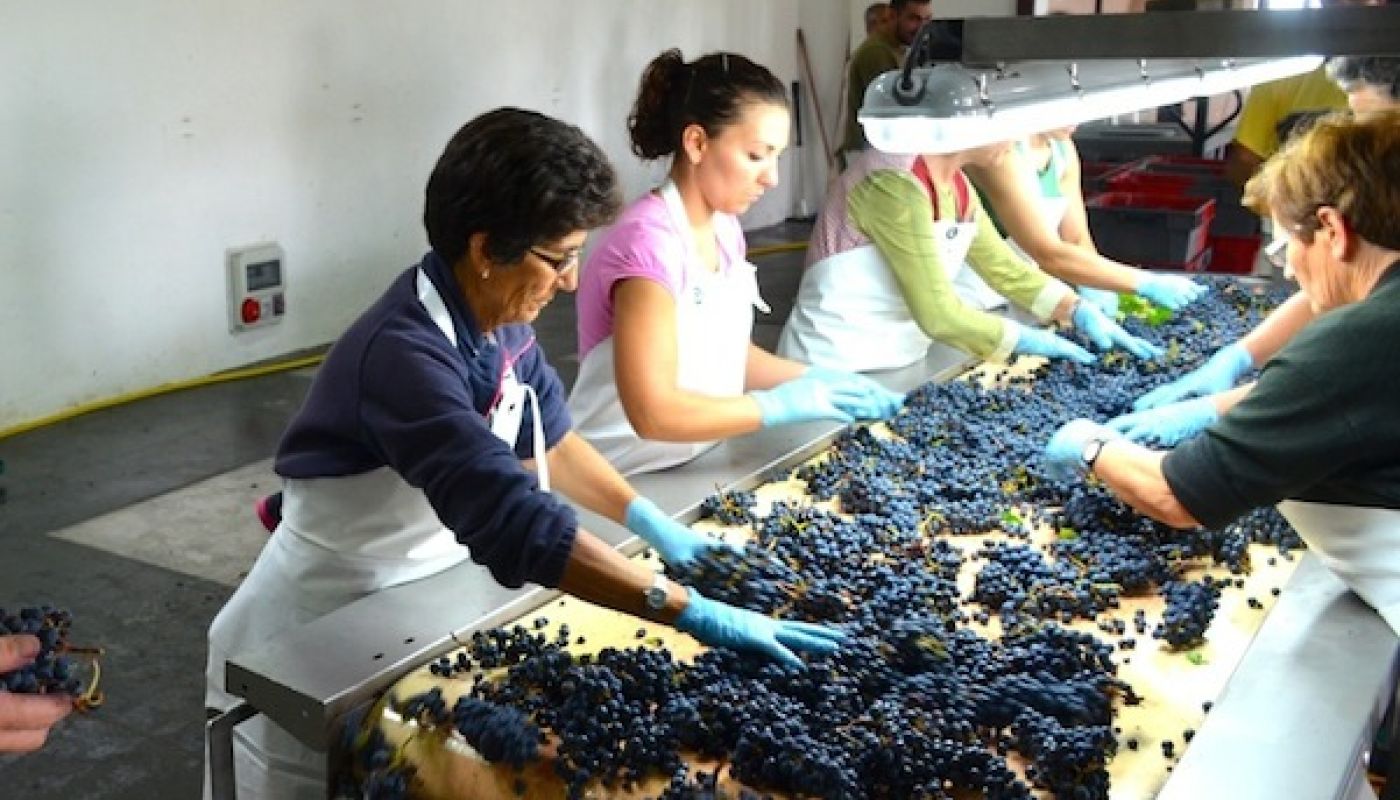
Then, almost as the clocks chimed midnight on July 31, the weather changed completely. August was cool, cloudy and pretty miserable. Total sunshine hours for August were just 225, well below the average of 242 and overall rainfall was 22% higher than the August average, although this varied considerably throughout the region with the northern Médoc being slightly drier than average. In these very varied conditions the véraison was spun out over a much longer period than usual and many bunches included grapes of very different levels of ripeness, which may account for a certain greenness in some wines. The best châteaux however presumably found their sorting tables (as above) much more useful than for the bumptiously healthy 2005 crop.
The more humid weather brought with it the risk of rot, which intensified in September. Those who had sprayed early against rot were rewarded with healthy vines, but virtually all vignerons except the most careless worked particularly hard throughout August to trim leaves and sometimes berries to keep the bunches aerated and crop levels, already officially limited, low enough to concentrate flavour. “There were so many people amongst the rows, it looked like harvest time,” observed wine merchant Bill Blatch of Vintex about August, the month when the Bordelais used in the old days to disappear on holiday. Anyone who had thinned their crop earlier risked their grapes being scorched by the exceptional July sunshine.
By the end of August the mood of vine growers had changed from July’s euphoria to gloom. Would the grapes be healthy and ripe enough to produce even a halfway decent vintage? Spirits lifted somewhat in early September, another new month which saw the weather change neatly and completely. The first 10 days were dry and increasingly hot so sugar levels began to build up nicely, even if many grape skins had been left in a vulnerable state after the damp, cool weather of August and rot was already to be found in the less cosseted vineyards.
The dry whites, the single most successful category of 2006 bordeaux, were generally picked now, their crispness and aromas nicely preserved by the cool August. Some of these wines, admittedly not the most fashionable category, are stunning.
But then rain, sometimes heavy, fell virtually every day from September 11 to 18, and on both 21 and 24 – different intensities in different districts but generally picking had to stop and growers had to cross their fingers that rot and mildew would be kept at bay – not least because the nights were often warm and damp too, making 2006 a great vintage for mushrooms and truffles, but less great for wine. Meticulous preparatory work in the vineyard started to pay off for those who had ensured their grapes were well aired and not too tightly packed.
It was very clear during tastings that the earliest red wine grapes to be picked, particularly Merlots in Pomerol and Graves, had notable freshness and appeal – particularly in relation to the Saint-Émilion grapes, which generally ripen a bit later and in some cases just did not seem to have managed to ripen their tannins fully, a phenomenon exacerbated in some cases by over-enthusiastic extraction. There seems to be a particular cluster of rich over-achievement in Pomerol just west of Ch Cheval Blanc (whereas most red Graves are simpler, prettier wines). As both Jean-Pascal Vazart of L’Évangile and Jacques Guinaudeau of Lafleur were keen to point out, it was important not to have cultivated the soil too much. If the ground was hard and compact, most of September’s heavy rain ran straight off into drainage ditches rather than being absorbed into the soil to dilute the grapes.
The other winning combination seems to have been northern Médoc Cabernet Sauvignon, generally not picked until the end of September, by which time the phenolics, particularly tannins, seem to have reached reasonable ripeness. I heard no-one speaking up for Cabernet Franc in 2006, a definite casualty of the cool August and wet September – and Petit Verdot seems rarely to have ripened fully.
The damp September made things potentially difficult for sweet white wine producers and it is not generally an exceptional year for Sauternes – except for the most extraordinary success at the very top level.
See purple pages for detailed tasting notes.
Second serving – What happened from October, and the most successful wines.