Since the beginning of this century, virtually all wine labels advertise the fact that the wine ‘contains sulphites’. What does this mean?
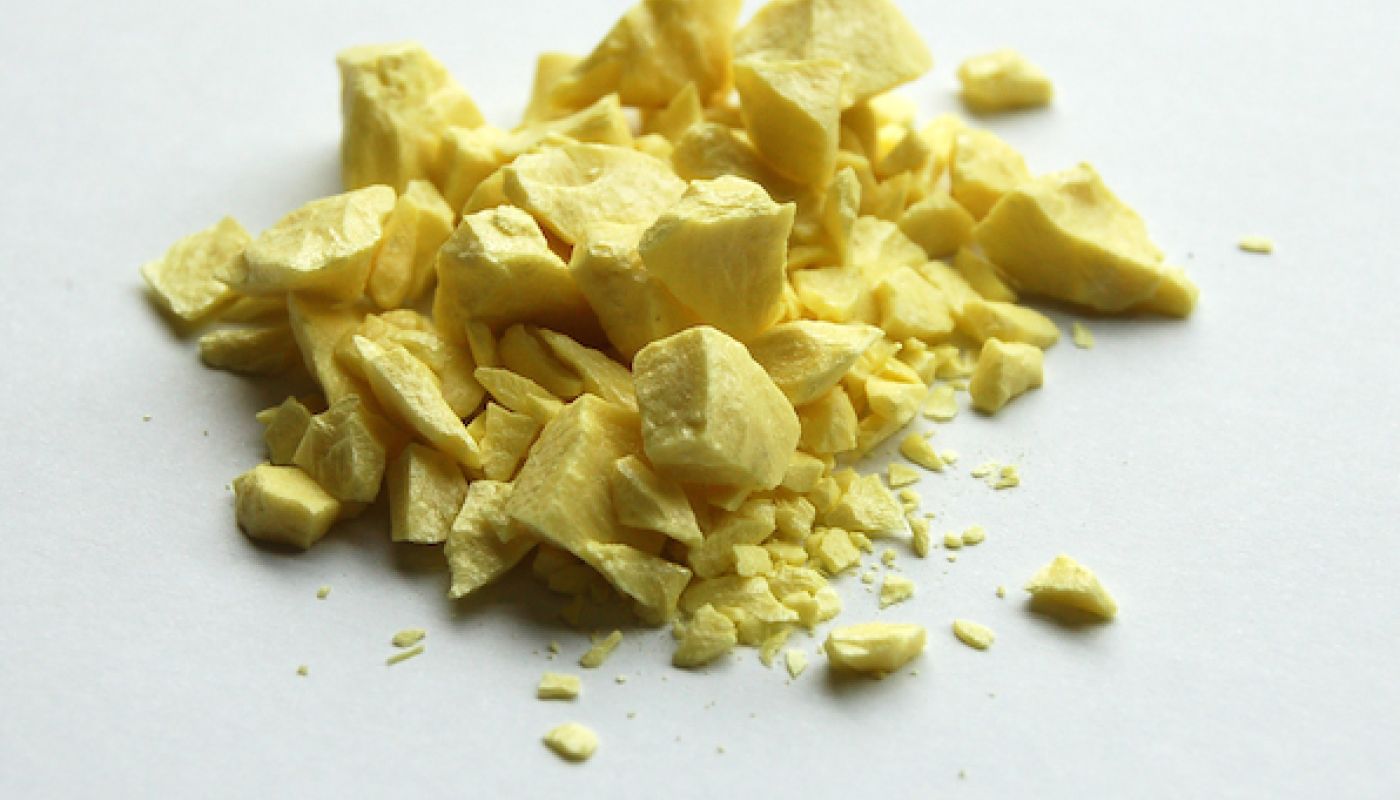
Sulphite is a term that covers all forms of sulphur, which is a natural by-product of fermentation so all wines contain a small amount of sulphites even if none has been added. The adjective sulphurous may have unappetising connotations but sulphur the noun is not irredeemably evil. As sulphur dioxide it has been used since classical times as an antioxidant (a virtuous word nowadays), a preservative and disinfectant. Mentioned by both Pliny and Cato, it is still widely and liberally used in the production of dried fruits, often described on packaging as E220 in Europe or 220 elsewhere.
But those who suffer from asthma and rhinitis can react badly to an excess of sulphur dioxide. It catches the back of the throat – a bit like the acrid sensation caused by coke solid fuel. It can also cause coughing, wheezing, a runny nose and even flushing and because of this all wines with more than 10 mg/l sulphites have to state on the label that they contain them.
At the beginning of the twentieth century some wines contained as much as 500 mg/l. In the 1960s and 1970s when standards of winemaking and winery hygiene were very much lower than they are today, it was common to come across wines that reeked of sulphur – especially the many wines around then that had considerable (re-fermentable) residual sugar in them.
But by then the harmful effects of sulphur dioxide on a subset of wine drinkers were known and in the 1980s there were concerted efforts by both wine producers and the authorities to reduce the amount used in winemaking. By the 1990s the EU’s maximum permitted levels of total sulphites in wine had been reduced to under 250 mg/l. Today the maximum levels allowed by the EU are 150 mg/l in dry reds, 200 mg/l in dry whites and rosés, 235 mg/l in sparkling wines, and 250 mg/l in sweet white and rosé wines. Some really sweet wines such as Sauternes from Bordeaux and Trockenbeerenauslese from Germany may contain up to 400 mg/l.
In 2012 all those EU regulators agreed on even lower maxima for organic wines: 100 mg/l for dry reds, 150 mg/l for whites and rosés, and 220 mg/l for most sweet wines.
Maximum levels for dry wines outside Europe are generally 350 mg/l in the US, 300 mg/l in Chile, 250 mg/l in Australia, 130-180 mg/l in Argentina and 150-160 mg/l in South Africa.
Certainly in my wine-drinking life I have noticed sulphur levels come down. The majority of winemakers nowadays try to minimise their sulphur dioxide use, perhaps just adding a little to the grapes soon after they arrive at the winery to keep them fresh. So nowadays it is quite a shock to experience the catch in the throat that signals perceptible sulphur in wine – most commonly in young, sweet German wines. (With time in bottle, this effect dissipates.)
But I get letters and emails from readers who find even dry wines quite uncomfortable to drink. They ask me to recommend low-sulphur wines, and some wish that labels were more specific about the exact levels of sulphites in each wine.
Sulphite levels are particularly low in so-called natural wines, those made by producers whose aim is to use as few additives as possible. My fellow Master of Wine Isabelle Legeron is one of the most vocal advocates of natural wines and her website www.rawwine.com usefully lists the sulphite level in every wine shown at her annual natural wine fair Raw Wine, held in east London every spring (and in New York and Berlin later this year). She sets a maximum limit of 70 mg/l for all wines exhibited there and most of them are between 10 and 60 mg/l, much less than in most conventional wines, with some of them boasting ‘no added sulphur’ at all.
I tasted 48 wines at this year’s fair (see Low sulphur wines for a report) and found some I really enjoyed, even if, admittedly, among the 230 exhibitors, I tended to favour those whose wines had already pleased me. Whenever I strayed into pastures new, the success rate was much lower – indeed some of the wines I found actively unpleasant, even if in general I am finding that the success rate of natural wines is on the up. (When natural wines burst on the scene a few years ago, it seemed as though some producers thought it was enough to be natural, rather than natural and good.) My favourites are listed below.
The problem is that if no sulphur dioxide is added, then the wine has no defence against harmful bacteria and is more likely to oxidise, to lose its freshness and fruity charm and possibly turn brown. No less an authority than Professor Monika Christmann, president of the OIV, the international wine regulatory body of which the UK’s membership has regrettably been allowed by DEFRA to lapse despite the growing reputation of English wine, recently expressed concern about the general trend towards ever lower sulphur use.
One of the problems is that thanks to our hotter summers, the acid levels in grapes are tending to fall earlier and faster than they used to, with a concomitant rise in wines’ pH, a measure of the strength of the acidity. But since the amount of molecular free sulphur dioxide available to combat harmful microbes is governed by pH levels, the higher they are the more likely it is that the wine will be exposed to microbial spoilage.
Although she is delighted that sulphur levels have some down from the unpleasantly high levels common 40 years ago, Professor Christmann worries that, ‘by continuing to reduce sulphur dioxide levels, we may reach a point where it is just impossible to stabilise wine'.
Her concern is that, with organic wines having lower maxima than conventional ones, sulphur is demonised. ‘Not using sulphur dioxide, or using it at extremely low levels, will certainly change our wine styles to more natural wine, and I wonder whether everyone will like that', she says.
The antioxidant properties of glutathione, or GSH, a tripeptide that occurs naturally in grapes, are currently being explored as a possible alternative to sulphur dioxide in wine, as discussed in this recent news item from the Australian Wine Research Institute.
A further worry is that sulphur dioxide is now outlawed for sanitising barrels, but there is no alternative allowed in the EU other than steam – although there have been some experiments with dry ice. This, worryingly, could potentially expose used barrels to all sorts of micro-organisms.
SOME RECOMMENDED LOW-SULPHUR WINES
with levels of sulphites
Le Grappin, En l'Ébaupin 2014 St-Aubin Blanc (white burgundy, 40 mg/l)
Dom de l'Écu, Gneiss 2014 Muscadet-Sèvre et Maine (white Loire, approx 40 mg/l) (£14.50 H2Vin)
Vine Revival, Terre de Gneiss 2015 Muscadet-Sèvre de Maine (white Loire, 35 mg/l)
Domaine de l’Horizon – most of their 2014s and 2015s (all three colours of Côtes Catalanes from Roussillon, mostly 30 mg/l)
Les Clos Perdus – most of their 2013s and 2014s (reds and whites from Corbières and Côtes Catalanes, 22-42 mg/l)
Tasting notes in Low-sulphur wines. Most of these wines are too outré to feature on wine-searcher.com.