When I explain to fellow wine lovers why I have designed one glass for every single sort of wine, no matter the colour, style or strength, I sometimes have to go into quite a bit of detail. I invoke the support of gifted champagne producers such as Olivier Krug and Jean-Baptiste Lécaillon of Louis Roederer who wage war on the tall, thin flute as showcase for their carefully crafted wines, for instance. Or that of sherry expert Professor Jesús Barquín of Equipo Navazos who likes his fastidiously selected sherries to be savoured in the same shape and size of glass you would choose for a great white burgundy.
The one aspect of my sales pitch that is taken as read by all subjected to it is the illogicality of the common habit of serving white wine in smaller glasses than red. Why? Is white wine any less subtle? Some, but by no means all, whites may be more aromatic than reds and therefore need less encouragement to release their perfume, but all of them can benefit just as much as reds from a good swirl and sniff from a tulip shape with a generously sized bowl.
White wine – especially white burgundy – can be every bit as subtle as a red, and I don’t see why a serving of white wine should be smaller than a serving of red.
I am all too conscious of what seems to be an unconscious bias against white wine. I’m in the hugely over-privileged position of regularly receiving unsolicited samples of wine. Of these, I’d say I am sent at least four, probably five, times as many red wines as whites. And I’m pretty certain this is reflected in the proportions of space devoted to red versus white in most wine publications and websites.
Yet in many countries, including the UK, sales of white wine are greater than those of red. (Let’s put rosé, arguably more popular than it has ever been and currently constituting more than 10% of all UK wine sales, on one side.) Even in the US, where red wine sales have soared ever since a 60 Minutes programme trumpeted its health benefits, four bottles of white wine are sold for every five of red.
In the late 1970s and 1980s white wine was much more sought-after than red. Chardonnay was the height of fashion (see part 3 of Elaine’s history of California Chardonnay published last week). Chardonnay was still so rare that Chenin Blanc and Colombard were accepted as substitutes. And the market had not yet reacted to German wine’s shooting itself in the foot by exporting vast quantities of sugar water.
One of many legacies – good and bad – of the rise to power of the American wine guru Robert Parker is veneration of red wine at the expense of white. His once-oracular Wine Advocate reviewed far more reds than whites.
But I would argue this qualifies as colour prejudice. White wine can be just as magnificent as red wine. Some may argue, ah but red wine is what you drink with the main course and is therefore a more serious match for food. Not so!
White wines are in general much more versatile food partners. I call as witness all those multi-course meals served in smart restaurants at which the sommelier carefully pairs a different wine with each dish. As a veteran of such meals at places as celebrated, and surrounded by red-wine producers, as The French Laundry in Napa Valley and elBulli in northern Spain, I can report that in such menus red wine appears only just before the sweet courses. The first two-thirds, or even three-quarters, of the meal are a dance around white wines of many different weights, flavours and sweetness levels.
That’s the great thing about white wine. It varies so much, arguably more than red wines, which are – pace some of the more unashamedly sweetened commercial brands, port and some Amarones – pretty much all dry. They vary mainly along the axes of alcoholic strength, oakiness and maturity. But whites, as well as varying considerably in all these respects, also vary in sweetness and fizziness.
Just one grape variety, Chardonnay, can produce wines as different as Chablis, Blanc de Blancs Champagne, Mâcon Blanc (some of it richly, sweetly botrytised), Meursault, Montrachet and a host of varietal Chardonnays from all over the world that can be as dissimilar as a typical, fat California rendition and one of the new, austere Australian examples.
When, as I frequently have, you organise a tasting to demonstrate different grape varieties (such as the one for which the wines noted here were the candidates), it is much easier to find a range of really distinct characters among white wine examples than reds – admittedly perhaps because so many more reds are swamped by oak.
Which brings me on to another asset of white wines. They tend to be much more refreshing than reds. Whites are much less likely to be oaky, full-bodied, heavy and chewily tannic. Whites generally make much better aperitifs; choosing a red wine to drink without food is considerably more difficult. (It needs to be fairly light, fruity and smooth – beaujolais, for instance.)
But the clincher in my argument for greatness of white wine is how well white wines can age. Ageability is recognised as one of the markers of wine quality. I well remember co-hosting a tasting with Hugh Johnson when we launched the fifth edition of The World Atlas of Wine in Germany in 2002 that contrasted the maturity of red Bordeaux with Mosel Riesling of the same vintages. The whites were much more youthful.
Several recent tastings reinforced this message. Continuing the Chardonnay theme was this comparison of venerable vintages from the two most famous producers of Chablis, Raveneau and Dauvissat. The Raveneau, Les Clos 1971 was admittedly a bit past it but the 36-year-old Dauvissat, Forêt 1982, just a premier cru not a grand cru, had lots of life ahead of it. As did all the others.
Just as Chablis is famously the most long-lived white burgundy, its Australian counterpart in terms of ageability is the Hunter Valley’s dry white speciality, Sémillon, the grape responsible for Sauternes but here associated with some of Australia’s longest-lived dry whites. Chris Tyrrell brought a clutch to London from his family’s pioneer Hunter Valley winery back to 1998 to demonstrate in this tasting how long they continue to improve. I thought the 20-year-old still had at least another eight years of evolution before the fruit might start to fade a little.
And this is without considering the white wines that are most famously long-lived, German Riesling and Sauternes. I’ve been lucky enough to taste a 50-year-old example of the former that was still very hale and hearty, and three definitely genuine, plus seven more questionable, nineteenth-century Yquems – none of them remotely past it. I hope the case for white wine is clear?
Oh, and by the way, I absolutely love red wine. I just think white wine is more in need of an advocate.
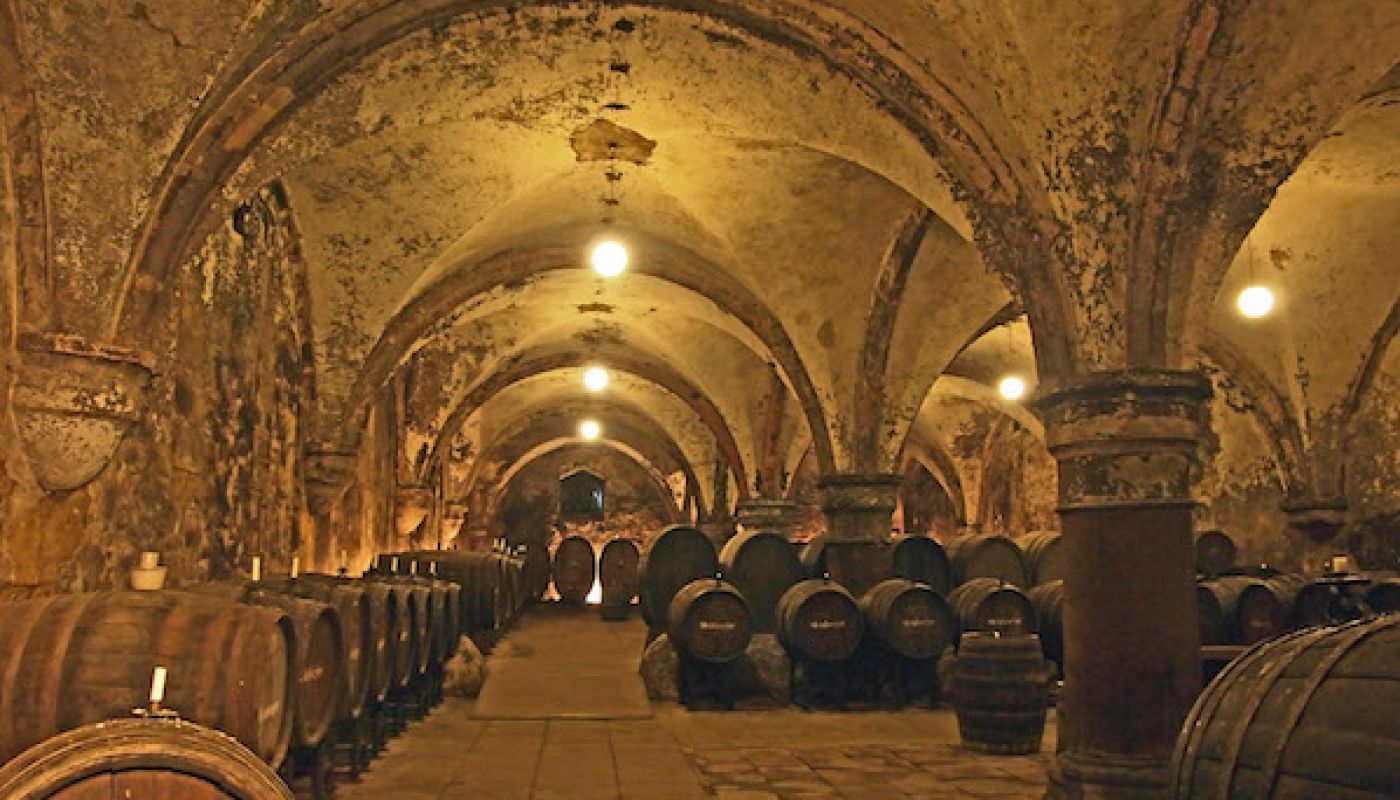
The picture is of the famous Cabinett collection of ancient Riesings at Kloster Eberbach in the Rheingau. See 100 vintages of Riesling for an account of a tasting of some of them.
WHITE WINES WORTH LONG AGEING
These recommendations refer to the best examples of these types of wines.
Chablis
Pessac-Léognan
Sauternes
Vouvray and Montlouis
Hermitage Blanc
Albana di Romagna
Carricante Etna wines
Fiano di Avellino
Selected Friuli wines
Soave from Gini and Pieropan
Verdicchio dei Castelli di Jesi
Trebbiano d’Abruzzo
Viña Tondonia, Rioja
Bairrada
Dão
Virtually any Riesling from anywhere in the world
Austrian Grüner Veltliner
Tokaj
Hunter Valley Semillon
Specific tasting notes are in our 170,000-strong tasting notes database. Stockists via Wine-Searcher.com.