
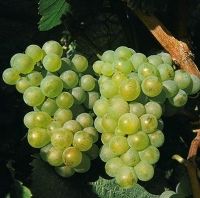
If you’re developing a new wine region, or trying to build the reputation of an old one, how do you go about deciding which grape varieties to plant?
This is a highly pertinent question as the outer limits of the wine world continue to be extended, and as the map of the wine world seems to be in constant flux. It occurred to me, not for the first time, during a recent presentation on the wines of Manchuela, a Spanish wine region of which I was entirely ignorant when I wrote my first few wine books. It’s on the north eastern border of La Mancha, is south east of Madrid and has all of the wine regions Utiel-Requena and Valencia between it and the Mediterranean. In all the total area of vines planted there is not that much smaller than the Bordeaux region, although only about 10 per cent of the vines have been officially registered for the local Denominación de Origen. Most of the growers have so far preferred to squeeze maximum yields from the vines and deliver the resulting grapes to a local co-op for cheap rosé or light red.
However, there is now a handful of individual bodegas seriously trying to put Manchuela on the map. Best known internationally is Finca Sandoval, established in 2001 by prolific wine writer and deputy editor of El Mundo Victor de la Serna. In line with late-20th-century fashion, he initially turned his back on the local variety and favoured an international import. So instead of producing the local Bobal, he concentrated on the decidedly unSpanish variety Syrah plus Garnacha and Monastrell (known respectively in their adopted country France as Grenache Noir and Mouvèdre) but has since come round to Bobal, and has launched a wine based on 70-year-old Bobal vines.
Indeed at this London presentation of Manchuela wines, de la Serna proclaimed, ‘Spain has three great native red varieties, Garnacha in the north, Monastrell in the south and in the middle Bobal, which is not as refined as the other two but is much better than it’s given credit for.’ Bobal makes big, muscular but aromatic wines – always a little rustic thanks to its tendency to ripen unevenly, but with no shortage of mouthfilling fruit. Most of it is planted in Manchuela and neighbouring Utiel-Requena. It has been mistakenly thought to be identical to Sardinia's Bovale Sardo – a possible relic of the time when much of the Mediterranean was governed from Spain.
One of the ambitious new Manchuela bodegas, Ponce, makes nothing but Bobal while those at Altolandón, with vineyards as high as 1,100m, have turned their backs on Bobal completely and put all their eggs in the basket of international varieties, including Cabernet Sauvignon and even Chardonnay. Who is right?
Of course two major factors normally govern the choice of grape variety: local conditions and what is easy to sell. I would argue that the worldwide trend at the moment is definitively away from the well-known international varieties Chardonnay, Cabernet, Merlot and Syrah/Shiraz in favour of more exotic varieties – and if those unusual varieties are by any chance indigenous, so-called ‘heritage varieties’, then extra points are scored. All over the developed wine world, which means Europe, traditional varieties are being rediscovered.
One of the first French regions to understand the value of rediscovering historic grape varieties was Gascony in the south west where the Plaimont group of co-operatives began to recover such almost extinct local specialities as Pinenc, Aruffiac and Petit Courbu 20 years ago. Today some of their most expensive wines depend on these varieties, of which only a few plants remained in the early 1980s.
Throughout Italy curious wine producers have been reviving dozens of that country’s rich heritage of native grape varieties – so much so that each time one is announced it sends a shiver down my spine. Back in 1986 I wrote a book, Vines, Grapes & Wines, that was a compendium of information on all the vine varieties I knew of then presented for the first time to a general, non-academic readership. Amazingly, the book is still in print, even though it is terribly out of date, and I tremble whenever I come across a variety that is not in the book.
Partly for this reason, I’m thrilled to be involved in preparing a successor to Vines, Grapes & Wines, a very ambitious, detailed and thoroughly up to date guide to all of the wine grape varieties relevant to the wine world today, helped not just by my exceptionally able assistant, Master of Wine Julia Harding, but also by José Vouillamoz, who is one of the world’s leading authorities on grapevine identification via DNA analysis. The depth of his knowledge is such that he can trace whole new patterns of relationships between grape varieties, shedding fascinating light on how different ‘families’ of vines spread throughout the world and which characteristics they share.
One country that has always been virtually an island as far as grape varieties go of course is Portugal, which has one of the widest ranges of extremely distinctive indigenous grape varieties, which are hardly grown anywhere else. And Portugal was much less prone than most wine-producing countries to the Chardonnay- and Cabernet-mania that spread round the wine-producing world at the end of the last century. So, with the exception of a few little experiments with Cabernet , Merlot, Syrah and Chardonnay in the south of the country, Portuguese vineyards are largely given over to specifically Portuguese varieties. Just a handful of these such as Alvarinho/Albariño, Jaen/Mencía and Tinta Roriz/Tempranillo are also grown in Spain. But by and large, Portuguese varieties are generally encountered exclusively in Portugal. So far...
The very same Victor de la Serna of Manchuela referred to above was so taken by the special qualities of the Douro table wines produced from the port grape Touriga Nacional that he has planted it at Finca Sandoval, where one of his most expensive wines, Touriga with Syrah, is known coyly as Cuvée TNS since the variety is not officially allowed under the Manchuela DO regulations. And he is not alone in showing interest in this clearly extremely high quality grape variety. There are signs that growers elsewhere around the world – not just those making wines in the image of port – are taking an increasing interest in it.
Australia, arguably the world’s most market-sensitive wine producer, is already showing a palpable move away from the major international varieties to what they call ‘alternative varieties’ (‘heritage varieties’ could be a misnomer for a wine industry ‘only’ 200 years old). The latest Australian vineyard survey recorded that plantings of 16 alternative varieties accounted for over five per cent of Australia’s total area under vine, with these speciality vines – the likes of Barbera, Nebbiolo and Tempranillo – seen as giving the Australian wine industry an innovative edge over the wine-exporting competition.
This is probably true – in 2009. But everything I see around the world suggests that Australia’s competitors are only one step behind on this particular path to viticultural enlightenment and genuine variety.
Pedant's addendum: Plants are varieties. Wines may be varietal (which, strictly speaking, is an adjective rather than a noun), but vines may not.













