
The power of Bordeaux
With a combined market value of more than €15 billion euros, the top Bordeaux châteaux are now clearly powerful luxury brands in their own right. Indeed, the raw data behind these calculations is somewhat staggering: more than 12.5 million bottles of wine are produced by just the top 50 estates, with a combined market value in excess of €1.6 billion euros. It comes as no surprise that the First Growths fill the top five places, with all but Haut-Brion valued at more than €1 billion. The top Super Seconds come in at €200 to €500 milllion, as do Pontet Canet, Duhart Milon and Lynch Bages. Over on the Right Bank the most valuable estate is, unsurprisingly, Pétrus. At an average price of €20,000, it also has the highest case price in the study. The top-ranking St-Émilion is, also unsurprisingly, Cheval Blanc. Although at €435 million, it is eight times less valuable than Lafite. The estate on the list with the lowest total production is Le Pin. Despite producing only around 600 cases per year, it has an estimated valuation of €90 million, thanks to its €15,000 euro average case price. In contrast, Prieuré Lichine has an average price of just €275 per 12x75cl case, but its 27,000-case production means it comfortably makes the €50 million club.
Profits and prestige
The fact that a fourth growth such as Talbot can achieve a valuation in excess of €150 million may strike some as excessive. However, it must be remembered that top Cru Classé Bordeaux estates have an estimated gross margin of between 70 and 99%. As such, the multiplier we have used represents a valuation of around 16-20 times pre-tax earnings. This would still be considered a punchy valuation in almost any other market, but when you consider the current rate of increase of fine-wine prices, this can be justified. The other factor to consider is that the top châteaux are truly 'trophy' assets and rarely come onto the market. Their perceived value, therefore, is greater than would be surmised from a purely profit-based approach.
Left versus Right
Twenty-two of the top 25 estates are from the Left Bank, with Pétrus, Cheval Blanc and Ausone the sole interlopers from the Right. The key to achieving a high valuation was to have a large production and a strong second wine, neither of which is common in Pomerol or St-Émilion. It is becoming increasingly clear that for the top names of the Right Bank to compete effectively with their peers across the river, they need to be able to expand their production, as is common in the Médoc. This is currently not possible under regulations governing the St-Émilion Grands Crus Classés. The proposed reforms, which would allow estates to expand (although still in a far more limited way than is possible in the Médoc), clearly can't come soon enough for the likes of Cheval Blanc and Angélus.
Lafite Rothschild – a four billion euro estate?
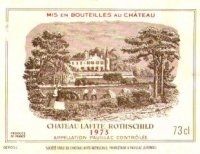
The one valuation that looks particularly challenging to accept is that of Lafite Rothschild, which tops the rankings. At a price of almost four billion euros, Lafite is almost certainly the most valuable wine brand in the world, valued on a par with multinational drinks conglomerate Constellation Brands. If we look at the numbers used in the calculation, the reasoning behind its sky-high valuation is clear. Lafite is now producing wine with a market value of close to €400 million – every single year. Even when taking into account the margins taken by merchants and négociants, Lafite could presumably sell its production for more than €250 million, if it exploited the current market price of its wine to the maximum extent possible. (As an aside, the fact that it currently doesn't and leaves a significant amount of margin on the table for its distribution partners could be a major reason for its runaway success.) The other factor to consider is that at a valuation of €3.7 billion, only a multinational company would be able to buy it outright. As such, it could be argued that a lower multiple of production value should be used, as multinational companies are not known for making vanity investments. Nevertheless, even if Lafite's value on the open market would achieve somewhat less than we have stated here, it would undoubtedly attract a multi-billion-euro price tag. Indeed, the production of its second wine, Carruades de Lafite, generates more revenue than legendary estates such as Haut-Brion or Pétrus. If you have any comments or queries on this research, please contact Jack Hibberd, Research Manager, at [email protected].

NOTES:
Errors and omissions – a word of caution Any piece of research is only as good as the data used. The key issue we faced when compiling this research was obtaining accurate production numbers. We used both the official declarations lodged with the local town halls and other publicly available information to calculate our estimates. We also, on occasion, asked the châteaux themselves. There is obviously a significant margin for error here. Furthermore, the top Bordeaux châteaux are traded very infrequently and both buyer and seller are usually private companies. As such, getting hold of the actual transaction prices is similarly difficult. Other influences on the price of the châteaux, such as the châteaux buildings themselves; additional land available for planting; recent capital investment; library stocks; cash held and debts, were not taken into account. We have also ignored the value of third wines and wine sold off in bulk. We have also assumed a standard merchant and négociant margin across all châteaux. As such, this research is best treated as a first step to determining a new valuation methodology for the leading châteaux. Real-world results might deviate significantly from the values provided.
How we did it
1. First we calculated the current trading price in euros of a 12x75cl case from the five most recent vintages (2005-2009) of both the first and second wines (where applicable) from each Bordeaux estate. We then averaged this to provide us with a case price.
2. This case price was multiplied by the number of cases produced, on average, by each estate, each vintage (culled from the declarations de récolte and other publicly available sources). This provided the total market value of each estate's annual production.
3. This total value was then modified (divided by 1.5) to account for the margin taken by the négociants and wine merchants. This provided the total income achievable, by the château, for one vintage release.
4. We then looked at major transactions of Bordeaux estates where the transaction price was relatively transparent or widely reported. This figure was then divided by the value of that château's production (worked out in the same way as above) at the time of the sale. The average multiple across all the wines we looked at was 15. (See Table 2.)
5. We then multiplied the total income achievable (Step 3) by 15 to calculate the current value of each château. (See Table 1.)