
See California – a new page? for my tasting notes on all these wines.
Something game-changing happened for California wine exports last month. A whole generation of British wine buyers who had previously associated California only with cheap and not very cheerful brands and unthinkably expensive and often exaggerated Chardonnay and Cabernet were exposed to something completely different. Not that the wines on show at an all-day event celebrating 'The New California' organised by London wine merchants Roberson were bargains. Most of the retail prices, between £12.95 and £89.95 a bottle, looked on the high side to me. But the wines themselves presented a completely different and refreshing face of America's wine state: bone-dry wines with nerve, tension, intrigue, geographical awareness, no more than 13.5% alcohol and, in most cases, the promise of developing into something even more interesting.
The day of tasting and presentations was named after a controversial new book by the wine editor of the San Francisco Chronicle, who led the talks. Jon Bonné doesn't look like a rebel. Quiet, neat and diminutive, he looks more like an academic. But he has become the chronicler of a new movement of California winemakers. He arrived in the state from his native New York in 2006 without great enthusiasm for the blockbuster wines that dominated the California wine scene then. 'I found them expensive, monotonous and not that interesting.' He wondered what had gone wrong because, having been brought up with wine by a chef father, he knew that people like Robert Mondavi, Warren Winiarski of Stag's Leap Wine Cellars and Paul Draper of Ridge had been making refined, complex wines for decades. He describes the early-21st-century orthodoxy of big, ripe wines as 'California's decadent phase. Wines had got not just riper but had really moved to pure impact rather than flavour.'
He then started to become aware of more and more producers who had decided to reject this paradigm, were vinifying grape varieties other than the well-known ones and those grown in much cooler regions, generally with particularly marked influence from the chilly Pacific and its fogs. Sta. Rita Hills, north west of Santa Barbara, for instance, where sommelier-turned-winemaker Rajat Parr, who was at the London event, makes Sandhi wines, is fog-free for only five or six hours most summer days. The Sonoma Coast ranch where Jasmine Hirsch's family grows Chardonnay and Pinot Noir with almost burgundian reticence is just three miles from the ocean and one mile from the San Andreas Fault – a help when marketing complex geology.  According to Bonné (picture here in both cases by Erik Castro), 'about 2010 it became clear that these sort of people were starting to change the conversation about California wine. I realised that their wine was radically changing things. They were providing completely new interpretations of familiar places, and also introducing places that wine people didn't know about.' Bonné says he was moved to write The New California because he felt this new movement, showcased in California since 2010 with an annual tasting called In Pursuit of Balance, or IPOB, was as significant in its way as the movement of the 1970s that fought over-industrialised wines and introduced winemaking ambition.
Because these 'new' wines are so different, they are in danger of polarising the market – and in danger of encouraging less skilful practitioners to think that early picking plus no new oak is enough. And even I feel that there are some occasions when a full-throttle, super-ripe, almost sweet-tasting California Chardonnay or Cabernet can seem just the job. It is surely essential for the state to retain diversity – arguably more than Australia has in its dash towards sometimes anorexic wines. The reaction of the California wine establishment has been either to deride the IPOB mob as mere fringe operators or to argue that there is nothing new about them, that there have always been exceptions to the rule. And certainly Napa Valley Cabernets from the likes of Corison (represented gloriously at the London event), Spottswoode and Viader have long been models of subtlety (and all have female winemakers – coincidence?).
But as someone who has been closely observing California wines since I was honorary secretary of Britain's Zinfandel Club in the late 1970s, I am convinced that things did change for the worse in the 1990s when prolonged 'hang time' came into vogue. The effects were particularly evident in the massive wave of red wines made from grapes left so long on the vine that they started to shrivel. Acidity and tannins came to be regarded as negative attributes; alcohol and richness were striven for. Yet when researching trends for the recent seventh edition of the World Atlas of Wine, I found every single region, however warm, reported a deliberate move away from this style – with the exception of mainstream California.
In California the estate model whereby wine producers grow all their own grapes is the exception. The great majority of grapes come from land owned by professional vine farmers tended by teams of highly skilled Mexicans. The result of the new fashion for ripeness was that growers were required to prioritise sugar levels in grapes above all else. Thanks to added acid and new techniques such as reverse osmosis and the so-called spinning cone, everything else could be 'fixed' in the cellar. So ingrained has the habit of extended hang time become that it can be difficult for the new-wave producers to persuade growers to pick as early as they would like and special contracts have sometimes had to be drawn up, theoretically to protect growers from being sued.
Steve Matthiasson, who manages to make blends of unusual, characterful grapes by growing them himself at the southern, more fog-cooled end of the Napa Valley, explained how he had been inspired by his experiences in Friuli, north-east Italy, where winemakers actively sought freshness in their wines. Back home he found himself on a panel called 'high impact winemaking past 25 Brix', a relatively extreme ripeness level. When he asked rhetorically how on earth you could offer freshness from such ripe grapes, one winemaker asked him what freshness was.
The twin elephants in the room during all these discussions were the leading American arbiters of wine taste, the Wine Spectator and Robert M Parker Jr of The Wine Advocate, both of which have consistently rewarded super-ripe wines. But Bonné, who has drawn heavy criticism from both (Parker having coined the scornful term 'anti flavor wine elite' as long ago as 2010), was keen that the blame be shared. 'As much as it is tempting to point fingers at one or two critics, it is actually the fault of the wine industry who went along with it and claimed they were just making what people wanted to drink.'
NEW-WAVE CALIFORNIA WINES
The wines shown in London were from Arnot-Roberts, Broc, Copain, Corison, Domaine de la Côte, Hirsch, Jolie-Laide, Kutch, Lioco, Matthiasson, Moobuzz, Mount Eden, Piedrasassi, Sandhi, Smith-Madrone, Tatomer and Viano and some were also being shown in other European cities. The following are particularly strongly recommended.
Viano Vineyards Cabernet Sauvignon 2009 Contra Costa County £14.95
Broc Cellars, Cuvée 13.1 Syrah 2012 Santa Lucia Highlands £21.95
Lioco Chardonnay 2012 Sonoma County £23.95
Jolie-Laide Trousseau Gris 2012 Russian River Valley £27.95
Arnot-Roberts, Luchsinger Trousseau 2012 North Coast £29.95
Sandhi Wines Chardonnay 2012 Santa Barbara County £32.95
Matthiasson Wines, Napa White 2012 Napa Valley £36.95
Smith-Madrone Cabernet Sauvignon 2009 Napa Valley £39.95
Hirsch Vineyards Chardonnay 2012 Sonoma Coast £49.95
Domaine de la Côte, Bloom's Field Pinot Noir 2011 Sta. Rita Hills £49.95
Mount Eden Vineyards Estate Chardonnay 2009 Santa Cruz Mountains £54.95
Corison Cabernet Sauvignon 2010 Napa Valley £59.95
All from Roberson Wine in the UK; check out wine-searcher.com for stockists elsewhere. See full tasting notes in California – a new page?
How new is the new California?
• 5 min read

This is a longer version of an article also published in the Financial Times.


选择方案
会员
$135
/year
适合葡萄酒爱好者
- 存取 297,331 条葡萄酒点评 & 16,160 篇文章
- 存取《牛津葡萄酒指南》及《世界葡萄酒地图集》
- Access askJancis, our AI wine assistant


核心会员
$249
/year
适合收藏家
Everything in “Member”, plus:
- Early access to the latest wine reviews, 48 hours in advance
- Early access to the latest articles, 48 hours in advance
专业版
$299
/year
供个人葡萄酒专业人士使用
- 存取 297,331 条葡萄酒点评 & 16,160 篇文章
- 存取《牛津葡萄酒指南》及《世界葡萄酒地图集》
- Access askJancis, our AI wine assistant
- 提前 48 小时获取最新葡萄酒点评与文章
- 可将最多 25 条葡萄酒点评与评分 用于市场宣传(商业用途)
商务版
$399
/year
供葡萄酒行业企业使用
Everything in “Professional”, plus:
- 可将最多 250 条葡萄酒点评与评分 用于市场宣传(商业用途)
- Access to submit wines for review
- Offer memberships to your employees and manage them from a single place
- API access available for an additional fee
More Free for all
Free for all
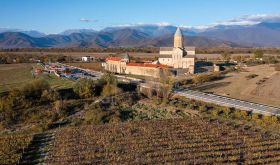
格鲁吉亚的葡萄酒继续令人惊喜。本文的略短版本发表于Financial Times (金融时报)。另请参阅品鉴文章 格鲁吉亚白葡萄酒...

Free for all
这家领先的新浪潮南非葡萄酒生产商正在展望未来。本文的一个版本由金融时报 发表。另请参阅这篇 帕拉迪乌斯垂直品鉴,他杰出的白葡萄酒混酿。...

Free for all
杰西斯 (Jancis) 回忆她遇到过的最迷人的葡萄酒生产者。上图为尼尔 (Neill) 在他的双桨园 (Two Paddocks)...

Free for all
在第一轮评审之后,我们很高兴开始发布今年写作比赛参赛作品中的最佳作品。所有入选作品均未经编辑发布...
More from JancisRobinson.com
Wines of the week
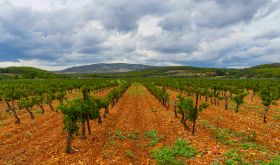
拉法热酒庄 (Domaine Lafage) 来自加泰罗尼亚丘 (Côtes Catalanes) 的穆图 (Moutou) 不仅美味...
Tasting articles
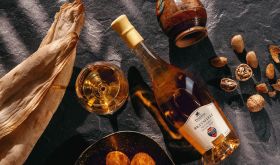
詹西斯深入探索这些独特的葡萄酒,尽管并未亲临这个独特的国度。上图来自生产商 杜格拉泽 (Dugladze) 的网站...
Tasting articles
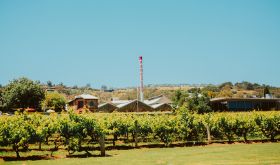
大红葡萄酒继续在奔富王国占据主导地位,但变革即将到来。上图为奔富的玛吉尔庄园 (Magill Estate)。 澳大利亚葡萄酒管理局...

Tasting articles
沃尔特 (Walter) 关于这个显著易饮年份报告的总结部分。今天,评论来自南部和东部村庄卡斯蒂廖内法莱托 (Castiglione...

Tasting articles
关于这个棘手年份的最终报告,如今展现出非凡的清新和易饮性。今天,我们将评鉴来自多个村庄以及北部和西部村庄凯拉斯科 (Cherasco)、罗迪...

Inside information
墨西哥的葡萄酒产业为应对气候挑战提供了经验教训,常驻墨西哥的记者兼侍酒师卡洛斯·博尔博亚 (Carlos Borboa) 如是说...

Vinomakase
理查德 (Richard) 的新专栏 Vinomakase 探讨专家如何将葡萄酒与日本料理搭配...

Bite-sized
位于圣奥尔本斯 (St Albans) 大教堂区的一家 15 世纪酒吧,提供最新潮的美食盛宴。 前厅酒吧仍然令人安心地保持着酒吧风格...