Volcanic Wine Awards | The Jancis Robinson Story | 🎁 25% off annual & gift memberships

Kurtatsch celebrates 120 years

Thursday 23 June 2022 • 6 min read
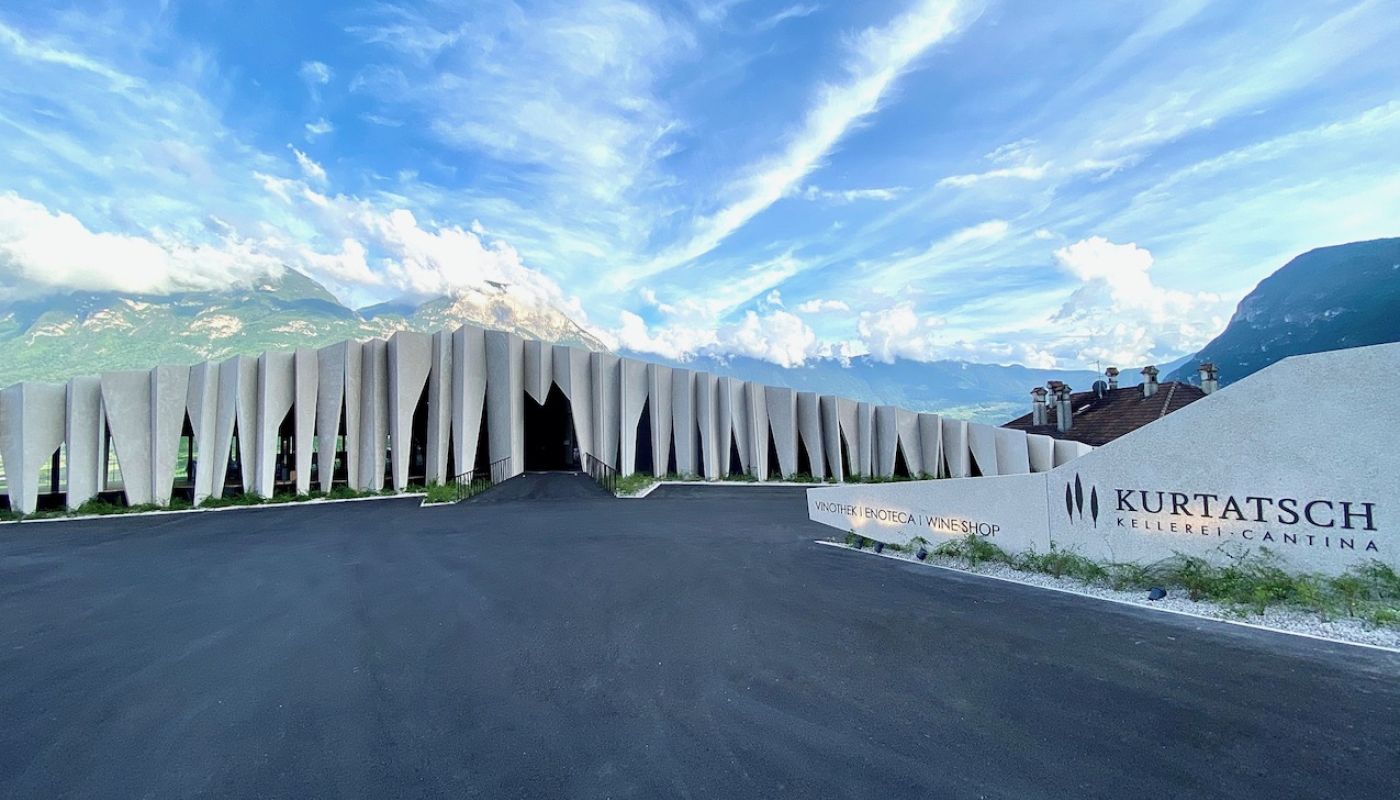
Cantina Kurtatsch new winery 2020

23 June 2022 Our dive into the archives this week produces an ideal companion piece to today's tasting article.

27 July 2020 Mountain sunshine is transformed into precise whites and reds, some notably local, by one of Alto Adige's smallest co-ops.

Cantina Kurtatsch had the misfortune to be celebrating its 120th anniversary in May 2020, with plans for a big party to mark the opening of their spectacular new winery pictured above. The event was postponed rather than cancelled and although I was not able to attend, I was lucky enough to be able to taste one of the 3,000 bottles of their impressive and delicious bone-dry Blanc de Blancs 2014 – their first-ever sparkling wine – released to mark the anniversary, alongside some of their other recent releases.

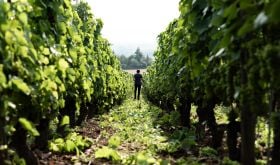
Kurtatsch Penon vineyard
Chardonnay vines in the tiny village of Penon (Penone) at 600 m, source of the new 600 Pas Dosé Blanc de Blancs

The new cellar with its striking façade made of dolomitic rock effectively doubles the size of their winery, giving them not only a new barrel cellar but also five storage halls, a new shop and a five-storey ‘terroir walkway’ as part of the visitor centre.

As I explained in this 2017 wine of the week, Cantina Kurtatsch – also known as Kellerei Kurtatsch since Alto Adige/Südtirol is a bilingual region – is one of the oldest and smallest wine co-operatives in a part of Italy where co-ops play a major role. Led by its youthful president Andreas Kofler (below), it is certainly a lot smaller than the 1,000-member, 6,000-ha Vignerons Ardéchois featured in my wine of the week earlier this month.
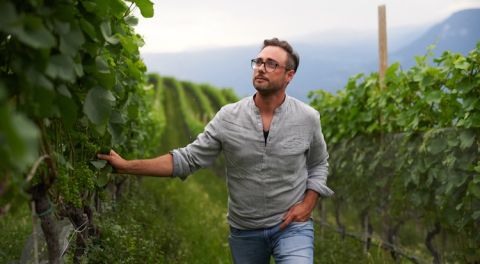
Andreas Kofler in the Penón vineyard

The co-op’s 190 members farm just 190 ha (470 acres) of vines at elevations of 220–900 m (720–2,950 ft). As they explain in a recent press release:

‘The very warm, steeply sloping sites have clay and gravel soils and temperatures that reach up to 40 ºC (104 ºF) in the summer, ranking them among the hottest places in Italy and rendering them ideal for the production of top international red wines. The upper Brenntal vineyards are especially suitable for Gewürztraminer with outstanding ageing potential. The white wines, produced predominantly on steep limestone soils at elevations as high as 900 meters, benefit from strong, cooling nocturnal [catabatic] winds.’

This gives them a happy combination of pure, ripe fruit flavours and freshness, with an intelligent double focus on well-priced wines, such as the Caliz Chardonnay and the Lagrein, as well as the single-vineyard wines where site-and-variety partnerships are well established and which express their place of origin.

The majority of their wines showcase a single variety but the delicious Amos white is an exception, made mainly from Pinot Blanc, Chardonnay and Pinot Grigio plus smaller amounts of Kerner, Sauvignon Blanc and Müller-Thurgau, all grown in exposed sites in the Cantina’s highest vineyards, pictured below.

Kurtasch Amos vineyard

Of the varietal wines, I particularly liked the sophisticated Kofl Sauvignon Blanc and the Penóner Pinot Grigio among the whites and among the reds I’d highlight the two made from local varieties: Lagrein and Schiava. The more ambitious, and more obviously oaked, Merlot and Cabernet Riservas clearly need more time.

The new winery and barrel cellar (below) will allow them to age their wines longer before release. I hope very much it will allow them to expand their production of the excellent Blanc de Blancs, though I wonder if wines other than the 600 Pas Dosé made specially for this 120th anniversary will be given the luxury of as many as 55 months on the lees.

Kurtatsch new barrel cellar

Many of the 16 wines described below, white then red, are available in the UK and the US and retail prices, where known, are given in the notes. Kurtatsch's UK importers are Haynes Hanson & Clark (online and shops in London, Stow-on-the Wold and Whitchurch) and Alpine Wines (online, currently stocking some earlier vintages including 2017's Pinot Grigio, Lagrein, Pinot Nero, Sonntaler Schiava Grigia as well as Frauenrigl Lagrein Riserva 2015, with the 2018s on the way). In the US, the importers are North Berkeley Imports (most states), Wine Icons (New York and New Jersey) and Eurowines (Florida). The HH&C prices below are for single bottles but there's a discount if you buy a case.

White

They were planning to release this, their first Metodo Classico sparkling wine, on their 120th anniversary and the opening of their new winery, 'but now it seems that we are going to postpone the celebration'. They explain: the grapes come from two plots of 20-year-old Chardonnay vines from Penón at 600 m, a tiny village and part of the municipality of Kurtatsch. The vineyards are east-south-east facing and planted on sandy-gravelly dolomite soils (dolomite limestone). 20% of the must fermented in second-use French oak barrels, the rest in stainless steel. The wine spent a total of 55 more months with the lees in the bottle, before it was disgorged on 28 February 2020. TA 7 g/l, RS 1.5 g/l.
Pale gold. Fabulous aroma of ripe golden fruit combined with an unexpected stony mineral note and a gently toasty and leesy autolytic character, with a tiny hint of struck match. Bone dry, beautifully fresh and precise, the mousse is subtle (unless it is my glass). Excellent ratio and combination of generous, pure citrus fruit and the complexity of long bottle ageing. There's a fine, bitter citrus-pith aftertaste to increase the fresh, persistent finish. Surprisingly mouth-filling without being heavy. Well done! (JH)

Alcohol: 12.5%
Drink: 2020 – 2024
Price: $49 RRP
White

Pinot Bianco came to the South Tyrol from Burgundy around 150 years ago. This is grown on the slightly cooler slopes above Kurtatsch. TA 6 g/l, RS 1.2 g/l.
This smells a little lighter than the Pinot Grigio with more apple than pear but has real intensity of fruit and fresh melon, plus the white mushroom I often find on Pinot Blanc from Alsace. There's also some citrus and gentle notes of white blossom – ie lightly scented rather than heavily perfumed. But it has real depth and length. Fresh, long and rounded on the palate. (JH)

Alcohol: 13.5%
Drink: 2020 – 2021
Price: £14.65 Haynes Hanson & Clark
White

Steep hillside at 500–650 m. On loamy gravel. Temperature-constrained fermentation in stainless-steel tanks – maturation on the lees in large wooden barrels. TA 6.1 g/l, RS 2.3 g/l.
Deep but fresh aroma of spicy citrus and apple and a hint of white mushrooms. The oak is discreet but adds a creamy dimension to the clean-fresh fruit. Very well judged to add richness but not undermine the cool purity of the fruit. There is a lot of sunshine in the warm vineyards in this southern part of the Alto Adige but Kurtatsch have really mastered the ability to have generosity and ripeness without loss of freshness. An unexpected mineral aftertaste elevates this above the fruit. (JH)

Alcohol: 14%
Drink: 2020 – 2024
White

Planted on the somewhat cooler slopes above Kurtatsch. TA 5.6 g/l, RS 1.5 g/l.
Fresh, spicy pears, lots of spice. Open and inviting. Creamy texture and plenty of pear-scented fruit on the palate. Straightforward and refreshing, with a well-handled combination of freshness and ripeness. The spice of Pinot Grigio but a light, crisp take on it. Deep-fruited and long, generous in the mouth yet balanced. (JH)

Alcohol: 13.5%
Drink: 2020 – 2021
Price: $17 RRP
White

From Penón, a steep site above Kurtatsch at 550 m on sand and gravel over chalky vineyard terraces. Fermented 20% in barrique with subsequent malolactic conversion; 80% fermented at controlled temperature in stainless-steel tanks, followed by maturation on the lees in large oak barrels. TA 6.6 g/l, RS 2.2 g/l.
Fabulously inviting and spicy aroma. Spiced fresh pears, a deliciously bitter citrus quality and subtle oak spice. Deep, long, rich and full in the mouth but with excellent balancing freshness. A big but fresh wine, ripeness and tangy freshness in excellent harmony. Long spicy finish. And I think this will age really well, though I haven't tasted older vintages. Similar fruit profile to the straight Pinot Grigio but a step up in intensity and complexity from the really well-judged oak influence. (JH)

Alcohol: 14%
Drink: 2020 – 2024
White

Pinot Blanc, Chardonnay, Pinot Grigio and other aromatic white wine varieties. Grown on an exposed hilly location in the Cantina's highest vineyards at 600–900 m on limestone with a gravelly and sandy structure. Controlled-temperature fermentation of the must in stainless-steel tanks, 14 months on the fine lees in large wooden barrels, minimum 5 months in the bottle. TA 6.1 g/l, RS 2.2 g/l. The Burgundy varieties (75%) form the solid, compact backbone. The aromatic accompaniment comes from Kerner, Sauvignon Blanc and Müller-Thurgau.
Rich, spicy and golden aroma, both citrusy and exotic. There's spice too, lots of spice. Creamy in the mouth, almost a little chewy, full-bodied but as with so many of these Kurtatsch wines, they manage to combine richness and depth with real freshness. Complex, generous and really well balanced. (JH)

Alcohol: 13.5%
Drink: 2020 – 2024
Price: £25.90 Haynes Hanson & Clark, $42 RRP
White

Grown on clay and calcareous sand on a steep hillside at 450–600 m. Cold maceration for three hours; temperature-controlled fermentation in stainless-steel tanks – maturation on the lees in large oak barrels. TA 6.3 g/l.
This is sophisticated Sauvignon. Aromas are herby, citrus, grassy and just slightly smoky from a reductive edge, I think. That same mineral/smoky character on the palate alongside deliciously ripe and fresh fruit. Like the Calix Chardonnay, this combines the gloriously ripe, intense and aromatic fruit of the region with excellent freshness. As sophisticated on the palate and the long finish as it was on the nose. Very well made, with restraint in the use of oak and generosity in the lees texture. (JH)

Alcohol: 14%
Drink: 2019 – 2021
Price: $29 RRP
White

Clay soils at 250–350 m. Cold maceration of the must for 3.5 hours – temperature-regulated must fermentation in stainless-steel tanks; development and maturation on fine lees for 12 months in stainless steel and for 6 months in large oak casks. TA 5.2 g/l, RS 7.5 g/l. 
Full, rich and exotic. Intense, benchmark Gewurz aroma of burnished gold, rose petals and lychees. Spicy, full-bodied, mouth-filling and long and manages to be fresh on the finish. A real classic for this variety, very well made. Balanced in its extreme characteristics. (JH)

Alcohol: 14.5%
Drink: 2020 – 2024
White

The name Caliz apparently derives from the Latin terms calix (calyx) und calx (limestone). Caliz grows exclusively on light gravelly soil with a high share of limestone at 250–500 m. The yield is reduced to 65 hl per hectare (modest for the region). Fermented in tank and aged on lees in large oak.
Inviting, rather subtle aroma of creamy citrus with just a hint of spiced pear that I associate with lees ageing. There's fresh melon, too. Ripe lemon on the palate, clean and crisp and given texture by the lees ageing in big oak – but no oak flavour. This has the hallmark combination of the region: ripe fruit giving sweetness in a dry wine and zesty freshness, with a dry, slightly stony finish from the specific site. This would make a great house wine (and apparently it is for HH&C's buying director Siobhán Astbury). (JH)

Alcohol: 13.5%
Drink: 2019 – 2021
Price: £15 Haynes Hanson & Clark
White

Hills with south/south-west exposure, 300500 m. Calcareous, gravelly soil with a small share of loam. Fermentation in French barriques with subsequent maturation (bâtonnage) for 11 months, followed by blending in large oak barrels and storage on the fine lees (6 months) and further maturation in the bottle for at least 7 months. TA 6 g/l, RS 1.9 g/l.
Pale gold. Lots of spicy oak on the nose. Really quite oaky and traditional in its style but the fruit is rich and fresh, full in the mouth and generous. A long and oaky wine with bitter orange on the finish. Maybe not on-trend for 2020 Chardonnay but balanced in its rich-fruited oaky style and has the potential for ageing with its harmony of richness and freshness. (JH)

Alcohol: 14%
Drink: 2020 – 2023
Price: $49 RRP
Red

Clayey vineyard in Glen, in the commune of Montan. Sunny days and cool nights. No information given on the winemaking.
Light cherry red. Subtle red fruit on the nose with a very slight rubbery note that I think is just a touch of youthful reduction that will disappear with aeration. Juicy, fresh and lively on the palate. The fruit is deliciously sweet like ripe red cherries but the wine is dry. Very easy to drink, and made with a light touch so that the tannins are as gentle as the fruit is sweet. Just a touch of spice on the finish. GV at the reduced case price. I actually prefer this to their rather more 'worked' and extracted Mazon Pinot. Lots of fruity pleasure and freshness. (JH)

Alcohol: 13%
Drink: 2020 – 2023
Price: £16.90 Haynes Hanson & Clark
Red

Mazon, at 300–450 m, is known locally for its Pinot Noir and is located opposite Kurtatsch on the other side of the Adige Valley. Planted on chalky and loamy conglomerate soils. Sustained, mild evening sun and cool nights just before harvest are decisive for the fruit character, say Cantina Kurtatsch. Cold maceration at 12 °C for 3–4 days, followed by spontaneous fermentation in wooden fermentation vats with long periods of skin contact (3–4 weeks). Maturation for 12 months in French barriques (30% new) and one year in the bottle.
Mid ruby with the beginnings of brick from rim to core. It's quite a powerful style of Pinot with lots of spice and some evident oak. It has definite Pinot red fruits but at the moment it is still slightly harsh and needs more time for the tannins to resolve. A characterful rather than an elegant Pinot, for now at least. Hard to know how this will age. (JH)

Alcohol: 14%
Drink: 2020 – 2023
Price: $49 RRP
Red

Grown on the lower hills above Kurtatsch. They write: 'Lagrein is Alto Adige’s oldest grape variety. It flourishes best in the deep, warm soils in Bolzano (the suburb of Gries) and the South Tyrolean Lowlands (Kurtatsch) that are made up of clay and sand as well as gravelly deposits from rivers and streams that break through porphyry, granite, mica schist, and limestone.' With Kurtatsch care in the vineyard (reduced yields) and the cellar (controlled fermentation and partial ageing in large oak barrels).
Very dark cherry red. Open, spicy and peppery on the nose, peppery black fruit. Lots of dusty pepperiness and zesty dark-red fruit on the palate, raspberry and mulberry sweet/tart intensity. Very fresh acidity, mouth-watering and maybe almost too fresh to be drunk on its own but would be great with a slightly oily meaty bolognese sauce or roast pork. Very fresh and full of lively fruit, zesty and a real palate-wakener. Tannins are fine and dusty and just right to hold the shape of the fruit. Full of life and energy. (JH)

Alcohol: 13%
Drink: 2020 – 2022
Price: £15.65 Haynes Hanson & Clark
Red

Grown on loose, sandy soils in the Kurtatsch Hills at 300–400 m. Temperature-controlled fermenting of the must in stainless-steel tanks, with regular pumping over; malolactic conversion and maturation in large wooden barrels of Slavonian oak.
Very light cherry red, even lighter than the Blauburgunder 2019, almost a dark rosé. Lovely aromatic immediacy: tart wild red fruit, perhaps cranberry, wild strawberry. On the palate, fresh and tangy even if the tannins are soft and smooth. Becomes even more aromatic with air, a touch floral. Straightforward yet scented and persistent, and a good example of the variety, pure and lively. (JH)

Alcohol: 12.5%
Drink: 2020 – 2025
Price: £15.65 Haynes Hanson & Clark, $23 RRP
Red

Planted on clay at 200–250 m. Temperature-constrained fermentation in roto-fermenters and ageing in oak barrels (50% new wood) for 14 months. Assemblage in large wooden barrels, TA 5.2 g/l, RS 2.3 g/l. Their tech sheet explains: 'The Brenntal site, one of South Tyrol's warmest, is located at the north-western end of the village, below the Kurtatsch Wine Road. In mid summer temperatures can reach 40 °C for short periods of time. The steep slopes border the northern foothills of the mighty limestone massif upon which Kurtatsch sits. Lime and porphyry gravel permeate the clay soil, ensuring optimal and natural drainage. A tightly woven fabric of water veins guides the mineral salts of the mountains under the earth from three different directions. These salts, which the water carries into the hot valley from great heights, lend the Brenntal Merlot its distinctive alpine character.'
The packaging on these Kurtatsch is really attractive – typographic, modern and clear, with style. Though some also have line illustrations. Smells ripe, dark and plush, rich in black plums but not excessively sweet-smelling. Full-bodied, generous, the deep fruit structured by smooth but firm tannins, showing this still has some way to go, though you could approach it now with a decent piece of meat. Chewy and spicy on the palate. You can taste the oak spice but the fruit holds its own. Even with this level of alcohol, the wine is balanced with a long spicy aftertaste. Quite a lot of Pomerol character here thanks to the generosity of fruit but also a savoury aspect. (JH)

Alcohol: 15%
Drink: 2020 – 2026
Red

The name of this wine derives from a Renaissance estate in Kurtatsch: Ansitz Freienfeld. The clayey and porous gravel bed is a multifaceted terroir of its own, the wine made only in some vintages. Maturation of the young wine is carried out in medium-toasted French barriques, 50% new. TA 5.3 g/l.
Deep garnet. Wonderfully classic Cabernet nose of cassis, cedar and just a touch minty. Dark and complex. On the palate, rich, chewy, the tannins still offering a firm grip. Powerful but not heavy and very much a wine of place. Powerful, dry, long and balanced but needs more time, and definitely needs food. The finish is long, spicy and intense with cassis fruit but without unwanted fruit sweetness. (JH)

Alcohol: 14.5%
Drink: 2020 – 2028
Price: $85 RRP
Become a member to continue reading
JancisRobinson.com 25th anniversaty logo

Celebrating 25 years of building the world’s most trusted wine community

In honour of our anniversary, enjoy 25% off all annual and gift memberships for a limited time.

Use code HOLIDAY25 to join our community of wine experts and enthusiasts. Valid through 1 January.

会员
$135
/year
每年节省超过15%
适合葡萄酒爱好者
  • 存取 285,502 条葡萄酒点评 & 15,806 篇文章
  • 存取《牛津葡萄酒指南》《世界葡萄酒地图集》
核心会员
$249
/year
 
适合收藏家
  • 存取 285,502 条葡萄酒点评 & 15,806 篇文章
  • 存取《牛津葡萄酒指南》《世界葡萄酒地图集》
  • 提前 48 小时获取最新葡萄酒点评与文章
专业版
$299
/year
供个人葡萄酒专业人士使用
  • 存取 285,502 条葡萄酒点评 & 15,806 篇文章
  • 存取《牛津葡萄酒指南》《世界葡萄酒地图集》
  • 提前 48 小时获取最新葡萄酒点评与文章
  • 可将最多 25 条葡萄酒点评与评分 用于市场宣传(商业用途)
商务版
$399
/year
供葡萄酒行业企业使用
  • 存取 285,502 条葡萄酒点评 & 15,806 篇文章
  • 存取《牛津葡萄酒指南》《世界葡萄酒地图集》
  • 提前 48 小时获取最新葡萄酒点评与文章
  • 可将最多 250 条葡萄酒点评与评分 用于市场宣传(商业用途)
Pay with
Visa logo Mastercard logo American Express logo Logo for more payment options
Join our newsletter

Get the latest from Jancis and her team of leading wine experts.

By subscribing you agree with our Privacy Policy and provide consent to receive updates from our company.

More Free for all

RBJR01_Richard Brendon_Jancis Robinson Collection_glassware with cheese
Free for all What do you get the wine lover who already has everything? Membership of JancisRobinson.com of course! (And especially now, when...
Red wines at The Morris by Cat Fennell
Free for all A wide range of delicious reds for drinking and sharing over the holidays. A very much shorter version of this...
JancisRobinson.com team 15 Nov 2025 in London
Free for all 这次不是我通常的月度日记,而是回顾过去四分之一世纪(和半个世纪)的历程。 杰西斯的日记 (Jancis's diary) 将在新年伊始回归...
Skye Gyngell
Free for all 尼克 (Nick) 向两位英国美食界的杰出力量致敬,她们的离世来得太早。上图为斯凯·金格尔 (Skye Gyngell)。 套用奥斯卡...

More from JancisRobinson.com

Clos du Caillou team
Tasting articles Plenty of drinking pleasure on offer in 2024 – and likely without a long wait. The team at Clos du...
Ch de Beaucastel vineyards in winter
Inside information Yields are down but pleasure is up in 2024, with ‘drinkability’ the key word. Above, a wintry view Château de...
Poon's dining room in Somerset House
Nick on restaurants A daughter revives memories of her parents’ much-loved Chinese restaurants. The surname Poon has long associations with the world of...
Front cover of the Radio Times magazine featuring Jancis Robinson
Inside information The fifth of a new seven-part podcast series giving the definitive story of Jancis’s life and career so far. For...
Karl and Alex Fritsch in winery; photo by Julius_Hirtzberger.jpg
Wines of the week A rare Austrian variety revived and worthy of a place at the table. From €13.15, £20.10, $24.19. It was pouring...
Windfall vineyard Oregon
Tasting articles The fine sparkling-wine producers of Oregon are getting organised. Above, Lytle-Barnett’s Windfall vineyard in the Eola-Amity Hills, Oregon (credit: Lester...
Mercouri peacock
Tasting articles More than 120 Greek wines tasted in the Peloponnese and in London. This peacock in the grounds of Mercouri estate...
Wine Snobbery book cover
Book reviews A scathing take on the wine industry that reminds us to keep asking questions – about wine, and about everything...
Wine inspiration delivered directly to your inbox, weekly
Our weekly newsletter is free for all
By subscribing you're confirming that you agree with our Terms and Conditions.