With any luck the 2009 vintage of the world’s most popular Sauvignon Blanc, to be picked in the next few weeks, should be the best ever.
Earlier this month I revisited Marlborough, the New Zealand region responsible for this particularly pungent, fruity Sauvignon style, for the first time since 1995. Making a BBC television series then, we portrayed Marlborough’s quaintness by having me drive round in the Morris Minor owned by Cloudy Bay’s oenologist. At that stage the conversion of farmland to vineyard was sufficiently remarkable for us to draw parallels between Klondike and the region’s main town Blenheim – which had one, extremely basic, motel then, as I recall. Today’s grape growers drive around in massive 4x4s and the multitudes of wine tourists are spoilt for choice.
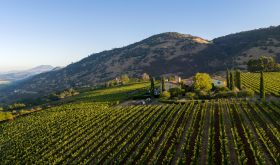
Gold runs out, but the Marlborough Sauvignon Blanc lake has deepened rapidly and continuously since 1995 when Marlborough’s vineyard total was what seemed an already impressive 5,000 acres. Today it is almost 60,000 acres. As my plane from Christchurch dipped and dived over this windy expanse in the north of the South Island, I could hardly believe the extent to which it is now carpeted with green, thanks to the ubiquity of some of the largest, flattest, most uniform vineyards I have ever seen.
It is hardly surprising that the wide Wairau Valley and the slightly cooler, more undulating Awatere Valley to the south have been so feverishly converted to the vine. International demand for Marlborough Sauvignon Blanc has, until now, seemed insatiable. One major factor in this has been the carefully managed cult status of the most famous example, Cloudy Bay Sauvignon Blanc. Now owned by LVMH and reputedly producing nearly two million bottles a year, Cloudy Bay Sauvignon is still sold as though it has to be rationed. Cloudy Bay even manages to command a premium over the average Marlborough Sauvignon, which, despite the fact that it requires no expensive oak ageing and, unlike so many other wines, is sold within months of the harvest, has managed to command much higher prices than most unoaked young whites.
New Zealand wine, which largely means New Zealand Sauvignon Blanc, has enjoyed the highest average retail price in the UK, its most important market, for many years. At £6.47 a bottle, last year’s NZ average was a good £2.09 more than the next highest national average. The other factor that has helped sustain Marlborough Sauvignon’s price, apart from the huge popular appeal of its zesty, off-dry style, has been its relative scarcity. New Zealand is a minnow in terms of the volume of wine it produces and it was only relatively recently that the owners of the market leader (now Pernod Ricard) felt able to launch the leading brand of Marlborough Sauvignon in the US – where for obvious reasons it is not called Montana, as elsewhere, but Brancott Estate.
With the 2008 vintage that is currently on the market all that changed. Last year’s was an embarrassingly large crop, the biggest ever at 154,000 tonnes, 69 per cent more than in the previous year, itself a record harvest. Yields in heavily irrigated Marlborough have traditionally been high. In 2008 some growers were rumoured to have produced as many as 10 tonnes of grapes per acre, two and a half times the maximum allowed in France’s Sauvignon Blanc stronghold Sancerre, for example. The grapes picked early in March 2008 were decent enough but then extreme heat followed by heavy rains meant that at the tail end of harvest there simply wasn’t enough tank space for grapes that were in any case, according to one visiting winemaker, ‘turning to mush on the vine’. Some growers sent their machines in to pick fruit straight on to the ground, to distance the rampant rot from the plants.
With grapes surplus to demand for the first time, some of them barely recognisable as Sauvignon, those premium prices and brand supremacy have been much harder to sustain. Twice as much wine as usual was shipped out of New Zealand in bulk last year, especially to Australia, where New Zealand Sauvignon has ousted Australian Chardonnay as the country’s favourite white wine, but also to the UK where some of it ended up as a blend that Tesco supermarkets offered at £4.99 a bottle over Christmas. Aldi recently crowed about their Freemans Bay bottling at £5.99. Marlborough’s most opportunistic growers, long both derided and envied by other wine producers for their lucrative factory-farming model, have finally been made to realise that there is a limit to demand for what they can so easily produce.
'We’re at a crossroads', the new man in charge of Wine Marlborough Marcus Pickens admitted during my recent visit, 'but it’s good that people are now focused on quality'. Word is that this year growers are being schooled in the art of crop thinning by the big companies who buy grapes in Marlborough so that the 2009s should boast unusually concentrated flavours. According to John Stichbury, veteran producer of Jackson Estate Sauvignon Blanc, '2009 will be an absolute cracker in Marlborough – if we’re still in business'.
One person who must be particularly worried by the current fall in price of Marlborough Sauvignon is Peter Yealands, a local farmer who made his first fortune in mussels and his second in the heavy machinery that has recently allowed him to re-landscape a mind-boggling 2,500 acres of the Awatere Valley and plant them with vines – mainly Sauvignon Blanc. The ill-fated 2008 was his first full-scale commercial vintage. He admits that his timing could have been better and describes the business of selling all this wine from so many extremely young vines as 'a bit of a challenge. When we budgeted, bulk prices were $5-7 a litre, but now they’re closer to $2-4'. He is able to see a silver lining, however. 'It’s put Savvy in markets it wasn’t in before – Germany for instance – but it will be a battle to get prices up again.' His wine has made it into own-label bottlings by the likes of Sainsbury’s, Thresher, Marks & Spencer, the Co-op and The Wine Society, but it may be a struggle to establish Yealands as a premium brand at this stage.
Yealands himself is obviously unusually resourceful, and his practical background has provided him with one or two novel solutions to the region’s viticultural challenges. Keen to reduce his agrochemical bill, he thought guinea pigs might provide an effective alternative to herbicides. A small-scale experiment proved him right, but also showed that to police the entire extent of his vineyards he would need 11 million of them. He is now busy breeding a flock of dwarf sheep, small enough to graze under the vines – and eventually to be sold off as Marlborough lamb. A hit in the making surely.
MY CURRENT MARLBOROUGH FAVOURITES
Astrolabe, Discovery Grovetown Riesling 2008
Cloudy Bay Chardonnay 2007
Dog Point Chardonnay 2007
Framingham Wines Classic Riesling 2007
Mahi, Francis Sauvignon Blanc 2007
Seresin Reserve Sauvignon Blanc 2007
Seresin, Home Vineyard Pinot Noir 2007
Te Whare Ra Gewurztraminer 2008
Wither Hills Chardonnay 2007
Wither Hills Pinot Noir 2006
International stockists from winesearcher.com
To pick out the wheat from the chaff, see Julia's NZ 2008 Sauvignon marathon tasting notes, and her comprehensive survey of challengers from across the Tasman in Australia's Sauvignons soar..