
I went to a tasting of 120 wines from some of South Africa’s most admired producers the other day. I didn’t taste them all but managed a good portion of them and the wine that stood out for me comes in a 25-cl can retailing for £5.
Admittedly the name is memorable. Worcester Sauce is typical of the creativity of the owner of The Liberator brand, and canned-wine proselytiser, Master of Wine Richard Kelley. It comes from the Cape wine region Worcester and is a strong, sweet, pale red wine made from Red Muscadel, the dark-skinned version of the poshest sort of Muscat grape. It’s fresh and grapey but far from vapid, lingering on the palate with quite a bit of presence and grip. I thought it great value and it rather distracted me from the other sweet wine there, the acclaimed wine producer Chris Alheit’s Lost and Found straw wine at £75 a half-bottle (also from Muscat vines, in this case planted before the Boer War apparently).
But Worcester Sauce is far from the only outstanding wine I have opened with a ring pull recently. Canned wine seems to be moving rapidly from convenient novelty to a category of real interest to serious wine producers and therefore drinkers.
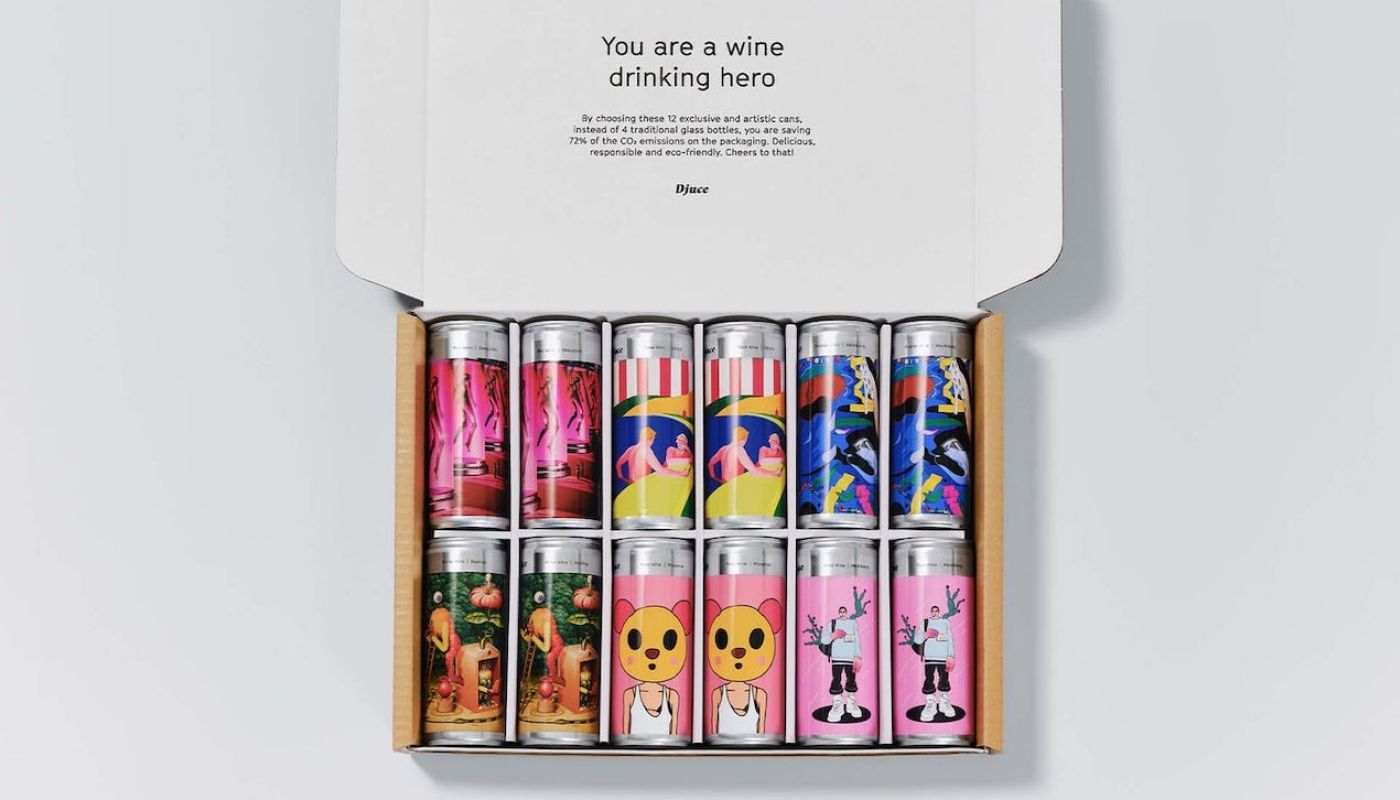
Djuce, based in Berlin, puts wine from some surprisingly smart addresses in cans and offers free returns and free shipping – but delivers only to Germany, Denmark, Sweden and the Netherlands. Verget, Guffens-Heynen and Dominique Piron in France and Meinklang in Austria have all supplied wine to Djuce and I can well understand why the Meinklang 2021 skin-contact 11.5% orange wine has already sold out.
Djuce’s sales pitch does not hold back in spelling out the environmental benefits of a can over a glass bottle. On their website Djuce maintain that wine drinkers should pat themselves on the back when they choose a can over a glass bottle, claiming, on the basis of a detailed survey by the highly environmentally aware Swedish alcohol monopoly Systembolaget, that a can is ‘28 times more efficient to recycle than bottles’ and that ‘three-quarters of all aluminum ever mined is still in use today’. According to the same survey, producing three 25-cl aluminum cans instead of a traditional 75-cl wine bottle can reduce carbon emissions by 79%.
Glass may be usefully and uniquely inert for wines meant to be cellared for years but for the 95% of all wine consumed within months, often hours, of purchase, bottles are increasingly expensive, breakable, heavy, inconveniently shaped containers. Every wine producer I talk to reports a current shortage of glass bottles, with their cost escalating, sometimes doubling, thanks to a shortage of raw materials and skyrocketing energy costs.
Glass furnaces require huge amounts of energy and, while converting some of them to low-carbon fuel sources is underway, it is no overnight solution. The production of aluminium for cans makes its own contribution to greenhouse gas emissions but recycling cans emits only about five per cent as much carbon as recycling bottles – where there is an efficient glass-recycling system in place (which there isn’t in much of the US for instance).
But I have long argued that expecting newcomers to wine to lash out for a full 75 cl of it, plus very possibly a special implement (a corkscrew) to access the bottle, is pretty unreasonable. Cans of wine are much smaller, typically 25 cl (one-third of a bottle), and could hardly be easier to open. So they are surely much more attractive to the sort of younger drinker that the global wine trade is desperately trying to attract in the face of increasing competition from craft beer, artisan spirits, cocktails, and no- and low-alcohol drinks.
And this is without considering the convenience factor. Cans are light, unbreakable, swiftly chilled and easy to store and recycle, recycling systems for cans having been in place since the 1960s when so many other drinks became available in cans.
Canned wine is already massive in the US, with trade observers reporting sales doubling to $253 million last year, and it’s already growing fast elsewhere. Grand View Research predicts that the global canned-wine market will be worth $571.8 million by 2028, having grown more than 13% a year.
That said, even I find it difficult to imagine entertaining friends to dinner with a series of cans on the table. But I could very easily imagine bringing cans out of a chilled bag at Glyndebourne, or anywhere outdoors. And it seems clear to me that al fresco drinking has become very much more popular in the UK now that, thanks to global warming, our weather is so much less fresco.
A 25-cl can provides two of the smaller regular servings commonly encountered in the UK. (There has been a noticeable increase in serving larger volumes – 175 ml instead of the traditional 125 ml – but I think this is a bit too much, especially if the wine is best served chilled.)
Of course I don’t advocate drinking wine out of a can. A good-quality wine glass would transform the experience, and I could even imagine pouring several cans into a decanter if the wine merited it, which some of them do.
One of the many good canned wines I’ve encountered is produced by Anne-Victoire Monrozier, aka Miss Vicky, the French wine blogger who happens to be the partner of Christian Seely who, as managing director of AXA Millésimes, is responsible for wine estates as luxuriously classic as Chx Pichon Baron and Suduiraut in Bordeaux, Quinta do Noval in the Douro Valley, Domaine de l’Arlot in Burgundy and Outpost in the Napa Valley. She is also the daughter of a wine producer in Fleurie, so no prizes for guessing what she puts in her cans. But it is well worth trying and, as a juicy, fruity but captivating light-bodied red from hand-picked grapes grown organically, is just the sort of wine I welcome in a can.
I’ve also enjoyed wines from the Canned Wine Co and The Copper Crew, both of which supply the UK market, the latter specialising in wines from South Africa, which is especially adept at canning wine. The Copper Crew’s winemaker is the talented young Sam Lambson.
But Richard Kelley MW’s The Liberator range is the most innovative, the name inspired by the fact that he buys up individual lots of South African wine overlooked by others, and gives each their own memorable name.
UK supermarkets are gingerly trying out cans, though for the moment mainly for rather uninspiring wines. I hope this will change.
There is even an International Canned Wine competition. This year’s, held in Booneville, California, was the fourth. Best-of-show awards went to wines from Provence, New Zealand, South Australia and California. The judges – surely generously? – handed out 97 gold medals to 300 entries from 20 countries.
But of course canned wine is just one of many possible alternatives to glass bottles. Bottles made from recycled plastic or lined paper, bag in box, single-serve pouches and cartons are also worth considering – and the technology that keeps wine fresh and unsullied in them has improved enormously.
For some wine drinkers, any alternative to a glass bottle is unthinkable. I would urge them to lobby for reusable bottles instead.
Superior canned wines
Canned Wine Co, No 5 Old Vine Garnacha 2019 Vino de España 14.5%
£16.50 for three 25-cl cans Canned Wine Co
The Copper Crew Chenin Blanc 2021 Western Cape 13.5%
£24.99 for six 25-cl cans The Copper Crew
Maine & Jean-Marie Guffens, Djuce Marsanne 2020 France 13.5%
£8.50 per 25-cl can Newcomer Wines, €64 for 12 25-cl cans Djuce
The Liberator, This is the Sea Albariño 2021 Coastal Region 11%
£5 per 25-cl can
The Liberator, New Blood and Chocolate Cabernet Sauvignon/Shiraz 2020 Coastal Region 14.5%
£6 per 25-cl can
The Liberator, Worcester Sauce Red Muscadel 2021 Worcester 17.5%
£5 per 25-cl can
Orion, Terre di Faiano Organic Primitivo 2021 Puglia 13.5%
£3.49 per 25-cl can Waitrose
Verget, Djuce Grand Élevage 2019 Bourgogne Blanc 13.5%
£12 Newcomer Wines, €9.50 per 25-cl can Djuce
Les Vins de Vicky, Ô Joie 2020 Fleurie 13%
$7 per 25-cl can Frankly Wines, NY, and others in the US; imported into the UK by Propeller Wines
Liberator stockists include Brixton Wine Club, Hawkins Bros of Surrey, South Downs Cellars, Wine Reserve of Cobham, The Old Bridge Wine Shop of Huntingdon, Vino Gusto of Bury St Edmunds, Wright Wine Company of Skipton, Dylanwad of Wales, Woodwinters of Scotland and Valhalla’s Goat of Glasgow. In the UK Hawkins Bros operate VinCanCan which sells a range of about 70 canned wines online.
Tasting notes in our database and other stockists on Wine-Searcher.com. See also our other articles about canned wine.













